Richard Nguyen grew up on the east side of San Jose, where he became caught up in street life at a young age. Looking back, he believed the path he was on could have ended with either prison or an early death.
Then came the moment that made him reconsider where his life was headed.
He overheard his mother speaking with friends about their children. She talked about relatives who had graduated from college, while Richard felt she had little she could proudly say about him.
“She couldn’t say anything good about me,” Richard recalled.
His mother was raising the family on her own, and hearing her disappointment became a wake-up call. Richard knew he couldn’t continue down the same path and decided he needed to find a different direction.
He took a job he found on Craigslist for $10 an hour, unsure of where it would lead. It became his entry point into an industry where he would spend the next 15 years learning and building experience.
What started as a decision to change his life would eventually become the foundation for something much bigger.
Years later, that experience would bring him together with Jack and David Nguyen and a growing group of IT hardware businesses.
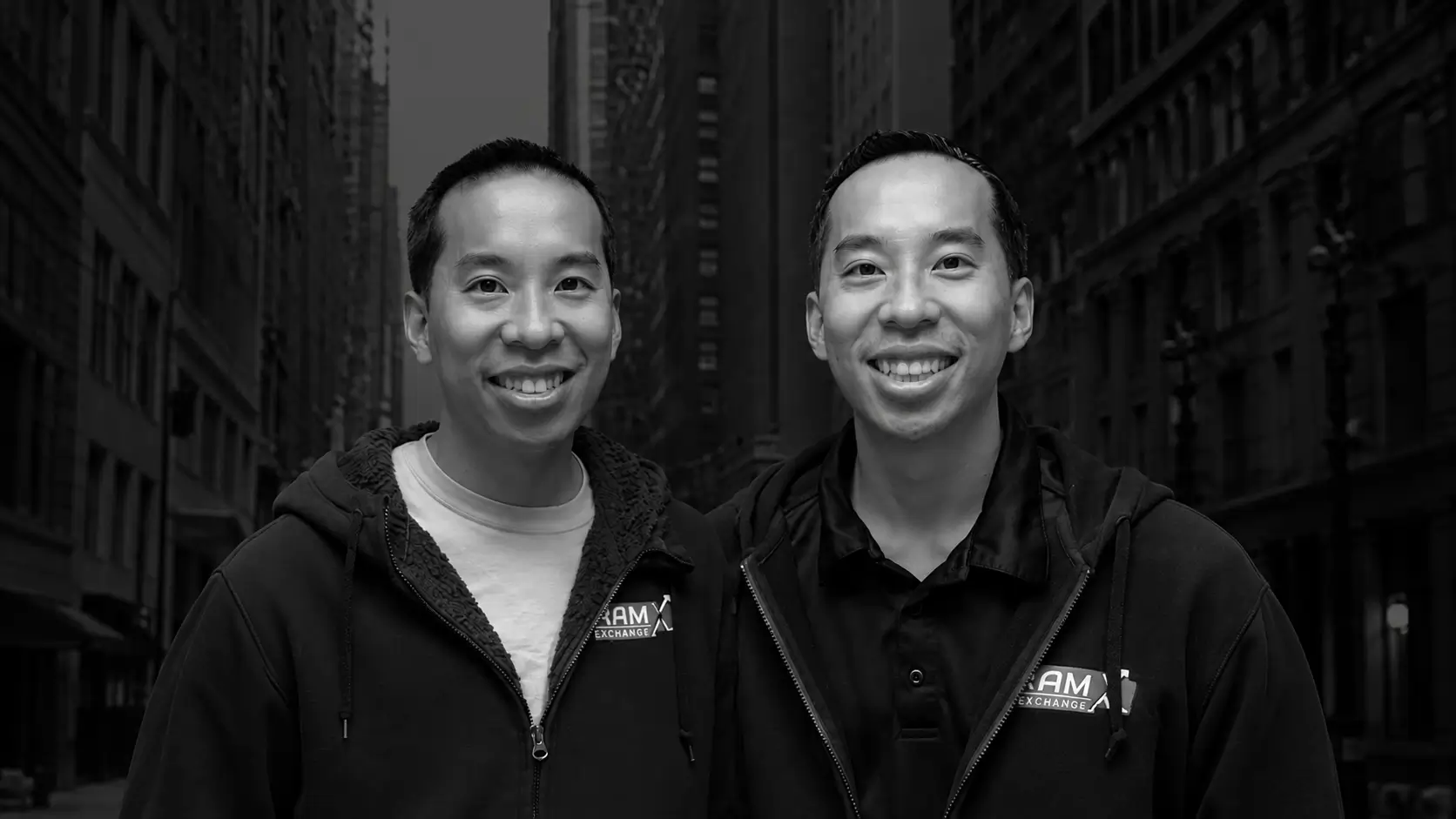
Twin brothers Jack and David Nguyen
The Brothers Behind the Business
Years before Richard partnered with them, twin brothers Jack and David Nguyen were already building their footprint in the IT hardware industry.
Around two decades ago, they saw an opportunity in used computer equipment and began reselling components, primarily semiconductors and RAM. That business became RAM Exchange, which eventually grew into what Jack described as a $50 million-a-year company.
From there, the brothers expanded into servers, networking equipment, drives, and other data center hardware through IT Server Exchange.
By then, Richard had spent years building his own expertise in the same industry. Their paths were about to come together.

Bringing Richard Into the Business
Richard was working for a competitor at the time, but his experience and reputation had already caught Jack and David’s attention. They knew his understanding of the IT hardware business and respected the grit, loyalty, and work ethic he brought to his work.
Eventually, Richard took a risk of his own and started E-XPIRE, focusing on IT asset disposition, secure data destruction, and electronics recycling.
As E-XPIRE grew, Jack and David saw more than Richard’s industry experience. They saw someone who could build a business, lead a team, and execute.
But Richard had already taken the risk of becoming an entrepreneur himself. Bringing him into their business would require more than offering him a position.
The opportunity became a partnership. E-XPIRE and IT Server Exchange merged, bringing Richard’s ITAD expertise together with Jack and David’s established hardware business. Richard became an equal partner in IT Server Exchange and took on the role of COO.
“We gave him the keys,” Jack said.
The merger brought together two complementary sides of the industry and created an opportunity to build something larger. Richard came in ready to rethink how the operation worked, and Jack and David gave him the freedom to make the changes he believed the business needed.
Their roles complemented each other. Richard took the lead on operations, execution, and building the team, while Jack and David provided the business foundation, resources, and support behind him. Jack described himself and David as Richard’s “pillars.”
Together, they continued growing RAM Exchange, IT Server Exchange, and E-XPIRE. Today, the partners say the three companies are on track for around $300 million in combined annual revenue.
What began with Richard taking a chance on himself and building E-XPIRE ultimately became the start of a partnership that would help reshape IT Server Exchange and support the growth of the wider business group.

Leading Through Culture
For Richard, how the team works is just as important as how the business grows.
He describes a culture built around speed, loyalty, and getting things done. Internally, the team uses the phrase “GSD,” short for “get stuff done.”
Richard also sees his employees’ livelihoods as a personal responsibility.
“I work 18-hour days because it’s for my team and my family,” he said.
David credits Richard with creating a culture where employees feel that same sense of loyalty toward the company.
That philosophy is shared by all three partners. Jack said one of their biggest sources of pride is not simply revenue growth, but the impact their businesses have had on employees and their families.

Finding a Reason to Keep Going
For Richard, success still traces back to the conversation he overheard more than two decades ago.
Today, David says Richard’s mother lights up when she talks about him.
“Every time I see her, she smiles,” he said. “She’s so proud of Richard.”
Richard’s advice for people who feel the odds are against them is simple.
“Anyone can make it,” he said. “You just gotta find a reason to do it.”
More than two decades after that conversation, Richard has given his mother plenty to be proud of. That same drive now carries into the work Richard, Jack, and David are building at E-XPIRE.
While companies race to adapt to AI, Jack, David, and Richard focus on what powers it: infrastructure. Their businesses support its lifecycle, from hardware to responsible decommissioning.
Today, E-XPIRE helps businesses securely destroy sensitive data and responsibly manage retired IT equipment. As technology continues to evolve, so does the need to handle what gets left behind.
Learn more about E-XPIRE and its work in IT asset disposition, data destruction, and electronics recycling.