Stories

October 7, 2026

SHARE:

Richard Nguyen grew up on the east side of San Jose, where he became caught up in street life at a young age. Looking back, he believed the path he was on could have ended with either prison or an early death.

Then came the moment that made him reconsider where his life was headed.

He overheard his mother speaking with friends about their children. She talked about relatives who had graduated from college, while Richard felt she had little she could proudly say about him.

“She couldn’t say anything good about me,” Richard recalled.

His mother was raising the family on her own, and hearing her disappointment became a wake-up call. Richard knew he couldn’t continue down the same path and decided he needed to find a different direction.

He took a job he found on Craigslist for $10 an hour, unsure of where it would lead. It became his entry point into an industry where he would spend the next 15 years learning and building experience.

What started as a decision to change his life would eventually become the foundation for something much bigger.

Years later, that experience would bring him together with Jack and David Nguyen and a growing group of IT hardware businesses.
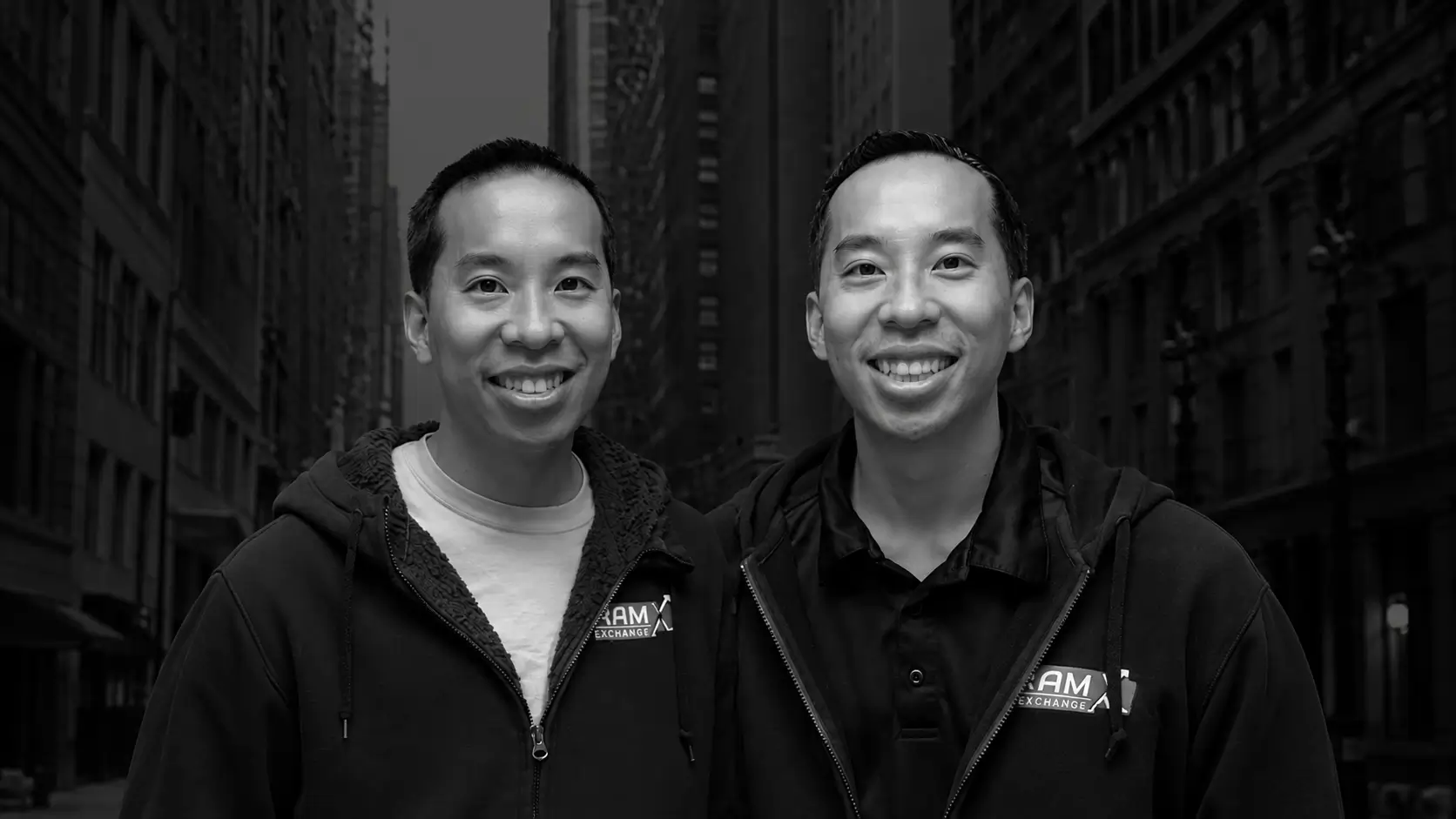
Twin brothers Jack and David Nguyen

The Brothers Behind the Business

Years before Richard partnered with them, twin brothers Jack and David Nguyen were already building their footprint in the IT hardware industry.

Around two decades ago, they saw an opportunity in used computer equipment and began reselling components, primarily semiconductors and RAM. That business became RAM Exchange, which eventually grew into what Jack described as a $50 million-a-year company.

From there, the brothers expanded into servers, networking equipment, drives, and other data center hardware through IT Server Exchange.

By then, Richard had spent years building his own expertise in the same industry. Their paths were about to come together.

Bringing Richard Into the Business

Richard was working for a competitor at the time, but his experience and reputation had already caught Jack and David’s attention. They knew his understanding of the IT hardware business and respected the grit, loyalty, and work ethic he brought to his work.

Eventually, Richard took a risk of his own and started E-XPIRE, focusing on IT asset disposition, secure data destruction, and electronics recycling.

As E-XPIRE grew, Jack and David saw more than Richard’s industry experience. They saw someone who could build a business, lead a team, and execute.

But Richard had already taken the risk of becoming an entrepreneur himself. Bringing him into their business would require more than offering him a position.

The opportunity became a partnership. E-XPIRE and IT Server Exchange merged, bringing Richard’s ITAD expertise together with Jack and David’s established hardware business. Richard became an equal partner in IT Server Exchange and took on the role of COO.

“We gave him the keys,” Jack said.

The merger brought together two complementary sides of the industry and created an opportunity to build something larger. Richard came in ready to rethink how the operation worked, and Jack and David gave him the freedom to make the changes he believed the business needed.

Their roles complemented each other. Richard took the lead on operations, execution, and building the team, while Jack and David provided the business foundation, resources, and support behind him. Jack described himself and David as Richard’s “pillars.”

Together, they continued growing RAM Exchange, IT Server Exchange, and E-XPIRE. Today, the partners say the three companies are on track for around $300 million in combined annual revenue.

What began with Richard taking a chance on himself and building E-XPIRE ultimately became the start of a partnership that would help reshape IT Server Exchange and support the growth of the wider business group.

Leading Through Culture

For Richard, how the team works is just as important as how the business grows.

He describes a culture built around speed, loyalty, and getting things done. Internally, the team uses the phrase “GSD,” short for “get stuff done.”

Richard also sees his employees’ livelihoods as a personal responsibility.

“I work 18-hour days because it’s for my team and my family,” he said.

David credits Richard with creating a culture where employees feel that same sense of loyalty toward the company.

That philosophy is shared by all three partners. Jack said one of their biggest sources of pride is not simply revenue growth, but the impact their businesses have had on employees and their families.

Finding a Reason to Keep Going

For Richard, success still traces back to the conversation he overheard more than two decades ago.

Today, David says Richard’s mother lights up when she talks about him.

“Every time I see her, she smiles,” he said. “She’s so proud of Richard.”

Richard’s advice for people who feel the odds are against them is simple.

“Anyone can make it,” he said. “You just gotta find a reason to do it.”

More than two decades after that conversation, Richard has given his mother plenty to be proud of. That same drive now carries into the work Richard, Jack, and David are building at E-XPIRE.

While companies race to adapt to AI, Jack, David, and Richard focus on what powers it: infrastructure. Their businesses support its lifecycle, from hardware to responsible decommissioning.

Today, E-XPIRE helps businesses securely destroy sensitive data and responsibly manage retired IT equipment. As technology continues to evolve, so does the need to handle what gets left behind.

Learn more about E-XPIRE and its work in IT asset disposition, data destruction, and electronics recycling.


📍Website

Related Articles

News

Tina Tang’s Inspiring Journey From Corporate Worker to Startup Founder

Tina Tang’s path to entrepreneurship is a captivating story of self-discovery and determination. Initially climbing the corporate ladder in IT Consulting, she soon realized that her true calling lay in the world of startups.

The turning point came when she embarked on her graduate school journey, where she felt the world open up before her, setting the stage for her entrepreneurial adventure. This pivotal moment led to the birth of Bristles, an innovative startup that has introduced a mobile app for DIY home projects.

Growing up, Tina found solace in expressing herself through art. Her parents spoke Cantonese at home, and when she started school, she didn’t know much English. Drawing helped her to express herself because it was easier for her than speaking.

Tina ended up with a career in engineering because she was good at math, but her creative side didn’t go away. Later on, when she worked with machine learning and computer vision, her artistic side came back.

Her background in IT Consulting equipped her with invaluable skills for her entrepreneurial journey. Tina’s proficiency in technical problem-solving was complemented by her newfound ability to understand clients’ pain points and devise tech-based solutions.

According to WRAL TechWire, Bristles came from Tina’s desire to bridge the gap between technology and creativity. She saw how AI could make art better, so she used machine learning and computer vision to help people express their creativity in home design.

Tina Tang’s journey from office worker to startup founder is an inspiring story about following your passions and trying something new. Her story serves as an inspiration for aspiring entrepreneurs or anyone interested in the stories behind successful businesses.

Featured Image Source: Linkedin

cosmetics design asia-png

News

Baemin Introduces Skincare and Makeup Brand Lazy Bee in Vietnam

South Korean delivery giant, Baemin, has expanded its business horizons by venturing into the world of beauty in Vietnam. The company recently unveiled its very own beauty brand, Lazy Bee, offering a range of skincare and makeup products. This strategic move helps Baemin in diversifying its services beyond food delivery while capitalizing on the growing popularity of K-beauty trends in Vietnam.

Lazy Bee’s product lineup consists of 11 items, including facial masks, lipsticks, and toner pads. The brand’s core mission is to provide accessible and effective beauty solutions tailored to the specific needs of Vietnamese consumers. With Vietnam’s humid climate and environmental factors affecting skin, Lazy Bee focuses on creating products that address these challenges. The brand’s formulations are enriched with natural ingredients, such as calendula and red ginseng, sourced from Korea to cater to the local climate and skin types.

In its current phase, Lazy Bee products are exclusively available through the Baemin app, catering primarily to customers in Ho Chi Minh City. Baemin is actively working to enhance the user experience within the app. Additionally, the brand is organizing on-ground events in Ho Chi Minh City, offering customers the opportunity to personally experience their beauty products.

Looking ahead, Lazy Bee has ambitious plans for expansion. The brand aims to extend its reach through online sales platforms like Lazada, Shopee, and TikTok Shop in the coming months. Furthermore, Lazy Bee intends to establish a physical presence by collaborating with beauty retail chains and convenience stores. The brand is set to broaden its footprint by entering the Hanoi market and offering nationwide shipping, firmly positioning itself as a contender in Vietnam’s dynamic beauty industry.

Featured Image Source: Tin Tuc

News

Naomi Osaka Breaks Her Silence About Mental Health Struggles in Sports

In a candid discussion on mental health in sports at the Billie Jean King National Tennis Center, the four-time Grand Slam singles champion Naomi Osaka shared her personal battle with depression and how it made her “very scared of social media.” She has been an outspoken advocate for mental health in sports, and her revelations shed light on the challenges athletes face both on and off the court.

Osaka’s journey to becoming a vocal advocate began with her withdrawal from the 2021 French Open due to depression and anxiety. This incident had a significant impact on the discourse surrounding mental health in sports, prompting a much-needed conversation. During the panel discussion, which included luminaries like Olympic swimmer Michael Phelps, U.S. Surgeon General Vivek Murthy, and Dr. Brian Hainline, Osaka discussed various aspects of mental health, including the role of social media.

Osaka admitted that somewhere along the line, she got very scared of social media. This fear highlights the immense pressure athletes face in the digital age, where the relentless scrutiny of their personal lives can exacerbate mental health struggles.

During her hiatus from tennis, taken for her mental well-being and the birth of her daughter, Shai, Osaka gained a new perspective on her career. She emphasized the need to cherish every moment in the sport she loves and encouraged others to reach out for support when facing mental health challenges. She revealed to ESPN that she has plans to play again at the Australian Open next year in January.

As Osaka continues to use her platform to promote change, the sports world is gradually recognizing the significance of prioritizing mental health alongside physical performance.

Featured Image Source: Naomi Osaka

News

Expanding the Legacy of a Family-Owned Chinese Restaurant Chain

In the heart of Los Angeles is a vibrant embodiment of the American dream—a dream realized through the culinary journey of a family-owned Chinese restaurant chain.

In the early 1960s, Kai Tai Chang and his wife, May, left Hong Kong for Los Angeles, seeking a better future. Kai Tai, driven by his unwavering work ethic, found opportunities in Chinatown’s food industry. He worked tirelessly, holding multiple jobs to support his family.

Kai Tai’s dedication led him to become a chef at the Phoenix Inn, a restaurant at Ord and New High streets. Over time, a strong friendship with the retiring owner paved the way for him to purchase the restaurant.

May Chang played a pivotal role as the welcoming face of the Phoenix Inn, forging personal connections with customers. For two decades, the Chang family thrived by prioritizing personalized service, valuing their staff, and offering delicious cuisine.

In 1997, the family expanded to Alhambra, introducing a unique addition to their menu—desserts, including classic Asian treats and fresh fruit options. Their commitment to culinary excellence, even sending Elaina to Le Cordon Bleu in Pasadena to hone her pastry skills, was rewarded with success.

Image Source: KTLA

Despite the challenges posed by the pandemic, Phoenix persevered with take-out and delivery services, expanding to its 13th location in San Diego in 2023. Nick Chang, the next generation, took the reins as president in 2021, committed to maintaining their high standards of quality and exceptional customer service as they continue to grow.

The Chang family takes pride in their legacy, built on a foundation of culinary excellence and heartfelt service, reflected in the glowing Phoenix signs that now shine beyond the Southland.

Featured Image Source: KTLA