Eunice Chen’s Táng Transforms Childhood Night Market into a Moving Animated Story
Stories
March 24, 2025
SHARE:
After transitioning from her career as a teacher to an animation artist and illustrator, the talented Eunice Chen once again decided to test her abilities by creating an animated short film project called Táng (糖).
“人算不如天算” — in Chinese belief, every encounter is predestined and our current state is the fruit of past karma. One life ago, we were somehow, unknowingly, cultivating our karmic connections, which ultimately led to this present life’s encounters or coincidences.
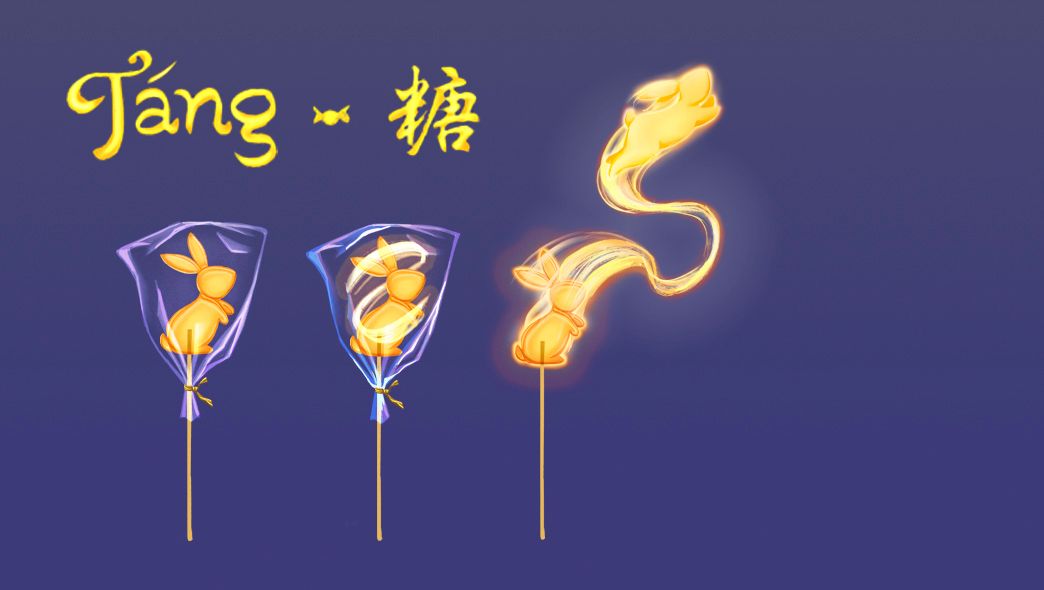
Táng is a movie about one of those by-chance encounters as well that integrates the art of 糖画 (tánghuà). Through the lens of tánghuà – a traditional Chinese sugar-painting art, this unexpected relationship arrives and flourishes into a confounding yet paramount work of fatherhood, family, and fate.
THE INSPIRATION BEHIND TÁNG
Growing up between the U.S. and Taiwan, Eunice developed deep-rooted cultural memories that shaped her appreciation for her heritage. In this new venture, she continues exploring culture—this time, through nostalgia.
Where should we begin? Back to her childhood in Taiwan, like every other child, Eunice loved going out and visiting open-air markets. Bustling lines of food vendors, jittery echoes of chatters, and also a rare occasion when one can play games without their parents’ side eyes, open markets are the idols of many young children in Taiwan. It is also where she was introduced to the art of sugar-painting.
Reflecting on this memory, Eunice shares:
Yes, the idea of this story first came from my childhood memories of visiting open-air markets and night markets in Taiwan. Whenever I visited those markets, I would always make sure to visit the candy stalls, where master candy makers sculpted these lollipops that were amazing pieces of art and also very tasty confections. And I’ve always had a giant sweet tooth, so I started my film out of a place of joy.
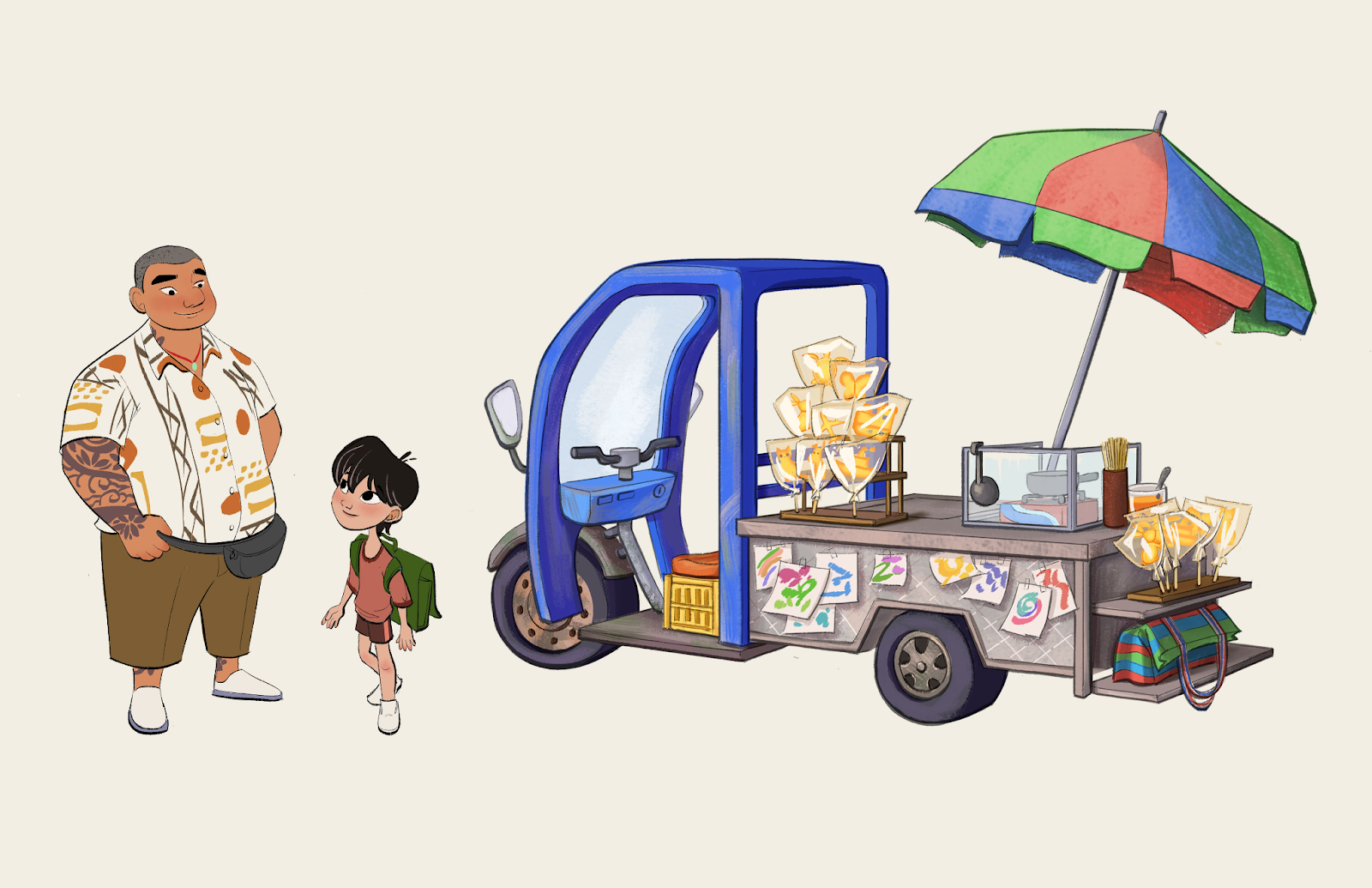
The short film centers around the meaningful connection between a sugar-painting street vendor (left) and a student.
A REFRESHING TAKE ON FATHERHOOD AND FAMILY
In Chinese families, “血浓于水” (Blood is thicker than water) has long been a staple for centuries—that family is of utmost importance, and the bloodbound places more value than strangers. It is only natural that the concept of a “chosen family” may irk some, who put a sense of filial piety and duty in high regard.
Of course, it feels almost peculiar for Eunice Chen – the eldest child, who has switched careers, from landing a “safe” job at teaching to taking a more off-the-beaten-path direction towards doll-making and now…animation artist and now…film director!! So expect the unexpected layers and nuances Eunice has painted Táng. Táng is more than just a love letter to Taiwanese night markets. It’s one that Eunice picks up the lack of positive portrayals of father-and-son relationships in the Asian community.
“When someone makes art or a film, sometimes they are painting a world they wish they had or would like to see in the future. I wish I had seen more strong bonds between Asian fathers and sons as I grew up,” Eunice shares.
While Táng’s messaging can cover this complex matter only to a certain extent; here, Eunice is after something more personal for many Asians: “a healing balm” for those with similar experiences. However, Eunice adds that she’s been seeing a lot of change in parenting recently. She says, “I am super proud of how intentional and hands-on Asian fathers from my generation (and beyond) have been with their children!”
Now, Eunice is bringing Táng to life, but she needs our support.
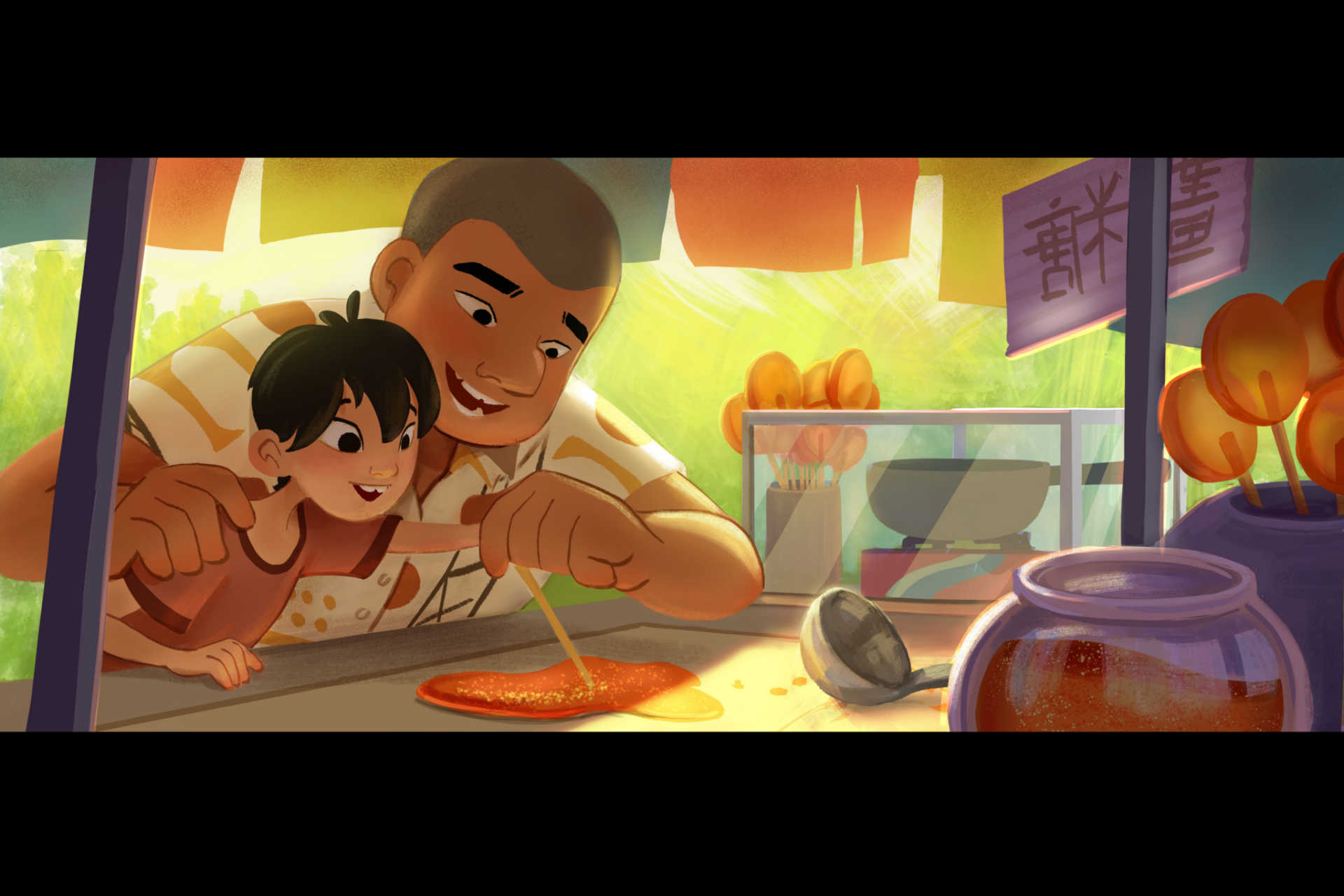
A scene involving the art of sugar-painting.
JOIN THE JOURNEY: SUPPORT TÁNG
The idea for Táng came to Eunice during a storyboarding class, when asked to create quick story concepts. Táng was one of the ideas she came up with, leading her to develop a script—her first ever. While world-building and character design might be her forte, the real challenge followed: securing funding. Facing multiple rejections, it took one “yes” from what she thought would be her final meeting to reignite her determination.
The initial funding allowed her to assemble a small but passionate team, who have since created the film’s first three minutes. Now, they need additional support to complete the project, leading to the launch of their Kickstarter campaign.
But independent films—especially ones that bring forward Asian heritage and underrepresented narratives—need tremendous community support.
Supporting the Táng crowdfunding campaign is a step forward to preserving a piece of cultural heritage while amplifying nuanced Asian fatherhood stories, and ensuring that art like this can continue to thrive.
“Keep working on your art and portfolio. Get to know people already working in the industry and learn from them. And make art that comes from the heart and makes you happy. It’s going to be very difficult, especially given the current state of things in the animation industry as a whole, but if this is truly what you want, then don’t give up!”
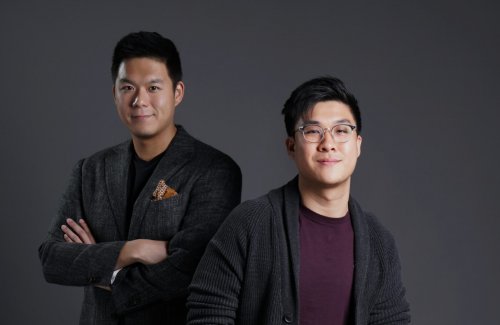
Chris Hwang (left) and Jonathan Shen (right) – founders of The Golden Duck
Growing up with Asian snacks like salted egg yolk chips meant savoring flavors that felt both comforting and unforgettable. Yet when Jonathan Shen and Chris Hwang turned their eyes to the global market, they saw a different reality: these beloved treats were undervalued, underpriced, and largely overlooked by international consumers.
Back in 2015, Singapore’s FMCG market was crowded, dominated by established Western brands. Asian flavors were largely seen as niche, affordable snacks rather than premium products you’d gift or showcase in events.
Jonathan and Chris quickly recognized a gap: millennial consumers craved adventurous, culturally rooted flavors, but no brand was presenting them in a way that made people proud to share them.
They founded The Golden Duck with a vision to elevate Asian snacking to a globally aspirational experience.
Today, The Golden Duck has sold over 20 million packs worldwide, and is stocked in 650+ Woolworths and Metro stores.
How It Began: Inspiration from a Familiar, Unlikely Flavor
Jonathan Shen and Chris Hwang didn’t start with a massive budget or fancy offices. What they had was complementary expertise, and a shared passion for snacks.
Jonathan, with a keen eye for branding and marketing, looked at salted egg yolk and asked: what if salted egg yolk could feel luxurious?
While ubiquitous in Asia, it was rarely found outside hawker stalls or home-cooked dishes.
Chris, a stickler for quality and craftsmanship, understood that getting the recipe and packaging right could make all the difference.
When it launched, crowds queued for hours, wanting to get their hands on chips that tasted like home but looked like luxury. The Golden Duck’s Salted Egg Yolk later earned Jonathan & Chris recognition on Forbes 30 Under 30 Asia.
How It Went: Bold Flavors, Relentless Hustle
Entering a competitive FMCG market without big funding meant bootstrapping everything—from sourcing ingredients to hand-packing orders. They had to balance daring flavors with high-quality production, ensuring every snack met premium standards.
It wasn’t just about product innovation. Breaking into a market dominated by Western brands meant shifting perceptions: convincing consumers that Asian snacks could be modern and premium. Every unconventional pairing, every new flavor, was a calculated risk.
Chris ensured every ingredient and recipe exceeded expectations, while Jonathan told the story in a way that resonated with millennial snack enthusiasts.
They launched pop-ups, engaged directly with customers, and refined details one by one. Salted egg yolk became their signature flavor, but it was only the beginning. The Golden Duck now offers a growing range of gourmet Asian-inspired snacks, from Chilli Crab Seaweed to Tom Yum Goong and Spicy Mala Hot Pot.
What’s Next For The Golden Duck?
The Golden Duck isn’t slowing down. In 2025, the brand launched a new line of canister chips for Western markets including Australia, the United States, and Canada, with bold flavours like bold flavours like Truffle Wagyu, Kombu Seaweed Butter, and Sour Cream & Sriracha. At the same time, the company is actively entering new markets such as the UK, Europe, and China.
Innovation and sustainability remain at the heart of The Golden Duck’s strategy. The company continues to explore new flavors and formats while sourcing real ingredients to deliver premium, authentic taste experiences.
With every new flavor and product, Jonathan Shen and Chris Hwang are proving that Asian snacks can be premium and globally celebrated. Every bite is a story of heritage, innovation, and taste waiting to be told.
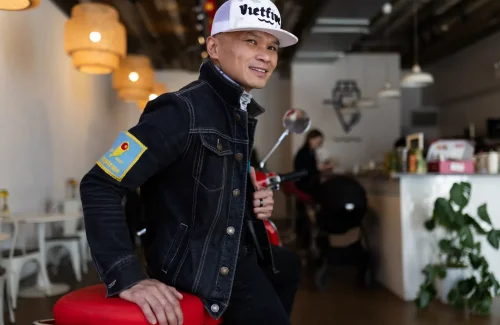
When you walk into VietFive Coffee in Chicago’s West Loop, the first thing you notice isn’t the rich aroma of Vietnamese Robusta beans. It’s the energy. Strangers sit shoulder-to-shoulder, conversations spark, and a sense of belonging fills the air. For founder Tuan Huynh, this space is far more than a café. It’s proof that redemption is real.
Tuan didn’t set out to build a coffee brand. He set out to rewrite a life story that once seemed destined to end behind prison walls. Today, he’s not just serving bold coffee; he’s serving hope, heritage, opportunity, and community.
The Darkest Chapter
Tuan’s early life was marked by conflict. Born in Vietnam, his family fled to the U.S. when he was just three years old, carrying little more than hope for a better future. They settled in government housing, where poverty pressed down on daily life. Like so many kids searching for belonging, Tuan got swept into the culture of gangs and drugs. At just 18 years old, barely an adult, his life took a devastating turn.
Convicted of first-degree murder, Tuan was sentenced to life in prison with the possibility of parole after 15 years. He spent the next decade and a half in Lansing Correctional Facility, one of the country’s maximum-security prisons.
Prison has a way of stripping people of their identity. For many, it cements a cycle of despair. But for Tuan, it became the crucible where transformation began. “Even in the darkest places,” he says, “I knew my story wasn’t finished.”
Choosing Creativity Over Despair
Inside those walls, during the latter half of his prison experience, Tuan chose to reimagine his life. He leaned into art and design, creative outlets that gave him purpose and revealed a talent for visual storytelling. Every sketch, every concept was an act of defiance against the idea that his future had already been written.
When he was finally paroled on June 21st, 2011, a date and time he still recalls with reverence, Tuan stepped into a world that had changed beyond recognition. He was a free man, but freedom didn’t come with an instruction manual. He carried the stigma of incarceration, the weight of lost time, and the daunting task of rebuilding from scratch.
A Door Opens in the Most Unexpected Place
Determined not to waste his second chance, Tuan pursued higher education, earning a Bachelor of Fine Arts in Conceptual Design. His portfolio caught the attention of the world’s largest advertising agency, which offered him a role in Chicago. For a refugee kid who had once been told he would never amount to anything, it was validation.
But something was still missing. After eight years in advertising, Tuan felt the pull of something deeper, something personal. On a trip back to Vietnam, the first since leaving as a child, he discovered his family’s legacy: generations of farmers cultivating Robusta coffee. That revelation ignited a vision.
Coffee, he realized, could be the perfect medium. It wasn’t just a drink. It was heritage, resilience, and connection poured into a cup. And with that, VietFive was born.
Tuan Huynh (right) with his uncle
Building VietFive Against All Odds
Launching a business as a formerly incarcerated person was no small feat. Doors closed before Tuan could step through them. Banks hesitated, investors doubted, and skeptics assumed his past would define his future. But Tuan refused to let rejection write his story.
Instead, he built VietFive from the ground up, importing beans from his family’s farm, shaping the brand through design, and pouring his heart into creating not just a business, but a movement.
VietFive is vertically integrated, meaning Tuan controls the process from farm to cup. That ensures authenticity, quality, and fair practices. But more than that, it provides every sip tells a story. A story of Vietnamese resilience. A tale of personal redemption.
The Power of Representation
For Tuan, VietFive is not just about coffee. It’s about representation. Too often, the stories of immigrants, refugees, and formerly incarcerated people are missing from mainstream narratives. By building VietFive, Tuan created a stage where those voices can’t be ignored.
“When people drink our coffee,” he says, “I want them to taste more than flavor. I want them to taste legacy, survival, and pride.”
That representation extends to the community VietFive has built. Walk into the café, and you’ll see it as a true “third space” where all are welcome. From business leaders to students, from immigrants to lifelong Chicagoans, VietFive has become a gathering point for connection.
Turning Pain Into Purpose
Tuan’s proudest achievement isn’t revenue numbers, though VietFive is on track to approach seven figures this year. His real pride is seeing familiar faces return, watching conversations unfold, and knowing that his café has become a home for many.
The struggles he faced, incarceration, rejection, and underrepresentation, didn’t vanish. But he reframed them. Each obstacle became a stepping stone, each “no” a chance to persist, each bias an opportunity to prove that transformation is possible.
In Tuan’s words, “VietFive is not just about beans. It’s about belonging.”
A Vision for the Future
Tuan’s mission is clear: to elevate Vietnamese Robusta on the global stage, to create spaces of connection, and to rewrite narratives that society often overlooks. He envisions VietFive not only as a coffee brand but as a global movement rooted in heritage and social impact.
For the Asian community, VietFive stands as an affirmation, proof that their culture, history, and voices belong at the table. For those who carry the weight of incarceration or failure, it’s a beacon of hope that broken beginnings can lead to beautiful new chapters.
Redemption in Every Cup
At its core, VietFive is more than coffee. It’s a story of redemption steeped into every brew. It’s the story of a refugee child who stumbled, a prisoner who refused despair, and an entrepreneur who now builds bridges where walls once stood.
When you sip VietFive, you’re not just tasting Robusta, you’re tasting resilience. You’re part of a narrative that proves our past does not define our future.
As Tuan Huynh himself puts it: “VietFive is my second chance in a cup. And I want every person who walks through our doors to feel that same possibility, that no matter where you’ve been, there’s always a way forward.”
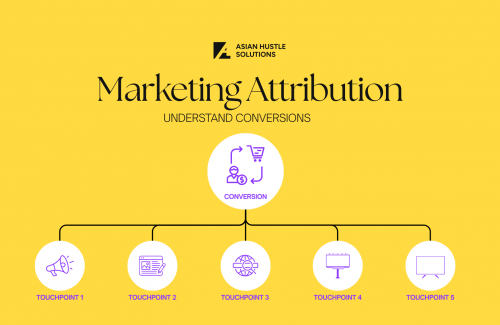
To win your customers, you need to run many marketing activities across multiple channels. And then those conversions came pouring in, but you don’t exactly know where those conversions come from since there are too many ongoing activities. That’s what marketing attribution does. By assigning credit to touchpoints, you can gauge how effective each touchpoint is to the conversion.
There are two types of Attribution:
Single-source attribution: Credits are given fully to one touchpoint, assuming that is the most effective one at driving conversion.
Multiple-source attribution: More complex models. This type of attribution model acknowledges that multiple touchpoints contribute to the buying decisions and gives partial credit to each.
Understanding attribution will help you to know where the revenue comes from so you can optimize your budget and gain more from your spending. to said touchpoint makes it more effective and less costly. Understanding the journey can help you win the race.
Why Asian Hustle Solutions?
At AHS, we specialize in helping brands capture attention and inspire action — whether you’re launching a new product or scaling your business, we’ll guide you to marketing that resonates and delivers results.
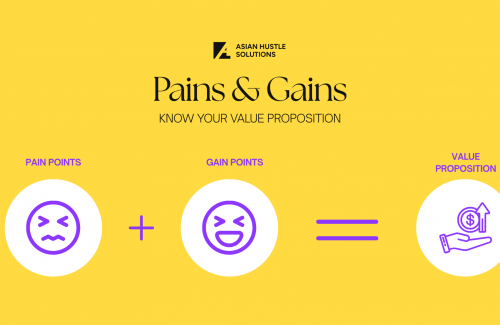
Pain points and gain points are not necessarily new concepts, but some might think they are opposing concepts, when in contrast, the two complement each other. Through customer pain and gain points, you can get a better understanding of your customers’ needs, and offer a unique value proposition.
Pain point: As the name suggests, it’s something that “pains” your customers; an issue that they have that needs to be addressed; a challenge that they need to overcome.
Gain point: Gain point, on the other hand, is more about you. What can your product or service do for the customers; what can they gain from using your service; what can you help them with?
The two are extremely simple and are a good place to start when you’re trying to advertise your product or service since they consider both your and your customer’s sides to offer a value proposition that is valuable.
[Book a FREE call with us] If you want to explore our services more, visit the Asian Hustle Solutions website at AHS.