Stories

November 13, 2026

SHARE:

Vera Li, a Founding Product Designer at Gemini Legal and creator with over 260,000 followers, has won four international design awards for her social app concept, Season.

Inspired by her experiences across China, Singapore, and the United States, Season explores a different way of building online communities.

Unlike traditional social platforms, Season’s communities dissolve and re-form every 30 days, allowing connections to evolve as people do.

Building Communities Across Borders

Vera received Gold at the London Design Awards and Tokyo Design Awards, along with Silver at the MUSE Design Awards and NY Product Design Awards. Her concept, Season, challenges how traditional social platforms work. Instead of keeping people in the same online communities indefinitely, Season’s communities dissolve and re-form every 30 days, allowing users to connect with people who reflect who they are at that point in their lives.

The idea comes from Vera’s own experiences of moving between countries and building new connections.

She grew up in a small town in rural Henan, a farming province in central China, before her family moved to Zhengzhou, the provincial capital. At 15, she earned the Singapore government’s SM1 full-ride scholarship and spent four years studying abroad, far from home and everyone she knew. She later moved to the United States to attend UCLA, once again finding herself in a new environment where she had to build her own community.

Each move taught her something about belonging. The people and places around her changed, but she continued finding ways to connect with others.

Finding Connection Through Dance and Design

Dance became one of Vera’s earliest ways of bringing people together. At UCLA, she founded dance teams, organized dance camps across four international cities, and taught dance in Los Angeles.

She also performed as a backup dancer at major events, including the MAMA Awards and KCON, sharing stages with artists such as J.Y. Park, ITZY, IVE, and ZICO. She also shared the stage with AESPA at Long Beach Arena.

These experiences showed her how people from different backgrounds could come together through a shared interest, even if only for a short time.

Vera eventually brought that same experience online. Through @VeraLiStudio on YouTube and @vera_shalala on TikTok and Instagram, she built a community of more than 260,000 followers around dance and movement, connecting people across languages and cultures.

Her interest in building meaningful experiences later led her into product design. She moved to Pittsburgh to pursue a Master of Human-Computer Interaction at Carnegie Mellon University before returning to Los Angeles.

For the past three years, Vera has worked as the sole Founding Product Designer at Gemini Legal, a legal technology company. She has led design initiatives for several products from concept to launch, most recently the company’s legal drafting tool, DraftEngine.

Working as a one-person design team also meant creating a design culture of her own. When she noticed a lack of opportunities for designers in Los Angeles to share their work and connect, she organized “Designers in the Age of AI,” an event that attracted hundreds of designers.

A New Approach to Online Communities

Vera’s experiences across different cities, dance communities, and product design eventually shaped Season.

The concept draws inspiration from the Japanese aesthetic principle Mono no Aware (物の哀れ), which recognizes the bittersweet beauty of things that do not last forever.

Rather than encouraging users to maintain permanent online communities, Season allows groups to naturally end and form again every 30 days. The idea reflects Vera’s belief that relationships and communities can remain meaningful even as they change.

“I have spent my whole life walking into rooms full of strangers and turning them into places where people belong,” Vera shares. 

“Every one of those communities had a season. Some friendships lasted, but the room itself always changed. Season is the first time I designed software that tells the truth about that instead of pretending the room is permanent.”

This fall, Vera moved to San Francisco, marking another chapter in her career. She has also begun a Doctor of Business Administration with a concentration in Applied Computer Science, focusing her research interests on human-centered design and how digital products can better serve their communities.

Her work in design is also opening new opportunities. Vera was recently invited to join the  International Academy of Digital Arts and Sciences (IADAS) and will soon begin judging the Webby Awards.

For Vera, the same principle continues to guide her work: great design is always intentional, and the people using it should be able to feel the difference.

Follow Vera’s journey in rethinking digital connections. 

📍 Connect with Vera

Related Articles

Image Source: shout.sg

Stories

Former Foodpanda Rider Launches Dessert Bar Serving Coriander Gelato, Mala Waffles

Combining sweet cream with the sharp zing of coriander, this gelato flavor apparently converted over 80% of coriander haters who tried it, as per Eat Book Singapore.

Bryan Liew launched his dessert cafe LoFi Bar at the height of the pandemic, with no prior F&B experience except being a Foodpanda rider.

According to Vulcan Post, Bryan’s purpose behind launching his cafe was simple: to fulfill Singaporeans ‘ habit of “eating and hunting for food ” during the COVID-19 pandemic. 

The 27-year-old earned a Malaysian and UK digital marketing degree and started as a Retail Marketer in 2017 before becoming a Senior Operations Manager. He quit his job on the first day of Singapore’s ‘circuit breaker’ lockdown.

Bryan used his digital marketing skills and did thorough consumer research to attract more consumers during the lockdown. When his restaurant opened, he surveyed every customer for feedback.

He innovated his menu with unique food like coriander ice cream which is currently their best seller, and the sweet, spicy, and savory Mala chicken waffles.

As a former Foodpanda rider, he understands the challenges riders face and makes food collecting easier, especially those with beverages, which are well-packed to minimize spillage.

Make sure to visit LoFi Bar when you travel to Singapore!

IMG_4416

Stories

Teen Brothers Build Non-Profit To Empower Underprivileged Kids Through Educational And Enrichment Programs

Founded in 2016, Ethan and Dylan sell what first started as Ethan’s Legenade at Summer Concerts, Sports Tournaments, Taste of Elk Grove, and various fundraisers. The brothers also get invited to private events to be speakers so they can share their moving stories.  

They speak to youth groups to inspire young kids and were invited on TV in local morning shows Good Day Sacramento, and Fox40 News. On top of that, they manage to keep up with the Honors Program in school, and extracurricular activities. 

Good Day Sacramento, a local morning show, in July 2019

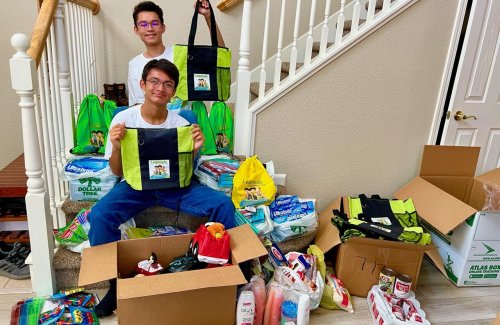
There are currently 6 locations Legenade Children’s Fund sends to in the Philippines – Marikina, Cebu, Cotabato, Antique, Anao and Mexico in Pampanga. With the help of the catholic convent, Daughters of Divine Zeal, where Dylan and Ethan’s great aunt is a nun there.

They also have volunteers and coordinators the brothers meet through family and friends who still live in the Philippines. For them, it’s very important to have proper connections there to keep these programs going. The program sends help twice per year before the school season starts and during the Christmas season.

Back to School Program in Antique, Philippines 2021

Ethan and Dylan shared with Asian Hustle Network their journey as early founders, advice to their peers and future generations, and their hopes to find a mentor to help them grow toward their goals.

13-year-old Ethan runs with their school Cross Country and Track Team, while 16-year-old Dylan is in the Cyber Patriots, a cybersecurity club in school where they compete with other schools nationwide. 

Since their launch, the brothers have been in at least 5-7 big events every year — with Elk Grove Giant Pumpkin Festival as the biggest, which attracts more than 60,000 people every year.

The Young and Simple Legendaries

Ethan: Hi, my name is Ethan Black. I’m the CEO of Legenade Children’s Fund. I’m 13 years old, going into 8th grade. I like running, like Cross Country and Track. I like to hang out with friends, and also be on the computer playing games. 

Dylan: My name is Dylan Black (16 years old) and I’m a junior at Franklin High School. My interests lie in finance, business, and engineering. 

Dylan (right) and Ethan (right) With Elk Grove City Councilmember, Stephanie Nguyen
Dylan and Ethan at Taste of Elk Grove in 2017

How It All Started

Ethan:  Legenade started with a business called Ethan’s Legenade that I started when I was about 7 years old. It means “Legendary Lemonade”. I met another local nonprofit through my mom, and I decided I wanted to help them so I made Ethan’s Legenade and sold lemonade. I gave 50% of the profit that came from Ethan’s Legenade to the local nonprofit. After doing that for about 3-4 years, my grandma helped us turn it into a nonprofit which is known today as Legenade Children’s Fund. 

Dylan: My brother wanted to help a charity owned by a friend of ours. To help that charity, he decided to open a lemonade stand and donate 50% of the profits. We attended small events and sold lemonade there, and that’s how we made our initial profits and we expanded from there into other sorts of events. 

Ethan’s very first event – Summer Concert in Elk Grove May 2016
Chicks in Crisis is the charity that Ethan wanted to help in the beginning. So he sold lemonade and donated half his earnings to them. He still supports them to this day.

Legenade’s Big Vision, Mission, and Goal

Ethan: Our motto is “Helping Kids Become Legendary”, which basically means helping them so they can be the best they can be. We mainly focus on children’s education through 5 different programs. Our goal is to help kids and communities all around the world. 

5 Legenade’s Programs are: Back to School Program, Future Legends Scholarship, Color the World Project, STEAM Programs, and Community Outreach

Dylan: I would like our nonprofit to have a well-established local and international presence to help kids with the education of all forms. That’s my goal, that’s my vision, that’s my mission. 

Achievements and Learnings

Ethan:  A few years back in 2019, we got Rookie Business of the Year from the Elk Grove Chamber of Commerce for being the best new business. I guess another achievement is actually turning into a nonprofit, coming from Ethan’s Legenade to becoming an official nonprofit. I’ve learned more about how to run a business. I was probably naive about how to run one when I was first starting out when I was 7. I’m more careful about making decisions. I’ve learned how kids live in other countries. 

Receiving the “Rookie Business of the Year 2019” award presented by the Elk Grove Chamber of Commerce. Dylan and Ethan are the youngest entrepreneurs in their city.

Whenever I heard stories about the Philippines, it was always worse than the life that we have here, so we shouldn’t take stuff for granted. You’d think that stories like that are exaggerated, but from the photos I’ve seen, it’s not. Their conditions are not ideal. So for example, we ship out toy cars, the ones you pull back to wind up and let go. Then we realized that they can’t play with them because they don’t even have concrete. Their houses are built on dirt. We learned to pay more attention to their living conditions and what they need so we can send them the proper help. 

Dylan: Our biggest achievement would probably be becoming an official nonprofit because it allows us to coordinate and organize resources to give to our donation recipients. Another one of our biggest achievements is the number of people we have helped. We’ve helped several thousands of people in some way, shape, or form. I’ve learned that I really like business and finance, and most likely do that in the future as a career. I’ve also learned that people can accomplish a lot and all they need is a little push from an outside force, maybe in the form of a donation. 

Legenade’s Current Project 

Ethan: Right now, school is about to start so we’re focused on the Back to School Program. We provide backpacks and school supplies to about 1000 students in multiple locations in the Philippines. We have Future Legends Scholarship where we sponsor gifted students and pay for their tuition fees so they can stay in school. A lot of them leave school so they can work to help their families. We help them finish high school at least. Closer to the holidays, we do community outreach locally here in Elk Grove, and Christmas Programs in the Philippines, and send toys and food to the kids and their families. 

Community Outreach Food Program – Anao and Mexico, Pampanga, Philippines.

Dylan: My current project is expanding our sphere of influence to reach more people with advertising and campaigns. Also to get our Legenade bottled at a bottling facility in high numbers so we can get them in vending machines and stores. Relying on donations from people means that the people we are helping are at the mercy of your kindness. When you sell a product, we can more reliably help people. We are grateful to our donors, but it’s better to be self-sufficient so our programs can be consistently well funded. 

The Founders’ Hope For Legenade 10 Years From Now

Ethan: I’d like to see Legenade 10 years from now being one of the biggest nonprofits in America, maybe in the Top 10 charities. We also want to help in more places internationally and nationally so instead of just here in Elk Grove, CA, maybe we can find people to help in all 50 states. Also internationally, instead of just in the Philippines, we can help somewhere else in Asia, Africa, or Southern America. We also want to visit our programs in the Philippines and meet the kids we’re helping. We can’t afford that right now so they just send us pictures and videos.  

Dylan: I hope that in 10 years, Legenade will have helped many people go to school and get credentials from high school, and even college. Also, be able to help more areas and not just have focused efforts in a couple of cities, but in many places. Education is important because it helps you make good decisions and helps you help other people and it lifts everybody up. I can’t help people if I don’t have an education. 

Advice To Young Generation

Ethan: I don’t want to sound generic. Do not wait, or like, don’t procrastinate. If you have an idea and you know it’s good, then go for it. Even if it turns out to be bad, then you can classify that as a learning experience. 

Dylan: Your plans don’t have to be big and grandiose. You can start off small and can go from there. Don’t overwhelm yourself by trying to reach huge goals, just spread it up into several smaller goals. And don’t let anything stress you out. Avoid things that stress you out. 

Raising money during the pandemic. May 2021

Seeking Entrepreneurs and Mentorship

Dylan:  Our goal is to get Legenade bottled. I’m hoping to reach out to other entrepreneurs who have gone through the process, and are willing to share what they’ve learned with us.

Ethan: We’re trying to get into mass producing our Legenade, but we have very little experience in doing so. We’re trying to collect as many contacts who can help us make it happen. Of course, we always need donations to keep our programs going. Please consider sharing your blessings. Any amount will help a lot.

Image Source: Startup Grind

Stories

The Rise of Young CEO Mehak Vohra: From College Dropout to Successful Marketing Mentor

After dropping out of school, Mehak Vohra spent the next two years working her way up the corporate ladder before establishing SkillBank, where she can now assist people land jobs at marketing agencies across the United States. 

Vohra was an experienced ghostwriter and copywriter from an agency, which inspired her to establish her marketing.

When the 21-year-old growth hacker attempted to launch Skilbank, it was initially conceived as a growth marketing training program geared toward newly established technology businesses. She first started the organization during the pandemic in 2019 and aspired to train a workforce that could soon fill entry-level positions in marketing. 

She has also established relationships with her business partners, who are her primary motivation in maintaining a healthy balance within the company and developing productive plans. 

Even though the pandemic has made people jobless, Vohra had the chance to build up the organization to help service workers upskill and gain employment. Skillbank was able to raise $1.5 million thanks to the support of investors like Jason Calacanis, Hawke Media Ventures, Soma Capital, Hustle Fund Champion Hill Labs, Transcend Network, John Kobs, Nelson Wang, Saunder Schroeder, Zack Bloom, and TikTok’s own Josh Richards and Griffin Johnson.

Investors have teamed up with Skillbank partly because they want to contribute to the funding of technologically savvy marketers. They believed that despite marketers’ best efforts, they are not educated in the field and often lack a solid foundation. They also liked that SkillBank was making their training easily accessible and thought the standard education model could use some improvements. “Mehak is a rockstar, and we believe she is the person to get this to success,” said Erik Huberman, CEO of Hawke Media, in praise of Vohra’s decision to Skillbank.

Skillbank just closed a funding round that helped numerous marketers make a career change and, as a result, increase their remuneration. Vohra also has designs for growing SkillBank’s business. At this time, a subscription to SkillBank’s courses starts at $4999, or $7199 if paid in installments. The SkillBank team may be small at the moment, but they have big plans to take on industry leaders like Masterclass and General Assembly.

Nothing can prevent anyone from becoming successful; even a student who quit school and later decided she wanted to devote her life to assisting others in achieving their goals can turn her dreams into a reality.

Image Source: houstoniamag.com/SHANNON O’HARA

Stories

From A Struggling Restaurateur To Successful Netflix Chef

The ability to cook does not, however, automatically translate into the capacity to manage a restaurant. The food industry is a fiercely competitive one.

Fortunately for Vietnamese chef Nikki Tran, he succeeded as an “accidental chef” despite his previous failures in the restaurant industry. But what exactly is the secret to his success? 

Nikki launched his first restaurant in Vietnam but was doomed to flop from the beginning because of its quick decline. It started on a drunken night when he drafted his first business plan. He had put down a deposit on a new location that same night, hired a chef, and opened a new restaurant within a week. 

The only problem was that the chef didn’t show up which caused trouble on the first day it was open. The restaurant also struggled to bring in customers despite the backing of Nikki’s famous actress friend, which resulted in a steady loss of revenue. 

Nikki recognized his missteps and realized he was not as well prepared as he thought. Consequently, he worked to improve and reinvent his culinary skills. It did not end up being a challenge for him; instead, he worked toward opening a second restaurant in Houston, Texas, when he returned to the United States. 

At that time, he got hooked on crawfish and began eating them frequently. He took it to Vietnam and experimented with it using a typical technique of its culture. His family, friends, and the first people in Vietnam are thrilled to try it out, and they’ve called it “Viet-Texan cuisine.”

This innovation, which was his take on the now-classic Viet-Cajun crawfish boil made using Vietnamese river prawns, became the one that accidentally brought and pushed him into the international limelight.

Soon, he was profiled by media outlets such as Vice, NBC’s Travel Voyager, Houston Eater, and Netflix. He did not let his first failure or lack of experience prevent him from pursuing his dreams and developing relationships until he became a Netflix star. He is also a familiar face in David Chang’s Ugly Delicious, Phil Rosenthal’s Somebody Feed Phil, and the critically acclaimed Street Food: Asia.

Today, Nikki operates three locations of his restaurant, known as “Ku Ba Quán.” And even though he is known for breaking the rules of traditional Vietnamese cuisine and blending in international influences whenever he feels it is appropriate, he has the impression that he has always gone his own way.