Stories

July 4, 2023

SHARE:

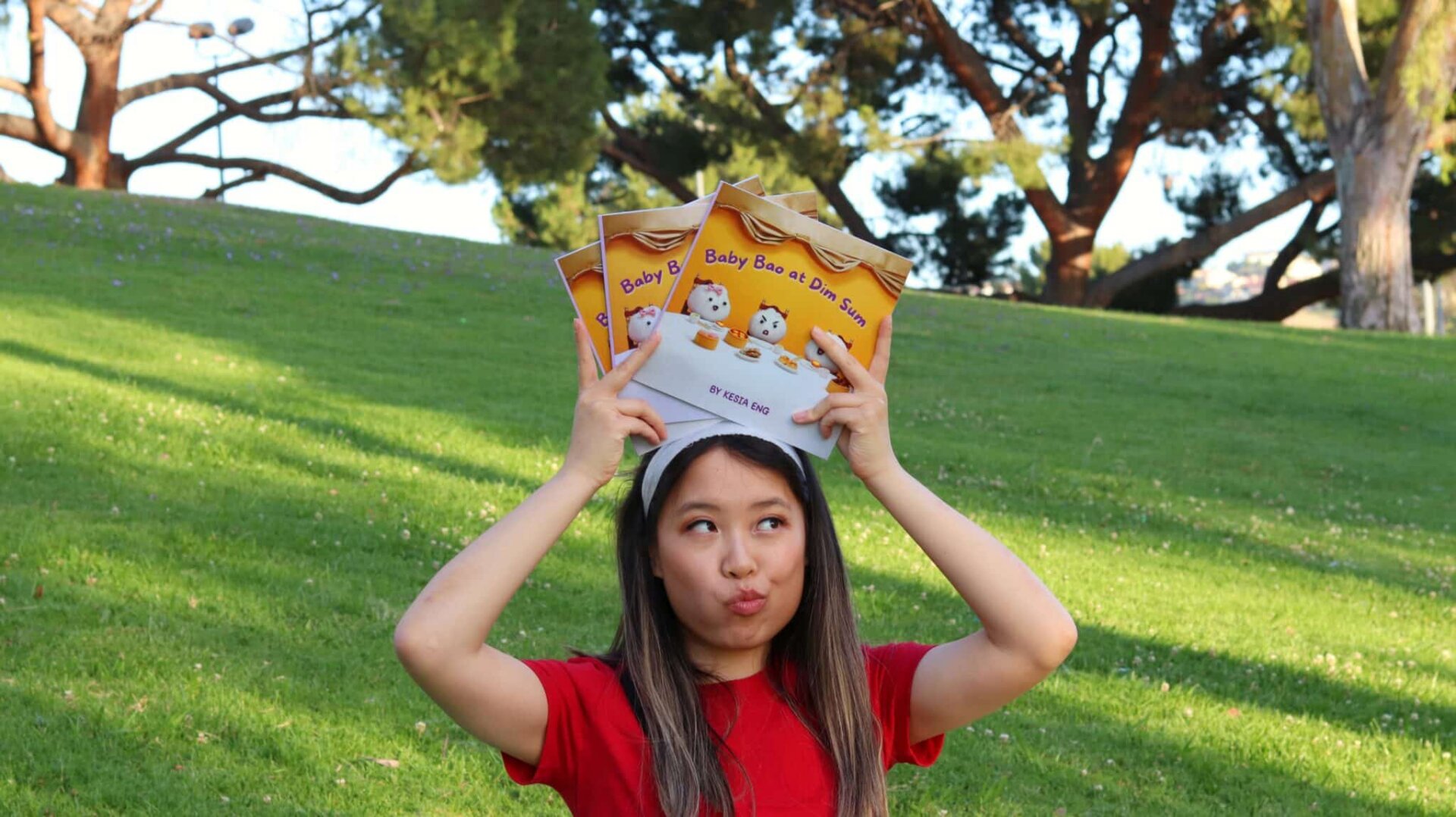
In a time when the world seemed to close its doors, Los Angeles native and talented writer Kesia Eng found her inspiration for her  delightful children’s book titled “Baby Bao at Dim Sum.”

Kesia shares with Asian Hustle Network her motivation and experiences behind this captivating story that captures the essence of family bonds and the rich cultural heritage of East Asian cuisine.

Growing up, Kesia cherished her visits to dim sum restaurants with her family. The savory aroma, the clinking of chopsticks, and the joy of feasting on delicious food became the backdrop of countless treasured memories.

Dim sum not only brought her family together but also offered a window into her Chinese heritage, teaching her the values of respect, care, and love for others. Ultimately, these shaped her identity and inspired her to write this book.

The pandemic threatened to rob younger generations of the invaluable experiences Kesia cherished, making her determined to pass on the cultural significance of dim sum to kids and share it with others.

In her debut children’s book, “Baby Bao at Dim Sum,” Kesia beautifully weaves a tale that explores the importance of family, selflessness, and the joy of bonding over a delicious meal. This book serves as a tool for parents and children to read together, sparking meaningful conversations about the values embedded in East Asian culture.

Join us as we delve into the story behind “Baby Bao at Dim Sum” through an exclusive interview with Kesia Eng.

Dim sum helped me better understand and appreciate my parents and our Chinese culture. I think I can speak for many American kids who have immigrant parents: There aren’t a lot of things in common between our upbringing and theirs. But food is our shared connection.

Kesia Eng

KESIA’S INSPIRATION FOR WRITING “BABY BAO AT DIM SUM”

As with most recent creative endeavors, the idea for the book sprouted during the pandemic. Everything was closed. Schools were shut down. Sports games were canceled. Even my favorite Target store started closing at 8 p.m. The world truly was ending. But the most devastating thing? My beloved dim sum restaurants have stopped indoor dining.

I know it didn’t seem significant. There’s plenty of other food. Plus, we can still get takeout. But I grew up coming to these restaurants with my family. Going there was a real treat as a kid – taking in the savory aroma that fills the air, hearing the excited chatter and clinking of chopsticks all around you, and of course, feasting on all the varieties of delicious food. Every time I came back from college for the weekend, my parents would take me to eat dim sum – it was a huge part of our everyday life.

Most importantly, dim sum helped me better understand and appreciate my parents and our Chinese culture. I think I can speak for many American kids who have immigrant parents: There aren’t a lot of things in common between our upbringing and theirs. But food is our shared connection. Food isn’t just something you eat. When you look closely, the experience of dim sum is filled with the values of East Asian culture:

  • pouring tea for the oldest person at the table first, and your own cup last
  • serving food to others before yourself
  • keeping an eye on everyone’s cup so you can refill it for them
  • fighting to pay for the check (and never backing down, even if you have to chase down the waiter and force your Visa card into their hands) 
  • and so on

All of the above embody community-oriented respect, care, and love for others. It’s how my parents showed how deeply they loved our family, even through the mundane act of eating at a restaurant. When my mom saves the biggest and best dumpling for me, or when my dad reaches across the table to fill my teacup first, I know it’s because they love me. And it’s a way for me to show my love in return – pouring their tea first, giving the best dim sum piece to them, (and yes, now that I’m a post-grad adult, literally fighting to pay that check). It’s not just nostalgia – dim sum is an essential part of my heritage, shaping how I’ve grown up, who I am, and who I want to become.

With COVID, it seemed like the pandemic would take these valuable moments away from younger generations. To be honest, it made me sad because I didn’t want them to grow up without having that experience, and thus a practical understanding of their cultural background. It’s a learning moment I want to pass on to kids and share with other people too.

“BABY BAO IS ME”

Part of the reason why I chose to focus on the theme of family and selflessness is in reaction to a lot of Asian American stories today that center on the difficult relationships that kids have with their immigrant parents.

I think the current popular narrative sometimes pushes this idea of hyperindividualism; that it’s all about the self and what the self wants. I totally understand the heart behind where that narrative/story comes from but sometimes it can demonize our parents for being hateful because they don’t agree with everything we say or do what we expect. Granted, nobody is perfect. But I think it’s important to have empathy towards our parents who grew up in a different environment than we did. We can try to put ourselves in their shoes, imagine the upbringing they had, the hardships they went through, etc.

And to be honest, I wrote it because of my own revelation. Baby Bao is me. I wrote Baby Bao as myself because I definitely was not a self-sacrificial loving kid growing up. It wasn’t until college that I realized I had taken their love and care for granted. I think it’s easy for us to be selfish and maybe not consider what our parents would appreciate or how they care for us. They do love us, but maybe it isn’t expressed in the exact fashion we expect it to be. 
FULL CREATIVE CONTROL AS A SELF-PUBLISHER

I knew the route of traditional publishing was long and a bit arduous. I felt like there were many gatekeepers and I didn’t want the flow/speed of my project to be hindered because of it.

It kinda goes like this: after you do your due diligence on finding the appropriate literary agent, you have to keep cold-emailing them about your manuscript, hoping they’d want to support you and your book. And finally landing a literary agent could range from a few months to a few years. They’re the best resource to connect you to a traditional publisher who would get your book published. 

But why wait for someone to give me the green light when I could just get my book out directly to the audience? I like to think I have an entrepreneurial spirit , because when I really believe in something, I don’t want to wait for someone to give me approval to do it. I just want to go for it. So I decided to self-publish my idea.

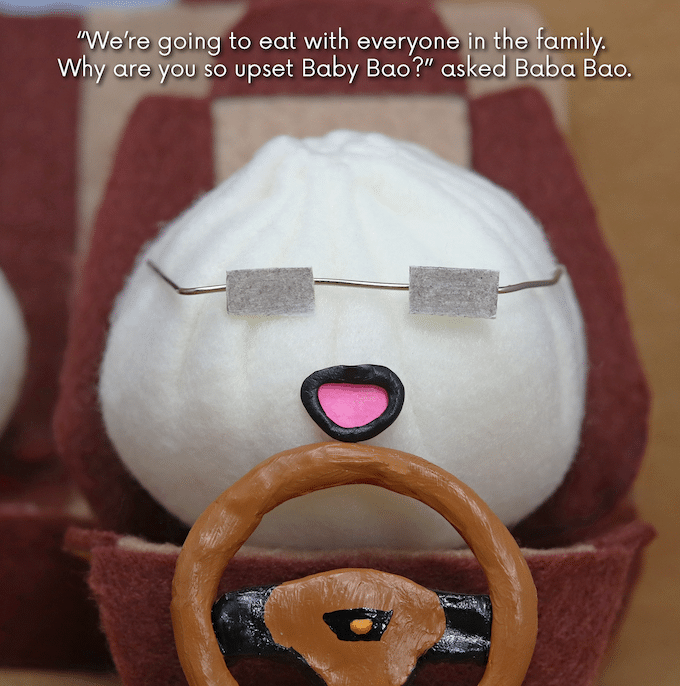
I think what’s truly unique about this book is that the illustrations are not 2D animated artwork that’s common in picture books. I can’t draw to save my life and I didn’t have enough funds to hire an illustrator, so I brainstormed ways to figure out how I was going to make the visual part of the story come to life.

While rummaging through my bookshelf, I found an old book my parents bought when I was young, that taught simple Chinese words. The front cover looked so interesting to me – it was a claymation of a girl. That basically spawned the idea of using claymation/”stop-motion” as the illustrations of the book.

I made all the sets, characters, and mini items by hand with lots of construction paper, cardboard, and other materials. I then taught myself product lighting, photography, and photo editing. I also run all the social media accounts. And this is in addition to writing the story myself, so it was truly a one-woman production.

Fun fact: I gave my book to Netflix Bling Empire’s Christine Chiu!

WHAT KESIA HOPES THAT READERS WILL TAKE AWAY

If I can narrow it down to just 3 takeaways I hope parents and children get out of this book, it’s that (1) family is important (2) loving others often requires self-sacrifice but is definitely worth it and (3) dim sum is an avenue we can use to love and cherish our families more!

I wanted parents and their children to think deeply about the message together. And that desire played a huge part in why I decided to deliver that through the form of a children’s book. I think the nature of children’s books often necessitates parent-child bonding because parents often read to their kids who aren’t strong independent readers yet.

So the book, “Baby Bao at Dim Sum” is a great opportunity for parents to bond with their cute kiddos just by reading it together. It also leads parents to talk through the story more with their children by mentioning the cultural values of it, going over the universal value of family, and asking them insightful questions about what they learned or what they noticed. 

DIVERSITY AND REPRESENTATION IN CHILDREN’S LITERATURE

I’m seeing a lot of great Asian American children’s books recently and I envision “Baby Bao at Dim Sum” adding depth to the representation of the Asian American experience in children’s literature.

The book shows that parents and/or family relatives ought to be given importance as well.

Additionally, the book does a great job showing and not just telling how the cultural values common in East Asian culture (community-oriented respect, care, and love for others) are embedded into the subtle actions (pouring tea for the oldest person at the table first and your own cup last, serving food to others before yourself, and keeping an eye on everyone’s cup so you can refill it for them) during a traditional Chinese meal.

Representation is showing the authentic experience of something, and I think showing chicken feet, regardless of people’s initial reaction to it, is an important unfiltered experience of dim sum. So I made it a mission for myself to include the chicken feet dish in my children’s book (right on the first page) because it’s an iconic Chinese cultural food. I think just because it’s different from what most people outside of the culture may see, it doesn’t make it weird or gross. Walk into a dim sum restaurant and you see it on the tables of so many diners.

I hope the story is an easy and welcoming way for people unfamiliar with East Asian culture, to learn about it and get a glimpse of what really goes on during an authentic Chinese meal of dim sum. Additionally, I think it’s a perfect book for East Asian families to personally connect with those experiences and pass them down to younger generations. 

It really warms my heart to see so many parents message me that their little ones love the book, want to read it every night with them, or want to eat dim sum because of it. Seeing those comments and messages never gets old!

UPCOMING PROJECTS

I drafted several storylines for the next potential “Baby Bao” adventure, and have whittled it down to two options. I can’t reveal when this project is going to be done just yet, but it’s in the works! Many of my readers have expressed that they’d love to see more of Baby Bao, so I’m happy to continue working on more stories with him as the protagonist.

In terms of other work, I’m actually in the process of finalizing a manuscript for my next writing project: a satirical poetry book about early adulthood! I enjoy comedy and I enjoy satire, so of course, I had to try writing with that flair. The book is a witty take on young adult life and pokes fun at relatable moments we experience in careers, friendships, and love. Final touches are being added. Release date TBA but aiming for before this fall season. 

Readers can expect that I’ll be pursuing different writing projects because I want to build upon my writing skills and flex my creative muscle. I think I have a knack for knowing my audience well and crafting stories that are relatable to all of us on a human level. So I’m really excited to continue exploring various story ideas and styles of writing to see what I’m the best at and produce work that my readers would love.

CONNECT WITH KESIA / BABY BAO AT DIM SUM

Instagram: @babybaoatdimsum

Tiktok: @babybaoatdimsum

Amazon: BUY HERE

Email: babybaoatdimsum@gmail.com

Website: kesiaeng.com
Related Articles

IMG_7442-jpg

Stories

Immigrant Mother Pursues Her Passion for Fashion After Long Deferral to Raise Her Children

Michelle Jing Chan is a Chinese American artist and children’s book illustrator who, in an interview with Asian Hustle Network, opens up about her mother’s remarkable journey as a first-generation immigrant and the profound impact it has had on their relationship.

Michelle’s mother, May, is a survivor of Mao Zedong’s reign. She emigrated from Guangzhou, China, to California, facing numerous challenges along the way. She pursued her passion for fashion, but eventually put her dreams on hold to raise Michelle and her brother in Colorado.

After retirement, May embarked on a new venture where she creates Chinese-inspired baby clothes and puts them up for sale. The response from the community has been overwhelmingly positive, with many people showing keen interest in purchasing her creations.

In this article, Michelle shares a heartfelt glimpse into her mother’s story and their shared journeys. Join us as we explore May’s experiences as a first-generation immigrant, from surviving challenging times to embracing a new life in the United States.

HER MOTHER’S IMMIGRANT JOURNEY

Michelle: I’m a Chinese American artist and children’s book illustrator. I grew up in Colorado and now live in the Pacific Northwest. Although my background is in engineering and business, my passion is in art and storytelling–particularly in stories that empower queer and Asian youth to be their authentic selves.

My mom is a first-generation immigrant who grew up in Guangzhou, China, and emigrated to California in her early twenties. In China, she and her family survived Mao Zedong’s reign and the struggles that it brought, including facing famine, almost losing one of her sisters in an accident at a labor camp, and being targeted by Red Guards for my grandfather’s opposition to Mao during the Cultural Revolution.

When they emigrated to the US, they lived near LA and had a robust community of other Chinese immigrants. However, my mom and her family were poor and didn’t speak English. The rest of her family all found service jobs. Similarly, my mom worked as a waitress at a restaurant near Hollywood.

PUTTING DREAMS ON HOLD

Early in the morning before the restaurant opened, she would attend adult English classes. She always had an interest in fashion and it became even stronger after working near Hollywood and seeing designers and celebrities come into the restaurant. She saved up enough money to go to school and study fashion design. During that time, she continued to work at the restaurant on weekends and at a fashion company after school.

After completing her program, she planned to enter the fashion industry in California. However, she met my dad, a first-generation immigrant from Hong Kong, through a family friend. They got married and she moved to Colorado where my dad lived, and they had me and my brother shortly afterwards. In Colorado, opportunities in fashion design were much scarcer than in LA.

She decided to put her own dreams on the back burner and became a stay-at-home parent, dedicating the next decade and a half of her life to raising me and my brother. It wasn’t until I was in high school that she started working again, and she didn’t return to the fashion industry until a few additional years later.

MICHELLE’S RELATIONSHIP WITH HER MOM

Growing up, I was very close to my mom, but I don’t think I fully grasped the emotional weight of what it must have been like for her to sacrifice her career for her children. I definitely took for granted the fact that my mom was always able to pick us up after school and had the time and energy to make clothes and Halloween costumes for us, tailor clothes if they didn’t fit, and come up with other creative craft projects to keep us entertained.

As an adult now–especially as a creative myself–I understand more fully how isolating and difficult that sacrifice must have been. Also, our town in Colorado is conservative and not very diverse, so the adjustment for her coming from LA must have also been challenging and lonely. What strikes me now is how unselfish and giving she is. She has never voiced resentment for the educational or creative opportunities that I’ve had even though she didn’t have access to those same doors herself.

While my parents and I didn’t see eye to eye on my career in children’s book illustration at first, they are now some of my biggest cheerleaders. In fact, being in a creative career myself has allowed me to bond with my mom in a new way as she is embarking on her own creative journey. We can now connect over our creative passions, which is a new dimension to our relationship that didn’t exist before.

CREATING CHINESE-INSPIRED BABY CLOTHES

My mom loves kids and designing kids’ clothes. As I mentioned earlier, she made clothes for us growing up–including many of our Halloween costumes! She also loves Chinese fashion and still has suitcases of clothes from her life in LA. As she and my dad are now retired, pursuing this new venture seemed like a natural integration of these interests.

She uses Gerber brand onesies and transforms them into Chinese-inspired designs by adding ribbons, gold fabric, and traditional qipao-style buttons. She sews all these designs by herself in my childhood home.

She’s blown away by the response to her shop so far and is still processing the influx of orders! (Thank you again to the AHN community!) She wants to expand into clothes for toddlers and perhaps someday, older kids as well. In my eyes, the sky’s the limit for her and her talent and I’m excited to see where she goes from here.

VALUES MICHELLE INHERITED FROM HER MOM

The biggest thing she has taught me is how to have a strong work ethic. My mom, dad, and my grandparents work harder than anyone I know. Now as an adult, I carry that with me always.

MICHELLE’S MESSAGE TO HER MOM

Thank you for everything you’ve done for me and my brother. I know it’s a debt I will never be able to repay, but I hope I can give you a small fraction by supporting your creative dreams like you’ve come to support mine.

CONNECT WITH MICHELLE

Instagram: @michellieart

Twitter: @michellieart

Tiktok: @michellieart

Website: michellejingchan.com

CONNECT WITH MAY

Instagram: @pandacub.babywear

Website: etsy.com/shop/PandaCubBabyWear

The Spruce Eats-jpg

News

Vietnamese-Owned Food Brand Takes Over Whole Foods’ Instant Noodle Aisle with Bold Asian Flavors

Omsom is a vibrant Asian food brand, owned by Vietnamese sisters Vanessa and Kim Pham, that has been on a mission to reclaim and celebrate the true flavors of Asian cuisine.

Aside from providing delicious food, Omsom aims to promote and educate on the richness of Asian-American culture on a national scale. Since its founding in 2020, the brand has fearlessly embraced its heritage, evident in its bold brand names, products, and engaging storytelling across digital and physical channels.

Now, Omsom is making waves by expanding its presence in Whole Foods with its latest offering, Omsom Saucy Noodles. These flavorful noodles come in enticing varieties such as Soy Garlic, Coconut Lemongrass Curry, Garlic Black Pepper, and Chili Sesame, priced at $4.99 MSRP. Last year, Omsom introduced its line of sauces, including Krapow, Vietnamese BBQ, Yuzu Misoyaki, and Spicy Bulgogi, to Whole Foods stores nationwide.

Omsom’s expansion to Whole Foods is an important milestone since it allows the brand to reach a bigger audience and migrate from online presence to in-store availability. Customers may now readily access Omsom products locally and get a taste of the vivid Asian flavors thanks to the fast expanding community of over 175,000 people.

Omsom competes in the instant noodle market that is dominated by well-known brands like Kraft Heinz and Nissin Foods, but the company distinguishes itself by providing convenience and quality. Unlike the conventional dry powder seasoning found in many instant noodle products, the company takes pleasure in providing sauces of restaurant-quality.

“But at the end of the day, I think when you’re playing in a category like noodles, like it’s got to be the taste; it’s got to be the product. And I think we’re bringing something really unique to the category,​” Kim Pham explains to Food Navigator.

Featured Image Source: The Spruce Eats

LA Times-jpeg

News

How a Local Grocery Turned into One of The Largest Supermarket Chains in The US

99 Ranch is a beloved Asian supermarket chain turned into a national powerhouse, under the management of the second-generation owners, Jonson and Alice Chen.

Established in 1984 in Westminster by their Taiwanese immigrant father, Roger Chen, the grocery store has now evolved into one of the largest Asian supermarket chains in America, with 58 stores in 11 states and its headquarters in Buena Park, California.

Catering extensively to ethnically Chinese communities, 99 Ranch Market has become more than just a grocery store for many Asian Americans in California. The name “99 Ranch” carries a double meaning: “ranch” symbolizes freshness, while “99,” pronounced “jiu jiu” in Mandarin Chinese, conveys longevity – signifying the company’s pursuit of near perfection with a commitment to constant improvement.

Jonson and Alice Chen represent the new generation of leadership steering the nearly 40-year-old grocery chain’s expansion across the United States. As children, they spent countless weekends at the store and their childhood experiences provided them with valuable insights and knowledge.

Today, the company grows most of its produce on specialty farms across the United States and Mexico, with a team of over 7,000 employees, 82% of whom are bilingual, to cater to the diverse needs of their customers.

According to Yahoo FInance, Part of 99 Ranch’s success lies in its responsiveness to the changing tastes of its customers. As trends evolve, the company actively includes Filipino ingredients, skewers, and spicy Sichuan flavors in their offerings.

As the Chen siblings carry the legacy of 99 Ranch forward, their commitment to serving their community and striving for excellence remains steadfast, ensuring the supermarket chain’s continued success on a national scale.

Featured Image Source: LA Times

tatler asia - maia & elaine-jpeg

News

These Dynamic Female Duos are Redefining the Food and Beverage Industry

The food and beverage industry, long dominated by men, is witnessing a transformation as a new wave of young female duos are making their mark and reshaping the sector to reflect their own vision. These inspiring women are blending their Asian heritage with a global upbringing and a willingness to take risks, showcasing the power of collaboration and innovation.

Elaine Chen and Maia Mah perfectly demonstrate this, as the regional director and creative director of Fukien Old Wine, a 181-year-old Chinese cooking wine brand. They organized a cocktail pop-up event at Soho House Hong Kong, combining traditional Chinese wine with modern trends.

Despite facing initial skepticism from their male-led head office, Chen and Mah are determined to introduce new ideas and adapt to societal changes. The success of the event surprised their colleagues, highlighting the duo’s ability to think outside the box.

Meanwhile, in Taiwan, Square Jao, a production designer, and her partner Lily Lin opened Plants Eatery, the country’s first gluten-free, whole-food restaurant. After the Fukushima disaster, Jao and Lin embarked on a mission to promote sustainable eating and raise awareness about the impact of food choices on the environment.

While vegetarianism is already popular in Taiwan, Jao and Lin’s restaurant offers strictly plant-based, gluten-free options, avoiding processed mock meats. Aside from their restaurant, they also published a cookbook in hopes to influence culinary schools to embrace plant-based and gluten-free cuisine, according to Tatler Asia.

In Japan, Eri Miyagi and Miki Nomura, both third-culture kids raised in the US, co-founded Cabi, a condiment brand aimed at introducing the flavors of Japan to Gen Z and Millennial home cooks. Cabi’s debut seasonings, including umami dashi soy sauce, sweet yuzu vinegar, and zesty sansho peppercorn miso, are designed to be versatile and cater to the modern urban lifestyle.

The rise of these female duos serve as an inspiration for a lot of underrepresented individuals, and remind us that with the proper determination and great collaboration, anything is possible.

Featured Image Source: Tatler Asia