Stories

July 4, 2023

SHARE:

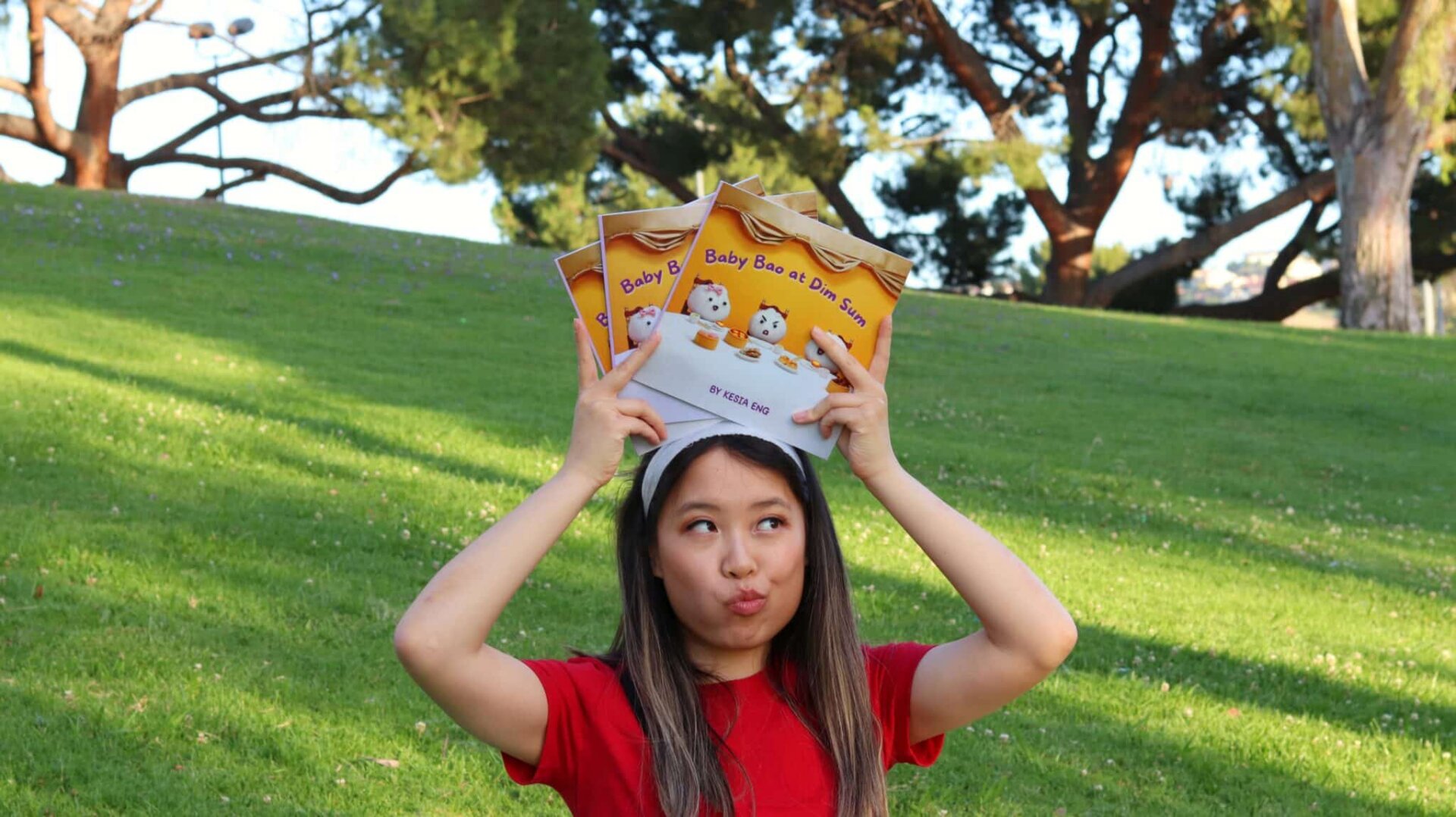
In a time when the world seemed to close its doors, Los Angeles native and talented writer Kesia Eng found her inspiration for her  delightful children’s book titled “Baby Bao at Dim Sum.”

Kesia shares with Asian Hustle Network her motivation and experiences behind this captivating story that captures the essence of family bonds and the rich cultural heritage of East Asian cuisine.

Growing up, Kesia cherished her visits to dim sum restaurants with her family. The savory aroma, the clinking of chopsticks, and the joy of feasting on delicious food became the backdrop of countless treasured memories.

Dim sum not only brought her family together but also offered a window into her Chinese heritage, teaching her the values of respect, care, and love for others. Ultimately, these shaped her identity and inspired her to write this book.

The pandemic threatened to rob younger generations of the invaluable experiences Kesia cherished, making her determined to pass on the cultural significance of dim sum to kids and share it with others.

In her debut children’s book, “Baby Bao at Dim Sum,” Kesia beautifully weaves a tale that explores the importance of family, selflessness, and the joy of bonding over a delicious meal. This book serves as a tool for parents and children to read together, sparking meaningful conversations about the values embedded in East Asian culture.

Join us as we delve into the story behind “Baby Bao at Dim Sum” through an exclusive interview with Kesia Eng.

Dim sum helped me better understand and appreciate my parents and our Chinese culture. I think I can speak for many American kids who have immigrant parents: There aren’t a lot of things in common between our upbringing and theirs. But food is our shared connection.

Kesia Eng

KESIA’S INSPIRATION FOR WRITING “BABY BAO AT DIM SUM”

As with most recent creative endeavors, the idea for the book sprouted during the pandemic. Everything was closed. Schools were shut down. Sports games were canceled. Even my favorite Target store started closing at 8 p.m. The world truly was ending. But the most devastating thing? My beloved dim sum restaurants have stopped indoor dining.

I know it didn’t seem significant. There’s plenty of other food. Plus, we can still get takeout. But I grew up coming to these restaurants with my family. Going there was a real treat as a kid – taking in the savory aroma that fills the air, hearing the excited chatter and clinking of chopsticks all around you, and of course, feasting on all the varieties of delicious food. Every time I came back from college for the weekend, my parents would take me to eat dim sum – it was a huge part of our everyday life.

Most importantly, dim sum helped me better understand and appreciate my parents and our Chinese culture. I think I can speak for many American kids who have immigrant parents: There aren’t a lot of things in common between our upbringing and theirs. But food is our shared connection. Food isn’t just something you eat. When you look closely, the experience of dim sum is filled with the values of East Asian culture:

  • pouring tea for the oldest person at the table first, and your own cup last
  • serving food to others before yourself
  • keeping an eye on everyone’s cup so you can refill it for them
  • fighting to pay for the check (and never backing down, even if you have to chase down the waiter and force your Visa card into their hands) 
  • and so on

All of the above embody community-oriented respect, care, and love for others. It’s how my parents showed how deeply they loved our family, even through the mundane act of eating at a restaurant. When my mom saves the biggest and best dumpling for me, or when my dad reaches across the table to fill my teacup first, I know it’s because they love me. And it’s a way for me to show my love in return – pouring their tea first, giving the best dim sum piece to them, (and yes, now that I’m a post-grad adult, literally fighting to pay that check). It’s not just nostalgia – dim sum is an essential part of my heritage, shaping how I’ve grown up, who I am, and who I want to become.

With COVID, it seemed like the pandemic would take these valuable moments away from younger generations. To be honest, it made me sad because I didn’t want them to grow up without having that experience, and thus a practical understanding of their cultural background. It’s a learning moment I want to pass on to kids and share with other people too.

“BABY BAO IS ME”

Part of the reason why I chose to focus on the theme of family and selflessness is in reaction to a lot of Asian American stories today that center on the difficult relationships that kids have with their immigrant parents.

I think the current popular narrative sometimes pushes this idea of hyperindividualism; that it’s all about the self and what the self wants. I totally understand the heart behind where that narrative/story comes from but sometimes it can demonize our parents for being hateful because they don’t agree with everything we say or do what we expect. Granted, nobody is perfect. But I think it’s important to have empathy towards our parents who grew up in a different environment than we did. We can try to put ourselves in their shoes, imagine the upbringing they had, the hardships they went through, etc.

And to be honest, I wrote it because of my own revelation. Baby Bao is me. I wrote Baby Bao as myself because I definitely was not a self-sacrificial loving kid growing up. It wasn’t until college that I realized I had taken their love and care for granted. I think it’s easy for us to be selfish and maybe not consider what our parents would appreciate or how they care for us. They do love us, but maybe it isn’t expressed in the exact fashion we expect it to be. 
FULL CREATIVE CONTROL AS A SELF-PUBLISHER

I knew the route of traditional publishing was long and a bit arduous. I felt like there were many gatekeepers and I didn’t want the flow/speed of my project to be hindered because of it.

It kinda goes like this: after you do your due diligence on finding the appropriate literary agent, you have to keep cold-emailing them about your manuscript, hoping they’d want to support you and your book. And finally landing a literary agent could range from a few months to a few years. They’re the best resource to connect you to a traditional publisher who would get your book published. 

But why wait for someone to give me the green light when I could just get my book out directly to the audience? I like to think I have an entrepreneurial spirit , because when I really believe in something, I don’t want to wait for someone to give me approval to do it. I just want to go for it. So I decided to self-publish my idea.

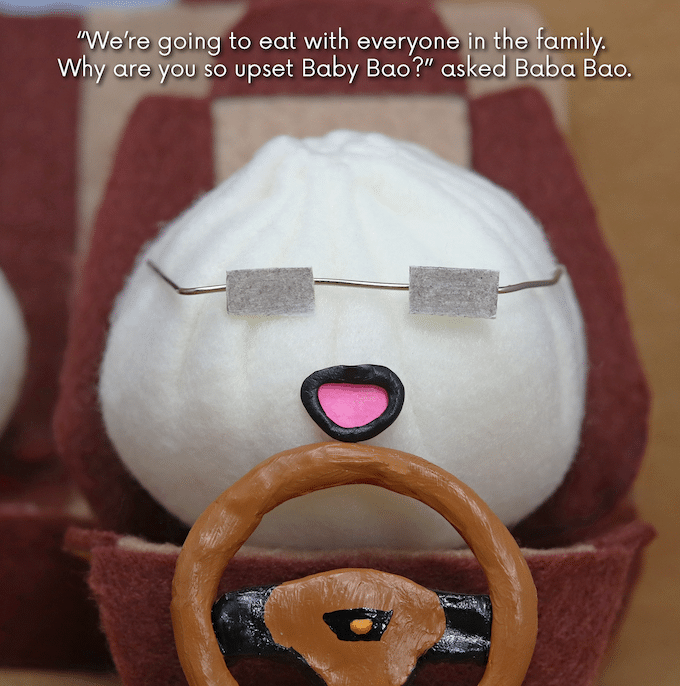
I think what’s truly unique about this book is that the illustrations are not 2D animated artwork that’s common in picture books. I can’t draw to save my life and I didn’t have enough funds to hire an illustrator, so I brainstormed ways to figure out how I was going to make the visual part of the story come to life.

While rummaging through my bookshelf, I found an old book my parents bought when I was young, that taught simple Chinese words. The front cover looked so interesting to me – it was a claymation of a girl. That basically spawned the idea of using claymation/”stop-motion” as the illustrations of the book.

I made all the sets, characters, and mini items by hand with lots of construction paper, cardboard, and other materials. I then taught myself product lighting, photography, and photo editing. I also run all the social media accounts. And this is in addition to writing the story myself, so it was truly a one-woman production.

Fun fact: I gave my book to Netflix Bling Empire’s Christine Chiu!

WHAT KESIA HOPES THAT READERS WILL TAKE AWAY

If I can narrow it down to just 3 takeaways I hope parents and children get out of this book, it’s that (1) family is important (2) loving others often requires self-sacrifice but is definitely worth it and (3) dim sum is an avenue we can use to love and cherish our families more!

I wanted parents and their children to think deeply about the message together. And that desire played a huge part in why I decided to deliver that through the form of a children’s book. I think the nature of children’s books often necessitates parent-child bonding because parents often read to their kids who aren’t strong independent readers yet.

So the book, “Baby Bao at Dim Sum” is a great opportunity for parents to bond with their cute kiddos just by reading it together. It also leads parents to talk through the story more with their children by mentioning the cultural values of it, going over the universal value of family, and asking them insightful questions about what they learned or what they noticed. 

DIVERSITY AND REPRESENTATION IN CHILDREN’S LITERATURE

I’m seeing a lot of great Asian American children’s books recently and I envision “Baby Bao at Dim Sum” adding depth to the representation of the Asian American experience in children’s literature.

The book shows that parents and/or family relatives ought to be given importance as well.

Additionally, the book does a great job showing and not just telling how the cultural values common in East Asian culture (community-oriented respect, care, and love for others) are embedded into the subtle actions (pouring tea for the oldest person at the table first and your own cup last, serving food to others before yourself, and keeping an eye on everyone’s cup so you can refill it for them) during a traditional Chinese meal.

Representation is showing the authentic experience of something, and I think showing chicken feet, regardless of people’s initial reaction to it, is an important unfiltered experience of dim sum. So I made it a mission for myself to include the chicken feet dish in my children’s book (right on the first page) because it’s an iconic Chinese cultural food. I think just because it’s different from what most people outside of the culture may see, it doesn’t make it weird or gross. Walk into a dim sum restaurant and you see it on the tables of so many diners.

I hope the story is an easy and welcoming way for people unfamiliar with East Asian culture, to learn about it and get a glimpse of what really goes on during an authentic Chinese meal of dim sum. Additionally, I think it’s a perfect book for East Asian families to personally connect with those experiences and pass them down to younger generations. 

It really warms my heart to see so many parents message me that their little ones love the book, want to read it every night with them, or want to eat dim sum because of it. Seeing those comments and messages never gets old!

UPCOMING PROJECTS

I drafted several storylines for the next potential “Baby Bao” adventure, and have whittled it down to two options. I can’t reveal when this project is going to be done just yet, but it’s in the works! Many of my readers have expressed that they’d love to see more of Baby Bao, so I’m happy to continue working on more stories with him as the protagonist.

In terms of other work, I’m actually in the process of finalizing a manuscript for my next writing project: a satirical poetry book about early adulthood! I enjoy comedy and I enjoy satire, so of course, I had to try writing with that flair. The book is a witty take on young adult life and pokes fun at relatable moments we experience in careers, friendships, and love. Final touches are being added. Release date TBA but aiming for before this fall season. 

Readers can expect that I’ll be pursuing different writing projects because I want to build upon my writing skills and flex my creative muscle. I think I have a knack for knowing my audience well and crafting stories that are relatable to all of us on a human level. So I’m really excited to continue exploring various story ideas and styles of writing to see what I’m the best at and produce work that my readers would love.

CONNECT WITH KESIA / BABY BAO AT DIM SUM

Instagram: @babybaoatdimsum

Tiktok: @babybaoatdimsum

Amazon: BUY HERE

Email: babybaoatdimsum@gmail.com

Website: kesiaeng.com
Related Articles

Image Source Canlis Restaurant

Uncategorized

Seattle’s Famous Canlis Restaurant named the First Female Executive Chef

Aisha Ibrahim has been announced as the new head chef of the famed restaurant Canlis in Seattle. She is the first female executive chef at Canlis and joins a long list of notable chefs who have worked at the restaurant over its seven decades.

The management at Canlis was looking for a chef who was interested in that way of thinking, someone who was interested in not simply putting his or her ego on a plate, but rather in actually trying to help inspire an entire industry.

Ibrahim was a sous chef at California’s three-star Manresa. She worked with chef Eneko Atxa at Aziamendi and Azurmendi, developing her culinary horizons.

The new head chef was drawn to Seattle’s wealth of locally sourced ingredients, according to the New York Times, her Canlis dishes would explore the region’s microclimates, traditional cuisine, and Asian influences.

Brian Canlis, a co-owner of the restaurant, considered Ibrahim’s test meal as the final step in the long process. “We set out to find a leader who could help rebuild a broken industry,” he tells Eater. Many kitchen cultures are toxic, he added. They want to continue creating a new norm for how individuals are regarded in kitchens and restaurants.

During the COVID-19 pandemic, Canlis, along with many other restaurants in the past year, experimented with a variety of different service formats. These formats included everything from parking lot yurts to drive-through burgers. 

The famed restaurant has informed that they will soon be opening a restaurant that will be distinct from the one that they previously operated but which they shut down a year ago. They have no interest in going in the other direction and would much rather proceed in the future path.

Canlis will be led by Ibrahim into the post-pandemic future, with the debut of her menu slated for July 2021.

Image Source theguardian.com

Uncategorized

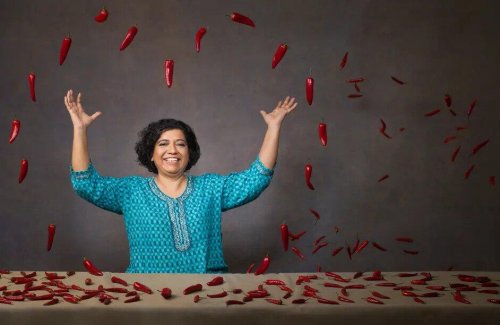
Darjeeling Express Chef Asma Khan’s New Cookbook Celebrates Women and Her Ammu (Mother)

Cookbook author, activist Indian chef Asma Khan is so much more than just being in the kitchen. 

In addition to owning London’s Darjeeling Express and hosting her own online cooking class, YesChef, she uses her platforms to advocate for world hunger, mentoring immigrant women, gender equality, and calling out toxic work cultures in kitchens.

With the release of ‘Ammu: Indian Home-Cooking to Nourish Your Soul’, The Bengali chef continues to redefine how women are portrayed at home and in restaurant kitchens, with a loving ode to her Ammu (or mother).

“Ammu [is] a tribute to these powerful women”, Asma tells Elle Canada, “the sharp things in our lives and the anchors that kept us going in difficult and stormy times. There [are] births, deaths [and] marriages in our culture; food is a very important element of that. That’s what this book really reflects.”

Ammu is filled with 100 dishes that will leave your mouth-watering recipes that have been carefully passed down from generation to generation.

Asma hopes the readers to try her chicken biryani, “Because I’ve worked so hard on getting the recipe right and I [know] people have recreated it” she tells Elle Canada.

According to The Guardian, Asma Khan’s biryani has the power to make you cry — not in the hyperbolic, internet vernacular sense, where food is considered “amazing”, “divine” or “to die for”

Asma also recommends trying out cooking any of the kababs, fish dopiyaza, and prawn malai.

“So much of our food is bastardized into [something that is] super spicy, oily, with cream and butter. If I put [that] much cream and butter in my shoe, it’ll taste nice! Our food is actually light and refreshing, but most people don’t associate those words with Indian food.” 

As the only female-founded, all-female kitchen cooking Indian food globally, she hopes that the next generation of women would surpass her, “That will be my greatest victory.”

Caroline Mangune Alanis

Uncategorized

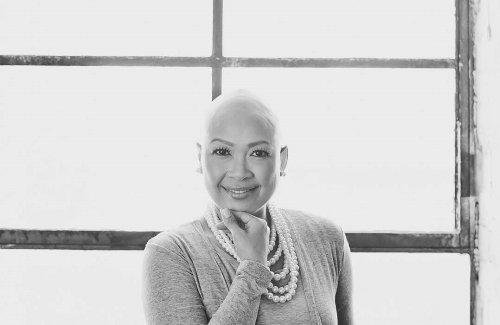
Bald, Bold, and Beautiful: Proud Of Being Fifty-Five Walking My Truth

In the view of society, hair is connected with youthfulness and beauty in women, virility, and masculinity in men. It should come as no surprise that hair loss may make many men and women feel self-conscious. But should that be always the case?

Caroline Mangune Alanis was only 4 years old when she lost all her hair, “I don’t even know what it is like to have hair.” she said. Caroline has Alopecia Universalis (AU)  — the rarest form of Alopecia Areata, it’s an autoimmune condition that attacks the hair follicles.

Growing up Bald

Born in the Philippines to a strict father and a sweet and kind soul mother, as she describes, “My dad didn’t allow me to go out with friends a lot. I was never allowed to go on sleepovers.  He sheltered me from people. I never realized that until I was an adult, and reflected on my childhood.” She also has two brothers who were protective as well.

At the tender age of 4, she was already practicing “DAILY AFFIRMATIONS” although she never knew how impactful they were,  “I was always told to look in the front of the mirror.  I would say, I am beautiful, I am strong, I am special. I have beautiful eyes, beautiful skin, etc.”  Her parents never told her the pain and heartbreak of raising her, rather they just always told her how special and beautiful she was, “They always told me I was meant to stand out.”

She had no recollection of the time her hair started falling out, but she was told that her hair fell off within a 2-week time frame, “My mom said it could have been brought by stress from an earthquake we had in the Philippines.”  

Caroline was never allowed to say negative words about herself, or else her father would scold her. She was imparted that words she says about herself will either bring her up or tear her down, “So maybe I thought negative things about myself, but I never said it. Growing up bald, I never felt ugly, just incomplete.”

Growing up bald, I never felt ugly, just incomplete.

– Caroline Mangune Alanis

Although her parents taught her how to be courageous and had always made her feel how beautiful and blessed she was, growing up bald was not easy — she had to endure the everyday pressure of life. “There was the pressure of seeing little girls with beautiful hair and wishing every day that I had that. There was the pressure of kids being mean and pulling off my bandana and laughing at me because I was bald.” She faced the pressure of name-calling and bullying.

Caroline’s parents finally convinced her to start wearing a wig which, unfortunately, didn’t make things easier as she recalls. Walking home from school one day with her brother, a girl decided it would be fun to pull Caroline’s wig off and throw it on the ground. “At that moment, all I could do was cry and run home,” she adds, “every day I feared leaving the house, the emotional scar is unimaginable.”

She learned how to hide her AU, she felt as if people wouldn’t accept her for being her so it became a secret, and only her family and those she truly trusted, which were not many, knew the real Caroline.

In high school, only a handful knew about her AU, “which made it so easy to try to blend in since I never wanted to stand out, never!” The ironic part about it, as Caroline describes, was she would always be the one to be called by her teachers to lead a project, sing solos, and participate in plays and fashion shows. They even nominated her to join the homecoming queen and enter a beauty pageant. However, “I realized that my fear never really went away by keeping my AU a secret and the emotional scar was also still a part of my life.”

Every day I feared leaving the house, the emotional scar is unimaginable.

-Caroline Mangune Alanis

Being Bold With The Love Of Her Life

She met her husband Mark from work, where they were both managing stores at a mall in Chicago. They became best friends and were each other’s plus one at weddings, “We didn’t start dating until I transferred to another mall.” she said.    

But the day has to come when she must tell Mark about her condition, “Telling Mark about my alopecia was very difficult. He once told me that he loved hair and eyes on a woman,” she adds, “He himself has gorgeous hair.” Caroline felt she didn’t have one of the criteria Mark was looking for. Although she mentioned several times that she had something to tell him and he would always say “whenever you are ready.” Caroline thought that they both knew that Mark is aware of her wearing a wig, they just never talked about it. 

Mark and Caroline had been dating for about a year when she finally tried to tell him one evening. She got choked up and started crying. He told her, “Caroline, don’t you think I know you by now from your head down to your toes?” He had tears in his eyes. She then asked Mark why he didn’t tell her.  He replied, “I wanted you to trust me enough to tell me”.  

As they began to start their family, Caroline’s AU became their secret. She held her family bound to her alopecia. When her daughters’ were infants, she wouldn’t carry them in public for fear that they would pull her wig. “They were taught never to touch mommy’s hair, ever!” 

Her daughter could never have friends sleep over because it would be very uncomfortable for Caroline to be her in her own home. “My daughters were always fearful when we were out in public, especially on windy days.” 

Caroline’s baldness was a big secret, even her husband’s family didn’t know, “because I hid so much all my life, I didn’t realize I walked in fear every day.  I didn’t realize I lived in bondage.”

Mark told her, “Caroline, don’t you think I know you by now from your head down to your toes?” He had tears in his eyes. She then asked Mark why he didn’t tell her.  He replied, “I wanted you to trust me enough to tell me”.  

Embracing Being Beautiful

In the summer of 2015, her life opened a new door, she became a part of an International Alopecia Group on Facebook and realized that her journey with AU has prepared her to help others like her. She saw so many men and women devastated by losing their hair. They were going through a lot of emotional pain, “You see, alopecia can happen at any time in one’s life so the adults experience a loss and have to grieve.” Caroline said. Alopecia might not be life-threatening but it is life-altering. Hair, eyebrows, and lashes truly make a difference in one’s appearance, “I myself put my face on every day.” she added. 

She also saw some men and women walking proudly bald. One man, in particular, Anthony Carrigan, an actor who also kept his alopecia a secret but he came out and had been helping others and is a beacon of light.  

Then, Caroline started giving advice about doing daily affirmations, “doing lots of SELF LOVE!”  as well as giving makeup tips, the alopecia community knows her as the “Eyelash Queen”.

But once the parents of alopecia children started posting their heartbreaks, “that’s when I realized my parents’ challenges of raising me, a bald child.” Caroline started reiterating what her parents taught her. She gave advice to parents, about how special their child was, how they were perfect and beautiful just as they were. “Alopecia children are so strong,” she noted.

“I then realized I was all those things: perfect, beautiful, and strong,” she said, but her baldness was still a secret. Caroline thought to herself, how does she encourage others to accept themselves if she herself could not let people know about her condition? So as those thoughts lingered in her head, she began telling her family and friends — she only wanted to tell people, not show people. Her goal was to have 30 different wigs for each day of the month.

“But God! God had other plans for me,” the unexplainable started occurring, her wigs became unbearably uncomfortable to wear, “it almost felt like my scalp was burning,” which she thought was completely strange since she has been wearing them for 40 years. It took a lot to take a look at herself bald.  She then began to think, “How can I tell my daughters  and others that beauty really lies deep within if I myself can’t see past my lack of hair?”

On August 14, 2015, on her way home with her husband from dinner, Caroline’s wig was getting itchy so she took it off to scratch her head. She was about to put her wig back on but Mark held her hand to stop her. He said “Honey, don’t put it on, you’re fine. You are safe with me, nothing can hurt you, and no one will hurt you. You are beautiful.” She reluctantly did what he asked and wanted to be strong for him. 

Mark kept holding her hand tight and kept asking if she was okay,  “I just kept saying it is scary.”  As they were nearing their home, her husband pulled over and said “Come on let’s take a selfie.” to lighten the situation. Her husband dropped Caroline off in front of their home, with her wig in her purse. Mark told her to go ahead and go into their home.  

“For the first time in 40  years, I felt God’s love on my head. The soft wind touched my head, a few raindrops falling on my head. I cried and laughed as I ran to my house.” she recalls.  

After that night, her husband helped Caroline with her small steps into seeing herself for who she was — a beautiful woman living with AU. Slowly, she found herself no longer wearing her wigs. They would go on drives and take walks on the beach. “I felt free, my secret slowly fading; including the emotional scar.”

I felt free, my secret slowly fading; including the emotional scar.

-Caroline Mangune Alanis

“On Sept 9, 2015, I posted it on Facebook, I cried the whole night.  Everyone was so kind.  I was still afraid, but I started walking bald.” she expressed.

In the fall of that year, it started getting cold and she didn’t like her hats since they looked terrible without any hair. She was pretty sad because she really did not want to start wearing her wigs again, “I just prayed and asked God to lead me in what I am supposed to do. I got my answer on Sunday, October 4th,” A lady stopped her and asked if she has Alopecia, to which she responded “Yes!”. The woman said, so did she, and asked Caroline, how does she do it? — She knew the lady meant how she could walk around without her wig.

Caroline answered “I don’t know. This is all new to me. “God is giving me the strength to do this. I couldn’t have done this on my own.” So that day, she officially retired all her wigs. “Yes, I put them all away for those special occasions,” she added.

She has met so many people just like her all over the world which inspired her to start her own Alopecia Group in Chicago, where they meet once a month. “I love having a family I call my own, people who truly understand me.”

The Chicago Alopecians

Caroline together with her friends started the Facebook group, with her as the main facilitator. It is a place where they can share their personal journeys and ask for advice or help. The Chicago Alopecians’ mission is to ensure that no one feels alone. Recently, they have been planning to create more events to cater to everyone, children, teens, and men. 

“We each have our own alopecia journey and we just want to connect with each other,” said Caroline. They also allow wig vendors in the group, “Chicagoland is such a big place. I love having a solution for everyone in the group.” As of writing, they currently have 332 members, and they’ve also started an Instagram page to widen their reach.

For the international group, Caroline is also encouraging others to create their own alopecia groups — their own tribe in their local towns.

“I have always known God wanted me to stand out, but I was always afraid.  These days, I am no longer afraid to not have my wig on, I embrace it.”

Caroline is truly a woman who is defying what society calls “beautiful”. 

Image Source tinhte.vn

Uncategorized

Google Data: Nearly Half of Gen Z Searches on TikTok Rather than Google

TikTok, which is the social media app that is expanding at the fastest rate, has seen its user base skyrocket over the past few years.

A Google executive has confirmed that the format of TikTok is changing the way that young people conduct internet searches, and Google is working to keep up with these changes. 

According to data that was initially discovered within Google and reported by TechCrunch, nearly 40% of members of Gen Z prefer to search using TikTok as well as Instagram rather than Google Search and Maps when they are looking for a place to eat lunch.

Google has now confirmed this figure to Insider and has acknowledged that they face stiff competition from a variety of sources, including general and specialized search engines, as well as apps that are designed specifically for searching. 

It is also predicted that TikTok’s advertising revenue will overtake YouTube by 2024, according to Insider Intelligence.

Google has outlined the modifications it intends to make to its search engine in order to appeal to a younger audience. One of these adjustments is the addition of a feature that will allow users to pan their camera over an area and obtain instant information about multiple objects in a wider scene.