Stories

July 4, 2023

SHARE:

The world of home decor is a place where creativity and self-expression know no bounds. It’s a space where artists and makers come together to craft unique and meaningful designs that add a personal touch to people’s homes.

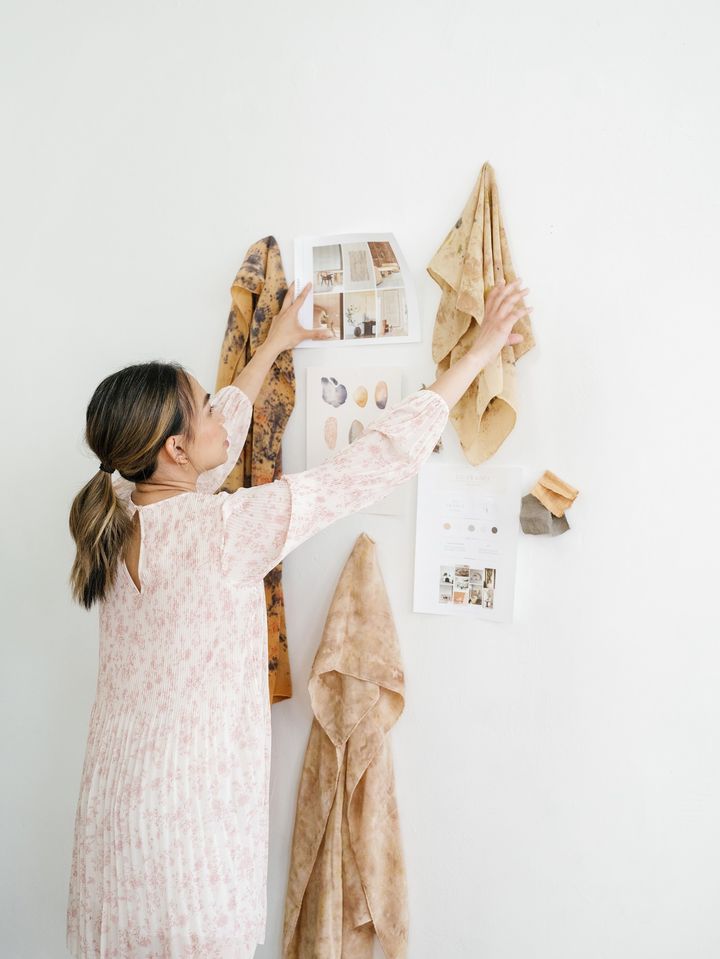
In the heart of San Diego, California is France Malvar. Her story is one of hope, passion, and self-discovery. After 14 years as an early childhood educator, France took a leap of faith and pivoted her career to become a natural dye artist and create Lu France Interiors, a home decor brand for intentional design. For the past two years, she’s been pouring her heart and soul into her work, crafting pieces that are as beautiful as they are sustainable.

France carefully chooses the businesses and artisans that her brand partners with. Her previous collections were made in collaboration with small businesses all over the world, mostly in the Philippines, to support the local weavers and artisans in her homeland.

I HOLD FOND MEMORIES GROWING UP IN THE PHILIPPINES

I’m pretty blessed to have had a childhood full of memorable experiences and surrounded by people who have in one way or another shaped me.

I grew up in my Papa’s ancestral house in the Philippines before my parents eventually built their own, which became our home, and I have nothing but good memories of both. Summers and Christmas breaks were spent with my cousins and we would spend weeks at our Lola’s house, or at our Tita and Tito’s home, or somewhere exploring a new place together.

As my parents got settled in their respective careers, we progressed to traveling more or going out — driving up to Tagaytay, spending Sundays at the park, exploring all sorts of shops and markets, or eating out. They also gave us the opportunity to explore different sorts of activities and I took a special interest in ballet, starting classes at the age of 3 and then continuing through the start of high school before moving to other forms of dance through college. A lot of my memories involve recitals and shows and having my family there to support me. 

I don’t know what defines a typical childhood. But I do know that I hold fond memories growing up in the Philippines. Even to this day, there are moments that I get so nostalgic for every time, and I am grateful for all of them.

TRANSITIONS CAN BE SCARY, PIVOTS AT LEAST TO ME ARE TERRIFYING

Much of my young adulthood has always been about pivots.

Growing up, a career in medicine is what I’ve always been exposed to. A lot of times I’d tag along with my sisters to our Papa’s clinic or I’d wait for Mama in hospital break rooms and offices. Whether those instances were by design or simply out of necessity, I always thought I’d just follow along and take a science course to eventually pursue a career in medicine in one form or another.

So I studied Sports Science in college. During an Adapted Physical Education class, I realized that I liked teaching children. It gave me so much joy seeing how even the smallest actions you make and the lessons you share, impact their days and eventually their lives. After graduation, I applied for teaching jobs with a focus on music and movement, and fitness for young children. I figured I could take my Sports Science degree, my love for dance and movement, and use it to pivot to a career teaching children.

My first job offer out of college was from a school in Singapore, but I chose to stay in the Philippines and worked for a year there before moving to the US. I eventually took a certificate in early childhood education and spent 14 years in that industry working both in the US and the Philippines. It was a career I loved (and honestly actually miss). While I continued to teach, I also kept dabbling in the different art forms I’ve taken a liking to. I took design workshops to relieve my stress – styling, floral arrangement, natural dyes, etc.

When the pandemic happened and schools shut down, I enrolled in Interior Design online and started honing my love for all things design, leaving a career I’ve known for 14 years and taking my love for natural dyes and design a step further by launching my business.

Transitions can be scary, pivots at least to me are terrifying. I’m the type of person who is constantly planning. I need to know where I will be, and what I will do at certain points in my life. When changes happen and I need to adjust, that throws me off and my anxiety kicks in. But I think for the most part it is exactly because I am a planner and because I willingly chose these pivots from Sports Science to early childhood to now, a natural dye artist and small business owner, there was more excitement than anxiety as I took every transition. 

LU FRANCE INTERIORS IS AN EXTENSION OF MYSELF

Much of who I am as a designer and artist are rooted deeply in my being Filipino and more specifically, my experiences and memories I have growing up in the Philippines. That’s true for the things that catch my eye whether it be handcrafted wood pieces, ceramics, or the spaces I gravitate to, I crave rooms and spaces that are “maaliwalas,” full of warmth with a lived-in look, calming, and organic.

The stories that shape my collections are all stories from home. The candle scents I have in collaboration with Terra, a Filipino-American brand, are inspired by my life growing up in the Philippines. Every single scent has a story, a distinct memory attached to it.

The stories that guide and serve as the foundation for my naturally dyed pieces are all inspired by memories from the Philippines too. Sometimes a moment from years ago inspires me or a Filipino word that resonates with me moves me to make a tangible piece of art. Or sometimes an event back in the Philippines moves me to create a whole collection of naturally dyed textiles. I previously dropped a whole collection inspired by the campaign of former Vice President Leni Robredo! What I can’t articulate, I translate in the form of my naturally dyed textiles, always hoping to share a piece of my being Filipino with others. 

My values also play an important role in the people I choose to work with. I have a collaboration collection with Anthill, a social enterprise based in Cebu, Philippines. My thrust for love of community, sustainability, amplifying the work of Filipino artisans, and sharing their stories are some of the values I found in Anthill too. 

And while I proudly work with non-Filipino makers too and curate pieces from artisans and businesses around the globe, the same design influences from my life in the Philippines and the same values guide me in choosing what to pick and who to work with no matter where they come from. I say this often, Lu France Interiors is an extension of myself. It’s me in brand form and while I do not constantly scream about my being Filipino, I think if you browse through my website or follow me on social media, you’ll see why I don’t have to — it’s just naturally, constantly, permanently, and beautifully a part of my identity. 

ALLOWING MYSELF TO ASK FOR HELP FROM OTHERS HELPED ME TO RIDE THE HICCUPS THAT USED TO KEEP ME UP AT NIGHT

As with any other small business, I think the financial uncertainty that comes with building and running a brand is the most challenging part of building a business. The design process comes easily to me (at least thankfully, for the most part, it does!).

My years of teaching children and dealing with difficult parents have also helped me in dealing with customers and suppliers. But navigating slow seasons, courier mishaps, and other unexpected issues that affect cash flow were challenges that really kept me up for nights at some point since I launched my brand. But I’m really lucky to have the constant support of family who all go above and beyond in helping me pursue and monetize this passion, the support of friends, and the support of a very loyal audience who all continue to spread the word about my brand. 

I also found comfort and strength in knowing that I am not the only small business owner who has had to deal with the hardships post-pandemic and I’ve learned much from my fellow makers, artists, and owners. I pivoted to pushing for more wholesale opportunities for my natural dye work so that they are stocked in more retail stores, I joined more pop-up markets to introduce my brand to audiences that social media doesn’t reach, and I adjusted in terms of collection batches and when and how I launch and restock pieces.

The brand is a continuous work in progress for sure as much as I am too as a person and I think changing my perspective on how I view these challenges and using them as learning curves and allowing myself to ask for help from others helped me to ride the hiccups that used to keep me up at night. It’s okay to ask for help and to admit when you need it! 

THE PHILIPPINES IS AND WILL ALWAYS BE MY HOME

That’s not to say that America isn’t because it is too and I’m super grateful for that. But I think wherever I go and whatever I do, the foundation on which my identity is anchored is firmly rooted in calling the Philippines my home. I feel like it has always been my comfort zone, most of my friends are there and I feel like I navigate everyday life more confidently over there.

I’m an introvert and I think that has been magnified so much more here in the US. But you know how situations force you to adjust and adapt? I think I’ve become much braver living here, I push myself to do things I wouldn’t have tried back in the Philippines. I know it sounds cliche but America has really opened doors for me in terms of providing an environment for me to explore and create opportunities for myself and for others. Moving here has been a journey of self-discovery and it still is. This adoptive country of mine has taught me that I am more than one thing and that it isn’t too late to try something else.

If you told me while living in the Philippines that I’d one day call myself a natural dye artist, own a home decor brand, have pop-ups at stores like Madewell, join markets and art exhibits at galleries, and connect with strangers turned customers turned friends through social media, I would have laughed and said you are crazy. Yet here I am surprising myself every single day, bravely going out of my comfort zone, opening myself up to people, and rediscovering a deep sense of love and immense gratitude for 2 countries that I proudly call home. 

CHANGING CAREERS SHOULDN’T BE TAKEN LIGHTLY

I’ll probably raise a few eyebrows in saying this but I don’t believe in the “Do what you love, love what you do” statement or advice. I think that doing a pivot and considering a major career change entails not only sacrifice but careful planning and much… so much patience.

Every situation is different, we all come from different paths and I recognize that it is a privilege to be able to pivot to a new career and explore a whole new industry without worrying about what to eat the next day or where to sleep. So I think before you make that leap you should thoroughly, carefully, consider your situation, your needs, and your goals. 

If you need to stick to doing something that you don’t love at the moment so that it gives you a little more cushion for the pivot you are planning then hang in there for a little bit longer and use your dream as your motivation. Changing careers, especially leaving a stable job with a stable, monthly income shouldn’t be taken lightly. But when you do, if you are able to, give it your all. Do it wholeheartedly, give it 110% of your time and effort, and stick to it. Stick to it long enough for as long as it makes you happy, for as long as the joy you get from it outweighs the sacrifices you make to make it work. And do not ever forget your WHY. Let your WHY guide you always.

CONNECT WITH FRANCE

Instagram: @lufranceinteriors

Website lufranceinteriors.com

Facebook @lufranceinteriors
Related Articles

Jed Rodriguez

Stories

How a Veteran’s Military Experience Led To Raising Healthcare Awareness Through Lifestyle Brand

Jed is a first-generation Filipino-American who was born in Los Angeles, California and later on moved to San Diego when he was a teenager. He has spent 11 years in the military, serving as a Navy Corpsman for the Marines and later became a specialized X-ray tech. He was deployed to different countries like Afghanistan, Qatar, Japan, Philippines, Vietnam, Guam, Palau, and Solomon Islands. It was this during this time that he witnessed the need for better medical care in the world.

He always had an entrepreneurial mindset that started off early in high school, when he created a local clothing brand. This transitioned to his adult life where he continued to make fashionable lifestyle wear mixed with fitness culture.  Although he had a passion for creating merchandise for others to wear, he wanted to create something that would have a deeper meaning and have the ability to help more people. He realized that he could combine his entrepreneurial mindset with his TikTok audience and quickly discovered that he could reach more people.

He started to use his newfound influence to raise awareness about issues that he is passionate about, and that’s when he realized he could do more. 

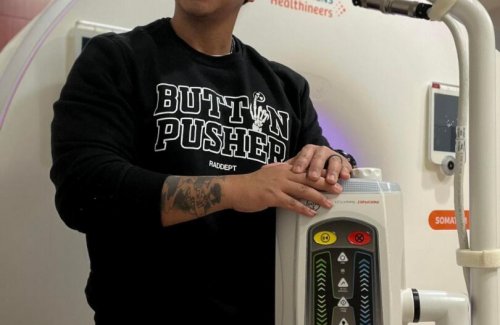
This sparked an inspiration for him to rebrand his long-time lifestyle clothing line into RADDEPT. With every sale, his company donates 10% to a charity that provides radiological services in underserved communities around the world. His goal is to make fashionable clothing for healthcare workers while also making a positive impact on the world.
Jed is proof that one person can make a significant impact on the world. His story reminds us that even the smallest actions can lead to something greater. We all have the power to create positive change in the world, and it’s never too late to start.

HOW THE MILITARY MOLDED ME AS THE PERSON I AM TODAY

The military helped me mature as a person. People always compare their “10-year transformation,” how they have changed physically, and honestly, mine was a complete mental 180. I grew up as a child of a single mother. We were pretty poor, and at times we were homeless, bouncing around to my mom’s friend’s houses. She worked in the real estate realm, and the companies she worked for were either shutting down or downsizing due to the economy. 

I started rebelling around high school so she kicked me out to live with my uncle in San Diego. He was a prior Corpsman in the Navy and became a solid role model. Eventually, after high school, I worked as a Certified Nursing Assistant for 3 years while attempting to complete the prerequisites for nursing school. I ended up joining the Navy so I could have nursing school paid for when I finally applied.

What was supposed to be a 4 year in and out Naval career, turned into an 11-year career that molded me into the person I am today. I excelled with being able to do the grunt work while developing excellent leadership traits. I used my background to help mentor the junior personnel and still continue that habit to this day. I remain in contact with peers, mentors, and mentees, and they all have a significant impact on my life.

THE BIGGEST BARRIERS IN HEALTHCARE

With my military experience, I have noticed that the biggest barrier to accessing quality healthcare for underserved communities is their access to ancillary services. During my last deployment to pacific countries, I recognized that the host nation’s patients had access to primary care visits and surgeries, but the patients had to pay out of pocket for ancillary services like medical imaging.

If you asked me about the significance of radiology before I ended up in this role, I would have laughed and said, ”They don’t do anything but push buttons.” But after completing school, I learned that Radiology has a significant impact on medical treatment – from early detection for diagnosis to being the eyes in the operating room or figuring out the next step for lifesaving intervention.

This deployment opened my eyes to the fact that many patients outside the United States are seriously prone to a lot of diseases that are uncommon in our country. Healthcare quality (although heavily scrutinized by the media) is actually pristine in America and we are lucky to have all these safety protocols in place.

With my military experience, I have noticed that the biggest barrier to accessing quality healthcare for underserved communities is their access to ancillary services.

jed rodriguez

RAISING AWARENESS FOR ANCILLARY SERVICES THROUGH RADDEPT

The first step I hope to achieve this year is to establish a community with my brand RADDEPT. The power of a community can achieve great accomplishments. My first milestone this year is to give 10% of each purchase to charity. I hope to collaborate with more people to be able to give more.

I plan to shine light on the effectiveness and importance of ancillary services. There is always a spotlight on becoming a doctor or a nurse. I plan on creating relatable merchandise for ALL healthcare workers. I’d like to be able to create products that I could donate to countries like the other ones I have previously traveled to and administered care to.

ONE DAY AT A TIME

My biggest advice for someone who wants to make a positive impact on the world but doesn’t know where to start is to take the first step and go for what they want.

One thing that always resonated with me was “Lay one brick a day and eventually, you would have built a well.” This is how I tackle the majority of my life goals. Small baby steps and take it one day at a time. If I keep focusing on the bigger picture, then it becomes overwhelming. Small daily/weekly goals and all those combined will help accomplish the bigger goals.

Also, surround yourself with like-minded individuals. Have mentors and mentees, everything you learn is important, but it is more important to spread the knowledge to the next person!

My biggest advice for someone who wants to make a positive impact on the world but doesn’t know where to start is to take the first step and go for what they want.

jed rodriguez

CONNECT WITH JED RODRIGUEZ

Social media is super important in today’s society. One thing I have learned from having my previous brand for years was the power of ad spending and email marketing. Now, I realized that TikTok could also act as a running ad, and I plan to maximize social media by influencer marketing and collaborating with other creators in the healthcare niche, in order to drive awareness and change.

Tiktok: jroddynotricch

ig: radxdept

www.raddept.com

ThePhysioRaver

Stories

Physical Therapist’s Making A Difference With A Mission To Keep Ravers Dancing For Until They’re 80 Or Beyond

Meet Joyce Ai, a woman with a passion for two seemingly different things – healing and raving. By day, she’s a physical therapist, helping patients recover from injuries and regain strength. But by night (and on weekends), she transforms into something of a superhero: ThePhysioRaver.

That’s right! Joyce is a hardcore raver, and she’s on a mission to help others in the raving community party safely, including DJs, shufflers, and ravers. With her extensive background in strength and conditioning, Joyce is uniquely qualified to help fellow ravers stay healthy, fit, and injury-free.

Her ultimate goal? To keep herself and other ravers stay in top shape so they can keep dancing until they’re 80, or beyond!

Read through as Joyce dives into her journey, explores her passion for both healing and dancing, and let’s learn how she’s using her skills to make a difference in the world as ThePhysioRaver. So turn up the volume, lace up your dancing shoes, and get ready to rave – Joyce-style!

THE STORY OF ‘THEPHYSIORAVER’

I was born and raised in Guangzhou, China, where I spent most of my childhood before my parents and I immigrated to Canada.

I got into physical therapy because I thought the human body was super interesting. I took a human anatomy dissection course in my first year of college. I was amazed by how all the tissues, fascias, tendons, and ligaments were connected.

I have also always enjoyed being active and staying fit, so physical therapy seemed like the natural pathway for me. As I continue to work in this field, I’ve also discovered that the more fulfilling part of this job is being able to help people and truly make a difference in their lives, which is super meaningful and rewarding. 

WORKING WITH THE RAVING COMMUNITY

What I love the most about working with the raving community is that we share a common culture and love for music. Music and live concerts are a big part of my life. Whenever I go to an event, I know everyone there comes to vibe out, enjoy the music, and take a break from their busy lives. Whenever I encounter a patient in the clinic who is also a raver, we always instantly hit it off and become best friends. Wouldn’t you want to be able to work with all of your best friends?

The most common injuries for ravers are back pain, knee pain, and foot pain. The most common injuries for shufflers are knee pain and ankle pain. The most common injuries for DJs are usually neck, shoulder, jaw, and back pain.

My treatment philosophy is that everything we do is goal oriented. There is a clear end goal in mind, and knowing these individuals’ goals helps me reverse engineer a solution to help them get there. In that way, my job is really cool because what it looks like for every patient is going to be different depending on their personality, their hobbies, their injury history, their demographics, and most importantly their goals and aspirations.

THE ROAD AHEAD FOR ‘THEPHYSIORAVER’

For now, this is a side hustle that I am doing that I eventually want to turn into a full-blown full-time business. I’m currently trying to produce consistent and high-quality educational content to bring more awareness to the importance of health and wellness in the raving community.

I have been connecting to some other accounts with a similar niche to potentially collaborate, and spread more awareness that way. I also plan on being more present in the local community, setting up booths at community events, and shuffle dance competitions to help broadcast my services.

FINDING HER CALLING

The most rewarding aspect of my work is making people feel heard. A lot of the time, the raving community tends to be an underserved community. 

People who get hurt in a mosh pit tend to cover up the real reason they got hurt and tell the doctor something else to save themselves from embarrassment. When asked about goals, people also tend to not list “being able to last through a whole festival” as one of their goals, because most of the time, they will be told off by their doctors or physical therapists to “just don’t go to these festivals”.

Moreover, since I am an avid shuffler myself and have gone through my fair share of shuffling-related aches and pains, I am uniquely equipped to help this community rehab and reach its goals, something that a traditional physical therapist with no shuffling experience is not quite prepared to do. This is why they are always very appreciative when talking to me because I actually listen to their stories, relate to their pain points, and genuinely want to help them get better so they can go raving and dancing all night long. 

The biggest lesson that I gleaned from this experience is to never stop trying and to always take consistent, uncertain action. I had a lot of doubts before launching this business. My inner critic kept telling me “but Joyce, you’re an academic, you’re not a businesswoman, and there is no way you’d be an entrepreneur.” Then, when I finally overcame that obstacle, my inner voice kept saying “you are creating a problem that does not exist. There is a reason why no one has done this yet because ravers, shufflers, and DJs do not need your services”.

It wasn’t until I got my first client that finally these voices were getting smaller. They still pop up from time to time, but I know that I am staying true to myself and my mission. This is corny, but you miss 100% of the shots you don’t take. If I never made the leap to put myself out there, I would have never had the opportunity to work with this population that I have been truly called to serve.

If I never made the leap to put myself out there, I would have never had the opportunity to work with this population that I have been truly called to serve.

-Joyce ai
cw4

Stories

Bay Area Dance School Teaches Students To Embrace Asian Roots, Showcases Culture To NBA Halftime

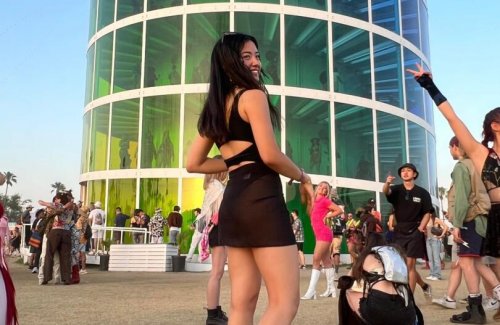
Christina is a dancer and the studio director of Lisa Performing Arts located in Bay Area. Through her dance performances, she tells stories about Chinese culture, including the ways people live, their mannerisms, and their unique clothing, all while passing down their unique stories from generation to generation.

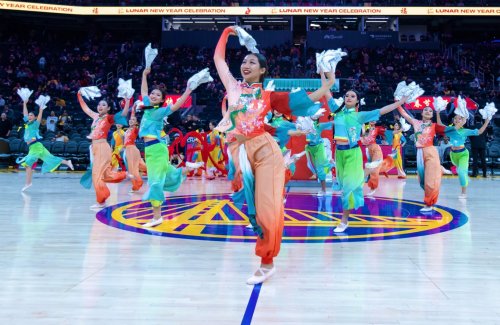
Christina’s journey has been filled with success and opportunities for her dancers to showcase their Asian American dance styles. They have competed at international competitions, premiered on NBC TV, and performed at various high-caliber events. Most recently, they were given the privilege of performing a halftime show for the NBA Golden State Warriors.

The troupe brought a unique and cultural experience to the game featuring the dynamic handkerchief dance, graceful and fluid movements of the ribbon dance, and intricate lantern dancing. The performance was the first of its kind, featuring “authentic Chinese dance” and a combination of fusion styles they have learned.

Read through as Christina delves deeper into the creative process of choreographing a new dance, her recent performance at the NBA Golden State Warriors halftime show, and the importance of celebrating one’s cultural identity.

BRIDGING THE GAP BETWEEN AMERICAN AND ASIAN CULTURES

Growing up as an Asian American, I experienced a lack of representation of Chinese culture in mainstream American platforms and faced the challenge of reconciling my traditional Chinese culture with the dominant American culture, which often excluded Asian Americans and perpetuated stereotypes.

I found solace in Chinese dance — a beautiful and intricate art form often overlooked in mainstream American platforms. My passion for bridging the gap between American and Asian cultures began when I started learning Chinese dance, which surprised me because not many people knew about it beyond the “lion dance.”

Chinese dance involves advanced technique, beautiful costumes, and a variety of unique dance styles, including Mongolian, Tibetan, Dai, Classical, and more. However, I noticed a lack of appreciation for Chinese dance at school rallies, outside performances, and dance competitions.

As I grew older, I realized that to bridge the gap between American and Asian cultures, I needed to find a way to blend the two in a way that was accessible and appealing to both. I was inspired by the success of Bollywood dance in America and dreamed of Chinese dance becoming just as popular. To achieve this, I realized it was necessary to incorporate elements of mainstream styles such as “contemporary” movements, technique, and storytelling, while adding our own Chinese dance elements such as costuming, music, and style.

I worked to create an “East meets West” fusion style of dance that combined both American and Chinese elements. I hoped to bring together teachers and dancers of both backgrounds to learn and appreciate each other’s styles and create unique fusion styles as Asian Americans.

Through my work in Chinese dance, I have seen a growing interest and appreciation for the art form from people of all ethnicities. I am proud to have helped spread awareness and understanding of Chinese culture and have given a voice to Asian Americans in the performing arts world.

Looking forward, I hope to continue to promote authentic representations of Chinese dance in mainstream media and to build a more diverse and inclusive society by encouraging greater cultural understanding and appreciation. My goal now is to form connections with Hollywood networks to ensure that authentic Chinese dance is portrayed in film and music videos and to prevent cultural appropriation.

I believe that the performing arts provide a universal language through which we can all communicate and that by embracing and celebrating our cultural identities, we can build a more harmonious and united world.

BEING ASIAN IS A STRENGTH, NOT A WEAKNESS

My interest in dance began at a young age. My mother was a professional dancer in China who opened her own dance studio in the US. I was exposed to a variety of dance styles, which allowed me to form strong friendships with people of all ages and backgrounds. Through dance, I not only learned about movement and performance, but also about teamwork, leadership, and resilience.

As I grew older, I became passionate about promoting and showcasing Chinese culture through dance. Chinese dance is a unique and vibrant art form with a rich history and tradition. It has a diverse array of costumes, props, and ethnic styles, as well as stunning technical skills, it was a hidden gem waiting to be shared on a larger platform. I felt that it was important to share this cultural identity with others and to show that being Asian is a strength, not a weakness.

Today, I am proud to say that our studio is well-known and respected in the Bay Area. Through our performances and outreach, we have been able to promote Chinese culture and inspire others to celebrate their own cultural identity.

I felt that it was important to share this cultural identity with others and to show that being Asian is a strength, not a weakness.

-Christina Wang

THE CREATIVE PROCESS

When choreographing a new dance, my creative process starts with considering the group of dancers I’ll be working with for the season. I think about each dancer’s individual strengths and how to create unity among the group. This includes deciding on a dance style that fits the group and identifying which dancers will perform which roles.

I then search for songs that will sound intriguing to the audience and consider modernized versions of traditional Chinese music if possible. Next, I find costumes that are in-season and on-trend to bring a contemporary Chinese feel to the performance. I also draw inspiration from trending technical work and group lifts that can work well with the group, as well as any props we may be using. The movements and facials themselves tell the story, and I choose ethnic styles that reflect the particular cultural traditions we’re exploring.

When creating a production piece, I try to tell a story that is easily understood by the audience. To achieve this, I brainstorm ideas inspired by TV shows, movies, and Chinese folklore that can be given an added twist through the use of props. For example, for our piece “The Legend of Avatar: East meets West,” we used props to tell the story of using Earth’s four elements.

Production pieces are more complex to choreograph, as I need to think about how different sections will mesh, color coordination for costumes, smooth transitions between segments, and how to coordinate rehearsals for a large group of people. I also need to consider which parts of the performance to cut or keep, depending on whether we’re performing for a competition or for a show. It’s a true team effort, with many people involved behind the scenes, including visionaries, teachers, prop makers, parents, costume designers, music editors, and dancers who make the vision come to life.

A PRICELESS MEMORY

The dance troupe’s recent halftime show performance for the NBA Golden State Warriors was a truly special and memorable experience. As the first Chinese dance studio to put on a full dance production at the Chase Center, it was an incredible honor to be able to showcase Chinese culture on such a large platform. While martial arts and lion dance have been featured in the past, Chinese dance had never been given the same opportunity until now.

This milestone not only allowed us to introduce Chinese dance to a wider audience who may not have seen it before, but it also provided a priceless memory for our dancers.

BREAKING DOWN CULTURAL BARRIERS

In addition to positive feedback on our technique and performances, we’ve also received comments on how our troupe’s performances have helped to promote cultural awareness and diversity. 

People have expressed appreciation for the opportunity to learn about Chinese culture through our dances, and many have shared how our performances have inspired them to explore and appreciate their own cultural heritage. We’ve also received word that our performances have helped to break down cultural barriers and build bridges between different communities. It’s all very encouraging and it keeps us motivated to continue doing what we do.

EMBRACING YOUR CULTURAL IDENTITY

For young Asian Americans who may be struggling with their cultural identity, my advice is to embrace your uniqueness and find your community. Don’t be ashamed or embarrassed about your heritage, as it is a valuable part of who you are.

Surround yourself with like-minded individuals who share your values and can help you grow. You can seek out cultural groups or organizations in your area, attend cultural events, or connect with others through social media.

Additionally, try to think outside the box and find creative ways to integrate your cultural identity with what people are already comfortable with, while highlighting the unique aspects of your heritage. 

Finally, don’t be afraid to take risks and pursue your passions, even if they may not fit the mold of traditional expectations. By embracing your cultural identity and celebrating your heritage, you can become stronger and more confident and inspire others to be the same.

Don’t be ashamed or embarrassed about your heritage, as it is a valuable part of who you are.

-Christina wang

VISION FOR THE FUTURE

Looking ahead, my vision for the future of my dance troupe and work in promoting Asian culture is to continue expanding our reach and impact. One of my top goals is to provide more opportunities for our dancers to perform at high-caliber events such as the White House, the Olympics, and major award shows like the Oscars and Grammys.

Beyond these major platforms, I hope to see Chinese dance become a more integrated part of the arts and cultural scene, potentially even becoming part of school curriculums to expose young people to this beautiful art form at a young age.


In the long term, I would love to take our work to the next level by establishing a Chinese American dance studio with a dance-specific talent agency sector, through which casting directors would be able to select dancers who can perform authentic Chinese dance for film, media, and commercials. This would create more opportunities for dancers to showcase their skills and help to further promote and introduce Chinese culture to a bigger audience.

334927899_3449125848702263_8902717091139261158_n

Stories

How Basketball Is Transforming The Lives Of Underprivileged Chinese Girls Through ‘The Gold Team’

For William Lo, it’s a tool for change. In his non-profit project that aims to help talented underprivileged Chinese girls, he is using basketball to better their lives and further their education.


For Asian girls, pursuing sports like basketball can be challenging. Societal pressures, cultural barriers, and lack of resources often stand in the way of their dreams. In this article, we will explore the barriers that Asian girls face in sports, particularly basketball, and how William Lo’s project is breaking down those barriers, one basket at a time.

BASKETBALL HAS ALWAYS BEEN A BIG PART OF MY LIFE

I was born and raised in Hong Kong until I was 15 years old and went to school in New Jersey. My mother is from New Jersey and my father is from Hong Kong.

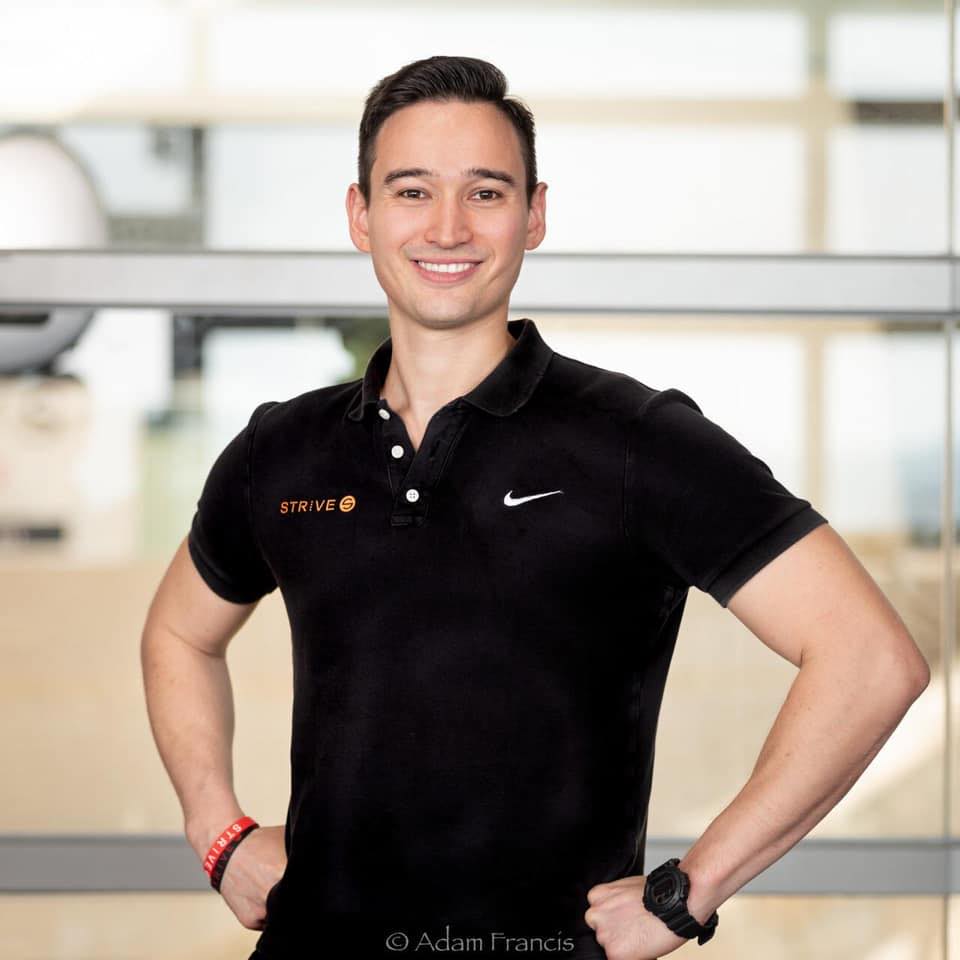
Basketball has always been a big part of my life and I was able to play at a Division 3 level. After college, I came back to Hong Kong and started “Strive” — a strength and conditioning facility mainly for basketball players looking to become better athletes. I did that for 6 years and then in 2019, we decided that it was time to expand into basketball training, as well as strength and conditioning to have a holistic training facility where basketball players could do basketball and fitness in one facility. I have been the Managing Director of Strive for almost 10 years.

William Lo

THE GOLD TEAM

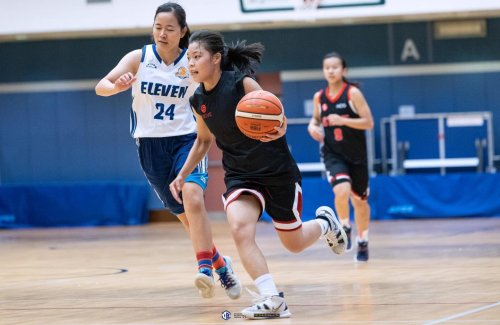
Our non-profit project, run by my wife Angela and I, is called “The Gold Team.” It’s a scholarship program where we help mainly talented and underprivileged Chinese girls, starting at ages 13-15, utilize basketball as a vehicle to further their education and better their lives.

We want our girls to be shining examples of what Chinese women are capable of on and off the court. Even if they don’t get the opportunity to play professionally, they could use the lessons they learned in the Gold Team and can move on to the next part of their life.

Gold Team is an elite training program, so we train 6 days per week on the court, 3 strength and conditioning sessions per week, and we also average 1 or more games against older women or boys.

We sign an agreement with all of our players and parents outlining what we will do for the girls and what is expected out of them. We also have a minimum GPA that we expect the girls to keep.

We believe in developing world-class players, students, and citizens at the same time. I take care of the basketball and training part, my wife Angela who was a much better student than I, monitors their grades closely. 

We want our girls to be shining examples of what Chinese women are capable of on and off the court.

William lo

CHALLENGES AND BARRIERS TO BECOME A SERIOUS ATHLETE

A lot of the challenges we see come from parents not understanding the point of why someone would want to become a serious athlete. I constantly hear “You can’t make a living on it so why spend so much time on it?” This is very common in our society and a lot of people do not see the value of how sports add value to a kid’s life mentally, emotionally and of course physically.

Another objection that I get a lot is the unwillingness to look outside of Hong Kong for bigger possibilities for basketball. Since there is a significant portion of Hong Kong people that have never traveled outside of Asia, they may not be aware of the possibilities of sports scholarships in countries such as the US, Canada, or Australia. I’m hoping that as we get more and more girls opportunities to play in the NCAA and other countries, this will change.

THE ROAD TO CHANGING ONE PLAYER’S LIFE FOREVER

Yannie Chan, who won Conference Player of the Year, is the first locally schooled Hong Kong girl in our city’s history to play in the NCAA, so that alone instilled a lot of hope for girls in our city. There will be more coming out of our program in the coming years!

In the classroom, we also have a girl who is now one of our best players — I got her when she was 13, she had a terrible track record at school and was ready to drop out and become a part-time waitress. I told her that in order to join the Gold Team she had to have a certain GPA. She immediately went to her teacher the next day and asked for tutoring, which left her teacher in shock! She has gone from a 2.5 GPA to a 3.4 GPA in 2 years. Now she has opportunities to play at prep school level in America. Her family is on government subsidies and now she is on the road to changing her life forever.

SKY’S THE LIMIT FOR CHINESE WOMEN ATHLETES

Men are often the first priority over women when it comes to sports. This is true, especially in our part of the world. However, after years of observation, I am very bullish on Chinese women’s sports. We have some of the best athletes in the world and girls who can compete with any country. Chinese women in the world cup are a perfect example coming in second after the US. I believe that if given the right opportunity, time, and love, the sky’s the limit for Chinese women athletes.

I want to also prove to parents that sports do, in fact, have a lot of value in the development of kids. Putting your sole focus only on studying is definitely not the way to developing a well-rounded adult in the future. If you are a great athlete and a great student, it opens up a lot more doors for you than only being good in the classroom.

Finally, as an Asian basketball player, I was not given a lot of respect just because of the color of my skin. Basketball in America is not an Asian-dominated sport and we need to be extra tough and extra skilled in order to earn that respect, which I’m totally fine with. I want to make a statement to the world that Asian players, when given the opportunity, can be just as good as anyone anywhere in the world. I firmly believe that.

Asian players, when given the opportunity, can be just as good as anyone anywhere in the world.

William lo

THE GOAL TO SHOOT FOR SUCCESS

My goal is to be able to travel with the girls multiple times per year around the world so that they can play against different competitions, learn about different cultures and see the world.

This June, My wife and I raised around 40-45,000 USD to sponsor 9 girls to come to the US and play on the AAU circuit (Amateur Athletic Union). Hopefully, with this trip many of our girls will be recruited to play in college.

SPREAD THE WORD

We are trying to change Asian sports and if you have any interest in knowing more you can contact me anytime. william@strivefitnesshk.com

Website: www.strivefitnsshk.com

Instagram: @willvlo