Stories

November 7, 2025

SHARE:

The first time Vivian Kwan realized she could build something on her own terms was during her college years in the U.S. — a time that completely shifted her perspective on what a career could be.

She found herself surrounded by students who were running side hustles, freelancing, and starting companies before graduation. It was a stark contrast to her upbringing in Hong Kong.

“Back home in Hong Kong, the path was pretty clear: study hard, land a stable job, and climb the corporate ladder,” she recalls. “But in the U.S., I met people who were building something entirely their own. That inspired me to think differently.”

Curious and driven, Vivian began experimenting — running a small photography business and creating content for fun. That experiment grew into Meraki Group, a boutique talent management agency representing a diverse roster of lifestyle creators — and now a 7-figure business built entirely from the ground up.

Redefining Success as a First-Generation Founder

When Vivian launched Meraki Group in 2021, she had no network, no outside funding, and no PR machine behind her, just the belief that creators deserved better representation.

As a first-generation Asian immigrant, Vivian was raised to stay quiet and keep her head down. “But entrepreneurship requires something different,” she says. “I had to learn to advocate for myself and my talents loudly and unapologetically.”

Without big teams or resources, she leaned into what she could control: being hands-on, transparent, and relationship-driven. That boutique approach became Meraki’s unique selling point: brands and creators know they can reach Vivian directly, and that trust has allowed Meraki to thrive against the odds. Today, Meraki has closed 300+ brand campaigns with brand partners like HOKA, REI, Shark, Columbia Sportswear, Libman, Google, and UGG.
The Challenge of Balance

Motherhood has always run parallel to Vivian’s entrepreneurial journey — two worlds that demand her heart in equal measure. In the early years of Meraki, she often found herself caught between deadlines and bedtime stories, client calls and school drop-offs. The guilt was relentless: every hour spent growing the business felt like time borrowed from her children.

But over time, her perspective shifted. She began to see that showing her kids what fulfillment looked like was one of the greatest gifts she could give them. Building Meraki wasn’t just about proving something to the industry — it was about showing her children what resilience, purpose, and self-belief looked like in real life.

“My kids deserve a mother who’s confident and happy,” she says simply. “That thought keeps me grounded when things get hard.”
A Year of Growth and Gratitude

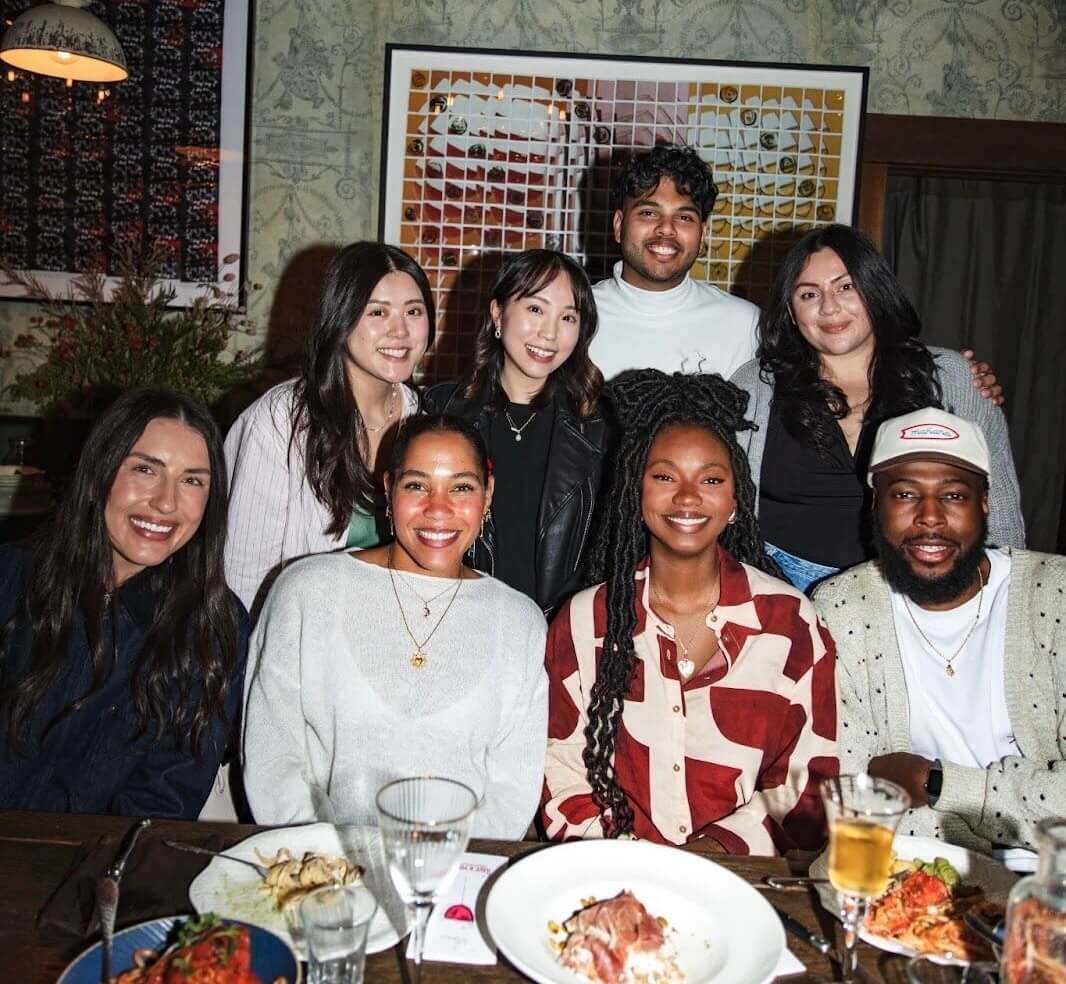
In October, the Meraki community came to life in a way that no Zoom call ever could. Vivian and her team hosted their annual NYC dinner — an intimate gathering of creators, brand partners, and friends who had helped shape the agency’s journey. The room buzzed with laughter, warm reunions, and stories that stretched back to Meraki’s earliest days.

For Vivian, it was a full-circle moment. Many of the guests were creators she had signed during the uncertainty of the pandemic — people she had championed from afar before ever shaking their hands in person. Watching them share a table, swapping stories and ideas, felt like witnessing the agency’s spirit materialise in real life.

It wasn’t a night of flashy sponsors or curated photo ops, but of genuine connection — the kind that has quietly fueled Meraki’s success from day one. “What I’m most proud of isn’t the growth,” Vivian reflects. “It’s loyalty. Many of my creators have been with me for three or four years. In an industry where talent often comes and goes, that kind of long-term commitment means everything.”

What Comes Next

As Meraki continues to grow, Vivian is laying the groundwork for a new chapter — one that strengthens the agency’s foundation while amplifying its impact. She’s focused on expanding her team and refining systems to preserve Meraki’s signature boutique quality, even as it scales.

“I’m being intentional with this next chapter,” she says. “Before stepping deeper into consulting and mentorship, I want to make sure the agency continues to run with the same care and creative integrity it was built on.”

With that foundation in place, Vivian plans to open limited consulting slots and launch educational programs for creators and emerging talent managers. Her goal is to nurture the next generation of creative leaders — empowering them to build with heart, purpose, and the courage to redefine what success can look like.
Follow Vivian’s journey:
📍 LinkedIn | Instagram

Related Articles

Image Source openthemagazine.com

Uncategorized

Director Gurinder Chadha On Shaping Her Successful Career By Celebrating Difference

“People might tell you that you’re the odd one out. Remember you’re not, you too are the mainstream. The world might try to make differences a pejorative thing, but I’ve carved out a whole career by celebrating it,” says the 62-year-old film director, Gurinder Chadha, in her recent candid interview with The Guardian.

Gurinder Chadha was born in Kenya, then a British colony. Her family was part of the Indian diaspora in East Africa. They moved to London when she was two and rented a single bedroom. She recounts being shoved into a metal bed frame by their landlord’s son. Her mother was devastated but couldn’t comfort her. “I still remember the indignity and injustice,” she adds.

For a while, she even refused to eat Indian food and had her chapatis with jam and butter. At age 10, she ran away from home and considered it an “escape” to be more British.

Gurinder considers the 2002 box-office hit ‘Bend It Like Beckham’ she directed a watershed moment. She tells The Guardian that until then, the perception was that Indian girls in the UK were obeying and submissive to strict families, but that wasn’t their experience.

“As an immigrant kid, you realise early on you and your parents live different realities,” she adds, “You can fight and rebel, or accept your parents for who they are, work around them, and get on with it. That’s what we did.”

It took three years to get the sports comedy-drama film green-lit. Everyone told her an Indian girl playing football wouldn’t attract the audience. However, it’s the only film to be released in every country since it debuted 20 years ago. “For people on the margins all over, it was transformative”

Unfortunately, her father died suddenly in 1999, and he never got to see Gurinder’s biggest achievements. This made her unappreciated her success for a long time as her father wasn’t there to share it with. It changed when she became a mother of twins in her late 40s, “Having my children celebrate my work has seen something shift within me. Finally, I’ve started to let myself believe it”

280828065_10210184429204132_8785869350725322057_n

Uncategorized

26-Year-Old Filipino Entrepreneur Turns Waste Coconut Shells Into A Thriving Business

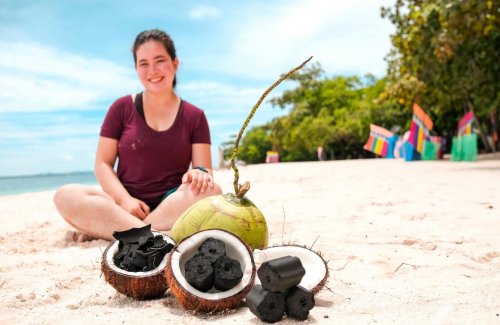
With zero funding, Filipino entrepreneur MJ Loleng built her start-up company, Ecobriqs Charcoal Briquettes, an innovative eco-friendly charcoal business from waste coconut shells.

She was able to attract investors with her idea who also had a passion for sustainability and providing employment to those who are poor in the Philippines, as she said that she experienced being poor herself. MJ wants to show that poverty is no reason to give up on ambitions.

MJ wrote on her Facebook, “For the past 4yrs I was just crystal focus on surviving and making things happen. I know I’ve always wanted to help, and I know that I can do it by building a business.”

When “Samgyeopsal” or Korean BBQ restaurants became popular in the Philippines, Ecobriqs experienced a surge in popularity. Briquettes were the ideal kind of coal to use since they did not produce smoke or odor and could be used more than once.

The pandemic drove several eateries to close, putting Ecobriq into a major setback for half a year, but MJ thought of another idea. She collaborated with her friends and opened their own Korean BBQ restaurant, Umma’s Samgyup Café, with a starting capital of P5,000 ($90).

As a result of MJ’s expanding business portfolio, she is now able to bring in more than P100,000 ($2000) per month, and learned stock trading in order to increase her income.

Her advice to aspiring entrepreneurs is to be persistent in achieving their goals, “I also didn’t know how we got this far. I just keep the faith, believe in my team, took the risk, give it ALL IN, and did my best” 

Image Source John Andrew Dangca Facebook

Uncategorized

From Former Janitor To Leading A Flourishing Filipino Restaurant In Australia

Who would have thought that the odd jobs of a janitor and a street vendor would lead to such a great story? This is what actually transpired to John Andrew Dangca, the owner of a Filipino restaurant in Canberra, Australia.

Before establishing his popular restaurant among Filipinos, he worked as a street vendor and janitor. Despite his difficult beginning, he was determined to succeed. He saved money and eventually opened his own restaurant. His business success has allowed him to provide for his family. 

Salu-Salo Restaurant, which has been serving Filipino cuisine in Canberra, Australia was also impacted by the pandemic. Fortunately, he was able to adapt by pivoting to a delivery and take-out model. 

He says that they’ve been able to weather the challenge because of the support of their customers. Andrew admitted that he reaches out to his customers to order some food, and if they do, he personally travels to them, regardless of the distance. 

His journey to Australia began when he was young and open to the idea of studying or working abroad. His aunt sponsored his trip to Australia in 2013, where he enrolled in college and began training as a cleaner. It was never easy for him to juggle a job and schoolwork, but he did it because he wanted to provide for his family.

Andrew’s story demonstrates that it is possible to achieve success despite challenging circumstances if one is willing to work hard and never give up. “I put in a lot of effort and always try to do my best in order to be where I am now,” he stated on a Philippine TV show. 

He proved that beginning in a low position, such as working as a janitor or street vendor, is not an obstacle to future success. Rather, this will serve as the fuel that propels you forward toward achieving your goals.

Untitled design

Uncategorized

Humphry Slocombe Launched Filipino-Inspired Ice Cream In Collaboration With Popular Eatery Señor Sisig

There is nothing quite like a scoop of ice cream on a hot day, as we’re sure you’ll agree! And what better way to enjoy one than with a tasty serving of delectable creations alongside your best dishes?

This summer, the renowned Filipino food truck now restaurant Señor Sisig will open a branch in the food hall of the San Francisco Bay Area and collaborate with the Filipino-inspired experimental ice cream Humphry Slocombe.

They have been starting to develop a new ice cream flavor that evokes childhood and promotes the favorite dishes with an accompanying dessert. According to SFGate, both businesses have decided to work together as they get ready to become Ferry Building tenants.

It may be a new flavor for Humphry Slocombe customers, but it’s not for Filipinos. Made with cinnamon and bananas, the ice cream is as delicious as it sounds. Named “churron”, a mash-up of “churro” and “turon,” a Filipino caramelized fried banana roll.

The new Señor Sisig restaurant will serve drinks with Filipino and Mexican tastes including ube, pandan, and calamansi.

Stop by one of the six Humphry Slocombe locations around the Bay Area to enjoy this new flavorful ice cream before it sells out!