Stories

May 27, 2025

SHARE:

From the Boardroom to the Comedy Club

Julie Kim didn’t begin her career in comedy—she initially followed the stereotypically ‘Asian’ path of stable jobs in academia and office work. Born and raised in Toronto to a Korean immigrant family, her upbringing took place in a tight-knit, two-bedroom apartment above her family’s grocery store. “At one point, there were seven people in the apartment,” she recalls. “And for a solid six or seven years, I slept on the pull-out sofa bed in the living room.”

With multiple degrees under her belt—including a Master’s and two attempts at a PhD—she straddled the worlds of business, education, and motherhood. Amidst the hustle and bustle, there remained a silent passion in her for a creative life. “At first, I wanted to speak well to stand out among a sea of old white men in boardrooms,” she says. “I also wanted to do a difficult, admirable thing. It was a checkbox.”

Julie Kim | Comedian

A Dramatic Shift to Comedy

Julie didn’t quit everything overnight to pursue comedy. She experimented with it while holding multiple stable jobs, contract roles, while also pursuing her PhD, oscillating between full and part-time focus on her studies. But passion has a way of growing, and eventually, she did what she had to—crossing what she describes as ‘a bridge between conventional pursuits and creative pursuits.’ She stepped away from academia, turned down secure opportunities, and entered a world full of uncertainty and creative risk.

However, Julie was no stranger to the industry’s harsh stereotypes. She faced mistreatment and discrimination, navigating everything from blatant racism to sexism disguised as condescension.  “One booker tried to push me out of the scene because I winced when someone tried to make me kiss him against my will,” she shares.  “A few local comics hated or resented me from the start because I didn’t ‘need’ to do comedy—as if they deserved it more because I had other options. It was a different kind of discrimination I hadn’t encountered before, but for sure it taught me to stay far, far away from the bitter ones in this industry.”

Jumping to comedy, Julie Kim’s now one of Canada’s most sought-after comedians.

Despite this, Julie pressed forward like the boss that she’s always been. “I had to learn how to produce and promote my own shows. And that built tenacity,” she says. “Now, I’m centered in my identity. My cultural identity and my confidence in it are central to much of the  success I’ve had in the past few years.”

Today, she’s one of Canada’s most sought-after comedians, performing alongside stars like Ronny Chieng, Atsuko, JR de Guzman, and more as she headlines major comedy clubs across North America. “This is the best time of my life,” she says. 

“I’m having the time of my life. But also, I’m still working on a little scarcity mentality and the feeling of constant survival mode,” she shares. “Part of me really enjoys that and part of me needs a new car and a real vacation.”

Being a Mom on the Mic

Being a mother in comedy isn’t easy—especially when constantly on the road. Julie has faced criticism from all sides: family members, fellow parents, and the weight of societal expectations. ‘I deal with it by blocking people out of my life or turning them into jokes—or both,’ she says with a laugh.

Her journey as a mother isn’t separate from her comedy—it is integral to it. “To do my work well, I need to be grounded, happy, and creative. So I try more and more to take care of myself to be those things,” she reflects. “I think it’s an accomplishment to still be writing and performing after more than a decade of true hustling. It’s taken a lot of grit, perseverance, some audacity, and foolishness.”

Julie Kim’s experience as a mother isn’t separate from her comedy career.

Julie Kim’s list of accolades is stacked: writing and producing Simu Liu’s iconic I Am Canadian monologue at the JUNO Awards, winning a 2023 Canadian Screen Award, and headlining four sold-out Just for Laughs shows in Toronto.  She’s also written for Kim’s Convenience and Run the Burbs, two shows centred around Asian Canadian families that have reached global audiences. 

As she continues to tour across North America, Julie is also working on upcoming television and film projects and producing her new podcast, Bothered. Next, she will prepare for a new 2026 tour of her solo storytelling show called ‘No One Special’ and writing her first book. 

Connect With Julie Kim

Website: https://www.juliekimcomedy.com/shows 

Podcast: https://www.juliekimcomedy.com/podcast 

Instagram: @juliekimcomedy

YouTube: @JulieKimComedy 

Facebook: Julie Kim

TikTok: @juliekimcomedy
Related Articles

Image by Lorephil Toledo

Uncategorized

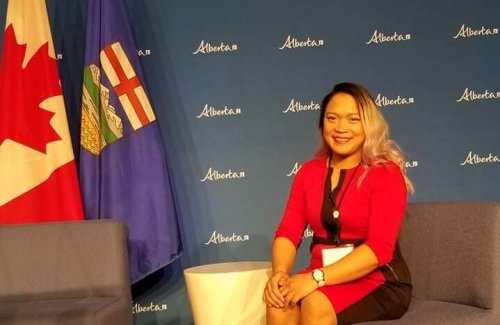
Filipina Single Mother in Canada Grew Her Cleaning Job Into a Million-Dollar Janitorial Business

We’ve all heard the stories of people who have started with next to nothing and come out ahead. They are able to turn their passions into successful businesses while providing them with a sense of purpose. But what does it really take to become a successful entrepreneur? 

As a Filipina single mom who built a business in Canada, Lorephil Toledo had to overcome a lot of challenges before achieving success. She is now the CEO of her own company and an inspiring Filipino dreamer for female entrepreneurs around the world. 

At a young age, Lorephil was already used to running her own business. She used to sell clothes, shoes, and underwear at school to pay for her own food. She has never been shy, and she even uses her skills to provide tutoring services in order to increase her income. 

In 2011, Lorephil sought work in Canada. Her oldest was 2 and her youngest was 11 months. She was unhappy because she had to spend so much time away from her children in order to earn. 

She overcame homesickness and missed her children by cleaning. “I found myself distracted by cleaning houses because I was homesick. I’m dreaming that my children are in here while I’m doing housework. I felt good every time I cleaned the house,” she explained.

Lorephil quickly realized that she could turn her pastime into a profitable business. Lorephil started the successful CanaJan Inc., a janitorial services company. Through her entrepreneurial spirit and hard work, Lorephil was able to serve the community with the best janitorial services.  

She started out on her own and now oversees a team of 15 people. More than 350 of her clients are consistent, and she brings in millions of dollars annually. She is a multi-award winner, having been named Entrepreneur of the Year, New Citizen of the Year, and New Business of the Year in addition to being named Ambassador of the Filipino Canadian Trades. She was also invited to speak by the provincial government of Alberta.

When sharing her story, Lorephil mentioned a few of the lessons she has learned along the way. She encouraged everyone to have big goals. She believes that there is no impossibility in life, even for the poor, and that there should be no limit to one’s dreams. 

She advises to work hard, “If you want to succeed, you have to work hard for it.” She felt dreams can’t come true without labor. She worked seven days a week for her company. She got four hours of sleep, skipped holidays for five years, and reinvested her money.

Lorephil is a firm believer in the saying “ “Don’t Quit.” She is confident that every difficulty can be overcome and that there is always a way out.

She upholds that in order to properly serve your customers, you must first properly serve your team. This is her reason for treating her employees well and providing free services to her regular customers. She added,  “If you give something to the universe, it will come back double times.”

Image Source: JG Summit

Uncategorized

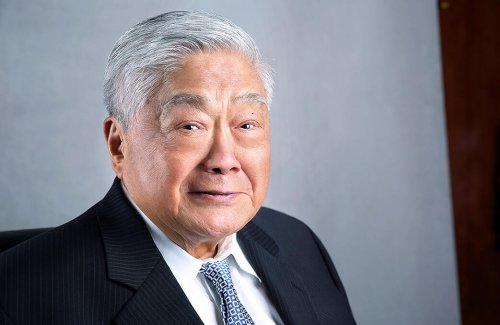
The Notable Filipino Entrepreneur Who Used His Peanuts Enterprise To Establish An Empire

“Choose to be an entrepreneur because then you desire a life of adventure, endless challenge, and the opportunity to be your best self.” — a remarkable statement from “Big John”, the founder and former chairman of JG Summit, one of the largest companies in the Philippines. 

John Gokongwei, a Filipino businessman, investor, and philanthropist, died in 2019 at age 93, but his legacy and business lessons continue to inspire. John created JG Summit, a worldwide conglomerate with assets in one of the Philippines’ largest Telecommunications companies PLDT, Manila Electric Company, and other international companies.

John’s grandfather, Pedro Gotiaoco, was one of Cebu’s richest persons in the 19th century. He was from Fujian province in China and was the owner of the massive trading firm Gotiaoco Hermanos. However, their family went bankrupt during the Great Depression, leaving them homeless.

John, his mother, and five siblings returned to China while his father stayed in the Philippines. At 14, he started selling peanuts to support his family. He quickly realized a bicycle would help him get more done. He saved money and eventually had enough to sell his goods in nearby cities.

At 17, he followed in his family’s footsteps and entered the trading business. He used a small boat to transport goods between Cebu and Manila. 

In order to put his siblings through school in China, he had to double his work. After the war, John saw it as an opportunity to expand his trading business internationally. Amasia Trading, his first company, sold and bought goods in the United States, Manila, and the Visayas region. 

Resulting from his fruitful dealings in Amasia Trading, John finally got to see his family again. When they get back to the Philippines, they helped run their father’s business which is American-Asia Trading. 

He then got interested in the cornstarch sector but needed the funds to get started. After numerous banks turned him down to secure a loan, Dr. Albino Sycip of China Bank lent him P500,000 ($8900). John founded Universal Corn Products in 1954, and eventually expanded into variety of products, it became Universal Robina Corporation (URC).

URC became one of the country’s major food and beverage firms, while one of the Philippines’ largest business empires, the JG Summit Holdings continues to grow. He also founded Consolidated Food Corporation (later CFC), Cebu Pacific Air, and Robinson Retail Holdings. According to Forbes, John was the third richest Filipino at the time of his death.

Big John’s success was largely a result of his management style and leadership abilities, in addition to the fact that he has proven to be a crafty business leader. He will be forever remembered as a self-made billionaire who began by selling peanuts and was one of the most enduring entrepreneurs in history. 


Image Source: Brian Flaherty / The New York Times

Uncategorized

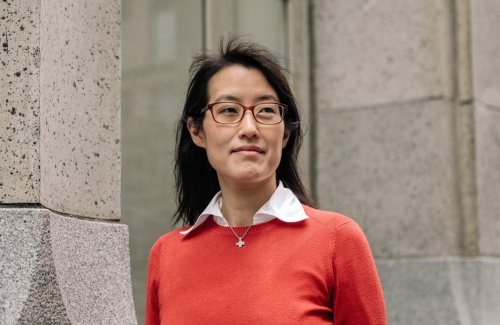
Former Reddit CEO Ellen Pao On Being A Confident Woman In The Male-Dominated Tech Industry

Greater diversity in tech overall could solve some of the industry’s biggest problems, including fighting disinformation, hate speech, and harassment in online spaces, said the former Reddit CEO, Ellen Pao in a recent podcast interview.

While women have made achievements in tech, their numbers are still low. A survey from AnitaB.org, a global group for women engineers, predicts it could take 12 years for women to see equality in the industry.

In 2012, Pao sued her then employer Kleiner Perkins Caufield & Byers for gender discrimination in San Francisco. The jury sided with the VC firm, but Pao became the face of the issue.

Pao shares with Jennifer Palmieri in her podcast that facing the Silicon Valley guys’ club inspired her to lead Reddit in 2014. During her time as the CEO of one of the biggest discussion websites, she didn’t have imposter syndrome as she had always thought that she had seen so many “horrible” male CEOs and board members.

The Taiwanese-American felt confident in her qualifications despite the Silicon Valley narrative that favors Caucasian and male college dropouts. “Maybe I’m not going to be perfect, and maybe I’m going to make mistakes, but it’s not going to be like some of these other mistakes I’ve seen.”

One of Pao’s priorities, when she was at Reddit, was strengthening the anti-harassment policy and clearing the site of nude pictures and revenge porn. Critics of the plan, mostly men, argued such measures were a form of censorship.

Today, however, Pao thinks that current tech leaders are driven to not prohibit hate speech because it boosts social media engagement and profitability.

As the majority white, male, and affluent tech leaders don’t see and experience problems the same way marginalized communities do, Pao believes that they can’t solve these issues.

Pao credits her mother, who is an engineer, for instilling in her a strong sense of right and wrong, which led her to speak up when she witnessed overqualified women and colleagues of color not getting promoted at the same pace as White men.

Image Source Colin Boyle/Block Club Chicago

Uncategorized

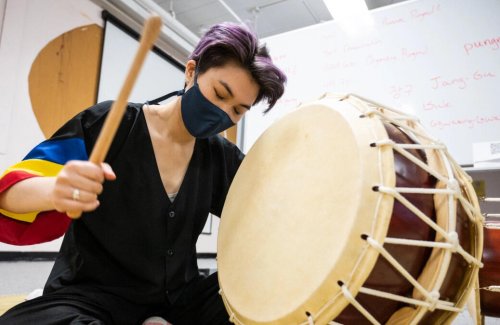
North Side Immigrant Rights Group Foster Community By Folk Drumming

Hana Center, a nonprofit organization for Asian American and immigrant rights, provides neighbors new opportunities to teach them traditional Korean folk drumming, which activists frequently use in their advocacy. 

Community engagement coordinator Won Joon Lee tells Block Club Chicago that the group teaches Pungmul, a Korean folk tradition with deep historical roots. It originated in Korea’s pre-industrial farming culture and used the hourglass-shaped janggu (a double-sided drum) to protest immigration and racism. 

Lee explained that during the Japanese occupation of Korea from 1910 to 1945, public gatherings were prohibited except for musical performances, making Pungmul a form of resistance. 

In 2017, two long-standing organizations,  the Korean American Community Services, and the Korean American Resource and Cultural Center were combined to become Hana Center, named from the Korean word for “one.”

The organization has a long history of youth Pungmul programming, but this summer marked the first time the non-profit offered classes for adults interested in advocacy work. 

The first-ever class will proceed after the initial session of eight weeks has passed. As the new program expands, the instructors intend to continue enrolling new students in it on an ongoing basis.

Hana Drum School instructor Inah Jeong said Pungmul drumming is loud as planned, and they are culturally and politically distinct. Korean immigrants may connect with Chicago immigrants and join the immigrant rights and citizenship march, she tells Block Club Chicago.

The ensemble delivered its first drumming class this summer, but new students are always welcome to join in. Residents and community organizations can benefit from such events, according to the center’s administrators.

Choi tells Block Club Chicago that the current situation is both exhausting and frightening, but she believes the strong and loving communities they form may provide joy even in difficult times.

Their communities enable them to change the world now and in the future. The goal according to Choi is to turn community building into advocacy that targets racial, gender, and economic concerns along with immigrant rights.

Hana Center is located at 4300 North California Avenue in Irving Park. It also offers services to address needs related to citizenship and immigration, housing, and other areas.