Stories

August 25, 2022

SHARE:

When looking at an Asian-American woman, certain implicit biases exist. They are often judged as being too meek, timid, or passive to achieve their goals. They may be held back by such an evaluation, preventing them from realizing their full potential.

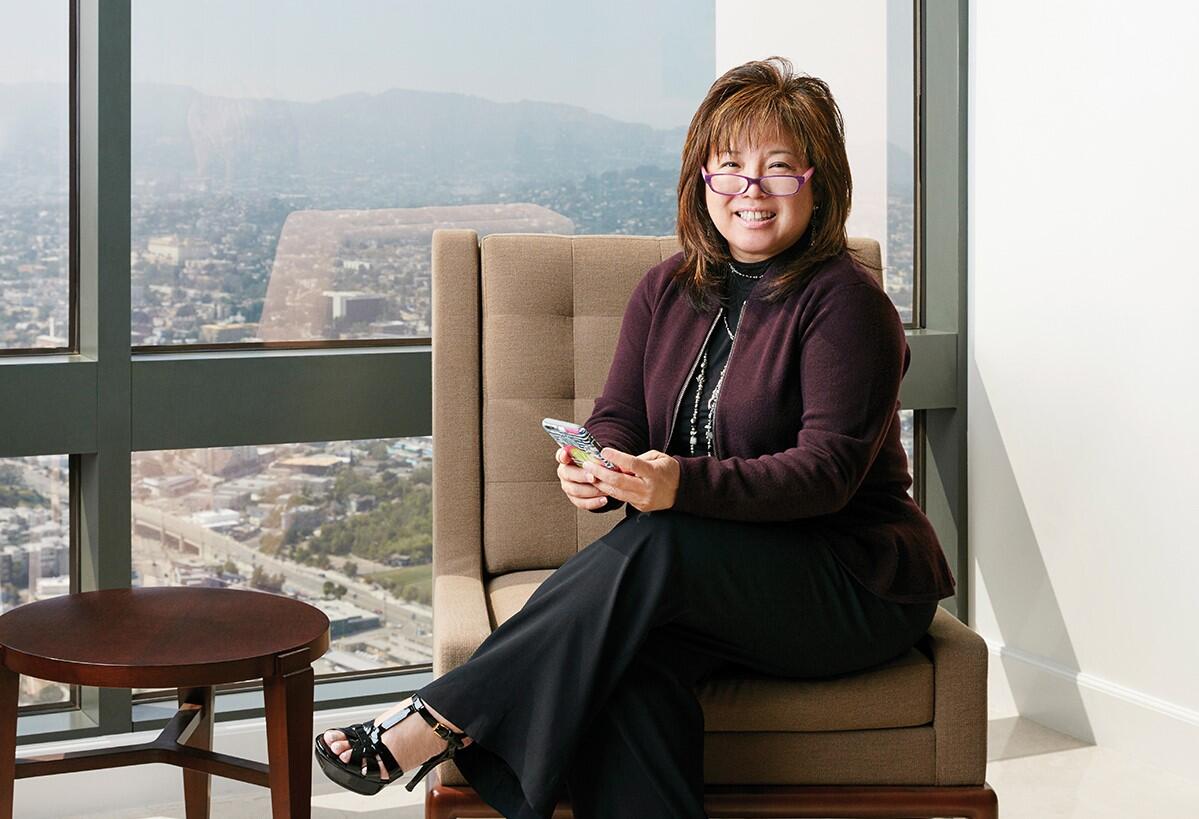
It was difficult for Asian-American lawyer Debra Wong Yang to speak up throughout her early career. In the long run, she realized that her inability to stand up for herself did not only hurt her but also her clients.

“Eventually, we all find a voice — my advice is to just make sure the one you ultimately adopt is actually yours,” she advised in her essay published by Law360.

Yang graduated from law school in 1985 when women were still relatively powerless in the legal field. Since she was still working toward the goal of following the path she had chosen, she has faced many challenges along her journey. She has witnessed it all, from the very traditional Chinese upbringing she received to the various sacrifices, frustrations, and challenges she must face on a day-to-day basis in her chosen field.

After years of practicing law and facing challenges in the courtroom, she came to a number of important realizations that helped her become a successful attorney. She remembered when she thought up some strategies that she hoped would assist her in communicating effectively with others. 

Yang also tried to conquer her fear, and her motivation helped her cope with the situation and make further progress. With a lot of the many books she has read on leadership, she knows she has finally found her own approach to developing herself. 

She aspires on detailing how she was preparing for her court session with an outline of her questions and concerns, and other litigants will be able to better manage their time with counsel. She realized she was getting better at defending her clients in court because she was able to keep her attention solely on the issues and evidence in her case.

When she was currently going through a period of learning and challenges, she learned that holding a position of authority does not guarantee respect from subordinates. She came to understand that one of the responsibilities of a leader is to address concerns raised by those who doubt one’s abilities.

In her courtroom sessions, Yang strongly suggests analyzing the situation first and looking for authentic solutions carefully. She strongly believed that the solutions to some problems sometimes are not immediately obvious and have never been tried before, or that it’s extremely straightforward. However, she is challenged to keep turning the issue over and over in her mind until she begins to see it from a new perspective.

Yang also stressed the importance of having mentors to turn to for advice and insight. She was assertive in her belief that one should be guided by the process of sitting down, thinking it through, and acting in a way that is most beneficial to them. She went on to say that if the message comes from within, the receiver will perceive it as more genuine and at ease.

In 2002, She was appointed by President George W. Bush as United States Attorney and became a former judge serving the Los Angeles County Superior Court. The fact that her success can be attributed to her strong leadership and the bravery that she possesses as an individual is a reason why she wields her power. 

Not only does Yang share her own experiences, but she also provides valuable advice that other women can use to advance their careers. She stated, “My wish for each of you is that you will be brave when facing self-doubts, challenges, and obstacles. That you will dig deep, reach out if needed, do the research, make the tough decision and not be afraid of losing.”

The fact that Yang, an Asian American woman-in-law, was able to take control of her power demonstrates that one’s race should not determine the opportunities available to them or the path they choose to take in their professional advancement. However, by maintaining a positive attitude and giving oneself the power to make decisions, one will be able to live up to the standards and goals that have been established to assist in one’s own success.
Related Articles

Image Source: CNN

Stories

Young Tech Startup Founders In Asia Make Mental Health Support Accessible To Break Stigma

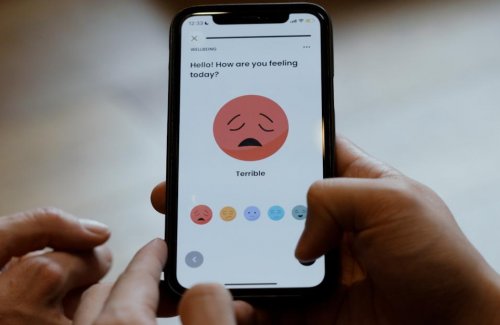
Breaking down societal stigma and creating a new mental healthcare system for the Asia-Pacific area are two of Theodoric Chew’s objectives, founder of the digital mental health app, Intellect.

Founded in 2019, the mobile app frequently monitors users’ moods, delivers rescue sessions and exercises, and lets them chat with therapists in real-time. 

The 26-year-old explained that mental health is just as important as physical health, “You and I face things like stress, burnout, sleep issues, and relationship struggle as well.” he told CNN, “ That’s where actually a lot of us should start working on our mental wellbeing.”

Since early 2020, the startup serves over 3 million Asia-Pacific users in 15 languages. According to CNN Business, the Singapore-based mobile app has raised $20 million in its Series A funding, the largest amount raised by a mental health start-up in Asia.

Early this year, Singapore and Jakarta-based digital mental healthcare start-up, Ami, has raised at least $3 million from a number of investors, including Meta, the owner of Facebook. The firm was founded by Justin Kim, a Forbes 30 Under 30 Asia alum with Beknazar Abdikamalov.

Both digital mental health companies are targeting employers in their business models, where companies can subscribe to provide staff unlimited, private access to their services.

According to the WHO, depression and anxiety disorders cost the global economy $1 trillion a year in lost productivity. In March, it was reported that anxiety and sadness surged 25% worldwide in the first year of the pandemic.

Image Source: Shoutout LA

Uncategorized

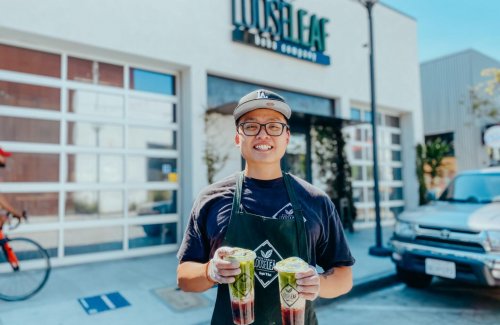
Loose Leaf Boba Company Blends Third-wave Coffee And Tea With Cultural Inclusion

Loose Leaf Boba Company is not only well-known for its expert “bobaristas.” but also for its diverse cultural representation including Burmese, Thai, Filipino, and Hispanic. “Going out for boba” was a childhood tradition that assisted the company’s mission of unifying people by normalizing cultural differences.

The brand constantly values cultural inclusivity and also empowers BIPOC, AAPI, women, and the LGBTQ+ community.

Loose Leaf Boba Company’s sharp vision of “Building a Better Boba Company” comes to life every time a customer experiences a foreign favorite, for which they make beverages for customers to try global favorites. This means making tasty beverages like Vietnamese Egg Coffee or Mexican-inspired Guava Atole.

Founded in 2012 by husband and wife duo Thomas and Jasmine Liu in West Covina, the viral third-wave shop has locations across the United States, including Connecticut, California, and Massachusetts.  This bubble tea tycoon has big plans to grow large retail sites in metro Dallas, TX, Northampton, MA, and Hadley, MA.

Image Source: Forbes Asia

Stories

Farm of the Future: Farm66 Cultivates Vegetables Within Hong Kong’s Skyscrapers

In the course of COVID-19, a significant number of people have reported having insufficient access to fresh food entirely for sustainable living.

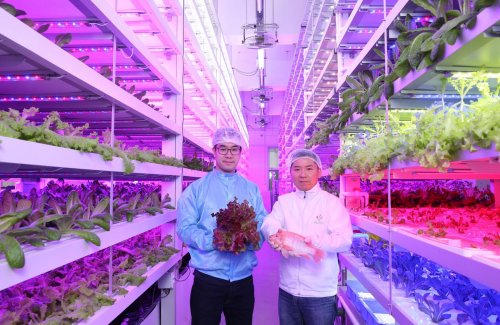
Gordon Tam has created an urban farm that solves this problem. He is the co-founder and CEO of the Hong Kong-based vertical farming – Farm66. With advanced farming technology, he grows fresh vegetables inside skyscrapers in Hong Kong. 

In 2013, Tam and Billy Lam, Farm66’s COO, founded Hong Kong’s first high-tech vertical farm and developed LED lighting and wavelength innovations for farms. Tam and his team found that different light wavelengths affect plant growth. Red LEDs generate longer, stronger stems, whereas blue LEDs produce larger, stronger leaves.

The technological and robotic advances at Farm66 are also both groundbreaking. The 20,000-square-foot indoor farm is managed with IoT sensors and robots for quality assurance and other tasks. 

When asked about the challenges facing conventional farming, Tam cites a lack of talent as a significant issue. “It’s because the children of many remaining farmers don’t want to take over the farms. They think it’s a very tedious job.” – he told Forbes. This is why he placed a premium on technology and saw it as a means to attract young people to farming by making the industry more appealing.

Farm66’s latest farming mechanism impressed billionaire Tang Yiu’s tech-focused venture capital firm ParticleX. The Alibaba Entrepreneurs Fund, Sino Group, and the Hong Kong government’s Cyberport and Science & Technology Parks are also investors. A total of over $4 million in funding has been acquired so far. Hengqin Financial Investment and the City University of Hong Kong have also backed Farm66.

There are currently fifteen full-time workers at Farm66, including data analysts, food scientists, and mechanical engineers, who can harvest as much as seven tons of vegetables every month. Tam hopes to share its company’s urban farming methods and success in Hong Kong with other cities. For instance, Farm66 converted a shipping container into a mobile farm for use in Middle Eastern desert cities.

Image Source: Jack X. Li/Eater Chicago

Stories

Chicago’s Khmai Fine Dining: A Daughter’s Tribute To Mother’s Healing From Khmer Rouge

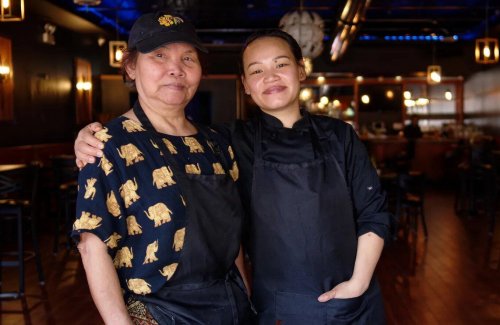
Khmai Fine Dining is a unique Cambodian restaurant in Rogers Park, Chicago. Owned by executive chef Mona Sang, the name is a mix of “Khmer,” the language and ethnicity of native Cambodians, and “me,” the Khmer term for mother, to emphasize her mother’s important role in presenting traditional Cambodian cuisine.

Mona, together with her sister, two brothers, and mother Sarom Sieng came to the US in early 1980 after surviving the Cambodian genocide. The Khmer Rouge tortured Sarom and executed her husband as the family fled to Thai refugee camps.

A single mother who never spoke English, Sarom began cooking for other families in the Cambodian community in order to survive and eventually expanded into catering events at Living Water Community Church in Rogers Park.

Mona hasn’t heard every detail of Sarom’s experience during the genocide, but the trauma her mother went through is still very clear to her. “I don’t know the whole story, but she tells it little by little when she’s cooking,” Mona told Eater Chicago. “I think there’s a lot of other people out there who have been through the same thing, but their story has never been told.”

In 2018, another family tragedy came when one of Mona’s brothers died unexpectedly in his sleep. Her mother discovered him the next morning and that image haunted Sarom.

Now that she is almost 80 years old, Sarom spends her days with her 13 grandchildren or assisting at Khmai.

According to Eater, Mona isn’t simply conveying a message to its customers with Khmai’s name. It is also a way of healing and writing a love letter to her mother who has fought for them to survive through the restaurant.

Khmai’s mesmerizing dishes include “Nom Bahn Chok”, a vermicelli noodle dish with minced tilapia marinated in kreoung and prahok, simmered in coconut fish stock, “Sach Koh Ang”, beef skewers marinated in lemongrass, Khmer spices and chili peppers, and Mai’s famous eggrolls stuffed with ground chicken, bean thread noodles and taro root.