Stories

August 25, 2022

SHARE:

When looking at an Asian-American woman, certain implicit biases exist. They are often judged as being too meek, timid, or passive to achieve their goals. They may be held back by such an evaluation, preventing them from realizing their full potential.

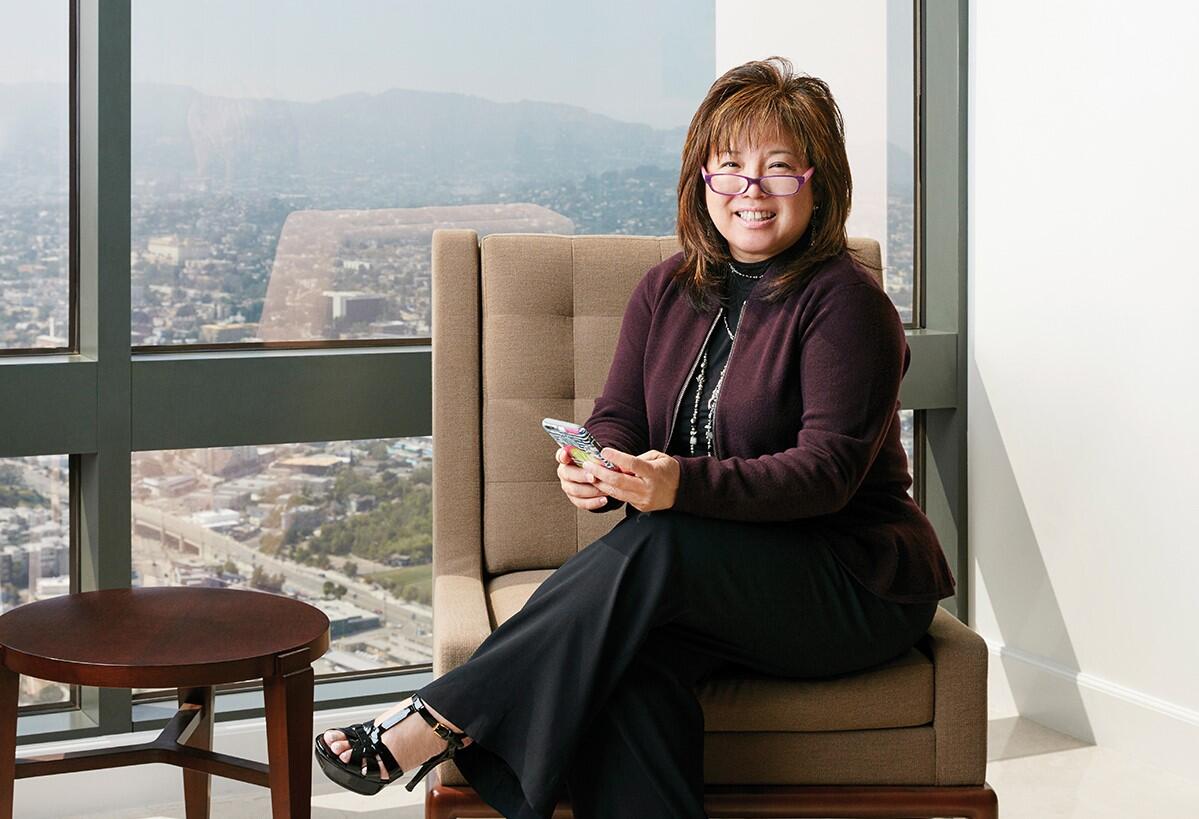
It was difficult for Asian-American lawyer Debra Wong Yang to speak up throughout her early career. In the long run, she realized that her inability to stand up for herself did not only hurt her but also her clients.

“Eventually, we all find a voice — my advice is to just make sure the one you ultimately adopt is actually yours,” she advised in her essay published by Law360.

Yang graduated from law school in 1985 when women were still relatively powerless in the legal field. Since she was still working toward the goal of following the path she had chosen, she has faced many challenges along her journey. She has witnessed it all, from the very traditional Chinese upbringing she received to the various sacrifices, frustrations, and challenges she must face on a day-to-day basis in her chosen field.

After years of practicing law and facing challenges in the courtroom, she came to a number of important realizations that helped her become a successful attorney. She remembered when she thought up some strategies that she hoped would assist her in communicating effectively with others. 

Yang also tried to conquer her fear, and her motivation helped her cope with the situation and make further progress. With a lot of the many books she has read on leadership, she knows she has finally found her own approach to developing herself. 

She aspires on detailing how she was preparing for her court session with an outline of her questions and concerns, and other litigants will be able to better manage their time with counsel. She realized she was getting better at defending her clients in court because she was able to keep her attention solely on the issues and evidence in her case.

When she was currently going through a period of learning and challenges, she learned that holding a position of authority does not guarantee respect from subordinates. She came to understand that one of the responsibilities of a leader is to address concerns raised by those who doubt one’s abilities.

In her courtroom sessions, Yang strongly suggests analyzing the situation first and looking for authentic solutions carefully. She strongly believed that the solutions to some problems sometimes are not immediately obvious and have never been tried before, or that it’s extremely straightforward. However, she is challenged to keep turning the issue over and over in her mind until she begins to see it from a new perspective.

Yang also stressed the importance of having mentors to turn to for advice and insight. She was assertive in her belief that one should be guided by the process of sitting down, thinking it through, and acting in a way that is most beneficial to them. She went on to say that if the message comes from within, the receiver will perceive it as more genuine and at ease.

In 2002, She was appointed by President George W. Bush as United States Attorney and became a former judge serving the Los Angeles County Superior Court. The fact that her success can be attributed to her strong leadership and the bravery that she possesses as an individual is a reason why she wields her power. 

Not only does Yang share her own experiences, but she also provides valuable advice that other women can use to advance their careers. She stated, “My wish for each of you is that you will be brave when facing self-doubts, challenges, and obstacles. That you will dig deep, reach out if needed, do the research, make the tough decision and not be afraid of losing.”

The fact that Yang, an Asian American woman-in-law, was able to take control of her power demonstrates that one’s race should not determine the opportunities available to them or the path they choose to take in their professional advancement. However, by maintaining a positive attitude and giving oneself the power to make decisions, one will be able to live up to the standards and goals that have been established to assist in one’s own success.


Related Articles

Image Source: Shark Tank

Stories

Software Engineer Turned Crocheting Hobby Into A Six-figure Business Takes $450k Deal on ‘Shark Tank’

Justine Tiu, a former Google Classroom software engineer, started crocheting to unwind after work. After realizing its appeal, she and her ex-Wall Street director husband, Adrian Zhang, launched The Woobles, a crochet kit company.

On Friday’s “Shark Tank,” the two explained the hobby’s vast appeal. The firm made $3.1 million last year and $5.3 million since launching two years ago.

All five Sharks quickly decided they wanted a piece of the company, and they showed they were willing to betray their business partners to get it.

The Woobles is a crafting kit company that offers patterns, step-by-step video tutorials, and all the materials needed to do amigurumi crochet, a Japanese fiber art form, even if you are a complete beginner. Once your kit arrives with all the materials, a login code gives you step-by-step written and video instructions to make your craft and helpful hints when you get stuck.

Tiu and Zhang ultimately received a $450,000 investment offer from sharks Mark Cuban and Lori Greiner. In exchange, the company, which at the time of filming was on pace to generate $7 million in yearly sales, gave Cuban and Grenier a split of 6% equity.

Image Source: FOX5 New York

News

Manhattan’s Chinatown Receives $20M Funding For 11 Post-pandemic Revitalization Projects

Manhattan’s Chinatown is one of the neighborhoods that has been impacted the most severely by the pandemic.

New York Governor Kathy Hochul unveiled eleven transformational projects that would be part of the initiative to help the Chinatown community reopen corridors, restaurants, businesses, and cultural institutions. 

The projects include:

  • Renovating Kimlau Square
  • Beautifying the Park Row connection to Chinatown
  • Upgrading a section of Sara D. Roosevelt Park
  • Installing murals and light projection art throughout Chinatown
  • Expanding light-up Chinatown street lanterns
  • Opening a community health & wellness center
  • Reopening the childcare and family support center at Smith Houses
  • Creating a Building Upgrades Fund
  • Creating a Chinatown welcome arch/gateway
  • Establishing Asian Culinary Arts of New York
  • Establishing the Chinatown Cultural Welcome Center

“These critical investments will transform the neighborhood and create a more vibrant and inviting destination for locals and visitors alike while enriching the neighborhood by improving foot traffic, economic and cultural activity.” Governor Hochul said in a statement.

Image Source: K.M. Cannon / Las Vegas Review-Journal

News

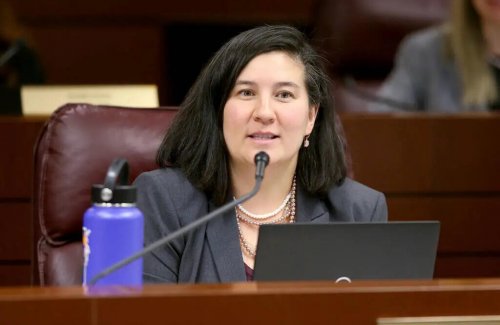
Rochelle Nguyen Sits As The First Asian American Nevada Senator

Clark County Commission appoints Nevada’s first Asian American senator, Rochelle Nguyen, a state assemblywoman. 

“I plan on working hard to ensure we are adequately funding our public schools, that health care is affordable as well as accessible, and that all voices are represented,” Nguyen said, who will replace former state Sen. Chris Brooks for a job in the private sector.

Nguyen was nominated by Senate Majority Leader Nicole Cannizzaro, D-Las Vegas. The new Nevada senator’s appointment to the Finance, Judiciary, and Health and Human Services committees for the next parliamentary session was made public by the Democratic caucus. She will hold the position’s vice chair.

The caucus acknowledged her efforts on “landmark” legislation, which included reforming the criminal justice system, regulating short-term rental agencies, and advocating for victims of domestic abuse.

When Brooks was elected to the state Senate in 2019, Clark County made the decision to nominate Nguyen to replace Brooks in the Assembly. She eventually won the election for the seat in both 2020 and 2022.

Image Source: Vedant Fashions

News

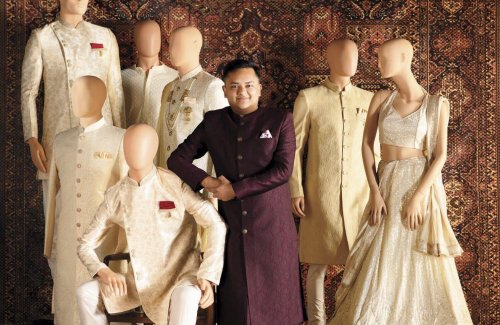
Vedant Fashions Founder Made It To India’s Richest List From Selling Affordable Indian Wedding Couture

Ravi Modi started Vedant Fashions in 1999 with the Manyavar brand, selling pajamas, saris, sherwanis(long-sleeved outer coats), kurtas, lehengas (ankle-length skirt), and salwar sets (trouser-and-tunic combination).

Vedant Fashions designs clothes but outsources bulk of the manufacturing. It currently has 590 outlets in 228 Indian towns and 13 in North America and the UAE. 

Manyavar is its flagship men’s line, while Mohey is its 2015 women’s collection. Both are mid-premium or affordable aspirational.

According to Forbes, Modi listed 15% of the company on the Indian stock exchanges in February—the basis of his $3.75 billion fortune that adds him to the ranks of India’s richest this year for the first time.

Modi grew up with three sisters in Kolkata. His father was a first-generation entrepreneur who opened a clothes company in 1975. Kolkata’s AC Market is one of the city’s earliest air-conditioned markets, including clothing, jewelry, and electronics retailers. 

The 45-year-old billionaire lives in a big bungalow on the outskirts of Kolkata where he grows his own fruits and vegetables. With 30 years of retail expertise, he provides a fresh perspective on money and career. “Earning wealth without earning time is meaningless,” he told Forbes.

Moreover, according to Forbes, he spends a quarter of his time on business, asset management, and philanthropy, and the rest on health, relationships, and learning. His daily activities include meditation, yoga, and studying strategies of retailers such as LVMH, Nike, and Uniqlo.