Stories

August 25, 2022

SHARE:

When looking at an Asian-American woman, certain implicit biases exist. They are often judged as being too meek, timid, or passive to achieve their goals. They may be held back by such an evaluation, preventing them from realizing their full potential.

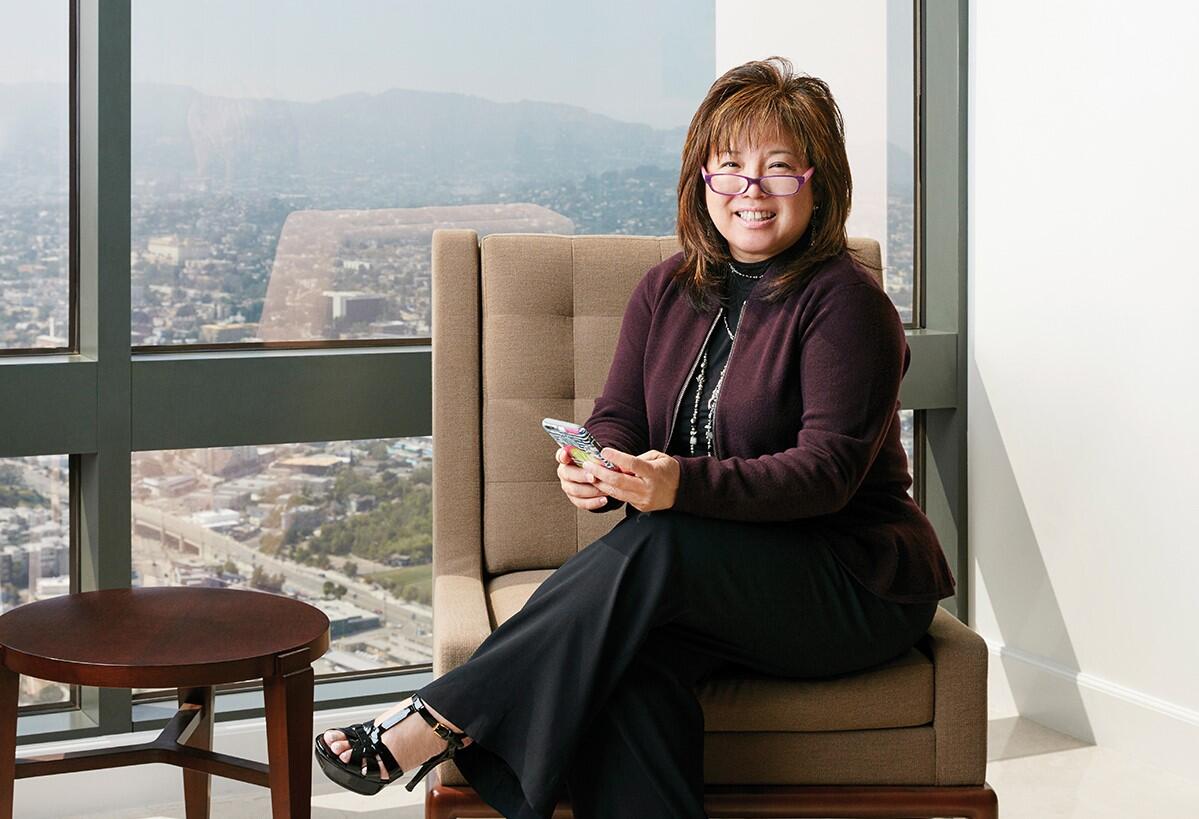
It was difficult for Asian-American lawyer Debra Wong Yang to speak up throughout her early career. In the long run, she realized that her inability to stand up for herself did not only hurt her but also her clients.

“Eventually, we all find a voice — my advice is to just make sure the one you ultimately adopt is actually yours,” she advised in her essay published by Law360.

Yang graduated from law school in 1985 when women were still relatively powerless in the legal field. Since she was still working toward the goal of following the path she had chosen, she has faced many challenges along her journey. She has witnessed it all, from the very traditional Chinese upbringing she received to the various sacrifices, frustrations, and challenges she must face on a day-to-day basis in her chosen field.

After years of practicing law and facing challenges in the courtroom, she came to a number of important realizations that helped her become a successful attorney. She remembered when she thought up some strategies that she hoped would assist her in communicating effectively with others. 

Yang also tried to conquer her fear, and her motivation helped her cope with the situation and make further progress. With a lot of the many books she has read on leadership, she knows she has finally found her own approach to developing herself. 

She aspires on detailing how she was preparing for her court session with an outline of her questions and concerns, and other litigants will be able to better manage their time with counsel. She realized she was getting better at defending her clients in court because she was able to keep her attention solely on the issues and evidence in her case.

When she was currently going through a period of learning and challenges, she learned that holding a position of authority does not guarantee respect from subordinates. She came to understand that one of the responsibilities of a leader is to address concerns raised by those who doubt one’s abilities.

In her courtroom sessions, Yang strongly suggests analyzing the situation first and looking for authentic solutions carefully. She strongly believed that the solutions to some problems sometimes are not immediately obvious and have never been tried before, or that it’s extremely straightforward. However, she is challenged to keep turning the issue over and over in her mind until she begins to see it from a new perspective.

Yang also stressed the importance of having mentors to turn to for advice and insight. She was assertive in her belief that one should be guided by the process of sitting down, thinking it through, and acting in a way that is most beneficial to them. She went on to say that if the message comes from within, the receiver will perceive it as more genuine and at ease.

In 2002, She was appointed by President George W. Bush as United States Attorney and became a former judge serving the Los Angeles County Superior Court. The fact that her success can be attributed to her strong leadership and the bravery that she possesses as an individual is a reason why she wields her power. 

Not only does Yang share her own experiences, but she also provides valuable advice that other women can use to advance their careers. She stated, “My wish for each of you is that you will be brave when facing self-doubts, challenges, and obstacles. That you will dig deep, reach out if needed, do the research, make the tough decision and not be afraid of losing.”

The fact that Yang, an Asian American woman-in-law, was able to take control of her power demonstrates that one’s race should not determine the opportunities available to them or the path they choose to take in their professional advancement. However, by maintaining a positive attitude and giving oneself the power to make decisions, one will be able to live up to the standards and goals that have been established to assist in one’s own success.
Related Articles

Image Source: Netflix

Uncategorized

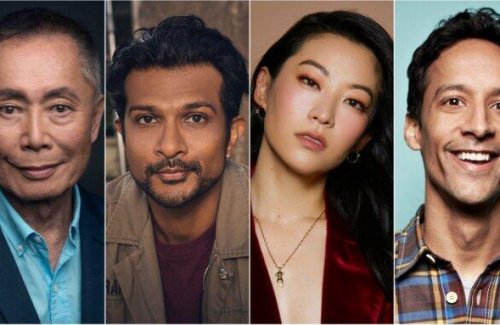
Netflix’s Star-studded Series Avatar: The Last Airbender Includes George Takei, Utkarsh Ambudkar, Arden Cho, Danny Pudi

More actors have joined the cast of Netflix’s live-action version of “Avatar: The Last Airbender,” including George Takei, Utkarsh Ambudkar from the sitcom “Ghosts,” Arden Cho from Partner Tracks, and Danny Pudi from the comedy series “Mythic Quest.”

Avatar: The Last Airbender unites the “four nations”: Water Tribe, Earth Kingdom, Fire Nation, and Air Nomads with a diverse representation of Asian and Indigenous talent.

Star Trek’s Takei voices Koh, an ancient predatory spirit. Cho, Ambudkar, and Pudi all portray Earth Kingdom characters, with Cho as June, a vicious bounty hunter; Ambudkar as King Bumi, the elderly and mercurial king of Omashu; and Pudi as the mechanist, an eccentric inventor and engineer raising his kid in a war-torn country.

Cast members include Gordon Cormier as Aang, Kiawentiio as Katara, Ian Ousley as Sokka, Dallas Liu as Zuko, Elizabeth Yu as Azula, Paul Sun-Hyung Lee as Iroh, and Daniel Dae Kim as Fire Lord Ozai.

Executive produced by showrunner Albert Kim, Rideback’s Dan Lin and Lindsey Liberatore, and Michael Goi, “Avatar: The Last Airbender” is a live-action version of the animated Nickelodeon series of the same name. Directors include Goi, co-executive producer Roseanne Liang, Jabbar Raisani, and Jet Wilkinson.

Kim tells Netflix that the live-action adaptation creates “a chance to showcase Asian and Indigenous characters as living, breathing people. Not just in a cartoon, but in a world that truly exists, very similar to the one we live in.”


Image Source: CAA

Uncategorized

Constance Wu On Surviving Twitter, Producer’s Sexual Assault On Her New Memoir

Constance Wu is opening up about her time on “Fresh Off the Boat” and saying that a senior producer of the 2015–2020 ABC sitcom sexually harassed her.

She tells The New York Times about a producer’s “controlling behaviors” in her memoir Making a Scene. “Fresh Off the Boat was my first-ever TV show. I was thrown into this world,” she added, “I don’t have parents in the industry. And because I was 30, people thought I knew what I was doing. It made me paranoid and embarrassed.” 

Wu also told The Atlantic she hadn’t spoken about this before out of fear of repercussions. “I kept my mouth shut for a really long time about a lot of sexual harassment and intimidation that I received the first two seasons of the show,” Wu said. 

Once the show got successful after two seasons, she was able to say “no” to the producer’s harassment and intimidation. And, so she thought: ‘You know what? I handled it, nobody has to know, I don’t have to stain this Asian American producer’s reputation. I don’t have to stain the reputation of the show.”

The actress addressed the infamous tweet in spring 2019 when ABC renewed another season of the sitcom. “I was punished for being ungrateful,” she said. Wu publicly apologized, but she received backlash. 

She then sought psychiatric help and quit social media for three years. Wu had started writing a book back in 2016 but had lost momentum.

In the fall of 2019, she went back to work at “Fresh Off the Boat”, the final season, where she apologized to her colleagues in person.

The next year, the world stopped due to the pandemic. And she finished the book she was writing. In her memoir, Wu talks about how she felt alone, how racism affected her career, and how she’s moving on.

“I try not to make myself out to be a hero,” Ms. Wu told NYT. “I try to make myself out to be a pretty normal person who has flaws like everybody else. I’m not really into the actor memoir where it’s like, ‘I overcame the odds, and I’m this person who was humble and just kept working. I was the victim.’ It’s less black and white than simply victim and perpetrator.”

Image Source: Etsy.com

Uncategorized

Major Online Shops Including Etsy, Yelp, Uber Eats Boost Visibility Of Minority-Owned Businesses

The pandemic has devastated minority-owned businesses. Only 31% of Black-owned enterprises and 44% of Hispanic-owned businesses got Paycheck Protection Program aid, according to the Federal Reserve.

To raise awareness and support minority-owned companies across the country, major online shops and delivery systems are now showcasing Asian, Black, LGBTQ, and female entrepreneurs.

Amazon Launchpad enables vendors to identify on their “seller credentials” page if they are Black-owned, Latinx-owned, or women-owned.

DoorDash allows you to search for Black-owned restaurants in numerous US cities with “Black-owned” and “women-owned” tags on all company profiles. DoorDash Merchant Support can add the tag to a business’s profile.

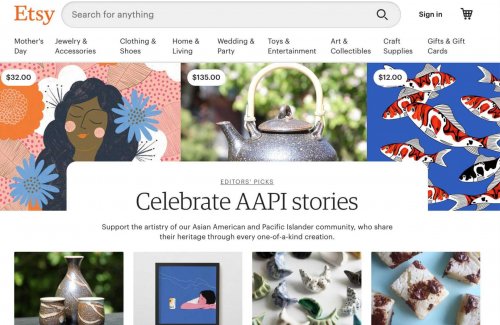
Etsy lets shoppers search for Asian, AAPI, Black, handicapped, Jewish, Latinx, Native, female, LGBTQ, as well as veteran and military family-run businesses.

Google Business Profiles that are verified can add “Black-owned,” “women-led,” and “LGBTQ-owned” attributes to Google Search, Shopping, and Maps.

Macy’s Diverse Owned Brands section of its website features hundreds of items from minority-helmed brands, including those manufactured by AAPI, Blacks, Latinos and Hispanics, LGBTQ persons, and women.

The Intentionalist sorts for Asian-owned, Black-owned, Latino-owned, LGBTQ-owned, Native-owned, veteran-owned and woman-owned companies.

Uber Eats has partnered with the EatOkra app, which connects diners to Black-owned eateries, restaurants and food trucks in cities of Atlanta, Chicago, Los Angeles, Miami and Seattle.

Yelp allows businesses to self-identify as Black-owned. Yelp’s Ones to Watch series also spotlights top Asian-, Black-, Latinx-, LGBTQ- and women-owned businesses around the country. Businesses can also categorize themselves as “open to all,” which means that they welcome anyone regardless of race, ethnicity, national origin, sex, sexual orientation, gender identity and expression, immigration status, religion or disability.

Olivia_headshot

Uncategorized

Twrl Milk Tea Co-Founder & CMO Olivia Chen Shares Essential Lessons On Setting Foot In Famed Retailer Costco

Two mom-friends and milk tea lovers Olivia Chen and Pauline Ang have capitalized on the early success of their milk tea company by sending samples to the head office in Costco which lead to launching their product with the retail giant in just three and a half months.

“We are still pinching ourselves that our Twrl’s Taiwan-Style Black Milk Tea is now in Southern California Costco!” Olivia says, “We’re starting with 3 locations: Irvine, Monterey Park, and Tustin (2700 Park Avenue).” 

Pauline (left) and Olivia (right)

They overcame it without calling in a broker to help them. It wasn’t easy at all, however, this exemplifies the importance of hard work and perseverance of the duo to learn every step of the way for their small business to set foot in one of the world’s largest retail stores.

Olivia enthusiastically shares with Asian Hustle Network the timeline of how their plant-based Twrl Milk Tea made it into Costco to help entrepreneurs navigate the highly competitive food and beverage space. 

Roadshow Or Small Rotation

We met our buyer at Expo West (Think Super Bowl for the Food & Beverage industry where retailers and manufacturers meet up. Super worth doing if you are in CPG. We even landed our 1st TV interview).

After Expo West, we sent more samples to the office and began negotiations for placement. We were offered two ways of being at Costco:

Roadshow

  • 4 days of selling on consignment. We could control costs by using our own people and decide the volume of product we wanted to bring in.
  • Typically, this is how small brands enter Costco. If it does well, you are offered a rotation. If you don’t do well, then it’s really hard to get into the regular set.

Small Rotation

  • We started with a number of stores and the item is part of the regular set.
  • This is harder to secure because Costco is paying for the inventory and the buyer has to believe in your product.

In both situations, it is critical that Twrl Milk Tea sells well and ideally sells out. Why is this important?

It proves to the Costco Buyer that there is a market for our better-for-you plant-based milk teas. More importantly, companies owned by Asian American small business owners like ours are proven to be great partners worth investing time in and onboarding.

Reasons For Opting for Small Rotation

After a few weeks of due diligence on our end, we decided to go with a small rotation. Our reasons were simple:

  • Our manufacturer could produce the volumes needed and in the time we needed. Not always the case in this crazy supply chain. We are made in the USA so it makes a huge difference in our speed for delivery.
  • We could handle the financial obligations to fund the inventory. It’s a lot of money upfront so it’s not a light decision for a smaller company like ours. And, there is still a chance you can be sitting on inventory if it does not sell through.
  • We are committed to Costco and wanted to be part of the regular set and did not want to take the chance that with Roadshow which is only 4 days could be a bust due to so many variables that we may not be able to control.
  • We love Costco ourselves and shop there regularly so we saw our consumers there! Did you know the typical Costco shopper is 35-44 years old, an Asian female making $125,000 and the average trip is $114?!

Roadshow which is only 4 days could be a bust due to so many variables that we may not be able to control.

-Olivia Chen

Decisions, Decisions, Decisions

What flavor to sell?

Out of our 3 flavors, we selected Taiwan-Style Black Milk Tea to launch because it’s one of our best sellers and our Taiwan-Style Black Milk Tea flavor is really unique. Our single-origin loose-leaf black tea is a one-of-a-kind varietal, sourced from a small multi-generational family farm on a misty slope, fed by sweet mountain spring water.

Our tea flavor, aroma, and health benefits are un-parallel to anything on the market. We use pea milk and lightly sweetened our teas with organic agave so our tea flavors really come through. Only 45 calories & 6g of sugar per can.

What would the packaging look like?

Packaging design and sourcing begin for Costco. Luckily for us, Pauline Ang is a seasoned graphic design guru (with 15+ years in the food and beverage packaging for Fortune 500 companies) and designs all our packaging in-house so we could save costs and time here!

How to onboard?

Mountains of paperwork for our two-person team begin. We didn’t use a broker and did everything ourselves. Yes, a broker would have been so incredibly helpful to answer all the questions that we didn’t know the answers to and definitely would have saved us some headaches.

Big Takeaways

  • Don’t be afraid to chase the account you want to be in. Don’t be shy about sharing your vision of where you see the company. Special thanks to Ryan Sung of Honolulu Cookie Company and Vincent Kitirattragarn of Dang Foods for talking to us about their journey with Costco and encouraging us to go for it.
  • It can be done without a broker but not without headaches and some huge learning curves and we did make some mistakes along the way.
  • Have an advocate. We have been super lucky that our buyer has been so incredible to work with and it’s important to have such an advocate in the company. Cannot over-emphasize this enough!
  • Your team matters. Grateful to share this journey with Pauline Ang who is such an amazing friend and business partner. We are two moms that love Milk Tea and simply wanted to make milk tea —a quintessential Asian drink that we love—even better.

Don’t be shy about sharing your vision of where you see the company.

-Olivia chen

Connect with Olivia and Pauline

Your support would mean the world to our small business and the small family farms that use sustainable practices for a tea that’s better for you, and better for the planet. Follow our journey: Instagram, Facebook, TikTok, Twitter

Twrl Warehouse