Marlin Chan is a remarkable individual whose journey embodies determination and triumph in the face of adversity. Born to Cambodian immigrants, Marlin’s family overcame hardships that spanned continents, shaping the very essence of his character.
His parents faced the harsh realities of the 1970’s Cambodian Genocide that forced their separation for nearly 2 decades. After being apart for 18 years, a fortunate stroke of serendipity allowed them to miraculously reunite and lead to the birth of the miracle baby Marlin.
Inspired by his grandmother’s beef crisps, Marlin started a business venture called “Yay’s” to pay homage to his culture. Through Yay’s, Marlin continues his family’s legacy of hard work and determination, sharing a unique taste of Cambodia to the world.
Asian Hustle Network had the privilege to sit down with Marlin Chan and delve into his inspiring journey. Join us as we explore his remarkable story of strength, dreams, and resilience.
CHALLENGES THAT MARLIN’S PARENTS FACED AS CAMBODIAN IMMIGRANTS
During the Cambodian Genocide, my parents faced the challenge of survival, as those of higher status, like artists, government officials, and intellectuals were among the first to be targeted and eliminated.
Because there were countless horror stories of Khmer U.S. Air Force members being killed upon arrival at the Phnom Penh’s air station, it prevented my dad from returning home after serving the U.S. Air Force to save his family. This marked the onset of my parents 18-year separation.
Amid their time in the work camps, my mom tragically lost my sister to chickenpox and malnutrition due to the mistreatment by the Khmer Rouge. This tragic event left her devastated. To escape the work camps, my mom and her family had to navigate minefields at night to be unseen.
Like many immigrants, my dad faced the challenge of not knowing the English language upon his arrival in America so he turned to television to learn how to speak the language. Meanwhile, my mother successfully made her way to America to start a new life and began selling noodles on the streets of Stockton, California to support our family.
THE REMARKABLE REUNION OF LONG-LOST LOVE AFTER 18 YEARS
One day, my father visited a local donut shop for the first time to meet with an old friend, and the donut shop owner recognized him from their days in Cambodia.
As the owner was inquiring about my mother, he revealed that the last he heard about her and her family’s whereabouts was in Stockton, California. My father’s face drained of color, and he froze upon hearing this shocking revelation. Immediately, he asked if the owner had their contact information and without skipping a beat, he got in touch and embarked on a road trip to Northern California the very next morning.
Upon arriving in Stockton, California, my dad found my mom, still hopeful and strong-willed as she had always been, but her health wasn’t in the best condition. She was living in a one-bedroom shared apartment with multiple other families. They promptly went for health check-ups and discussed restarting a life together again. In that same year, I was born on October 7, 1993. The Stockton Newspaper published an article of Marlin Chan as the miracle baby that beat the odds of survival with my parents’ long-lost reunion and my mother’s ability to bear children at forty.

LESSONS THAT SHAPE MARLIN’S JOURNEY
As a child of Cambodian immigrants, here are some of the things I learned:
- Stay curious, for knowledge is a treasure that never diminishes and our curiosity fuels our drive to innovate.
- Having a positive outlook can transform our perception of life, particularly during trials.
- Material wealth is temporary. The value in developing your knowledge and skills is what truly holds the key to unlocking your infinite potential for abundance, which created a drive for me to continually invest in myself.
Relentlessness and grit are values I learned from my parents’ stories at a young age. I come from a determined, resilient family that fights for love. Hearing stories of my mom walking from Cambodia to the border of Thailand in search of refuge taught me the power of determination. Based on these principles, I have always believed in my potential and fostering a strong work ethic. While I may not always be the most attractive or intelligent person in the room, I strive to outwork everyone to the best of my abilities.

FACING FAILURE, FINDING STRENGTH
When I was eighteen years old, I was selected as one of the top 10 finalists to compete on ‘Internet Icon,’ a show created by Ryan Higa, my content creator idol. Unfortunately, I ended up placing 8th on the show, and as a young eighteen-year-old, I was devastated. I doubted whether I could become a full-time content creator if I couldn’t win this competition.
In the following year, I took a service industry job at Chipotle and completely stopped making videos. By the end of that year, I felt a renewed sense of fervor and determination to pursue my career in content creation. The skills I learned from my job at Chipotle, such as executing with excellence to avoid repetition, transferred to my work ethic for content creation.
By doing something that wasn’t creative, it shifted my perspective with content creation and allowed me to pursue my passions with more fervor and focus. I realized that I would only be a failure if I gave up since you miss 100% of the shots you don’t take. This experience resonated with the Japanese proverb, “Fall seven times, stand up eight.”
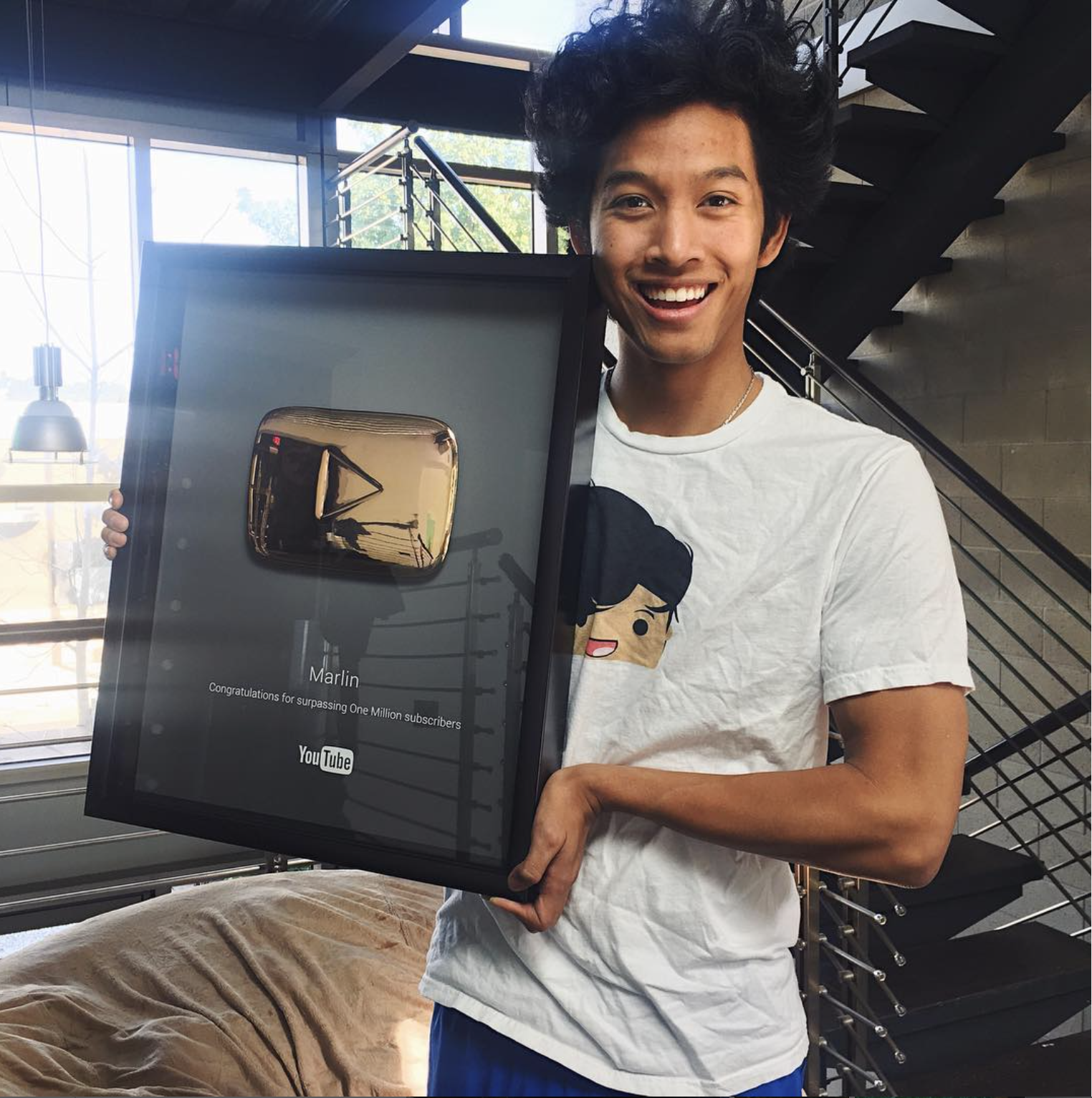
Over the next three years, I moved to Los Angeles, California, and gained over 1 million subscribers, turning content creation into a full-time job. I learned that if I could visualize my goals, they could become my reality, or even exceed beyond my imagination.
LOOKING AHEAD
My greatest accomplishment would be giving my parents a better life and inspiring kids to foster their talents and pursue their passions.
Looking ahead, my goals for the future are centered around bringing joy and delight to the world with my food and creations. I aspire to represent Asian Americans, who are under-represented in American media and encourage my Asian community to share a piece of their culture with others.
My dream is to become the first Cambodian American to bring a taste of Cambodia to every home with Snack Yay’s on a global scale. Bringing exposure to the Cambodian community would be a true fulfillment of my mission in life.

ABOUT HIS BRAND YAY’S
My Grandma, known as ‘Yay’ in Khmer, has been crafting beef crisps since the early 90’s to cover her apartment rent in Stockton, California. Beef crisps consist of thinly sliced marinated beef air-dried to a delightful crunch with flavor profiles that offer a symphony of umami, sweetness, and spiciness. Consumer goods expert Kathryn Tuttle described them as a fusion of ‘Beef Carpaccio meets potato chips meets bright Asian flavors.’ What sets these apart from traditional American beef jerky is their light and crispy texture. While regular beef jerky takes about 3 hours to dehydrate, beef crisps demand up to 20 hours for that perfect crispiness.
Growing up, I thought beef crisps was a snack that was readily available in stores. My earliest memories involved enjoying this delectable treat outdoors, helping my grandma sell them to our community. The concept of making Yay’s as a brand first came to me in December 2017. Though the idea took root then, I didn’t start the business until June 2023. Pioneering and expanding something unprecedented like this has not been an easy feat. It was very discouraging at first to reach out to over 57 different manufacturers and be told numerous times that it couldn’t be done because of the technical hurdles in producing beef jerky with this level of crispiness.
Yay’s is currently self-manufactured to ensure we use the highest quality ingredients. Every bag we send out meets our standards because we take the time to slow-dry the meat for over 20 hours, while typical beef jerky takes 3 hours to produce.
We initially started out in a small commercial kitchen in Camarillo, California, and transferred to a medium-sized commercial kitchen in New Jersey this year to increase production. We are sourcing USDA Prime meat from the same suppliers that many Michelin-starred restaurants in New York City use. Every bag of Yay’s is handcrafted because we value quality. For me, the possibility of sharing a taste of Cambodia to the world is a dream come true.
MARLIN CHAN’S INSPIRATIONAL MESSAGE TO YOUNG AAPI INDIVIDUALS
Never give up. Remember to focus on your own journey because you are uniquely you, and your authenticity is your ultimate gift to share with the world. Being referred to as a miracle baby since birth has shaped my perspective to preserve through the seasons of life and be grateful of the blessings in my life. Maintaining a positive attitude is a powerful tool to develop unwavering confidence in your potential to achieve anything you set your mind to.
CONNECT WITH MARLIN CHAN
Instagram: @marlinramseychan
Youtube: @snackmarlin
Yay’s Instagram: @snackyays