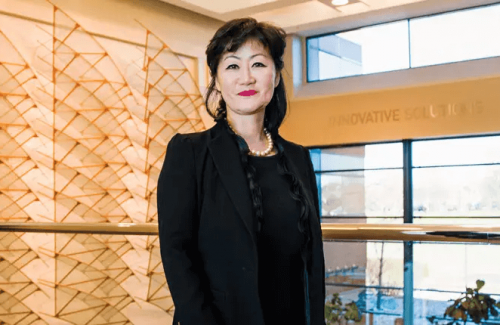
When COVID-19 forced Samantha Lee to put her wedding photography/videography business on hold, she seized the opportunity to cherish precious moments with her one-year-old daughter.
As news of the alarming increase in Anti-Asian hate spread, Samantha became deeply concerned about the world her daughter would grow up in.
Born in Malaysia to Chinese parents, Samantha’s family made the life-changing decision to relocate to Australia when she was just eight months old, motivated by her father’s aspiration for a better life. Growing up, Samantha only had blonde dolls to play with, so she wanted to be like her blonde classmates. She thought that they were so lucky to be born that way.
She wanted differently for her daughter, so she embarked on a quest to find dolls that represented their Asian heritage to help her daughter feel proud of her Asian identity. However, Samantha was disheartened by the lack of diversity and representation available in the toy industry when she couldn’t find any.
Fuelled by a passionate desire to make a difference, Samantha resolved to create dolls that would empower Asian children and celebrate the vibrant tapestry of Asian cultures. Starting with six cultures, Samantha’s goal was to expand her collection to represent as many cultures as possible, including underrepresented regions like Southeast Asia, Vietnam, and the Philippines.
Now, after months of hard work and unwavering dedication, Samantha’s dolls, Joeydolls, are finally ready to be ordered. These dolls embody the beauty and traditions of various Asian cultures, instilling a sense of pride and confidence in children.
Join us as we delve into the inspiring story of Samantha Lee, who, in an exclusive interview with Asian Hustle Network, shares her journey in creating Joeydolls.
LACK OF REPRESENTATION IN DOLLS
When I was growing up, I grew up with only blonde dolls and only saw the same on TV. I remember thinking that I was so envious of my classmates at school – that they were so lucky to be both that way. I also remember thinking that I could never be a princess or a famous actress. Not seeing myself represented meant that I always felt like I was not good enough the way I was, that I didn’t really matter, and that I was only meant to be on the sidelines.
When I witnessed the rise in anti-Asian hate, I was scared for the world my daughter would grow up in. I began to reflect upon my own experience. I didn’t want her to feel the same shame I grew up with. Since we were in lockdowns during the pandemic, my daughter couldn’t play with other children so I started to look for dolls that could be her companion. Most of the dolls only had fair skin and black hair and they were considered “Asian”. I just couldn’t connect to them, especially since I also experienced colorism while pregnant. I was told that it would be better if my daughter was born with my husband’s fair skin and my eyes (double eyelids). I was really disheartened by the continued concept of beauty in the Asian community.
Around that time, we celebrated my daughter’s first year birthday by putting her in traditional Chinese and Korean outfits and I wondered why dolls didn’t do the same. I wanted her to not only feel comfortable with who she is, how she looks, and where she comes from.
THESE DOLLS ARE MORE THAN JUST DOLLS FOR PEOPLE, THEY ARE PART OF THEIR STORY AND THEIR HEALING
I faced a lot of challenges in creating the dolls. I didn’t know anything about producing a doll – or a toy for that matter. I also had no experience in fashion or sewing. I was just a mom who wanted to make a difference. It was hard to find the resources since I also had no contacts in the industry.
I started with the concept of doing 6 ethnicities and then expand in the future. I wanted to make sure that Southeast Asia was represented since they have been underrepresented for so long. Initially, I wanted the dolls to have different skin tones to pick from for each ethnicity, however, it was so difficult to do so on a mass scale.
I was also surprised at how difficult it was to find the right shades for the skin tones and at the same time keep costs low since my production numbers were not large enough. As I was losing so many of my contracts in my photography business, I didn’t have a sustained and reliable income to be able to support this passion project. So I really tried to develop the dolls on a shoestring budget.
I wanted to start the prototyping and manufacturing process locally but the costs got exponentially larger especially when it was so difficult to find the fabrics and materials we needed. We were so limited in what we were able to source so that’s when I began to look overseas.
I began developing the dolls with one company that gave a very good price for the dolls, but they had a lot of trouble finding the right skin tone and couldn’t do the hair like we wanted. Then, we found another company that was able to do the skin tones and hair we wanted, but I found that their quality was not acceptable. Quality was very important to me because I really wanted people to feel proud to have these dolls and what they represented.
I often posted to Instagram about my progress and people would respond by saying that they teared up seeing them. I knew that these dolls are more than just dolls for people, they are part of their story and their healing. So many people said that they would have so loved having these dolls when they were younger and it would have helped them feel better about themselves. That’s exactly what I wanted these dolls to do for people – to help them feel that they are worthy in this world.
It took a lot of dedication to learn each of the cultures and the symbolism behind some of the traditional details. I also wanted the dolls to be safe for babies to have as well, so that’s where I struggled with keeping the details accurate, cost-effective, and most importantly safe for all children. There was a lot of back and forth and redesigning. We went through countless prototypes and so many times I wanted to give up because I felt that I was not up to the task to complete it.
I had to remind myself of my “why”. I decided that instead of trying to hide behind social media, I would be vulnerable and talk about the struggles behind developing these dolls. I was worried that people would tell me to just give up, but instead, they gave me so many messages of support. They pushed me to keep going and told me how much they appreciated what I was doing. That these dolls make such an impact on them! I knew I had to keep going. So I kept pushing. These dolls are not only for my children but also for the other children who NEED these dolls.

YES, WE ARE ASIAN BUT WE HAVE SO MANY DIFFERENCES THAT MAKE US SPECIAL AND UNIQUE
I hope that children will see the dolls and feel proud to learn more about their heritage and also just be comfortable in their own skin. I hope that it helps parents teach their children how worthy they are. I hope that the dolls will help foster positive self-esteem and self-confidence.
I want to change the narrative – that Asians are not a monolith. Yes, we are Asian but we have so many qualities that make us special and unique. So in doing so, I also hope that these dolls will help create more awareness and education about Asian diversity. That each of our cultures is not the same. That each should be celebrated.
I hope that our dolls can be a stark contrast to the hate. That’s why I created the campaign #StartAsianLove instead.
CHILDREN AND ADULTS WILL FINALLY FEEL INCLUDED AND REPRESENTED BY DOLLS THAT RESEMBLED THEM
Even when my daughters couldn’t speak, their faces would light up and they would giggle with delight as I designed the dolls on my computer. It was a heartwarming experience, even during moments when I wasn’t fully satisfied with the prototypes. I would hide them around the house or in my office, and my daughters would discover them, hugging and kissing the dolls as if they were their dear companions. The sheer joy they exhibited upon seeing those happy doll faces was truly priceless.
When my youngest daughter Jasmine turned 1, we dressed her in a traditional hanbok. To my delight, my oldest daughter Joey pointed at the Korean doll and exclaimed, “It looks like Jasmine!” On another occasion, she referred to the same doll as a “princess.” It was a deeply touching moment for me because I had never imagined that Asians, including myself, could be seen as princesses.
The feedback I received from parents further affirmed the impact of my work. One parent expressed gratitude for creating a different world for their child, where they could proudly embrace their culture and heritage without the fear of being bullied or pressured to assimilate. The acknowledgment of the value of diversity was deeply meaningful to them.
Another parent expressed admiration for how Joeydolls would positively influence the lives of other girls. The representation of Asian culture was applauded, as it meant that children and adults will finally feel included and represented by dolls that resembled them. The support and well wishes I received from these parents fueled my motivation, and I am grateful for their continued support.
I WAS IN TEARS READING EACH MESSAGE BECAUSE I COULD FEEL HOW EACH PERSON CONNECTED WITH MY STORY
It was amazing to receive all the messages of support on AHN! I was in tears reading each message because I could feel how each person connected with my story and just wanted to give me that push to keep going.
I knew that my story was important. As a community, we needed to see these dolls be finally made and put in the hands of young children, and how these dolls can further impact the community on a much greater level.
I was excited about being the one to push for changing our narrative, breaking stereotypes, and deconstructing racism and colorism. These are all important changes I wanted to make in the world and all the messages solidified how important my work was.
SAMANTHA’S HOPE FOR JOEYDOLLS
My goal is to represent as many ethnicities/cultures within Asia. This will further help solidify the messaging of how beautiful and diverse Asians are! Also, I want to create boy/gender-neutral dolls too.
I hope that children (and adults!) of all backgrounds (not just Asians) will appreciate and love our dolls and what they symbolize. I also have some other fun ideas that I hope to work on that still encompass celebrating the beauty of Asian culture and diversity.
CONNECT WITH SAMANTHA
Website: joeydolls.com
Instagram: @joeydolls
Facebook: Joeydolls
Youtube: Joeydolls
TikTok: @joeydollsco