Stories

August 21, 2023

SHARE:

When COVID-19 forced Samantha Lee to put her wedding photography/videography business on hold, she seized the opportunity to cherish precious moments with her one-year-old daughter.

As news of the alarming increase in Anti-Asian hate spread, Samantha became deeply concerned about the world her daughter would grow up in.

Born in Malaysia to Chinese parents, Samantha’s family made the life-changing decision to relocate to Australia when she was just eight months old, motivated by her father’s aspiration for a better life. Growing up, Samantha only had blonde dolls to play with, so she wanted to be like her blonde classmates. She thought that they were so lucky to be born that way. 

She wanted differently for her daughter, so she embarked on a quest to find dolls that represented their Asian heritage to help her daughter feel proud of her Asian identity. However, Samantha was disheartened by the lack of diversity and representation available in the toy industry when she couldn’t find any.

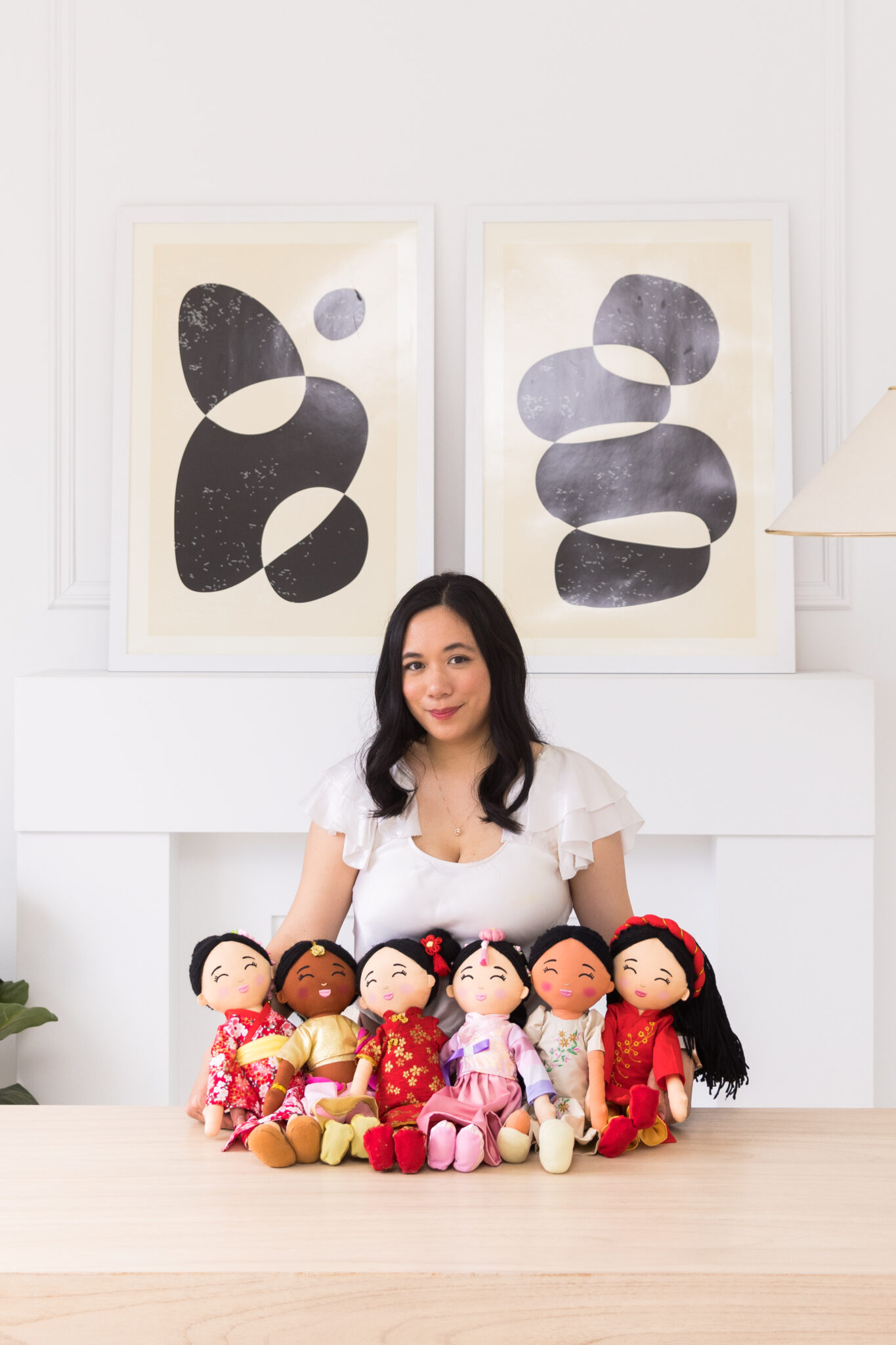
Fuelled by a passionate desire to make a difference, Samantha resolved to create dolls that would empower Asian children and celebrate the vibrant tapestry of Asian cultures. Starting with six cultures, Samantha’s goal was to expand her collection to represent as many cultures as possible, including underrepresented regions like Southeast Asia, Vietnam, and the Philippines.

Now, after months of hard work and unwavering dedication, Samantha’s dolls, Joeydolls, are finally ready to be ordered. These dolls embody the beauty and traditions of various Asian cultures, instilling a sense of pride and confidence in children.

Join us as we delve into the inspiring story of Samantha Lee, who, in an exclusive interview with Asian Hustle Network, shares her journey in creating Joeydolls.

LACK OF REPRESENTATION IN DOLLS

When I was growing up, I grew up with only blonde dolls and only saw the same on TV. I remember thinking that I was so envious of my classmates at school – that they were so lucky to be both that way. I also remember thinking that I could never be a princess or a famous actress. Not seeing myself represented meant that I always felt like I was not good enough the way I was, that I didn’t really matter, and that I was only meant to be on the sidelines. 

When I witnessed the rise in anti-Asian hate, I was scared for the world my daughter would grow up in. I began to reflect upon my own experience. I didn’t want her to feel the same shame I grew up with. Since we were in lockdowns during the pandemic, my daughter couldn’t play with other children so I started to look for dolls that could be her companion. Most of the dolls only had fair skin and black hair and they were considered “Asian”. I just couldn’t connect to them, especially since I also experienced colorism while pregnant. I was told that it would be better if my daughter was born with my husband’s fair skin and my eyes (double eyelids). I was really disheartened by the continued concept of beauty in the Asian community. 

Around that time, we celebrated my daughter’s first year birthday by putting her in traditional Chinese and Korean outfits and I wondered why dolls didn’t do the same. I wanted her to not only feel comfortable with who she is, how she looks, and where she comes from. 

THESE DOLLS ARE MORE THAN JUST DOLLS FOR PEOPLE, THEY ARE PART OF THEIR STORY AND THEIR HEALING

I faced a lot of challenges in creating the dolls. I didn’t know anything about producing a doll – or a toy for that matter. I also had no experience in fashion or sewing. I was just a mom who wanted to make a difference. It was hard to find the resources since I also had no contacts in the industry.

I started with the concept of doing 6 ethnicities and then expand in the future. I wanted to make sure that Southeast Asia was represented since they have been underrepresented for so long. Initially, I wanted the dolls to have different skin tones to pick from for each ethnicity, however, it was so difficult to do so on a mass scale.

I was also surprised at how difficult it was to find the right shades for the skin tones and at the same time keep costs low since my production numbers were not large enough. As I was losing so many of my contracts in my photography business, I didn’t have a sustained and reliable income to be able to support this passion project. So I really tried to develop the dolls on a shoestring budget. 

I wanted to start the prototyping and manufacturing process locally but the costs got exponentially larger especially when it was so difficult to find the fabrics and materials we needed. We were so limited in what we were able to source so that’s when I began to look overseas. 

I began developing the dolls with one company that gave a very good price for the dolls, but they had a lot of trouble finding the right skin tone and couldn’t do the hair like we wanted. Then, we found another company that was able to do the skin tones and hair we wanted, but I found that their quality was not acceptable. Quality was very important to me because I really wanted people to feel proud to have these dolls and what they represented.

I often posted to Instagram about my progress and people would respond by saying that they teared up seeing them. I knew that these dolls are more than just dolls for people, they are part of their story and their healing. So many people said that they would have so loved having these dolls when they were younger and it would have helped them feel better about themselves. That’s exactly what I wanted these dolls to do for people – to help them feel that they are worthy in this world. 

It took a lot of dedication to learn each of the cultures and the symbolism behind some of the traditional details. I also wanted the dolls to be safe for babies to have as well, so that’s where I struggled with keeping the details accurate, cost-effective, and most importantly safe for all children. There was a lot of back and forth and redesigning. We went through countless prototypes and so many times I wanted to give up because I felt that I was not up to the task to complete it.

I had to remind myself of my “why”. I decided that instead of trying to hide behind social media, I would be vulnerable and talk about the struggles behind developing these dolls. I was worried that people would tell me to just give up, but instead, they gave me so many messages of support. They pushed me to keep going and told me how much they appreciated what I was doing. That these dolls make such an impact on them! I knew I had to keep going. So I kept pushing. These dolls are not only for my children but also for the other children who NEED these dolls.

YES, WE ARE ASIAN BUT WE HAVE SO MANY DIFFERENCES THAT MAKE US SPECIAL AND UNIQUE

I hope that children will see the dolls and feel proud to learn more about their heritage and also just be comfortable in their own skin. I hope that it helps parents teach their children how worthy they are. I hope that the dolls will help foster positive self-esteem and self-confidence. 

I want to change the narrative – that Asians are not a monolith. Yes, we are Asian but we have so many qualities that make us special and unique. So in doing so, I also hope that these dolls will help create more awareness and education about Asian diversity. That each of our cultures is not the same. That each should be celebrated. 

I hope that our dolls can be a stark contrast to the hate. That’s why I created the campaign #StartAsianLove instead.

CHILDREN AND ADULTS WILL FINALLY FEEL INCLUDED AND REPRESENTED BY DOLLS THAT RESEMBLED THEM

Even when my daughters couldn’t speak, their faces would light up and they would giggle with delight as I designed the dolls on my computer. It was a heartwarming experience, even during moments when I wasn’t fully satisfied with the prototypes. I would hide them around the house or in my office, and my daughters would discover them, hugging and kissing the dolls as if they were their dear companions. The sheer joy they exhibited upon seeing those happy doll faces was truly priceless.

When my youngest daughter Jasmine turned 1, we dressed her in a traditional hanbok. To my delight, my oldest daughter Joey pointed at the Korean doll and exclaimed, “It looks like Jasmine!” On another occasion, she referred to the same doll as a “princess.” It was a deeply touching moment for me because I had never imagined that Asians, including myself, could be seen as princesses.

The feedback I received from parents further affirmed the impact of my work. One parent expressed gratitude for creating a different world for their child, where they could proudly embrace their culture and heritage without the fear of being bullied or pressured to assimilate. The acknowledgment of the value of diversity was deeply meaningful to them.

Another parent expressed admiration for how Joeydolls would positively influence the lives of other girls. The representation of Asian culture was applauded, as it meant that children and adults will finally feel included and represented by dolls that resembled them. The support and well wishes I received from these parents fueled my motivation, and I am grateful for their continued support.

I WAS IN TEARS READING EACH MESSAGE BECAUSE I COULD FEEL HOW EACH PERSON CONNECTED WITH MY STORY

It was amazing to receive all the messages of support on AHN! I was in tears reading each message because I could feel how each person connected with my story and just wanted to give me that push to keep going.

I knew that my story was important. As a community, we needed to see these dolls be finally made and put in the hands of young children, and how these dolls can further impact the community on a much greater level.

I was excited about being the one to push for changing our narrative, breaking stereotypes, and deconstructing racism and colorism. These are all important changes I wanted to make in the world and all the messages solidified how important my work was.

SAMANTHA’S HOPE FOR JOEYDOLLS

My goal is to represent as many ethnicities/cultures within Asia. This will further help solidify the messaging of how beautiful and diverse Asians are! Also, I want to create boy/gender-neutral dolls too.

I hope that children (and adults!) of all backgrounds (not just Asians) will appreciate and love our dolls and what they symbolize. I also have some other fun ideas that I hope to work on that still encompass celebrating the beauty of Asian culture and diversity. 

CONNECT WITH SAMANTHA

Website: joeydolls.com

Instagram: @joeydolls

Facebook: Joeydolls

Youtube: Joeydolls

TikTok: @joeydollsco
Related Articles

OLYMPUS DIGITAL CAMERA

Stories

How Anise Health Addresses the Unique Mental Health Needs of the Asian Community

Anise Health is on a mission to improve mental healthcare for Asian Americans.

Recognizing the lack of health equity in the existing mental healthcare system, especially for people of color, Anise Health aims to create a positive change by offering culturally-responsive care.

Anise Health wants to make mental health care accessible and affordable for everyone. They work with different health plans and offer affordable plans for those who pay themselves. They have big plans to reach more people of color and support them in their mental health journey. 

Anise Health believes that everyone deserves the care and support they need to live a happier and healthier life. Read through the inspiring insights from Anise Health in an interview with Asian Hustle Network.

Alice and Nisha, founders of Anise Health

ADDRESSING THE UNIQUE MENTAL HEALTH NEEDS OF THE ASIAN COMMUNITY

Anise Health is building the gold standard of mental healthcare for Asian Americans because there is an urgent need to advance health equity.

People of color are extremely underserved by the existing mental health care system, with 50% dropping out of therapy after just the first session. Specifically, 41% of Asian Americans experience current symptoms of depression and anxiety, yet only 30% report feeling supported today. The sharp increase in anti-Asian hate crimes compounded with the model minority myth means that the Asian community often suffers in silence, leading to devastating consequences such as Asian young adults being the only ethnic group with suicide as the leading cause of death.

Anise is on a mission to change these trends by creating a culturally-responsive digital mental health platform built by and for the Asian community. We’re humbled by the incredible results our clients achieve on our platform, including:

  • 97% completion rate of the first 4 weekly sessions, which far exceeds the industry benchmark of outsized dropouts after the first session
  • 95% of our clients report feeling heard or understood by their provider, demonstrating a strong therapeutic alliance between providers and clients
  • Net promoter score of 84 (46 points above the industry average), indicating unparalleled satisfaction with our provider curation and training

SPECIFIC CHALLENGES THAT INDIVIDUALS FACE WHEN SEEKING MENTAL HEALTH SUPPORT

Asian Americans experience unique stressors such as collectivistic family dynamics, bicultural tension living as a minority in a majority culture, pressure to achieve and perfectionism from reinforced narratives of self-sacrifice, intergenerational trauma from unhealed historical wounds, excessive shame and guilt leading to internalized self-criticism, rigid gender norms and relationship expectations, to name a few. 

Our clinical advisory board comprises pioneering experts in the field who are leading evidence-based research to address these stressors and empower the well-being of the Asian community. We infuse their expertise into our care models and translate this information into digestible educational formats which are curated in our digital resource library.

DESTIGMATIZING MENTAL HEALTH

Anise normalizes mental health by delivering psychoeducational webinars and interactive workshops tailored to Asian Americans. Our clinicians lead these group services across a diverse range of topics for a variety of enterprise partners and schools, including Netflix, LinkedIn, Microsoft, and many more. We also host free community engagement programming with a large network of over two dozen nonprofit partners, as well as speaking at multicultural conferences and celebratory events.

For individuals seeking 1-on-1 services, Anise has developed care models that are clinically validated and culturally tailored, which research shows to be ~5x more effective than one-size-fits-all offerings. We are the only platform providing a holistic suite of services that integrate individual teletherapy, behavioral coaching, peer support groups, alternative medicine, and a curated library of self-service digital resources. Furthermore, our approach enables the accurate assessment of cultural stressors and personalization of care using machine learning technology. Anise’s proprietary clinical care model incorporates cultural adaptation along every step of the client’s journey from intake to blended treatment plans.

THE CULTURALLY-RESPONSIVE CARE MODEL

At Anise, culturally-responsive care means seeing a client as more than just a set of symptoms and diagnoses. Clients are seen as unique individuals whose racial and cultural contexts shape how they experience the world and how their needs are not being met.

Our providers are recruited for their deep expertise in culturally-responsive care and extensive experience supporting Asian clients. Once hired, providers are trained in our proprietary curriculum to explore clients’ intersecting identities and empowered in monthly consultation sessions, which offer providers their own space for connection and continued learning. In fact, our providers are diverse and maintain a wide range of ethnic backgrounds, sexual orientations, language capabilities, and therapy approaches.

Therapists and coaches work together as a dedicated team for clients, where the therapist helps the client navigate through psychological history and set concrete therapy goals, while the coach works with the client to achieve these goals. This empowers Asian clients to achieve lasting outcomes.

TESTIMONIALS

  • Anise Client – “Therapy had not worked for me before, but after meeting my Anise clinician I have regained confidence in the process and am excited to continue working with my therapist.”
  • Anise Clinician – “I found Anise’s clinical model to be such a culturally effective way to provide mental health services for clients and clinicians. Especially the way it incorporated coaching with therapy.”
  • Enterprise Partner – “I had never thought about burnout through the lens of cultural identity and how that may impact me. This session helped me understand deeper elements of what I was dealing with.”

ACCESSIBILITY AND AFFORDABILITY

Anise is in-network with Managed Health Network and Optum, and is in the process of contracting with several large health plans, in addition to accepting HSA and FSA benefits. For self-pay clients, Anise is affordable with subscription plans averaging $200 per month, nearly 1/4 the cost of average private practice rates in New York and California. For clients who want to supplement their holistic health, Anise offers clinician-led peer support circles along a variety of diverse themes at only $25 per week.

LOOKING IN THE FUTURE

We have ambitious growth plans to support the Asian community and people of color more broadly, which include expanding to more states, partnering with universities to support students, and offering our services as covered employee benefits for businesses. We are open to feedback and love piloting solutions with our community. Contact Anise Health’s Head of Growth, Angel Wang, for ideas at angel@anisehealth.co

CONNECT WITH ANISE HEALTH

Website: anisehealth.co

Instagram: @anisehealth

Linkedin: Anise Health

TikTok: @anisehealth

Facebook: Anise Health

the honeycombers-png

News

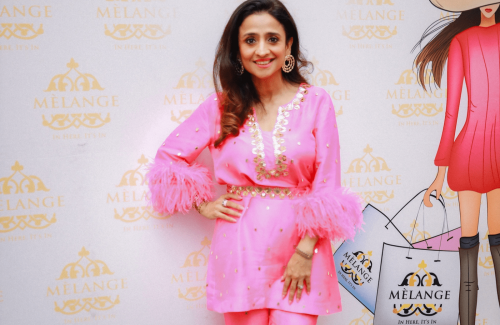
Samia Khan is Championing Modern South Asian Fashion Through Melange

Melange is a multi-label South Asian fashion platform that shares fashionable items from South Asia.

Samia Khan, who lives in Singapore but comes from Mumbai, started Melange in 2015. She wanted to bring attention to modern Indian designs for clothes, jewelry, and other accessories. She loves fashion that’s versatile, meaning you can wear it in different situations. She doesn’t think it’s just for Indian people – anyone can enjoy it.

During a virtual chat with The Peak, she talked about a special event she went to in Mumbai, India. It displayed how famous fashion companies like Yves Saint Laurent, Chanel, and Dior have used Indian fabrics for a long time. Samia was really impressed by this exhibition, and is excited about the growing interest in Indian fashion.

Because of the pandemic, Samia had to move Melange’s business online. This turned out to be good because more people from different countries like the US, UK, and Australia can now enjoy Indian fashion through her website.

Samia wants to keep sharing South Asian fashion and hopes to have a permanent showroom someday. “I want South Asian fashion to be accessible to many more people. I hope to be able to contribute to my heritage in this way,” Samia shares with The Peak.

Featured Image Source: The Honeycombers

ezgif.com-webp-to-jpg-jpg

News

Ghazal Alagh Wanted Safe Products for Her Baby and Built a Billion Dollar Business During Pregnancy

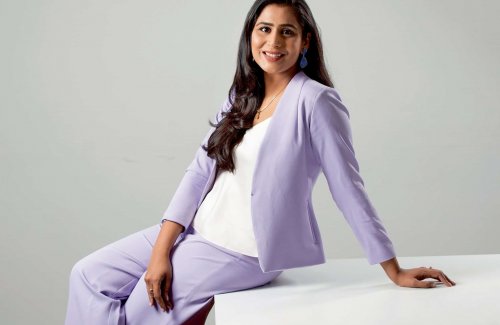
Ghazal Alagh is the co-founder of MamaEarth, a company worth $1.2 billion. She’s not a graduate from fancy colleges like IIT or IIM, but her story is remarkable and full of inspiration.

Ghazal’s journey began in Gurgaon, Haryana, where she grew up in a middle-class family. After finishing her studies in computer application from Punjab University in 2010, she explored her creative side by learning about design and art at the New York Academy of Art. These experiences laid the foundation for her entrepreneurial path.

In 2016, Ghazal and her husband, Varun Alagh, started MamaEarth because they wanted safe and natural products for their soon-to-arrive baby. They cared deeply about the environment, so they made sure their products were organic and packed in materials that could be recycled.

Like many business ventures, their journey wasn’t easy, but eventually, MamaEarth became Asia’s first brand to earn the MadeSafe label, showing that their products were free from harmful stuff. They started selling online but soon expanded to physical stores. They have their own place to create and test products, which helped them achieve big success.

Now, MamaEarth isn’t just about baby stuff; they offer all kinds of personal care items. Over 5 million people use their products in 500 cities. Last year, they made a profit of Rs 14 crores and became a unicorn, now worth $1.2 billion.

Featured Image Source: Fortune India

india today-jpg

News

Diganta Das’ Journey from being a Daily Wage Worker to Paratha Business Owner

Diganta Das’ journey to becoming a successful food entrepreneur in Assam from a humble beginning as a daily wage worker despite facing numerous hardships is a testament to the power of determination and perseverance.

Originally from Gohpur town in Assam, Diganta had different jobs to support his family. He worked as a cook, security guard, and even in a coal mine. But he didn’t give up on his dreams.

One of Diganta’s friends started a paratha business in Andhra Pradesh, and Diganta joined him to handle the marketing. Through hard work and dedication, he not only succeeded in the marketing venture but also helped expand the business.

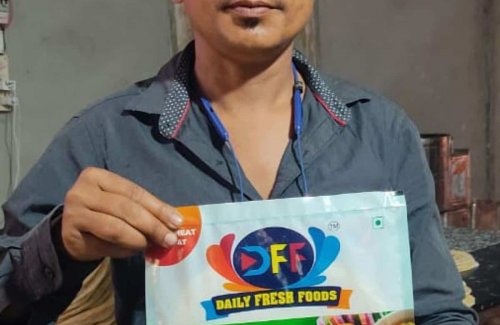
Eventually, with his love for travel and cooking, he was able to start his own paratha business. He created DFF (Daily Fresh Food), offering tasty parathas that people can enjoy on the go. Today, DFF is well-known for its delicious ready-to-eat parathas.

It was not an easy journey for Diganta. He faced financial struggles and at one point, even got partially paralyzed in an accident. But he didn’t lose hope and he kept going.

Diganta’s journey shows that with enough determination and courage, anyone can overcome challenges and achieve their dreams.

Featured Image Source: India Today