Stories

August 21, 2023

SHARE:

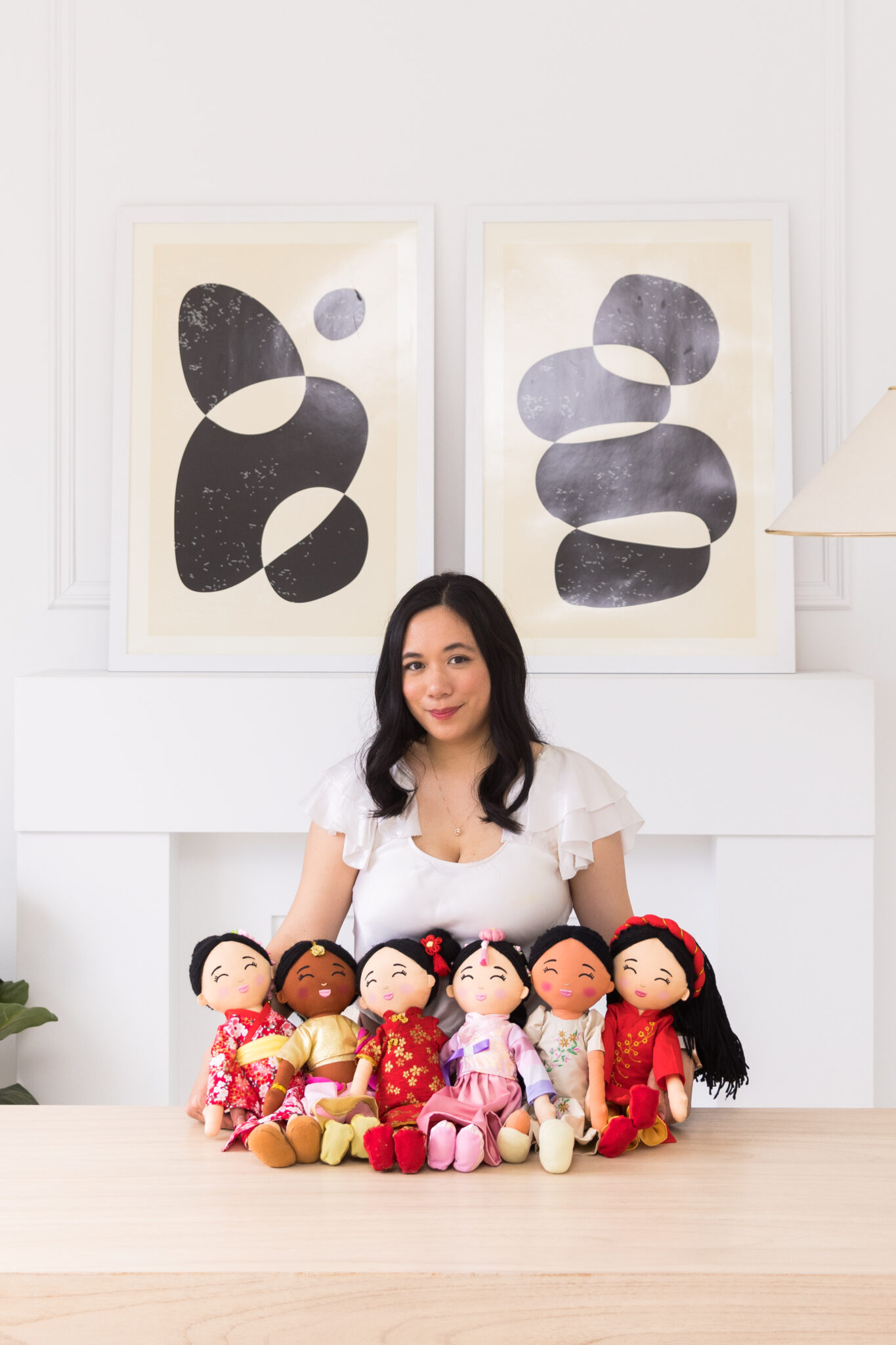
When COVID-19 forced Samantha Lee to put her wedding photography/videography business on hold, she seized the opportunity to cherish precious moments with her one-year-old daughter.

As news of the alarming increase in Anti-Asian hate spread, Samantha became deeply concerned about the world her daughter would grow up in.

Born in Malaysia to Chinese parents, Samantha’s family made the life-changing decision to relocate to Australia when she was just eight months old, motivated by her father’s aspiration for a better life. Growing up, Samantha only had blonde dolls to play with, so she wanted to be like her blonde classmates. She thought that they were so lucky to be born that way. 

She wanted differently for her daughter, so she embarked on a quest to find dolls that represented their Asian heritage to help her daughter feel proud of her Asian identity. However, Samantha was disheartened by the lack of diversity and representation available in the toy industry when she couldn’t find any.

Fuelled by a passionate desire to make a difference, Samantha resolved to create dolls that would empower Asian children and celebrate the vibrant tapestry of Asian cultures. Starting with six cultures, Samantha’s goal was to expand her collection to represent as many cultures as possible, including underrepresented regions like Southeast Asia, Vietnam, and the Philippines.

Now, after months of hard work and unwavering dedication, Samantha’s dolls, Joeydolls, are finally ready to be ordered. These dolls embody the beauty and traditions of various Asian cultures, instilling a sense of pride and confidence in children.

Join us as we delve into the inspiring story of Samantha Lee, who, in an exclusive interview with Asian Hustle Network, shares her journey in creating Joeydolls.

LACK OF REPRESENTATION IN DOLLS

When I was growing up, I grew up with only blonde dolls and only saw the same on TV. I remember thinking that I was so envious of my classmates at school – that they were so lucky to be both that way. I also remember thinking that I could never be a princess or a famous actress. Not seeing myself represented meant that I always felt like I was not good enough the way I was, that I didn’t really matter, and that I was only meant to be on the sidelines. 

When I witnessed the rise in anti-Asian hate, I was scared for the world my daughter would grow up in. I began to reflect upon my own experience. I didn’t want her to feel the same shame I grew up with. Since we were in lockdowns during the pandemic, my daughter couldn’t play with other children so I started to look for dolls that could be her companion. Most of the dolls only had fair skin and black hair and they were considered “Asian”. I just couldn’t connect to them, especially since I also experienced colorism while pregnant. I was told that it would be better if my daughter was born with my husband’s fair skin and my eyes (double eyelids). I was really disheartened by the continued concept of beauty in the Asian community. 

Around that time, we celebrated my daughter’s first year birthday by putting her in traditional Chinese and Korean outfits and I wondered why dolls didn’t do the same. I wanted her to not only feel comfortable with who she is, how she looks, and where she comes from. 

THESE DOLLS ARE MORE THAN JUST DOLLS FOR PEOPLE, THEY ARE PART OF THEIR STORY AND THEIR HEALING

I faced a lot of challenges in creating the dolls. I didn’t know anything about producing a doll – or a toy for that matter. I also had no experience in fashion or sewing. I was just a mom who wanted to make a difference. It was hard to find the resources since I also had no contacts in the industry.

I started with the concept of doing 6 ethnicities and then expand in the future. I wanted to make sure that Southeast Asia was represented since they have been underrepresented for so long. Initially, I wanted the dolls to have different skin tones to pick from for each ethnicity, however, it was so difficult to do so on a mass scale.

I was also surprised at how difficult it was to find the right shades for the skin tones and at the same time keep costs low since my production numbers were not large enough. As I was losing so many of my contracts in my photography business, I didn’t have a sustained and reliable income to be able to support this passion project. So I really tried to develop the dolls on a shoestring budget. 

I wanted to start the prototyping and manufacturing process locally but the costs got exponentially larger especially when it was so difficult to find the fabrics and materials we needed. We were so limited in what we were able to source so that’s when I began to look overseas. 

I began developing the dolls with one company that gave a very good price for the dolls, but they had a lot of trouble finding the right skin tone and couldn’t do the hair like we wanted. Then, we found another company that was able to do the skin tones and hair we wanted, but I found that their quality was not acceptable. Quality was very important to me because I really wanted people to feel proud to have these dolls and what they represented.

I often posted to Instagram about my progress and people would respond by saying that they teared up seeing them. I knew that these dolls are more than just dolls for people, they are part of their story and their healing. So many people said that they would have so loved having these dolls when they were younger and it would have helped them feel better about themselves. That’s exactly what I wanted these dolls to do for people – to help them feel that they are worthy in this world. 

It took a lot of dedication to learn each of the cultures and the symbolism behind some of the traditional details. I also wanted the dolls to be safe for babies to have as well, so that’s where I struggled with keeping the details accurate, cost-effective, and most importantly safe for all children. There was a lot of back and forth and redesigning. We went through countless prototypes and so many times I wanted to give up because I felt that I was not up to the task to complete it.

I had to remind myself of my “why”. I decided that instead of trying to hide behind social media, I would be vulnerable and talk about the struggles behind developing these dolls. I was worried that people would tell me to just give up, but instead, they gave me so many messages of support. They pushed me to keep going and told me how much they appreciated what I was doing. That these dolls make such an impact on them! I knew I had to keep going. So I kept pushing. These dolls are not only for my children but also for the other children who NEED these dolls.

YES, WE ARE ASIAN BUT WE HAVE SO MANY DIFFERENCES THAT MAKE US SPECIAL AND UNIQUE

I hope that children will see the dolls and feel proud to learn more about their heritage and also just be comfortable in their own skin. I hope that it helps parents teach their children how worthy they are. I hope that the dolls will help foster positive self-esteem and self-confidence. 

I want to change the narrative – that Asians are not a monolith. Yes, we are Asian but we have so many qualities that make us special and unique. So in doing so, I also hope that these dolls will help create more awareness and education about Asian diversity. That each of our cultures is not the same. That each should be celebrated. 

I hope that our dolls can be a stark contrast to the hate. That’s why I created the campaign #StartAsianLove instead.

CHILDREN AND ADULTS WILL FINALLY FEEL INCLUDED AND REPRESENTED BY DOLLS THAT RESEMBLED THEM

Even when my daughters couldn’t speak, their faces would light up and they would giggle with delight as I designed the dolls on my computer. It was a heartwarming experience, even during moments when I wasn’t fully satisfied with the prototypes. I would hide them around the house or in my office, and my daughters would discover them, hugging and kissing the dolls as if they were their dear companions. The sheer joy they exhibited upon seeing those happy doll faces was truly priceless.

When my youngest daughter Jasmine turned 1, we dressed her in a traditional hanbok. To my delight, my oldest daughter Joey pointed at the Korean doll and exclaimed, “It looks like Jasmine!” On another occasion, she referred to the same doll as a “princess.” It was a deeply touching moment for me because I had never imagined that Asians, including myself, could be seen as princesses.

The feedback I received from parents further affirmed the impact of my work. One parent expressed gratitude for creating a different world for their child, where they could proudly embrace their culture and heritage without the fear of being bullied or pressured to assimilate. The acknowledgment of the value of diversity was deeply meaningful to them.

Another parent expressed admiration for how Joeydolls would positively influence the lives of other girls. The representation of Asian culture was applauded, as it meant that children and adults will finally feel included and represented by dolls that resembled them. The support and well wishes I received from these parents fueled my motivation, and I am grateful for their continued support.

I WAS IN TEARS READING EACH MESSAGE BECAUSE I COULD FEEL HOW EACH PERSON CONNECTED WITH MY STORY

It was amazing to receive all the messages of support on AHN! I was in tears reading each message because I could feel how each person connected with my story and just wanted to give me that push to keep going.

I knew that my story was important. As a community, we needed to see these dolls be finally made and put in the hands of young children, and how these dolls can further impact the community on a much greater level.

I was excited about being the one to push for changing our narrative, breaking stereotypes, and deconstructing racism and colorism. These are all important changes I wanted to make in the world and all the messages solidified how important my work was.

SAMANTHA’S HOPE FOR JOEYDOLLS

My goal is to represent as many ethnicities/cultures within Asia. This will further help solidify the messaging of how beautiful and diverse Asians are! Also, I want to create boy/gender-neutral dolls too.

I hope that children (and adults!) of all backgrounds (not just Asians) will appreciate and love our dolls and what they symbolize. I also have some other fun ideas that I hope to work on that still encompass celebrating the beauty of Asian culture and diversity. 

CONNECT WITH SAMANTHA

Website: joeydolls.com

Instagram: @joeydolls

Facebook: Joeydolls

Youtube: Joeydolls

TikTok: @joeydollsco
Related Articles

medschoolboiz-png

Stories

Creators Podcast: Surya Chinamuthevi on the Journey of Medschoolboiz

AHN and Meta Prosper have partnered on a new podcast series highlighting API creators. Meta Prosper is dedicated to amplifying and supporting the API community and driving economic growth and equitable representation. The Creators Podcast series delivers stories on how creators achieved success and created impact through their platforms, serving as an inspiration for the community.

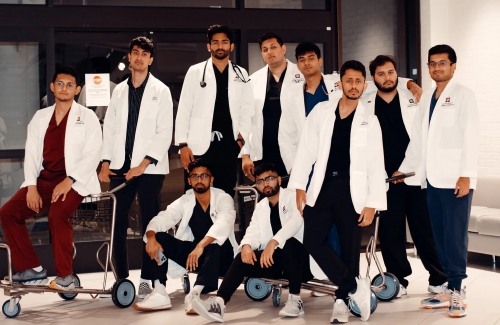
The journey through medical school is often depicted as one of relentless study and sacrifice, but the Medschoolboiz, a group of Texas A&M medical students, are flipping the narrative. With a mission to showcase the friendships, fun, and meaningful moments that make the medical journey worthwhile, Medschoolboiz has become a social media sensation.

Founded by a group of friends who bonded during a pre-medical school retreat, the Medschoolboiz started as an organic experiment. Their first video, a TikTok filmed at their white coat ceremony, captured their transition from casual attire to white coats. The video went viral overnight, and what began as a fun project evolved into a platform celebrating the lighter side of medical school.

Under the slogan “Camaraderie in Medicine” and the tagline “Excited for the journey, not just the destination,” the Medschoolboiz aim to highlight the importance of relationships and joy in what is often seen as a grueling profession.

In a recent episode of the Creators Podcast, hosted by Asian Hustle Network in partnership with Meta Prosper, Medschoolboiz member Surya Chinamuthevi shared insights into their journey. He discussed how the group balances medical school with content creation, the challenges of maintaining authenticity, and their vision for the future.

CONNECT WITH MEDSCHOOLBOIZ

Website: medschoolboiz.com
Instagram: @medschoolboiz
TikTok: @medschoolboiz

William Wang's

News

The Story Behind VIZIO Founder William Wang’s Lifetime Achievement Award

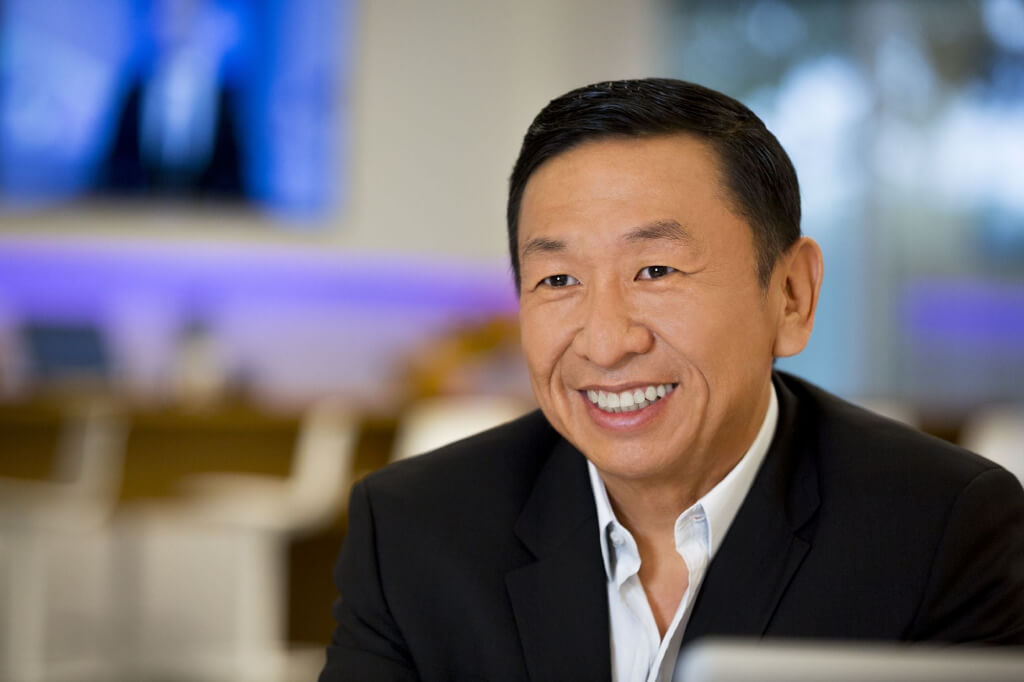
This October, William Wang was honored with Lifetime Achievement at the 75th Annual Technology & Engineering Emmy Awards. As the founder of VIZIO, Wang has revolutionized the television industry, shattering the cost-related concerns about whether quality and pricing can go hand in hand. From a Taiwanese immigrant to a trailblazer, his journey is one of innovation and persistence.

Humble Beginnings and Pursuit of the American Dream

Born in Taipei, Taiwan, William Wang immigrated to the United States as a teenager with his family. Settling in Southern California, cultural barriers arose as a major problem for an immigrant teenager like Wang. However, his persistence shone through: he excelled academically, leading him to pursue engineering at the University of Southern California (USC).

Image Soure: VIZIO

After graduation, Wang was on his way to materializing his dream: starting a company in the tech industry. Yet, he failed multiple times, draining his resources and budget. However, each failure gave him the opportunities and lessons to grow his entrepreneurial endeavors.

The Turning Point: A Life-Altering Experience

But life comes with unheralded events. In 2000, the Singapore Airlines Flight 006 that he was on encountered a crash, and he was one of the few survivors of that fatal incident.

This disastrous event completely altered his outlook on life: he became more grateful for his relationships and the comfort they provide, such as families spending cozy time together watching TV. This newfound perspective catalyzed his entrepreneurial shift into his next venture, fostering an idea that would transform the consumer electronics market. He envisioned a future where the gap between top-tier technology and affordability disappeared—a vision that soon became VIZIO. In 2002, he launched VIZIO. 

By 2007, just five years after its founding, VIZIO had become the top-selling LCD TV brand in the United States—a monumental achievement in an industry dominated by global giants like Sony and Samsung.

Wang’s Humble Reflections on the Achievement

William Wang's
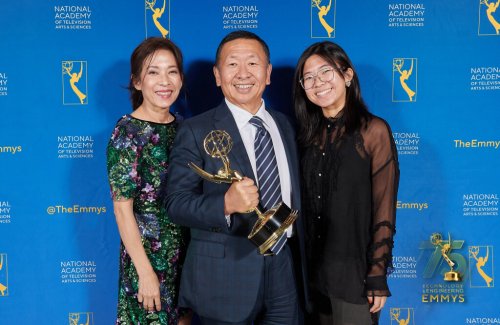
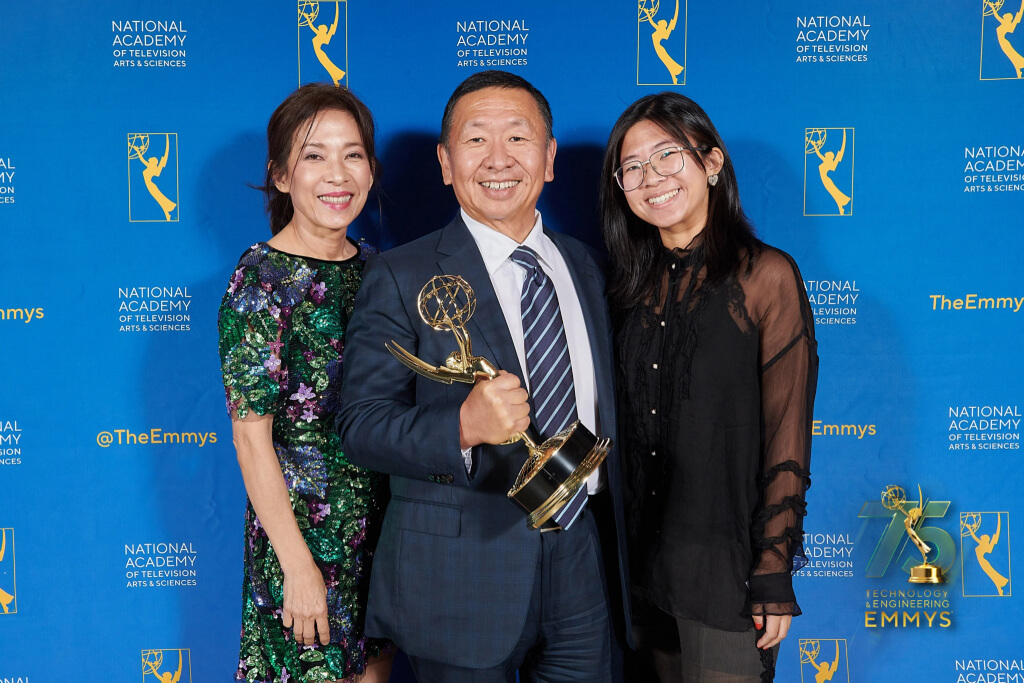
William Wang (center) with his family at the 75th Technology & Engineering Emmy Awards. (Image Source: VIZIO)

When receiving the prestigious Lifetime Achievement Award at the Emmy Awards, he couldn’t help but feel emotional about his near-death-inspired vision. At that moment, his survivor’s guilt had driven him to enrich lives, saying, “My life has been dedicated to bringing great technology to consumers in America.” As influential as he is, he expressed his gratitude for his team, stating, “This recognition is also a testament to the incredible team at VIZIO – it is our lifetime achievement. Together, we’ve challenged the status quo and have created new possibilities for the future of television. I’m proud of what we’ve accomplished and excited for the journey ahead as we continue to push the boundaries of technology and entertainment.”

Featured Image Source: VIZIO

2be9dbfe-8170-4a3a-8ef1-f1dd8a946db5 (1)-jpg

News

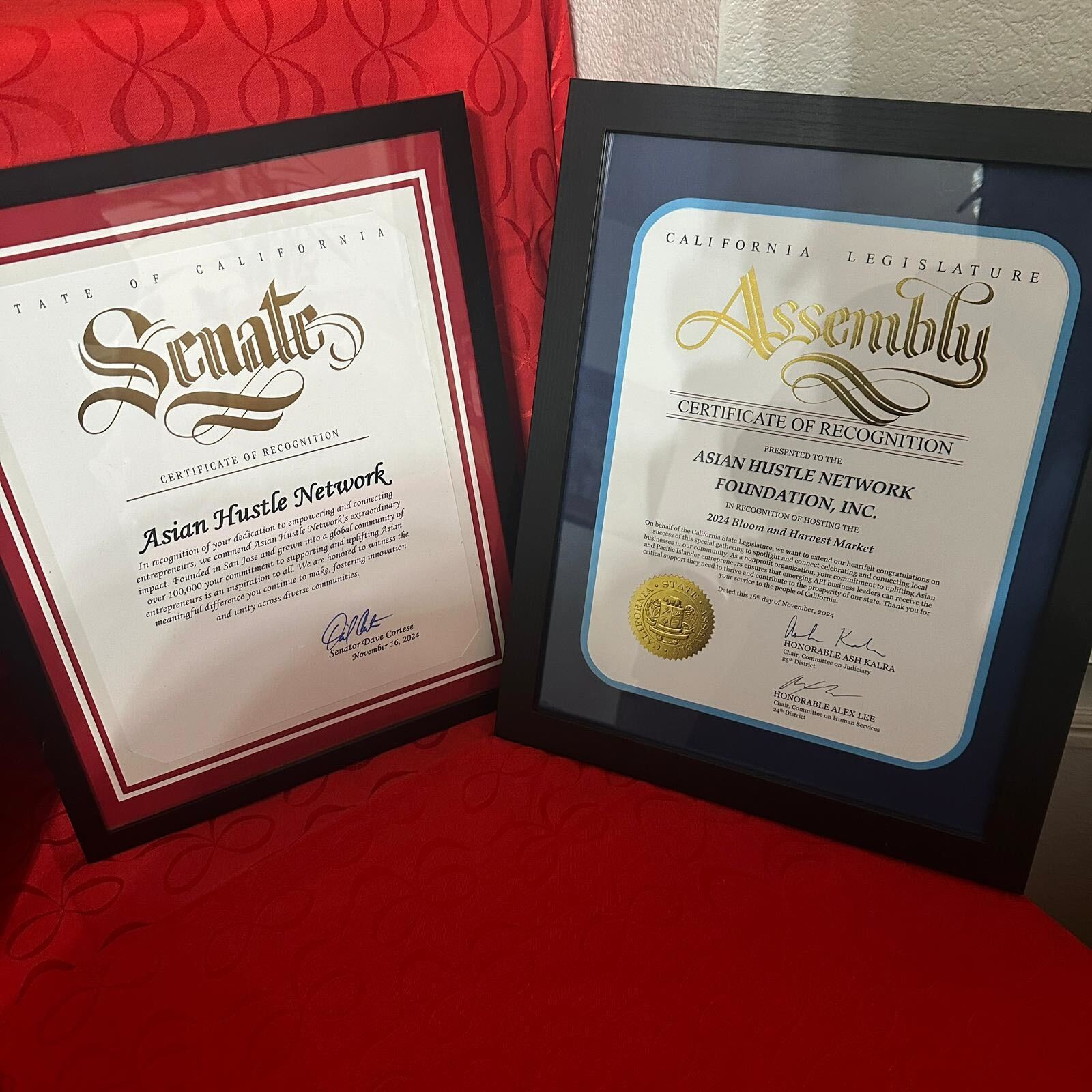
AHN and AHNF Celebrate Milestones with California Senate and Assembly Recognition

As an acknowledgment of Asian Hustle Network (AHN)’s contribution to the Asian and Pacific Islander (API) community, the California State Senate has extended its appreciation for AHN’s extraordinary efforts in fostering innovation and unity. Since its founding in 2019, AHN has continued to support and uplift the API community.

This year was a rewarding and progressive year for AHN, with numerous events and projects in the pipeline to build and strengthen the community while inspiring the next generation of future API leaders. 

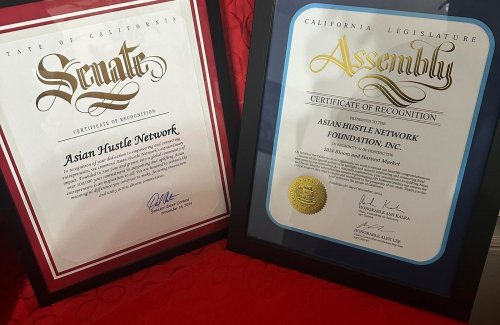
One of the highlights was having our executive director Tristan Paule, and the AHN organization honored with a Certificate of Recognition from the California State Senate and Assembly for successfully hosting the 2024 Bloom and Harvest Market in San Jose, CA. In partnership with SHOPLINE, Flora Haven, and Hot Boi Chili Oil, the event truly aligns with our vision, creating a vibrant marketplace for local AAPI vendors, entrepreneurs, creatives, and influencers. 

In addition, we want to extend our gratitude to those who have contributed to the event’s success:

Community Partners and Sponsors

@nestleusa, @yelpbayarea, @yelpsiliconvalley, @drinklunar, @banhmioven_ca, @andy_nguyen_photography, @lovemeknots_bridal, @varoundtable, @aodaifestival.sj, @vietsteps, @steph.eatsntravels, @amberkimv, @angelinahong_

Retail Vendors

@daesignstudio, @behabbi, @oyucosmetics, @shop_farols, @thebillyguan, @muzmak.official, @ajarofpickles_, @jhcandleco, @thehungryslothco

Prepackaged Goods

@chartruffles, @thepategirl, @thisisbabas.house, @bonjerksnacks, @nokkifarm, @drinklivingflora, @drinknarra, @hotboichilioil, @helladacbiet, @myjinka

Food & Drink

@nhathecafe, @_hetsay_

Beer Garden

@matchpointbrewing

As we look back on this incredible month, we are grateful for the support and excited for what’s coming. Thank you to the local legislation for believing in and enforcing our mission. 

Interior-Chinatown-e1729570164214

News

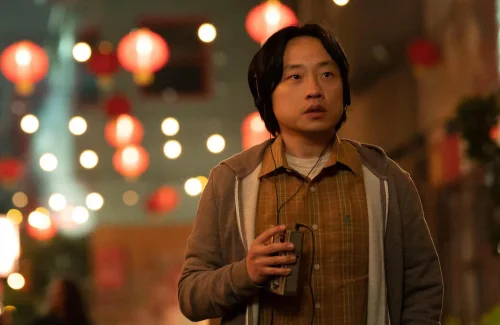
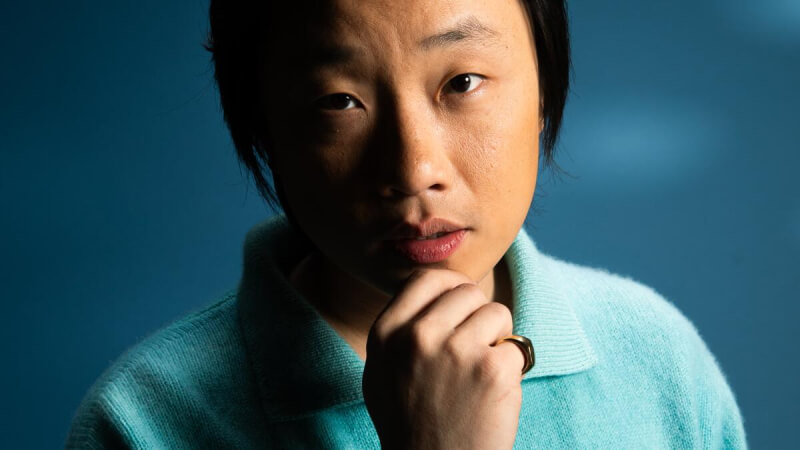
Jimmy O. Yang Finally Wins the First Lead Role in Charles Yu’s “Interior Chinatown”

After years of working at odd jobs, Yang has found his first lead role and left Yu knocked back in tears during his audition.

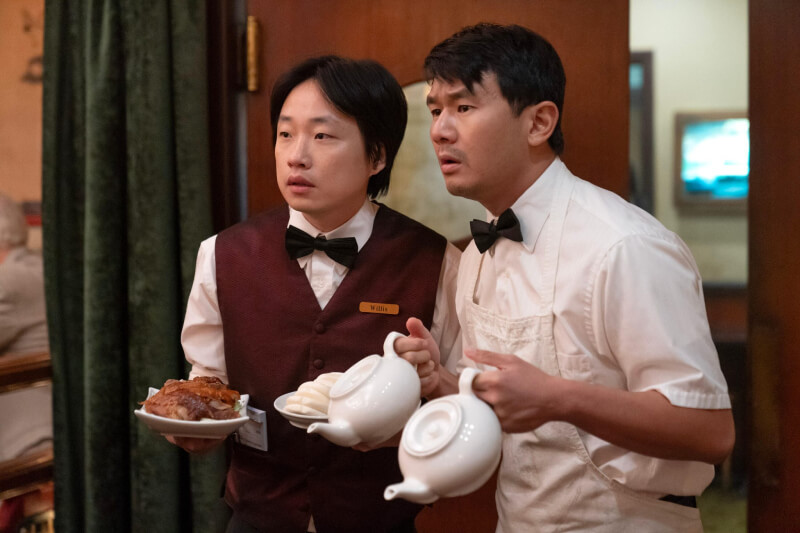
A Lemon. The $1,500 Toyota Corolla with no power windows, a busted side door, and poor brakes is what Jimmy O. Yang rode around Los Angeles to prepare for his role as Willis Wu, an overlooked Asian American everyman in the series “Interior Chinatown.” 

The result? “Pull over, call whoever got you in here. If you can’t, you gotta go…” A rude remark from the studio’s guard as Yang recalled in a Zoom with the Los Angeles Times (LA Times) even though he was No.1 on the call sheet. 

The experience reminded Yang of his life story as a Hong Kong immigrant moving to the United States. Yang stated in the interview, “Willis’ journey is such a metaphor for the Asian American experience because we are the model minority, but at the same time we are invisible. People talk about Black and white, but where do we fall? You’re just not seen for who you are.” In an article by SCMP, the actor-writer-comedian further exemplifies, “Willis laments feeling like a background actor in someone else’s story and longs to be in the spotlight, but that’s hard if you look like me.”

At the age of 13, Yang relocated to Los Angeles feeling the intense culture shock. “My goal was to just assimilate so I don’t get made fun of,” Yang recalled. In the school’s locker room, he was mocked for wearing whities instead of boxers. During 8th grade, his peers had mustaches and dunked basketballs while he barely hit puberty. Using a fake address, he enrolled in Beverly Hills High School and immersed himself in American pop culture. Unable to rap, Yang learned to incorporate his violin into the hip-hop beats he made through a software named Fruity Loops.

Despite his parents’ harsh opposition, Yang acknowledges, “I don’t think they were, like, anti-art by any means. My dad probably wishes he could have been an actor or a musician. It just truly wasn’t a real job for him. He wanted me to be financially stable, and not be homeless.” Yang started working at a string of odd jobs from selling used cars to DJing at strip clubs. Stand-up comedy, which Yang has now become notorious for besides acting, became his informal acting, writing, and directing school. 

Persistent in his passion, Yang landed small speaking roles in series like “Agents of S.H.I.E.L.D.,” where he was misunderstood as a background actor for his ethnicity, and “Silicon Valley,” originally a one-off guest role or a one-note cliché. Yang’s fame finally came in Crazy Rich Asians. Yang claims, “If I botched an audition, I never blamed the fact that they weren’t looking for an Asian actor. It didn’t deter me. But looking back, we had very limited opportunities. Since ‘Crazy Rich Asians,’ I think there’s more.” The success has made Yang’s father, Richard Ouyang, proud – even helping him with commercial and acting gigs with his son. 

The series “Interior Chinatown” became an immediate connection to Yang. According to the LA Times, Charles Yu, creator of the series which was adapted from his National Book Award-winning novel of the same name, was inspired by, “people who have these backstories, but they don’t get to tell those stories”. He was astonished by Yang’s performance as he felt a connection between Yang’s multicultural background, multilingualism, and his natural ability for acting. 

Despite the grueling six months of shooting, doing comedy, drama, and Kung Fu every week, Yang happily states, “It was very grueling. But of course, it’s a beautiful story worth telling.” At the end of the day, whether it is for better or worse, Yang’s days of being a sidekick are finally over.

Featured Image Source: Mike Taing from The Wrap