Stories

September 4, 2024

SHARE:

Have you ever struggled to find glasses that fit just right? If you have a low-bridge nose, this challenge might be all too familiar.

For many people, especially in the Asian community, finding eyewear that stays comfortably in place without constant adjustment is a common struggle.

Megan Miyamoto, founder of MIKO Eyewear, knows this experience all too well, and it’s what inspired her to create a brand that finally addresses this issue head-on.

The Inspiration Behind MIKO

Growing up, Megan often faced difficulties in finding glasses that fit well. She felt frustrated by the lack of options that accommodated her facial features.

“I was often told to ‘just shop the rack,’ which left me feeling like I needed to fit in or that there was something wrong with my facial features,” Megan shared with AHN.

When she became a mother, she was determined to give the best for her daughter, including the right eyewear. She didn’t want her daughter to go through the same difficulties that she did.

Through her research, Megan discovered that up to 80% of lifetime UV exposure occurs before the age of 18, leading to serious eye health concerns like cataracts and eyelid cancer. Yet, when she went searching for suitable eyewear for her daughter, she found the options disappointingly limited, especially for children with low bridges.

After trying countless samples, including private label options that didn’t meet her standards, Megan decided to give it a go and design a product using high-quality materials that she could feel good about. And that’s how MIKO was born.

Overcoming Challenges with Community Support

One of the toughest challenges that Megan faced as an entrepreneur is the sense of isolation that can come with building something from the ground up. 

“There were moments when doubt would creep in, and it was easy to feel overwhelmed by the sheer amount of work and decisions needing to be made,” she said.

Megan found strength in the community that rallied around her. She pushed herself out of her comfort zone, connecting with mentors, fellow entrepreneurs, and communities like Authentic Asian.

“If you took the time to connect with me, spread the word about MIKO, or made a purchase, sincerely thank you for being a part of our MIKO journey.”

The Creative Process

Seeing her idea turn into a tangible product that her daughter and neighborhood kids genuinely love is one of the milestones that Megan is most proud of. What started as a quest to fill a gap in the market for low-bridge kids’ eyewear has evolved into a brand that brings confidence and joy to its young wearers.

The design process was particularly special for Megan, as it was a collaborative effort involving her daughter and the neighborhood kids, and turning her kitchen island into a mini design studio.

During these sessions, Megan paid close attention to the kids’ feedback, particularly when it came to the fit of the glasses. They tried on various prototypes, providing insights into what felt comfortable and what didn’t. They also got to select the colors for the frames, giving a fresh perspective and opening Megan’s eyes to combinations she probably wouldn’t have considered on her own.

Seeing the kids’ faces light up when they tried on glasses that fit perfectly was incredibly rewarding for Megan. Their creative process reinforced the idea that MIKO isn’t just eyewear made for kids—it’s made with them.

MIKO’s Mission and Vision

MIKO Eyewear is dedicated to empowering the next generation by providing inclusive, stylish, and functional eyewear specifically designed for children with low bridges.

Megan’s vision is to redefine what it means to wear glasses, turning them from a mere necessity into a source of pride and confidence for kids. By addressing the unique needs of low-bridge children, MIKO not only fills a gap in the market but also celebrates the diversity of facial features, empowering the Asian community and beyond.

Connect with MIKO

Instagram: @miko_eyewear

Website: mikoeyewear.com

Get a complimentary eyeglass strap with your MIKO Eyewear sunglasses purchase! It will be automatically added to your cart. Available for the first 100 customers only!


Related Articles

Image Source: Brendan Duong

Stories

A Secret Business Purchase Grew Into A Multi-million Dollar Enterprise

Tess Nguyen who is a trained physiotherapist was searching Gumtree, Australia’s marketplace, for a physiotherapy clinic to buy. Instead, a sleepwear ad called Midnight Mischief captured her eye, “I’d never heard of personalised pyjamas, and I was pretty up-to-date with trends, so I sent an inquiry,” she told 7life.

She consulted her friends who have accounting and business experience and told Tess it was worth nothing and advised her not to buy it. However, she liked the pyjamas’ style and name, plus she was able to bargain the business down to $15,000. So, a month later she bought the business.

Tess kept the purchase secret from her family. The business was going slow during the first two years, and running the business while working as a full time physiotherapist, took its toll.

When 2020 hit, the business was ready for the huge demand prompted by COVID and people staying at home. The big moment was when TV presenter Jules Sebastian posted a photo of herself wearing Midnight Mischief pyjamas.

The brand grew 165% in the year to July 2021. And Tess has gone from pyjama girl to Pyjama Queen – selling a set every 10 minutes. The designs retail for about $99.95 – and her sleepwear empire is now turning over $2.3 million.

“I’m so glad I did it and I’d tell anyone else to do the same,” Tess told 7Life, “Just go for it. You can figure it out as you go along. It’s worked for me.”

Image Source: Chris Pizzello/ Invision /AP file

Stories

Awkwafina Knows Best About How She Is Still More Financially Great Living On $500 A Month

Even though the Crazy Rich Asians actress’ wealth is likely in the millions, she believes that a mere $500 per month is sufficient to cover her expenses.

The 32-year-old actress recently told Harper’s Bazaar that her money philosophy goes back to when she was building her Awkwafina musical and comedy persona, which she used as an outlet for her creativity while she worked a day job in book publicity.

Her grandmother brought her up in a one-bedroom apartment in Queens, New York. Because her family’s restaurant went out of business and they were forced to sell their home, she has developed a greater appreciation for monetary gain than any other aspect of her life.  

Awkwafina remembers that funds were tight at home and that she would stay up late with her grandma, who worried about paying the bills.

She also claims that despite being in a better financial position to support her family and herself, she still maintains a just-the-basics mentality. The actress has been known to buy clothes at Target and not spend much money on anything. She set out with the simple objective of covering her living expenses. 

She explains to Harper’s Bazaar, “I went into this mode off, if I can make $500 a month, that’s all I need.” 

Awkwafina’s motivation and success are attributed mainly to her refreshingly optimistic view of financial considerations. She has kept herself busy acting in the years since, including launching her comedy series on Comedy Central and becoming the first Asian-American actress to win the Golden Globe for best actress for her lead role in the 2019 drama “The Farewell.”

Image Source: Photograph by Ken Richardson Boston Magazine

Stories

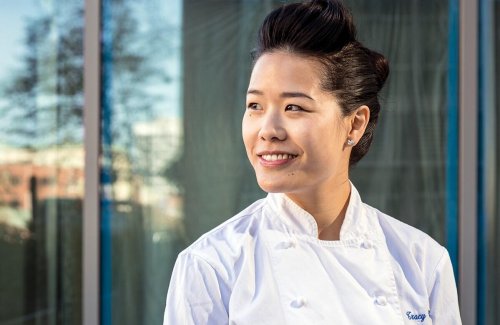
Chef Tracy Chang Gives Back To The Community Through The Language Of Food

Restaurateur Tracy Chang started the nonprofit Off Their Plate and Project Restore Us through the COVID-19 pandemic in 2020. 

The owner of the Japanese tapas restaurant,  PAGU, started Off Their Plate as a way to feed healthcare workers, and Project Restore Us sends nutritious and culturally appropriate grocery boxes to families living in food deserts. Both groups work to support local kitchens run by women and BIPOC and volunteers.

As a chef, Tracy also finds herself more in tune with customers than ever before. As someone who grew up lactose intolerant, she sources ingredients responsibly and remains mindful of the way guests feel after they leave her restaurant. This is also part of her restaurant’s ethos.

Her grandmother has also influenced Tracy’s cooking. Although her grandmother didn’t speak English, she spoke the language of food really well, said Tracy, and that was something that always resonated with her.

For Tracy, her personal experience has definitely come into play — trained in Spain but worked at a Japanese restaurant, and she grew up with a lot of Japanese and Taiwanese food, “The menu at PAGU is autobiographical and about my experience learning very specific dishes and techniques from people like my grandmother, my mentor and some of the chefs I’ve worked with.” she told TimeOut.

Image Source: CNN

Stories

Young Tech Startup Founders In Asia Make Mental Health Support Accessible To Break Stigma

Breaking down societal stigma and creating a new mental healthcare system for the Asia-Pacific area are two of Theodoric Chew’s objectives, founder of the digital mental health app, Intellect.

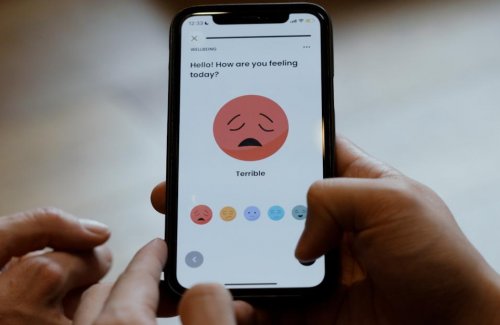
Founded in 2019, the mobile app frequently monitors users’ moods, delivers rescue sessions and exercises, and lets them chat with therapists in real-time. 

The 26-year-old explained that mental health is just as important as physical health, “You and I face things like stress, burnout, sleep issues, and relationship struggle as well.” he told CNN, “ That’s where actually a lot of us should start working on our mental wellbeing.”

Since early 2020, the startup serves over 3 million Asia-Pacific users in 15 languages. According to CNN Business, the Singapore-based mobile app has raised $20 million in its Series A funding, the largest amount raised by a mental health start-up in Asia.

Early this year, Singapore and Jakarta-based digital mental healthcare start-up, Ami, has raised at least $3 million from a number of investors, including Meta, the owner of Facebook. The firm was founded by Justin Kim, a Forbes 30 Under 30 Asia alum with Beknazar Abdikamalov.

Both digital mental health companies are targeting employers in their business models, where companies can subscribe to provide staff unlimited, private access to their services.

According to the WHO, depression and anxiety disorders cost the global economy $1 trillion a year in lost productivity. In March, it was reported that anxiety and sadness surged 25% worldwide in the first year of the pandemic.