Stories

September 25, 2023

SHARE:

In the world of comedy, they say that laughter is the best medicine, and for Dr. Jason Leong, this couldn’t be more true.

Up until 2010, Jason Leong’s life had followed the typical Asian narrative.

He had been a straight-laced kid, never earning anything less than an A in his exams. He secured a scholarship to pursue Medicine and eventually became a doctor in Malaysia.

Despite his initial success, the harsh reality of the workforce hit Jason hard. As a junior doctor, he endured grueling 36-hour shifts at least six times a month, with 100-hour workweeks becoming the norm. Sleep deprivation, constant hunger, overwhelming stress, and meager pay plunged him into the lowest point of his life. But things were about to change.

One day, he stumbled upon an opportunity for a monthly open mic show in Kuala Lumpur, the first of its kind in Malaysia. His wife encouraged him to try out. So he took 2 days off from work, drove 4 hours to the venue, and performed his first 5-minute standup. He left the stage saying to himself, “I want to do this forever.”

In 2011, Jason transferred to Kuala Lumpur and did regular gigs while being a full-time doctor. He loved being a doctor by day and a comedian by night, but it was still a lot of work for him. So in 2014, he made the big leap and did a not very Asian thing.

He quit being a doctor.

Having experience in the medical field not only informs Jason’s comedy, but it also makes his style a bit more unique. “The rigors of being a doctor made me all the more grateful to be able to tell jokes for a living,” he said.

At first, Jason didn’t tell his parents that he quit his job as a doctor. His parents now know of his career shift and support his journey wholeheartedly, with his mother saying, “If this comedy thing doesn’t work out, at least you have something to fall back on.” 

Jason’s comedy has since blossomed with two successful Netflix specials, “Hashtag Blessed” and “Ride With Caution.”

He boasts a portfolio of five solo one-hour specials, having graced stages at the Melbourne International Comedy Festival, featured on Comedy Central and Just For Laughs in Montreal, and won at the 7th Annual International Hong Kong Comedy Competition.

Jason is set to perform his solo show BRAIN DRAIN in Los Angeles on September 29 and San Francisco on October 4.

“Making a move to my passion and the arts is something that has allowed me to find real meaning in my work. I hope to inspire others within the Asian community to take the same risks and reach their real potential,” Jason shared with Asian Hustle Network.

CONNECT WITH JASON

Facebook: Dr. Jason Leong

Instagram: @drjasonleong

Tiktok: @drjasonleong
Related Articles

The Spruce Eats-jpg

News

Vietnamese-Owned Food Brand Takes Over Whole Foods’ Instant Noodle Aisle with Bold Asian Flavors

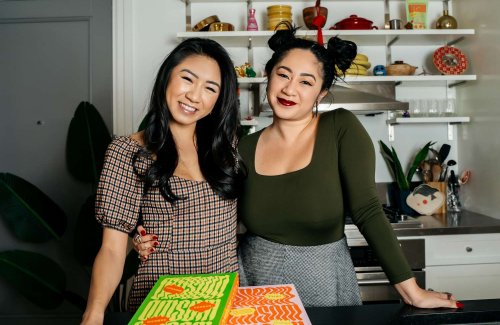
Omsom is a vibrant Asian food brand, owned by Vietnamese sisters Vanessa and Kim Pham, that has been on a mission to reclaim and celebrate the true flavors of Asian cuisine.

Aside from providing delicious food, Omsom aims to promote and educate on the richness of Asian-American culture on a national scale. Since its founding in 2020, the brand has fearlessly embraced its heritage, evident in its bold brand names, products, and engaging storytelling across digital and physical channels.

Now, Omsom is making waves by expanding its presence in Whole Foods with its latest offering, Omsom Saucy Noodles. These flavorful noodles come in enticing varieties such as Soy Garlic, Coconut Lemongrass Curry, Garlic Black Pepper, and Chili Sesame, priced at $4.99 MSRP. Last year, Omsom introduced its line of sauces, including Krapow, Vietnamese BBQ, Yuzu Misoyaki, and Spicy Bulgogi, to Whole Foods stores nationwide.

Omsom’s expansion to Whole Foods is an important milestone since it allows the brand to reach a bigger audience and migrate from online presence to in-store availability. Customers may now readily access Omsom products locally and get a taste of the vivid Asian flavors thanks to the fast expanding community of over 175,000 people.

Omsom competes in the instant noodle market that is dominated by well-known brands like Kraft Heinz and Nissin Foods, but the company distinguishes itself by providing convenience and quality. Unlike the conventional dry powder seasoning found in many instant noodle products, the company takes pleasure in providing sauces of restaurant-quality.

“But at the end of the day, I think when you’re playing in a category like noodles, like it’s got to be the taste; it’s got to be the product. And I think we’re bringing something really unique to the category,​” Kim Pham explains to Food Navigator.

Featured Image Source: The Spruce Eats

LA Times-jpeg

News

How a Local Grocery Turned into One of The Largest Supermarket Chains in The US

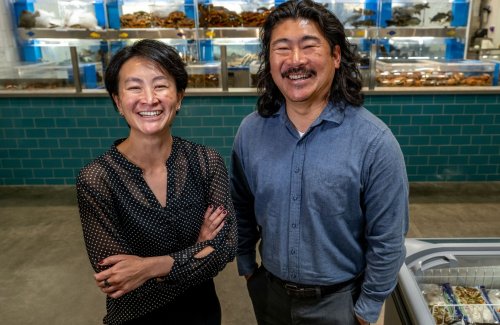
99 Ranch is a beloved Asian supermarket chain turned into a national powerhouse, under the management of the second-generation owners, Jonson and Alice Chen.

Established in 1984 in Westminster by their Taiwanese immigrant father, Roger Chen, the grocery store has now evolved into one of the largest Asian supermarket chains in America, with 58 stores in 11 states and its headquarters in Buena Park, California.

Catering extensively to ethnically Chinese communities, 99 Ranch Market has become more than just a grocery store for many Asian Americans in California. The name “99 Ranch” carries a double meaning: “ranch” symbolizes freshness, while “99,” pronounced “jiu jiu” in Mandarin Chinese, conveys longevity – signifying the company’s pursuit of near perfection with a commitment to constant improvement.

Jonson and Alice Chen represent the new generation of leadership steering the nearly 40-year-old grocery chain’s expansion across the United States. As children, they spent countless weekends at the store and their childhood experiences provided them with valuable insights and knowledge.

Today, the company grows most of its produce on specialty farms across the United States and Mexico, with a team of over 7,000 employees, 82% of whom are bilingual, to cater to the diverse needs of their customers.

According to Yahoo FInance, Part of 99 Ranch’s success lies in its responsiveness to the changing tastes of its customers. As trends evolve, the company actively includes Filipino ingredients, skewers, and spicy Sichuan flavors in their offerings.

As the Chen siblings carry the legacy of 99 Ranch forward, their commitment to serving their community and striving for excellence remains steadfast, ensuring the supermarket chain’s continued success on a national scale.

Featured Image Source: LA Times

tatler asia - maia & elaine-jpeg

News

These Dynamic Female Duos are Redefining the Food and Beverage Industry

The food and beverage industry, long dominated by men, is witnessing a transformation as a new wave of young female duos are making their mark and reshaping the sector to reflect their own vision. These inspiring women are blending their Asian heritage with a global upbringing and a willingness to take risks, showcasing the power of collaboration and innovation.

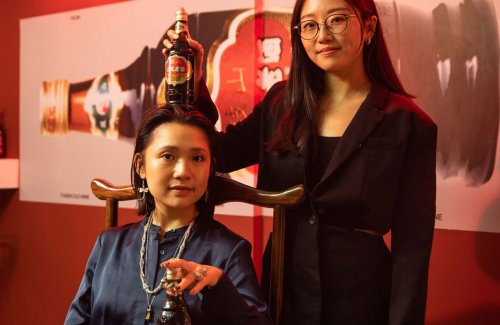
Elaine Chen and Maia Mah perfectly demonstrate this, as the regional director and creative director of Fukien Old Wine, a 181-year-old Chinese cooking wine brand. They organized a cocktail pop-up event at Soho House Hong Kong, combining traditional Chinese wine with modern trends.

Despite facing initial skepticism from their male-led head office, Chen and Mah are determined to introduce new ideas and adapt to societal changes. The success of the event surprised their colleagues, highlighting the duo’s ability to think outside the box.

Meanwhile, in Taiwan, Square Jao, a production designer, and her partner Lily Lin opened Plants Eatery, the country’s first gluten-free, whole-food restaurant. After the Fukushima disaster, Jao and Lin embarked on a mission to promote sustainable eating and raise awareness about the impact of food choices on the environment.

While vegetarianism is already popular in Taiwan, Jao and Lin’s restaurant offers strictly plant-based, gluten-free options, avoiding processed mock meats. Aside from their restaurant, they also published a cookbook in hopes to influence culinary schools to embrace plant-based and gluten-free cuisine, according to Tatler Asia.

In Japan, Eri Miyagi and Miki Nomura, both third-culture kids raised in the US, co-founded Cabi, a condiment brand aimed at introducing the flavors of Japan to Gen Z and Millennial home cooks. Cabi’s debut seasonings, including umami dashi soy sauce, sweet yuzu vinegar, and zesty sansho peppercorn miso, are designed to be versatile and cater to the modern urban lifestyle.

The rise of these female duos serve as an inspiration for a lot of underrepresented individuals, and remind us that with the proper determination and great collaboration, anything is possible.

Featured Image Source: Tatler Asia

seattle opera-jpeg

News

‘Bound’ Premieres at Seattle Opera Illuminating the Struggles and Triumphs of Asian Americans

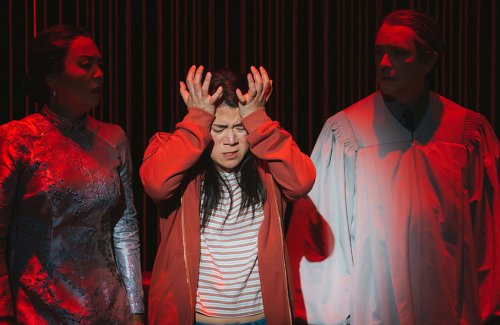
Huang Ruo’s captivating chamber opera, “Bound,” made its highly anticipated premiere at Seattle Opera’s Tagney Jones Hall.

The opera sheds light on the enduring discrimination faced by Asian Americans, a social issue that has persisted since the enactment of the Chinese Exclusion Act in the late 1800s. Huang Ruo, a prominent Chinese composer, openly explores these themes, creating a thought-provoking, visually stunning, and musically intense work. Teaming up with librettist Bao-Long Chu, a Vietnamese poet, both artists made their Seattle Opera debuts, showcasing their impressive talents and expertise.

“Bound” narrates the experiences of second-generation Asian immigrants who grapple with their cultural heritage while striving to be fully embraced as Americans. Inspired by the true story of a high school student imprisoned due to truancy, the opera delves into the conflicts between individual aspirations and familial obligations. 

The characters in “Bound” are intricately bound in their own ways. Diane Tran, the protagonist portrayed masterfully by Karen Vuong, grapples with the rules and expectations of being a second-generation Asian adult, constantly torn between her family, work, and education. Khanh, Diane’s mother, haunted by guilt and memories, remains tied to her immigrant past. Judge Moriarty, who sentences Diane to imprisonment, represents an unjust system lacking empathy and understanding.

Huang shared with The Seattle Times that he aspires to fill every performance with a diverse audience, showcasing how opera reflects the lives and times of contemporary society. He firmly believes that opera is not solely for the elite few, as it reflects the diverse experiences of many.

Featured Image Source: Seattle Opera