Stories

October 12, 2023

SHARE:

Jeanny Chai is an entrepreneur, coach, and cancer survivor. She’s inspired hundreds of women to break free from unfulfilling jobs and relationships. But she wasn’t always this way. In this exclusive interview she talks about how she went from a scared loner kid to a powerful leadership coach. 

Childhood Pressures and Shaping of Mindset

Growing up, Jeanny was always under pressure to achieve. Sound familiar? In episode 3 of her podcast, Asians Breaking Ceilings, she shares the expectations her parents placed on her.  “Oh, you’re going to be a doctor.” 

She lived under constant pressure to be perfect. “I was called careless when I missed math problems and my parents were displeased. I got disapproval and felt like a burden whenever I made mistakes, like spilling milk or getting sick. I felt like I had to be perfect to avoid anyone getting mad at me.”

You don’t need anyone’s permission, apology, validation, or approval for you to make the transition from unfulfilled to living your leadership potential.

Jeanny Chai

Her Battle with Cancer and Path to Transformation

As an adult she was free from her parents but then cancer got her. Her doctor told her that she had 3 tumors, stress-induced. Her reaction? “ashamed, scared, angry and then finally hopeful.” Despite cancer being a shitty experience, she had HOPE. How? 

Hope came when she realized that she was allowed to ask for help. It wasn’t her job to suffer alone in silence. She had managed to handle all the other stressors in her life alone, but this one was too much for her – and that was okay. For the first time ever, Jeanny learned asking for help was not a sign of failure or weakness. This theme would return later on.

A Glimmer of Hope in Solitude

Cancer threw Jeanny’s life and routine out the window. Yet the hardest part wasn’t the physical pain – it was the overwhelming sense of loneliness she experienced. Unable to have visitors, she was profoundly isolated, physically and emotionally. She shares, “When you are under so much medication, your days and nights mesh together and you get lost in your own thoughts,”

But in that time of sadness, Jeanny felt a glimmer of hope. One day, she heard a loud voice that declared, “You are already good enough.” The unexpected declaration left her in a state of awe. 

Jeanny had never entertained such a notion about herself before; this was a pivotal moment.  She kept repeating this idea to herself for the next few years, and that’s when she started to feel stronger, more confident, and more in control of her life. This also marked the starting point of her business, Bamboo Myth.

A Journey of Self-Discovery

After casually beating cancer, Jeanny embarked on a five-year journey of self-discovery.

“When I got sick, I was no longer focused on becoming the next Elon Musk or landing a job at the next unicorn start-up in Silicon Valley. Instead, I bought myself an electric piano and an acoustic guitar.  Later I bought a saxophone and ukulele and I gave myself voice lessons. I bought myself a baby rabbit, who was my bedside companion during my chemotherapy treatment. I remembered that I loved music, singing, and animals and learned to create my own happiness,” she shared.

With cancer showing her that life was short, Jeanny decided to leave the corporate world and start her own business, pursuing purpose instead of promotions. 

“Asians Breaking Ceilings” Podcast

Fast forward a few years and her business is thriving. She speaks about the Bamboo Ceiling at Fortune 500 companies and major conferences. 

She also runs a 12-week coaching program called “Live Your Leadership Potential,” and has coached over 300 Asian women, bringing “life-changing” results. Her program centers on 2 core principles that help women regain confidence, energy, and agency.

She teaches that what’s needed isn’t communication strategies, but permission to speak without guilt or shame. Once women overcome this barrier, their natural leadership abilities and newfound confidence are allowed to shine.

The best part? Jeanny emphasizes that this mindshift set doesn’t require years of therapy or yoga; all it takes is a focused approach to transform from burnout to happiness.

Now she is making these cultural-specific leadership strategies available to everyone,  through her podcast. In it, she shares a powerful new definition of success. 

“Confidence, assertiveness, and happiness are an inside job. So my new definition of success is this: Being able to decide, create, and ask for what you want in your career and life. And my podcast is designed exactly to do just that,” Jeanny shared.

Advice for Those with Similar Struggles

Did you resonate with any of this? Jeanny has the the following advice for individuals who struggle with people-pleasing, fear, or lack of self-compassion:

First, you must stop stuffing your feelings and coping by working harder and harder. Realize that you don’t need anyone’s permission, apology, validation, or approval for you to make the transition from unfulfilled to living your leadership potential.  

Stop getting more certifications and degrees to fill that feeling of “not being enough.”

Listen to my podcast! Start with Episode 1 and let yourself feel again. Many of us have numbed out our emotions so we can handle and cope with all the stress but this is the opposite of what we need to do to begin the transformation. 

Find a safe person (therapist, coach) and tell them your story. As Brene Brown says, shame thrives in silence. That’s why I’m paving the way by speaking up so others can speak up and be transformed for good.

And take this FREE assessment that I’ve created just for Asian Americans. It helps you identify in just under 5 minutes what is your biggest roadblock to success:

https://quiz.tryinteract.com/#/5daf9bbeb77a6e0014e41210

There is personal advice emailed to you based on your quiz results. 

CONNECT WITH JEANNY CHAI

Instagram: @jeannychai

Linkedin: Jeanny Chai

Twitter: @bamboomyth

Facebook: Bamboo Myth

Website (Bamboo Myth): bamboomyth.com

Website (Podcast): asiansbreakingceilings.com
Related Articles

AHS EMAIL ANGLE

Blogs

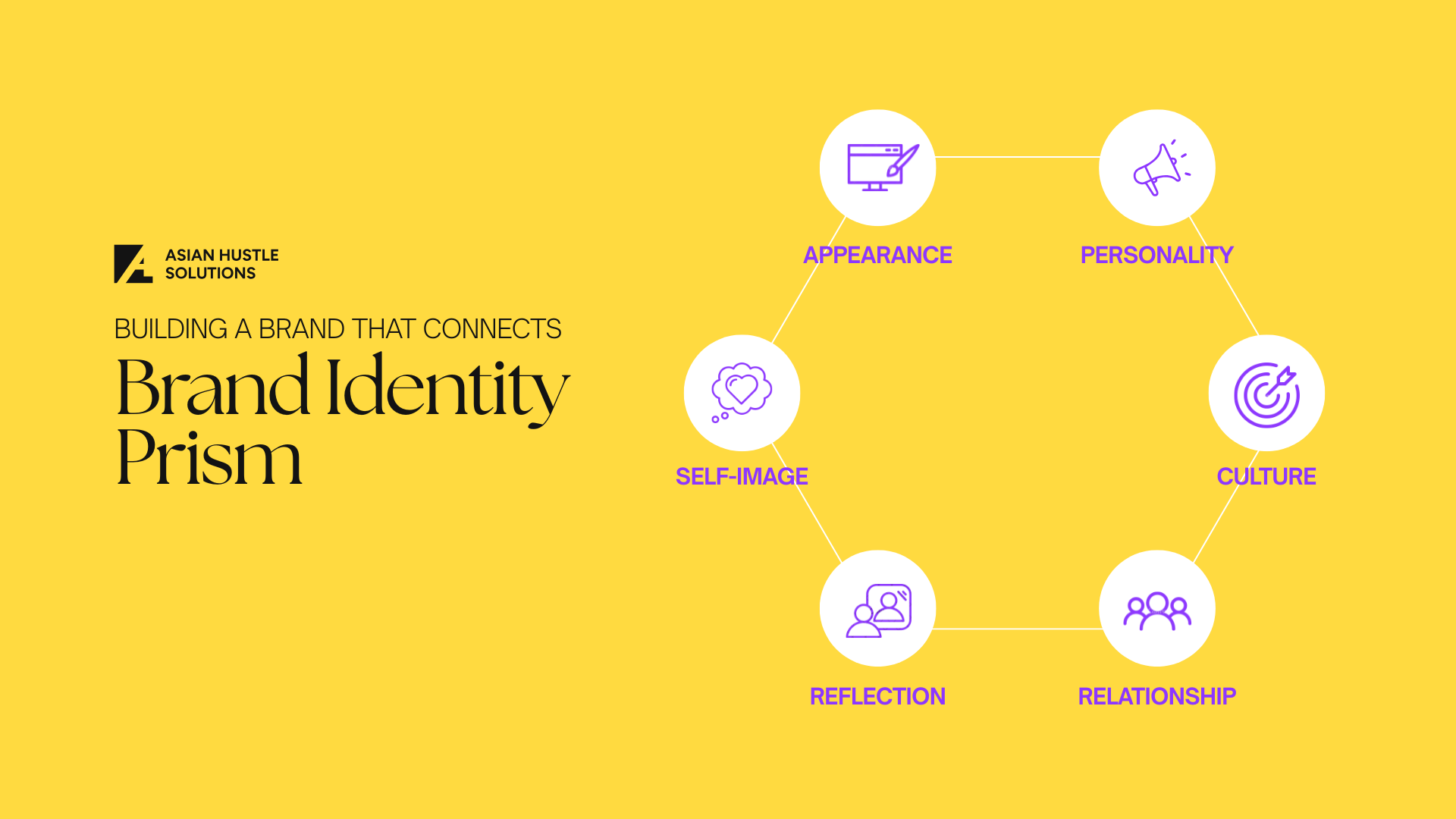
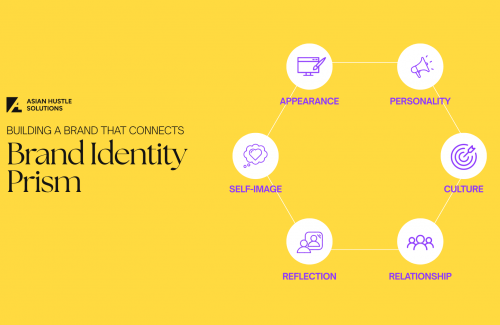
Build a Brand That Connects: Start with the Identity Prism

Every brand has a story worth telling—and how you tell it matters just as much as what you’re building.

One of the effective tools is the Brand Identity Prism—a simple but powerful framework that helps define what your brand stands for and how it connects with your audience.

  • Physique – What people see (logos, colors, visuals)
  • Personality – The voice and tone your brand speaks in
  • Culture – The values and beliefs driving your mission
  • Relationship – How your brand interacts with your community
  • Reflection – How your customers see themselves through your brand
  • Self-image – How they feel when they’re part of your world

Why Asian Hustle Solutions?

At AHS, we’ve seen firsthand how powerful a clear brand identity can be — not just in standing out, but in building real, lasting connections. 

If you want to learn more about our services, visit the Asian Hustle Solutions website at asianhustlenetwork.com/services/

samuel-jamier-png

Stories

Samuel Jamier on Paving the Way for Asian Cinema and Representation

For over two decades, the New York Asian Film Festival (NYAFF) has stayed at the forefront of Asian cinema in North America. Going into its 24th year, NYAFF is a project designed to remind the world that Asian cinema is here to stay and thrive, providing platforms for both well-established and rising filmmakers. At the helm of this meaningful festival is Samuel Jamier, a Korean French curator, filmmaker, and consultant whose passion and vision for Asian cinema drive NYAFF forward.

AHN had a chance to interview the talented Jamier on the festival’s inspiration and mission, and the future of Asian American Pacific Islander (AAPI) and Pan-Asian cinema.

Samuel Jamier | President and Executive Director of the New York Asian Film Festival and Foundation

Bridging Cultures Through Film

Over the course of his well-established career, Jamier has proved himself to be an avid enthusiast for Asian cinema who shows a clear commitment to its artistry and cultural authenticity. Jamier has gone from Chargé de Mission for the Cultural Services of the French Embassy, through his experience working with The Korea Society, The Japan Society, to becoming the guiding force behind NYAFF. 

As a Korean adoptee raised in the idyllic Brittany of northwestern France, it is natural that his journey was one of cultural navigation and a lingering yearning for heritage connections. All this lifelong commitment to Asian cultures made it intriguing to learn where it all began—turns out not all those who wander are lost.

I was always drawn to stories that challenge conventions, that shake you awake in the middle of the night. My inspiration came from literature, philosophy, and cinema—works that make your heart pound and your mind race like you’ve had too much caffeine.

Traveling and living in different countries in my 20s rewired my brain. Experiencing cinema across different cultures made me realize the immense power of storytelling. I was particularly struck by the underrepresentation of Asian narratives in global film industries, which fueled my drive to bridge that gap through my work at NYAFF and beyond.

Jamier, a Korean adoptee raised in France, has dedicated his career to championing Asian cinema and bridging cultural gaps through storytelling.

Leading a “nomadic” life throughout his 20s has reframed his understanding of storytelling, endowing him with the severely underrated power of Asian narratives in global media. That realization has become some sort of a push for him to challenge stereotypes and redefine Western perceptions of Asian cinema beyond just kung-fu flicks and arthouse genres. 

Breaking Barriers for Asian Filmmakers

Hollywood has become a benchmark for world cinema. It only took a few seconds to look up “film classics” on Google, and most of the recommendations would be Hollywood/ Western. As he revealed that one of his greatest challenges lies in “shifting global perceptions of Asian cinema” and “the industry’s gatekeeping,” his answer underscores a limited spotlight on Asian narratives. 

Historically, Western audiences have viewed Asian films through a narrow lens, often limited to action-packed martial arts films or slow, contemplative arthouse works. This raises concerns over “typecasting” Asians in movies and hindering the potential of the world’s largest region. Through NYAFF, Jamier has worked tirelessly to push back these outdated preconceptions and aimed towards a broader, more nuanced appreciation of Asian storytelling.

Jamier is reshaping global views on Asian cinema, breaking stereotypes and opening doors for new voices worldwide.

Jamier has also successfully secured various global distribution deals for Asian filmmakers, shedding light on emerging talents to international audiences. Back in 2020, the pandemic took over New York City, leaving many film festivals canceled and filmmakers struggling. 

Recognizing the urgency and devastating impact, Jamier and his team at NYAFF quickly adapted, launching virtual screenings and digital initiatives to keep Asian cinema in the spotlight. His commitment to dismantling industry gatekeeping and evolving Asian narratives has provided new opportunities for talents from Asia and the diaspora to gain recognition at major festivals and in Hollywood.

A Bridge Between East and West

Through his work at NYAFF and his consultancy firm, SMLX Consulting, Jamier has become a key figure in ensuring cultural authenticity in Hollywood. He never stops encouraging studios, filmmakers, and screenwriters to represent Asians, collectively drawing diverse and respectful depictions of Asian identities in movies. It’s not just about quantity—to Jamier, it’s about both: quality and quantity. 

Beyond curating films, Jamier is about to make his directorial debut with The Huntress, marking his first endeavor in filmmaking. The film, inspired by World War 2, was a powerful manifesto of women’s roles in resistance movements, bringing overlooked histories to the spotlight while challenging conventional war narratives of Southeast Asian stories on screen. His transition from festival curator to director is a testament to his commitment to elevating untold Asian stories on screen. 

The Future of Asian Cinema with New York Asian Film Festival 2025

Recent years have witnessed an interesting spike in Asian media—from K-dramas to anime—Asian cinema is “at an exciting turning point,” he shares. NYAFF remains dedicated to showcasing the depth and innovation of Asian storytelling, and Jamier encourages audiences to explore the incredible films emerging from Asia.

My mission is to bring authentic, compelling Asian stories to the forefront of global cinema. Whether it’s through NYAFF, my consulting work, or my filmmaking, I want to challenge outdated narratives and create new spaces for Asian filmmakers to be recognized and celebrated.

Jamier is championing a new era for Asian cinema, using NYAFF and beyond to spotlight bold, authentic stories and push the industry forward.

Looking ahead, the 24th edition of the New York Asian Film Festival is set to take place from July 11-27, 2025, promising a lineup that further expands the horizons of Asian storytelling. Jamier remains committed to fostering representation and creating new spaces for Asian filmmakers to thrive.

To support NYAFF’s mission and stay updated on the 2025 festival lineup, visit www.nyaff.org.

250618-jpg

Blogs

The Power of Three: A Simple Rule to Supercharge Your Brand

Third time’s a charm. Three seems to be our brain’s favorite number, often serving as a rule of thumb in storytelling, memory, and design. It strikes the perfect balance—long enough to be satisfying, yet short enough to avoid feeling overwhelming. This is known as the rule of three.

In marketing, the rule of three can be applied to everything from design to copywriting to sales. Here are three ways you can incorporate this powerful principle into your work:

1. Taglines and Slogans

With only three words, your taglines do not feel too long or too short. It’s enough for a build-up, climax, and resolution. Our brain naturally responds to the patterns of three, therefore making three-word taglines more impactful.

Example: 

“Veni, Vidi, Vici” (I came, I saw, I conquered) – Julius Caesar

“Just Do It” – Nike 

“I’m Lovin’ It” – McDonald’s

2. Design Colors

When creating a color palette, think of three colors that complement each other to enhance your brand: primary color (the core of your brand identity), secondary color (adds depth and supports the primary), and accent color (used sparingly to highlight key elements and draw attention).

3. Brand Story

Structure your brand story in three acts—setup, confrontation, and resolution—to make your narrative clear, concise, and compelling.

Why Asian Hustle Solutions?

At Asian Hustle Solutions, we believe in the power of three: clarity, strategy, and execution. Our services are built to guide Asian entrepreneurs through every stage of their journey—defining your vision, building your brand, and scaling your business.

If you want to learn more about our services, visit the Asian Hustle Solutions website at asianhustlenetwork.com/services/

250612 (1)-jpg

Blogs, Development

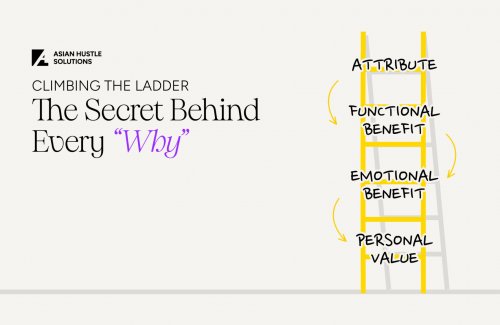
The Secret Behind Every “Why”: Climbing the Ladder

Have you ever asked someone why they bought something, and then asked again? You’d be surprised to find out that the answer now extends beyond the functional—we’re getting emotional. That’s what “laddering” is about. 

Laddering is a simple but effective tool to dive deeper into the decision-making thought process. Instead of just asking what people like, we explore the whys. Each answer helps us climb the ladder from surface-level to more profound insights.

1. ATTRIBUTE

A specific feature or characteristic of a product or choice.

Example: “These shoes have extra cushioning.”

attribute

2. FUNCTIONAL BENEFIT

The practical or performance-related advantage that the attribute provides.

Example: “They make running more comfortable.”

functional_benefit

3. EMOTIONAL BENEFIT

How the person feels because of the functional benefit.

Example: “I feel more confident and energized when I run.”

emotional_benefit

4. PERSONAL VALUE

A deeper belief, life goal, or principle that the emotional benefit supports.

Example: “Being healthy helps me feel free and in control of my life.”

personal_value

Why Asian Hustle Solutions?

At Asian Hustle Solutions, we help Asian-owned brands grow by understanding what truly drives their audience—beyond features, into feelings and values.

If you want to learn more about our services, visit the Asian Hustle Solutions website at asianhustlenetwork.com/services/