Stories

August 11, 2024

SHARE:

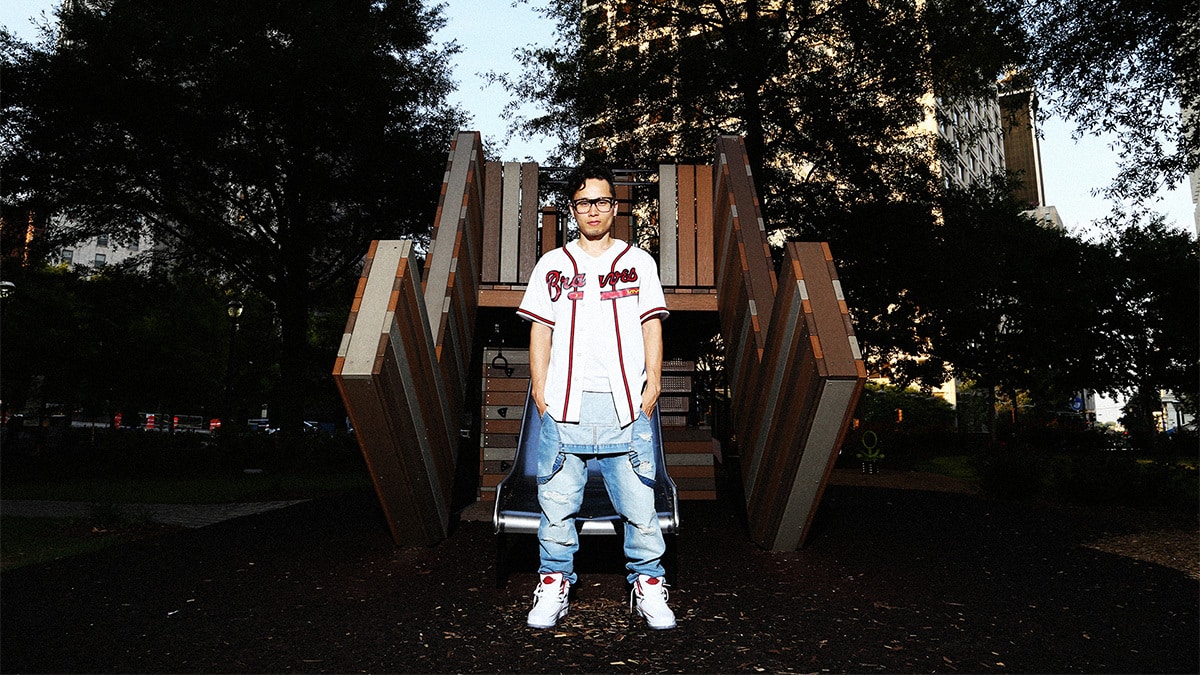
Paddling the world of parties and turntables, DJ Baby Yu’s story may not be in many Asian parents’ favor, who prefer more stable nine-to-five academic jobs. He talks about family expectations, the entertainment industry, the values of his “unconventional” job, and more. 

We all love dancing, don’t we? Sometimes, it feels good to just let your hair down and move to the music for a bit. That’s where DJs come in, blending beats and energizing crowds from all walks of life.

Nonetheless, this job may receive quite a few skeptical and questioning frowns from Asian parents. Uncontrollable parties, unprecedented futures, and unstoppable debaucheries are what the music industry is all about, many would argue. However, DJ Baby Yu is here to bring more Asian creatives to the forefront, shattering the traditional barriers that may hinder them.

Rewind to 28 years ago, in tight-knit local college radios and nightclubs, flooded with ravers and heart-throbbing hip-hop music. Daniel Nakayama, known as Baby Yu, who made mixtapes featuring hosts like Ye, Ciara, and The Game, might be unmoored; but he knew what he was doing and that he was doing it for the fun of it all.

Asian Parents and Conventional Jobs

If the nine-to-five cyclic life is considered to be successful in many Asian households, then the fun-blasting, bass-hitting life would be considered to be one of the most unconventional career paths. “Not all of us are destined for high-paying traditional jobs,” he said. “Generally speaking, our parents weren’t supportive unless we finished school, earned a degree, and pursued a prestigious job.”

Upon the chance meeting with an old friend who happened to be DJ-ing at a house party, uninvited yet inspired, he bought a pair of turntables and records the day right after. Starting to DJ in high school and defining his career at university, he describes the universal battle of fighting for your dream, especially for someone with an immigrant background, where traditional values were the guiding star.

As a child of immigrant parents from Miyazaki, Japan, I share the growing pains experienced by many first-generation Asian children. Our parents often try to shape our futures, pushing us toward careers like doctors, nurses, or lawyers, without considering our personal interests and passions.

At the end of the day, those expectations only came from their own experiences and their desire for their children to have a happy and stable future.

However, once my parents saw me perform on TV, heard me on the radio, and received praise from their friends’ children, they understood that I had found something that made me happy. That realization was all that mattered to them.

The Mash-Ups of Highs and Lows in the Music Industry

This industry is no stranger to a bad reputation, where another rising public darling replaces the ones who don’t transform, where every part of your career move is baselessly evaluated and overblown, where the radio label could count you out if they can no longer profit from you.

DJ Baby Yu (center) with Drake (left) and Jeezy

It’s tough work being an artist in this competitive landscape. One may have to toe the line for mainstream appeal. Some may scream “Smash it, I’m here to do my own thing.”

Whatever approach they may choose, the Internet has given rise to the demand for artists with distinctive musical personalities. “There are no rules for how you should express yourself in life,” he says. “If people understand and believe in you, they’ll follow. If not, that’s okay—they’re not your audience. There will always be those who appreciate your art and direction. Focusing on this has helped me overcome any obstacles life throws my way.”

He Did It for the Fun and He Did It for the Asians

Despite the struggles, Daniel took a moment to reflect on what he had learned from his shows around the world, where he gets to travel to new places, meet new people, throw joyful parties, and try new things.

As I matured in the industry, I ventured into new areas, working on artist development and taking on marketing and branding projects for companies like Puff Puff in Thailand and Whims in Austin. Event planning is another passion of mine, and I particularly enjoy creating fun and unique events.

A shot from the Wiz Khalifa: Under The Influence of Music Tour in Toronto, Canada, featuring Daniel as the tour DJ for Jeezy

Back in Toronto, he was holding a “branded party” called Playbook Social, where he mixed “food, cocktails, karaoke and DJs.” The party sold out, seated the most versatile community in the city. Of course, if you were in the game for the right purpose, like-minded individuals will team up and recognize what you’re doing, even way before you realize it. It turns out that what he’s been doing has such a tremendous impact on the AAPI community.

There have been several times in my life when loyal supporters have come up to me and thanked me for what I do, often ending with the phrase, “You’re doing it for all the Asians!” For a while, I didn’t fully understand that sentiment. In my mind, I was doing it for myself, for the love of music, and to make everyone around me happy.

However, as I traveled and understood my cultural position in the industry, whether I was the only Asian in a room full of Hip Hop leaders or in the pop scene dominated by white people, I realized there weren’t many Asians in these spaces. Times have changed now, with K-pop gaining global popularity, but back then, it was different. Asians weren’t the creators of R&B, soul, Hip Hop, house, rock, or pop music; we were lovers of these cultures, trying to fit in.

Connect With DJ Baby Yu

Curating a unique and eventful experience is the ultimate wish of any musician. DJ Baby Yu has never been one to shy away from collaborating with rising Asian talents. His upcoming event, a collaboration project with UPRISERS, a Japanese female-owned AAPI streetwear brand, is meant to bring together great Asian talent and leaders for celebration and appreciation.

I’ve teamed up with UPRISERS, a Japanese female-owned AAPI streetwear brand, to celebrate their 5th anniversary. Other AAPI groups, such as FACE (Filipinos Advancing Creative Education) and Represent ASIAN Project, are also promoting this event. My goal is to bring together great Asian talent and leaders under one roof to celebrate each other.

This event is also one of the official events of SKAM Summer 2024, a two-day DJ and influencer weekend at the Mondrian Hotel in West Hollywood, created by Sujit Kundu of SKAM Artist (more information at https://skamartist.com/skamsummer).

“Now, I truly understand when people say, “I’m doing it for the Asians.” As a leader, I want to guide and nurture the next generations with the experiences and knowledge I’ve gained over my 28-year career, especially within the Asian community. Collaborating with Uprisers is one way to bring Asian leaders together to celebrate life and acknowledge our achievements.”

Event details:
RSVP: https://UPRISERSxSKAMSUMMERxBABYYU.eventbrite.com
Date: Monday, August 19, 2024
Time: 8 PM – Midnight (PT)
Location: Kimpton Everly Hotel, 1800 Argyle Ave, Los Angeles, CA 90028

Personal contact
Website: https://babyyu.com/
IG: @djbabyyu
Related Articles

Image Source: Paulo Chun / NBC News

Stories

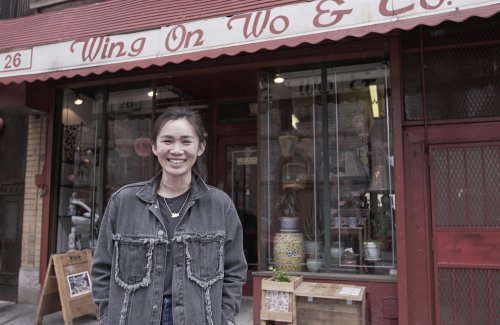
Fifth-generation Entrepreneur Reimagines NYC Chinatown Landmark While Preserving Cultural Traditions

Even though times are tough and New York’s Chinatown is on the verge of dying, there is one place where things appear to be mostly the same as they have always been.

Since Mei Lum started volunteering as a child, Wing on Wo & Co has been run by her family. Brilliant and creative heritage enterprises have withstood generations of economic ups and downs. Mei represents her family’s legacy and New Yorkers and future generations of Chinatown residents.

The 32-year-old fifth-generation owner has bigger plans. Mei revived Wing on Wo’s late-19th-century ambiance. The store was a meeting place, credit union, and informal post office for low-income Chinese employees during the Chinese Exclusion Act.

She wants to run things because she has always wanted to expand the store’s conceptual boundaries. “A business doesn’t have to be so economically driven. There can still be genuine connections, which sustain a community,” she told The Guardian.

Wing on Wo is still primarily run by the original family for over a century. For 30 years, Mei’s father Gary has chatted with clients at the counter. Lorraine, her mother, handles the website and order processing. Her 105-year-old grandmother, Nancy, promotes the store’s hand-painted wine cups, fish-shaped glazed vases, and elegant dinner plates on Instagram.

In 2016, her grandmother intended to sell the family-owned porcelain specialty shop, which was worth close to $10 million. Mei took over the business to preserve it and create a community hub. She was planning to study international relations at Columbia University, but she now wants to run the family business. She wanted the store to be a hub for activists and artists to fight gentrification and displacement.

As a result of the pandemic, Mei decided to focus her efforts on online sales, digital advertising, and social media. To ensure that the business is preserving tradition and shaping the future of Chinatown, she has added several new initiatives, such as youth programs, an artist residency, and a ceramicist fair.

Image Source: Korina Sanchez Youtube Channel

Stories

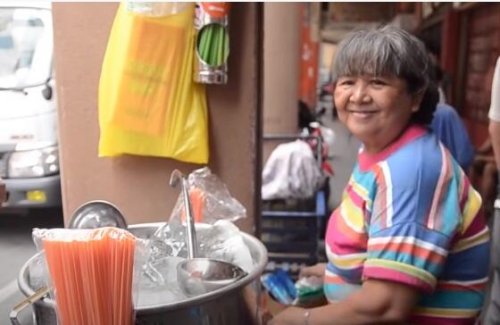
This Street Vendor Selling “Magic Water” Proves That No One Is Too Small To Be Successful

Priscilla Cornejo, better known as Nanay Bebe to the local people (“Nanay” means mother in Filipino), has been selling her magical water to the community since 1980 in the Philippines. She is convinced that her drink’s distinctive flavor is why so many customers seek out her business.

Magic Water, or known to be its local term “Samalamig” is also recognized as a leading refreshing drink in the Philippines. Despite coming from modest means, Nanay Bebe makes it her mission each day to quench the thirst of those hungry for success.

She explained that her drink is not just ordinary cold water. It has clear agar, sugar, mineral water, and tons of ice. When the agar hits the ice, it tends to melt, creating the ‘magic water,’ that will surely quench your thirst. 

Her business may not look like much compared to big companies or restaurants, as she only sells on the street, but it has tremendous growth potential. Nanay Bebe sells her magic water for PHP5 or PHP10 ($0.08 or $0.17) in small plastic bags, cups or some customers even bring their own Aquaflask or tumblers. From what she described, weekly earnings for her business could reach PHP35,000 ($600).

An endless line of curious onlookers from the street awaits to sample Nanay Bebe’s magic water. Many online publications, including those dedicated to food and social news, have featured it. Even today, some people attempt to duplicate Nanay Bebe’s traditional drink formula.

Image Source: Binance

Stories

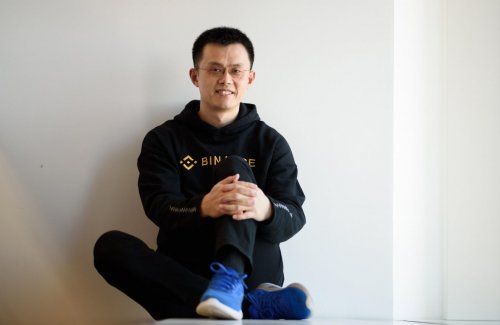
From Gas Jockey To Binance CEO: How Changpeng Zhao Became Richest Man In Cryptocurrency

Binance is one of the most valuable cryptocurrency exchanges in the world as of today, and its founder and current CEO is Changpeng Zhao, according to the Bloomberg Billionaires Index, had a net worth of approximately $30 billion, which placed him in 33rd spot on the list of the world’s richest people.

Early on in life, Zhao was born into a family of educators in a rural village in Jiangsu province, China. He claimed that as a child living in rural China, he had to endure food rationing. His family immigrated to Canada in the late 1980s and felt incredibly fortunate to have been able to leave China.

When Zhao and his family moved to Canada, he worked several part-time jobs, including one at McDonald’s. He attempted to earn money at 14 by working at a Chevron gas station and as a volleyball referee.

He studied computer science at McGill University in Montreal, where he developed an interest in technology similar to that of his father, a math prodigy and programmer in his teens.

Zhao began coding when he was only 16 years old and took programming classes in high school before enrolling at McGill University.  After finishing college, Zhao worked at the Tokyo Exchange and then at Bloomberg in the Tradebook department from 2001 to 2005. Zhao left his job in 2005 to become a partner at the Shanghai firm Fusion Systems, which developed software for the financial markets. 

After discovering Bitcoin in 2013 while playing poker, he went all-in on crypto and committed his life to it. He even gave up his home to fund his Bitcoin investment. He persisted, even as the value of bitcoin dropped from $600 to $200 after he bought it.

Being a tech leader at Blockchain, a cryptocurrency wallet provider, and OKCoin, a cryptocurrency marketplace, Zhao decided to create his exchange, combining the efficiency of high-frequency trading platforms he had previously developed with the potential of cryptocurrencies. Thus, he started Binance with a $15 million initial coin offering.

However, getting to the top is more complicated than it seems, especially for Binance. When Binance’s cryptocurrency, BNB, dropped in value below its ICO price, Zhao and his early colleagues were forced to adapt quickly to changing market conditions.

As a result, Zhao initiated the initiative to make Binance a distributed organization with a flexible international staff. He was also instrumental in growing Binance into a user-friendly platform with maximum bandwidth, low fees, and other benefits.

In a relatively short period, Binance’s offering became too attractive to the cryptocurrency community to be held back by persistent difficulties. Six months after its launch, Binance soared to the top of the cryptocurrency exchange rankings, which remains to this day.

He is now widely known by his alias CZ and is widely regarded as the cryptocurrency industry’s most influential and prosperous figure. His majority stake in the cryptocurrency platform is responsible for much of his wealth at around $30.6 billion. Since the exact value of Zhao’s cryptocurrency holdings is unknown, Bloomberg’s blog post reported that it did not factor them into his wealth.

Image Source: Harper's Bazaar Singapore

News

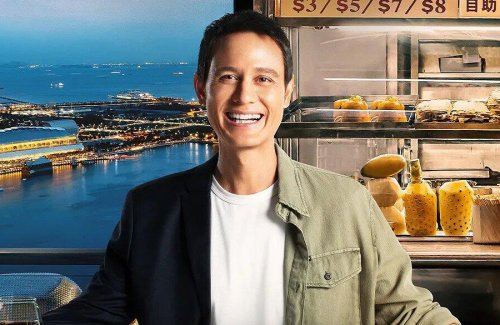
A Culinary Adventure With Mark Wiens On HBO Go To Debut This November

As the nation’s most famous foodie Mark Wiens is coming back to HBO Go with his very own show. He is currently located in Thailand and is a co-owner of Phed Mark, a popular Thai eatery known for its “very spicy” pad krapao.

A small look into the culture of Singapore will be presented in the Food Affair with Mark Wiens episode that will be made available on HBO GO on November 18th. Food is a serious matter; for Mark, it is not simply about consuming food; instead, he will bring each dish’s cultural and traditional elements to life.

The six-part series will feature him shooting the breeze up with everyone from Michelin-starred chefs to legendary street food vendors in Singapore.  He is impressed but used to being delighted by the city because it is home to more than fifty restaurants with Michelin stars and over sixty entries in the Bib Gourmand guide.

Mark found it inspiring to hear how the owners of different restaurants came to follow their dreams and create the unique cuisines they do today. ”It’s undeniable that food is at the center of all our lives, and that’s what brought us all together,” Mark shared.

The 36-year-old food enthusiast has persisted in pursuing his hobby of food vlogging, and he frequently takes the 9.3M audience of his YouTube channel around the world as he samples a variety of mouthwatering cuisines. The expressions on his face communicate to anyone who watches him exactly how delicious each dish is.

Follow Mark as he explores all aspects of Singapore’s food culture, from hawker centers and high-end restaurants.