Christine Holmes grew up feeling different from her peers due to being a bi-racial Taiwanese-American.
Christine was often referred to as either the “Asian girl” by her non-Asian friends and the “White girl” by her Asian peers until eventually, they referred to her as “Whasian girl,” which she liked because it represented both of her ethnicities.
She struggled to embrace her cultural background and wished to be fully White. It took her long before she learned to love her identity and cultural heritage, but she did.
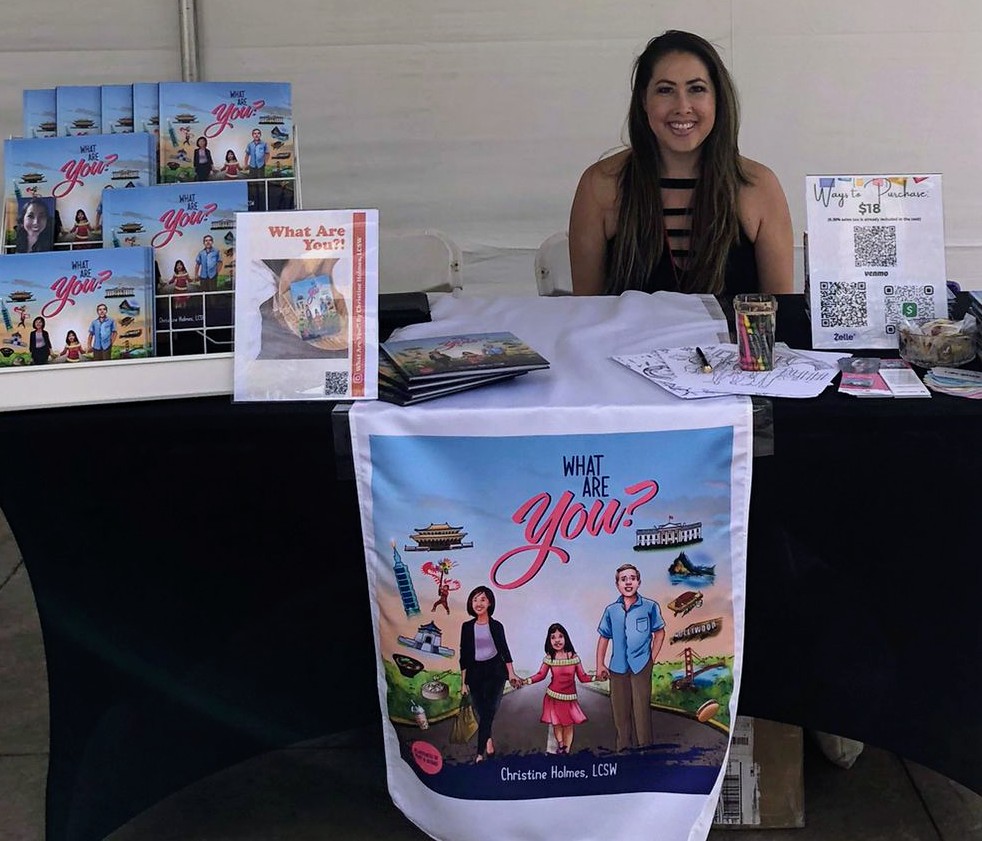
Inspired by her personal experiences, she wrote the book “What Are You?” to provide representation in children’s literature for mixed Asian children.
The book touches on her personal struggles with food and language, among other things, and highlights the importance of representation in literature for children who come from mixed cultural backgrounds.
GROWING UP WITH A TAIWANESE MOTHER AND AN AMERICAN FATHER
Christine grew up in Irvine, CA, where the population was predominantly white and Asian. However, there were very few mixed children, which made Christine feel very different from her peers, who were either fully White or fully Asian.

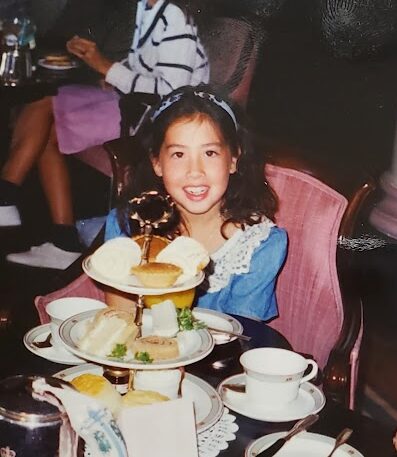
As a child, Christine was immersed in Chinese School, Chinese Choir, piano, and tennis, which made her feel even more different from her peers because most of them were fully Asian.
Christine’s dad, who is White but very much into Asian culture and a world-renowned Master of martial arts, made it very important for them that Christine knew her Taiwanese/Chinese culture. Christine’s mother cooked Chinese food for most dinners, and her first language was Mandarin.
Their home is filled with beautiful Chinese/Taiwanese antiques, and they used to visit Taiwan every year until Christine was in junior high/high school.
CHALLENGES OF BEING THE “WHASIAN” GIRL
“To my White friends, I was the Asian girl but to my Asian friends, I was the White girl until I got into high school and my friends decided to call me the “Whasian” girl which I preferred since it represented both of my ethnicities.”
Christine felt different from everybody growing up, which bothered her internally. In fact, she had a teacher in her Chinese school that wasn’t very nice to her because even though she can speak Chinese, she couldn’t write Chinese like the other children. This treatment left Christine feeling isolated and alone, until she eventually quit Chinese school altogether.

Her non-Asian friends also often made comments about the food her mom would bring to potlucks or the bags she would use to pack her lunch, making her feel ashamed of her culture. When her mom spoke Mandarin, her non-Asian friends would be offended and ask why she had to speak Mandarin in front of them. She would have to explain that it was sometimes easier for her mom to speak in her native language than speak English. This made her feel uncomfortable, and she would get angry at her mom for it.
At this point, she wished that she was fully White, perhaps because being White and blonde was considered the most beautiful when she was growing up. Her mom used to pinch her nose to make it look “taller” and less stubby like a typical Asian nose. Some of her Asian peers even told her that she was lucky to be at least half White compared to them being fully Asian.
THE TURNING POINT
It wasn’t until college that she fully embraced being mixed and started to love her identity. Christine found herself surrounded by a diverse group of friends who not only accepted her but celebrated her mixed heritage.
“In college, most of my friends were either mixed or of different ethnicities other than White or full Asian. And, they embraced me,” she said.
They appreciated the unique perspective she brought to the table and encouraged her to embrace her identity. For the first time in her life, Christine felt truly proud of her background and of who she is.
WRITING THE BOOK
Christine’s personal experiences served as the inspiration behind her book, “What Are You?” which is a story about her life growing up as a mixed-race individual in a predominantly white and Asian community.
Christine wrote the book when she realized there were no books that represented mixed Asian children. Despite being able to find books for her own children who are half Black, she couldn’t find any for children who were mixed Asian. So, she decided to create something that represented kids like herself.
“I think the part of the book that was most emotionally challenging was writing about the food and how embarrassed I was about my mom packing me Asian food even though I secretly loved it.” Christine admits to feeling a lot of guilt now as an adult for all the times she blamed and got mad at her mom as a child.

REPRESENTATION IN CHILDREN’S LITERATURE
Christine strongly believes in the power of representation and the need for diverse books that accurately reflect the experiences of mixed-race individuals. Having grown up without any books that reflected her own identity, she recognizes the importance of seeing oneself represented in literature.
She saw firsthand how much her own children appreciated books with characters that looked like them and had similar cultural backgrounds. Writing her book, “What Are You?”, she received overwhelming positive feedback from other mixed Asian individuals who wished they had a book like this when they were children.
Despite increased awareness and acceptance of mixed-race identities in modern times, Christine recognizes that children may still struggle with their identity and the pressure to choose one ethnicity over the other. Her book seeks to empower mixed-race children to embrace and celebrate all aspects of their identity.
OVERJOYED BY THE POSITIVE FEEDBACK
Christine initially had doubts about the book’s reception due to her own insecurities about putting herself out there. However, the encouraging and uplifting words from her readers have exceeded her expectations.
“I was featured on a TikTok page, twice, by someone with 1 million followers, who’s sister bought the book for her. She shared that my book had emotionally resonated with her in many ways. It was then that I realized the impact that my book has had on some people.”
HOPE FOR THE FUTURE
Christine hopes that her book will inspire readers to embrace their identity, no matter where they come from. She wants readers to know that they don’t have to choose between different cultural backgrounds and can be proud of their unique mix.
“I hope they embrace their cultural background, and they are proud of their roots.”
By highlighting her personal experiences, Christine hopes her book will contribute to a larger conversation about identity and belonging in our society today, and ultimately help break down barriers and build more inclusive communities.
CONNECT WITH CHRISTINE
Website: publishyourgift.lpages.co/christine/
Instagram: @whatareyoubook
Facebook: What Are You? Book
TikTok: @whatareyoubook