Stories

June 23, 2025

SHARE:

For over two decades, the New York Asian Film Festival (NYAFF) has stayed at the forefront of Asian cinema in North America. Going into its 24th year, NYAFF is a project designed to remind the world that Asian cinema is here to stay and thrive, providing platforms for both well-established and rising filmmakers. At the helm of this meaningful festival is Samuel Jamier, a Korean French curator, filmmaker, and consultant whose passion and vision for Asian cinema drive NYAFF forward.

AHN had a chance to interview the talented Jamier on the festival’s inspiration and mission, and the future of Asian American Pacific Islander (AAPI) and Pan-Asian cinema.

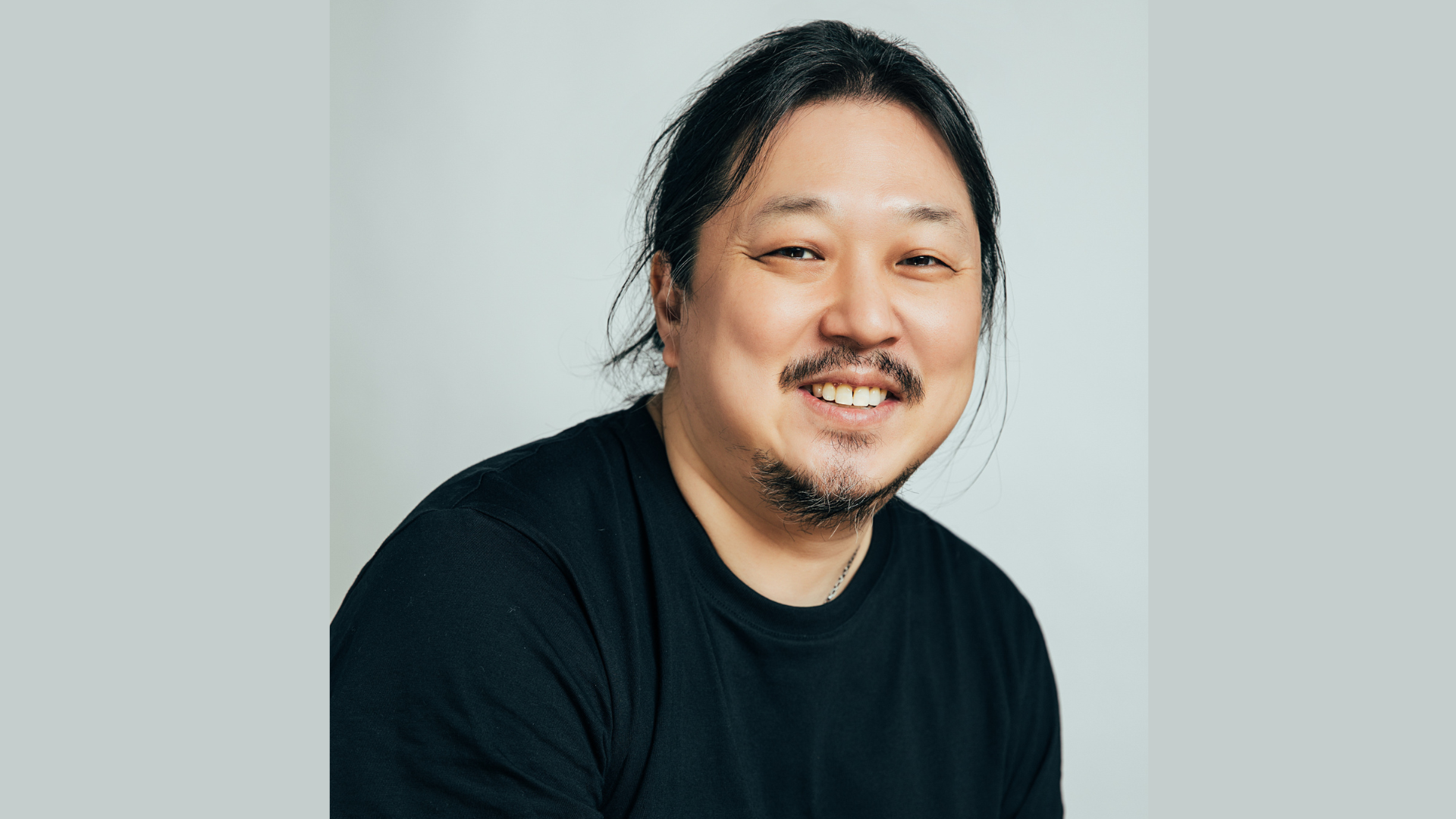
Samuel Jamier | President and Executive Director of the New York Asian Film Festival and Foundation

Bridging Cultures Through Film

Over the course of his well-established career, Jamier has proved himself to be an avid enthusiast for Asian cinema who shows a clear commitment to its artistry and cultural authenticity. Jamier has gone from Chargé de Mission for the Cultural Services of the French Embassy, through his experience working with The Korea Society, The Japan Society, to becoming the guiding force behind NYAFF. 

As a Korean adoptee raised in the idyllic Brittany of northwestern France, it is natural that his journey was one of cultural navigation and a lingering yearning for heritage connections. All this lifelong commitment to Asian cultures made it intriguing to learn where it all began—turns out not all those who wander are lost.

I was always drawn to stories that challenge conventions, that shake you awake in the middle of the night. My inspiration came from literature, philosophy, and cinema—works that make your heart pound and your mind race like you’ve had too much caffeine.

Traveling and living in different countries in my 20s rewired my brain. Experiencing cinema across different cultures made me realize the immense power of storytelling. I was particularly struck by the underrepresentation of Asian narratives in global film industries, which fueled my drive to bridge that gap through my work at NYAFF and beyond.

Jamier, a Korean adoptee raised in France, has dedicated his career to championing Asian cinema and bridging cultural gaps through storytelling.

Leading a “nomadic” life throughout his 20s has reframed his understanding of storytelling, endowing him with the severely underrated power of Asian narratives in global media. That realization has become some sort of a push for him to challenge stereotypes and redefine Western perceptions of Asian cinema beyond just kung-fu flicks and arthouse genres. 

Breaking Barriers for Asian Filmmakers

Hollywood has become a benchmark for world cinema. It only took a few seconds to look up “film classics” on Google, and most of the recommendations would be Hollywood/ Western. As he revealed that one of his greatest challenges lies in “shifting global perceptions of Asian cinema” and “the industry’s gatekeeping,” his answer underscores a limited spotlight on Asian narratives. 

Historically, Western audiences have viewed Asian films through a narrow lens, often limited to action-packed martial arts films or slow, contemplative arthouse works. This raises concerns over “typecasting” Asians in movies and hindering the potential of the world’s largest region. Through NYAFF, Jamier has worked tirelessly to push back these outdated preconceptions and aimed towards a broader, more nuanced appreciation of Asian storytelling.

Jamier is reshaping global views on Asian cinema, breaking stereotypes and opening doors for new voices worldwide.

Jamier has also successfully secured various global distribution deals for Asian filmmakers, shedding light on emerging talents to international audiences. Back in 2020, the pandemic took over New York City, leaving many film festivals canceled and filmmakers struggling. 

Recognizing the urgency and devastating impact, Jamier and his team at NYAFF quickly adapted, launching virtual screenings and digital initiatives to keep Asian cinema in the spotlight. His commitment to dismantling industry gatekeeping and evolving Asian narratives has provided new opportunities for talents from Asia and the diaspora to gain recognition at major festivals and in Hollywood.

A Bridge Between East and West

Through his work at NYAFF and his consultancy firm, SMLX Consulting, Jamier has become a key figure in ensuring cultural authenticity in Hollywood. He never stops encouraging studios, filmmakers, and screenwriters to represent Asians, collectively drawing diverse and respectful depictions of Asian identities in movies. It’s not just about quantity—to Jamier, it’s about both: quality and quantity. 

Beyond curating films, Jamier is about to make his directorial debut with The Huntress, marking his first endeavor in filmmaking. The film, inspired by World War 2, was a powerful manifesto of women’s roles in resistance movements, bringing overlooked histories to the spotlight while challenging conventional war narratives of Southeast Asian stories on screen. His transition from festival curator to director is a testament to his commitment to elevating untold Asian stories on screen. 

The Future of Asian Cinema with New York Asian Film Festival 2025

Recent years have witnessed an interesting spike in Asian media—from K-dramas to anime—Asian cinema is “at an exciting turning point,” he shares. NYAFF remains dedicated to showcasing the depth and innovation of Asian storytelling, and Jamier encourages audiences to explore the incredible films emerging from Asia.

My mission is to bring authentic, compelling Asian stories to the forefront of global cinema. Whether it’s through NYAFF, my consulting work, or my filmmaking, I want to challenge outdated narratives and create new spaces for Asian filmmakers to be recognized and celebrated.

Jamier is championing a new era for Asian cinema, using NYAFF and beyond to spotlight bold, authentic stories and push the industry forward.

Looking ahead, the 24th edition of the New York Asian Film Festival is set to take place from July 11-27, 2025, promising a lineup that further expands the horizons of Asian storytelling. Jamier remains committed to fostering representation and creating new spaces for Asian filmmakers to thrive.

To support NYAFF’s mission and stay updated on the 2025 festival lineup, visit www.nyaff.org.
Related Articles

Image Source: ESQA

News

First Indonesian Vegan Cosmetic Startup Obtains $6 Million Funding From Unilever Ventures

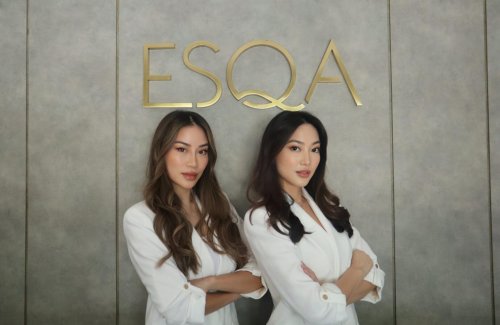
The first and top vegan cosmetics company in Indonesia, ESQA Cosmetics, raised $6 million in a series A round led by Unilever Ventures marking the latter’s first investment in the Southeast Asian beauty market.

In the said round, East Ventures also participated, the venture arm of the global consumer goods giant.

After spending over ten years living and working in Los Angeles, Cindy Angelina and Kezia Trihatmanto created ESQA in 2016, shortly after their return to Indonesia.

The two intended to redefine luxury cosmetic products and make them more widely available and reasonably priced.

With the acquired funds, the company plans to use the money to reach more cities and markets while also extending its omni-channel distribution.

Additionally, they want to expand their product offerings, foster talent development, and amplify their marketing initiatives.

Prior to this, the company reportedly increased its sales to Vietnam, Singapore, and Malaysia. 

TECHINASIA mentioned that one of the company’s expansion initiatives was to sell its goods through Sociolla’s physical storefronts, another East Ventures-backed startup.

Accordingly, the business stated that despite the pandemic, it had managed to turn a profit with its 120 vegan and Halal-certified products.

Avina Sugiarto, a partner at East Ventures, stated in Deal Street Asia that by having consistent profitability, they weren’t looking for high-quality, hyperlocal, and affordable beauty products.

She continued saying “We were certain that ESQA’s innovative, natural ingredients and wide-product offerings will propel ESQA to be a leader in the beauty market in Southeast Asia.”

Image Source: Luis Sinco / Los Angeles Times

News, Stories

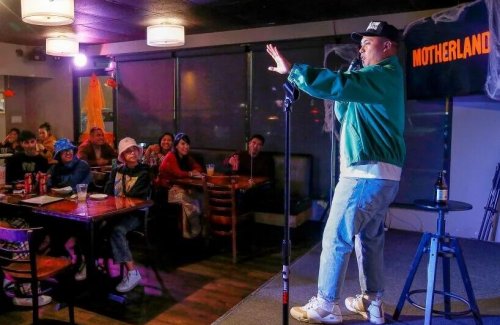
Enjoy Your Favorite Filipino Dishes Along With A Comedy Show at Eagle Rock’s Kusina Filipina

Big egg-shaped platters filled with famous egg noodle pancit, mouthwatering pork sisig, cold cans of beer, and blithe stand-up comic acts are offered as part of the restaurant’s unique dining experience.

The brain behind the comedy events is Filipino-American C.J. Toledano, who was born with the background necessary for such lighthearted entertainment.

The Eagle Rock neighborhood of Filipino Americans is the ideal fusion in creating the weekly program that is so exceptionally Los Angeles.

The restaurant’s co-owners, Jun Miranda and Vener Ramos, greased the wheels to serve the dishes and beverages that the predominantly Filipino audience was clamoring for when actress and stand-up comedian Felicia Folkes performed.

Toledano recalled how the Wednesday show got started and said in the Los Angeles Times that Jun Miranda was all about it.

“He just said, ‘The restaurant is yours on Wednesday nights,” Toledano stated which was backed by Miranda saying “I immediately said yes. Of course, I wanted to help the Filipino community.”

Toledano, who co-hosts the program with Orolfo and Rob Haze, stressed that the event is not just for mutual benefit but that “I have a specific vision for the show and the comedians who do it. [I want] people I’m fans of,” he continued.

He added that the intensely vibrant, funky, and fatty flavors of Filipino cuisine at “Motherland”— including the crispy sisig,a deep-fried chopped pork belly flavored with a little of lemon juice, diced onion, bell pepper, ginger and, a little of chicken liver spread;  dinakdakan, a combination of grilled and boiled pork belly mixed with onions, peppers — and mayonnaise; chicken adobo with quail egg and fried potatoes; and halo-halo, among others—are just as electrifying as the acts on stage.

“I’m a Filipino guy who grew up in Pennsylvania. I didn’t have many Asian friends. So the show is really killing several birds with one stone — I’m in touch with a culture I was never close to. I’m seeing old friends. New comics. It’s exciting for me,” Toledano admitted.

116018653_728607294654083_6041310441211220664_n

Stories

Her Father Ignored Her For 8 Months When She No Longer Wanted To Be A Doctor

This may have happened to you (maybe not the musical writing part), or you may know someone from an Asian background who is currently struggling as their parents had strongly expected or already had chosen a job for them.

But how many of you have bravely rejected your parents’ desires, and followed your true passion? Take it from this courageous girl, Joy Regullano. You might remember her from the viral YouTube sketch called White Fetish, or various random acting gigs like the TV Series Crazy Ex-Girlfriend (her line was “Yeah, bitch!”) or Modern Family (with her line was “You fools!”).

That’s right, Joy is quite too far from wearing a white coat. She’s an actress, comedian, and writer — every Asian parents’ nightmare. So when she told her parents that she didn’t want to be a doctor anymore, her father didn’t talk to her for 8 months. Years later, she wrote a comedy musical about it, called Supportive White Parents.

“Working on this musical has been a major part of my healing journey (my parents are imperfect people who were just passing down intergenerational trauma) and maybe it can be part of yours too,” Joy expresses.

Read through as Joy shares how she has discovered her passion for comedy, and her journey to healing and acceptance through her musical.

MY WHOLE LIFE, I THOUGHT I WAS GOING TO BE A DOCTOR JUST LIKE MY PARENTS

My parents were born and raised in the Philippines. My dad grew up very poor in one of the provinces, but after scoring in the top percentage of all students across the country on an exam, he got a scholarship to a prestigious science high school in Manila that was all expenses paid. My parents met in medical school, and soon after graduating, they came to the US by way of New York. Eventually, they made their way across the country to Eagle Rock in LA and then Orange County, where I grew up. 

My whole life, I thought I was going to be a doctor just like my parents. I tried my best to be the perfect daughter. I got straight A’s and took piano lessons since I was 3 and violin lessons starting at 8. (Well, actually, I got one B+ in AP/IB Physics, but we don’t talk about that B+) I studied math outside of school at Kumon and played educational computer games because it was a productive use of my time. I read medical books my parents had lying around the house and had subscriptions to science magazines in high school, for fun.

But as I grew older, there was a part of me that was starting to love writing and making people laugh. For 7th-grade vocabulary exercises, I cared more about making my sentences funny than using the word right. My favorite part about English and Spanish group projects was writing the scripts and acting in them. I wrote bad high school poetry. But I didn’t think that was an acceptable thing to want to do with my life, so I shoved that part down, deep inside me. I did write for the school newspaper and compete in speech contests and debate teams, but that was about the extent of my (public) creative life. 

But as I grew older, there was a part of me that was starting to love writing and making people laugh.

-Joy Regullano

I LOVED FEELING LIKE I COULD MAKE THE AUDIENCE LAUGH AND CRY JUST BY TELLING AN HONEST STORY

I went to UC Berkeley pre-med and was planning to take over my dad’s clinic when he retired. But in the first semester of my freshman year, I got a B on my first math test and a C on my first chem test, and I panicked. After some soul-searching, I realized I wasn’t actually passionate about any of that and ended up cycling through a bunch of different majors before landing on Theater and Southeast Asian Studies.

I wrote a play in college about a friend who had passed away in high school, and when I put it up in front of an audience, I was hooked. I loved feeling like I could make the audience laugh and cry just by telling an honest story. Just by being myself. I wanted to do that for the rest of my life. I loved Tina Fey and Amy Poehler’s work so much that I couldn’t even watch them for a long time because it hurt that I wasn’t doing what they were doing. 

WHITE PARENTS: A MUSICAL INSPIRED BY MY LIFE

I wrote the book and the lyrics to a comedy musical called “Supportive White Parents” about an Asian girl who tells her parents she doesn’t want to be a doctor anymore, and when they’re disappointed, she wishes on a shooting star for supportive white parents. Eventually, she learns to love her Filipino parents for who they are. My friends Sam Johnides and Tony Gonzalez wrote the music.

The musical was inspired by my life. When I told my parents I didn’t want to be a doctor like them and take over my dad’s clinic, my dad yelled at me, called me selfish, and didn’t talk to me for 8 months. I was absolutely devastated, even though I knew that making people laugh and cry was what I had been put on this earth to do. 

I felt so jealous of my white theater classmates with their seemingly endlessly supportive white parents. And funny enough, they were jealous of me because I had something called “discipline”, played multiple instruments, and knew other languages. And thus, the seed of a musical was born.

Eventually, she learns to love her Filipino parents for who they are.

-Joy Regullano

LAUGHING AT OURSELVES CAN BE ONE OF THE BEST WAYS TO HEAL

There aren’t many Asian American musicals, let alone comedy Asian American musicals. One of my teachers says that comedy is the back door to the truth. I think that laughing at ourselves can be one of the best ways to heal, as well as realizing that we are not alone. 

We as a generation are going through this together, and also, we, as well as our parents, are the products of society and intergenerational trauma. We are all imperfect people who are trying the best we can with the tools we have. 

ACCEPTANCE IS THE QUICKEST WAY TO SANITY AND PEACE

I love the serenity prayer. There are some things that we can change, and we should do what we can to change those things. There are some things we can’t change, and it’ll drive you crazy trying to. You can’t control other people. You can only control yourself. The sooner you can accept other people are how they are, the sooner you’ll stop giving your energy away. 

Also, one thing I learned that blew my mind is that it’s actually not love, to wish that your parents or family were different than who they are. If what I was asking from them was to love me for exactly who I am, with all my imperfections, isn’t that what I should be giving them too? Unconditional love and acceptance? (That’s not to say that you shouldn’t have boundaries – that could be a whole other article.) But accepting things you can’t change is the quickest way to sanity and peace. 

If what I was asking from them was to love me for exactly who I am, with all my imperfections, isn’t that what I should be giving them too?

-Joy Regullano

It’s a daily practice. But try it! After reading “The Subtle Art of Not Giving a F*ck”, I tried to imagine that I only had one f– to give a day. How much energy would I be saving by only getting bent out of shape over the most important things!? I’m not really good at giving only one f– a day. But I’ll keep trying.

One more thing – some people need to be angry before they move to acceptance. I know I did, and I still feel angry sometimes. Accepting yourself and your feelings is part of the process too. Wherever you are in your journey is okay.

CONNECT WITH JOY

Instagram: @supportivewhiteparents @joyregullano

Twitter: @swpmusical @joyregullano

Website: www.supportivewhiteparents.com

Be on the lookout for the upcoming Supportive White Parent concept album, to be released in January 2023, with singles leading up to it! 

Image Source: Melissa Keomoungkhoun / Tatsu Dallas

News

Dallas Omakase Restaurant Makes Memorable Dining Experience For Deaf Couple With Staff Using ASL

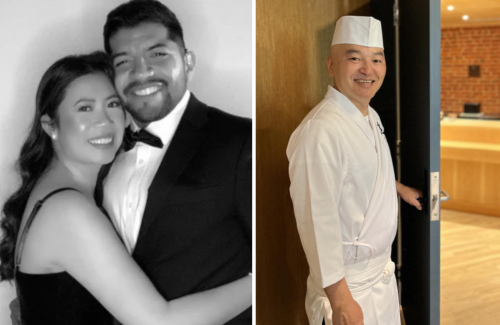
Victor Montiel and Melissa Keomoungkhoun were on the verge of tears as they expressed their gratitude to the Tatsu Dallas’ personnel for making their experience unforgettable.

The couple, who are both deaf, revealed in Today that they are used to getting ready in explaining themselves using their voices and American Sign Language, displaying texts from their phones, or even asking for pen and paper.

Melissa’s sister was worried that interaction with the staff would be difficult because she was aware that “omakase” means that diners receive meals that include foods chosen especially by the chef, which means more word-of-mouth discussion.

In advance of this, Melissa wrote Tatsu to inquire as to whether they could still enjoy the meal to its fullest without being able to hear the chef describe each course. She was shocked to learn that they had already gotten the tasting menu, which also listed the available drinks/cocktails, and that a complete menu will be available when they visited.

What surprised them more was the night of their reservation as they were greeted in American Sign Language (ASL) by the staff, including the Beverage Director who is the wife of the chef-owner.

Melissa was quoted saying that “With the staff signing at Tatsu, we didn’t feel left out even though it created some attention in the room.”

She also shared that they gazed in wonder at the excellent service that they received.

The excellent personnel and food service that Tatsu delivers to its guests were posted on Twitter by Melissa’s sister Nataly Keomoungkhoun, the online dining editor of D magazine. Her tweet received thousands of likes and retweets.

The chef-owner Tatsuya Sekiguchi, claims that when working in New York City, he had an encounter that solidified his resolve to always offer the best service he can, he stated “I believe that everyone and every day are unique.” He went on to clarify that his current objective is to just make every meal a special and memorable one.

In her tweet, Nataly put into words how Tatsu exceeded the couple’s expectations where they had the best experience possible.