Stories

June 23, 2025

SHARE:

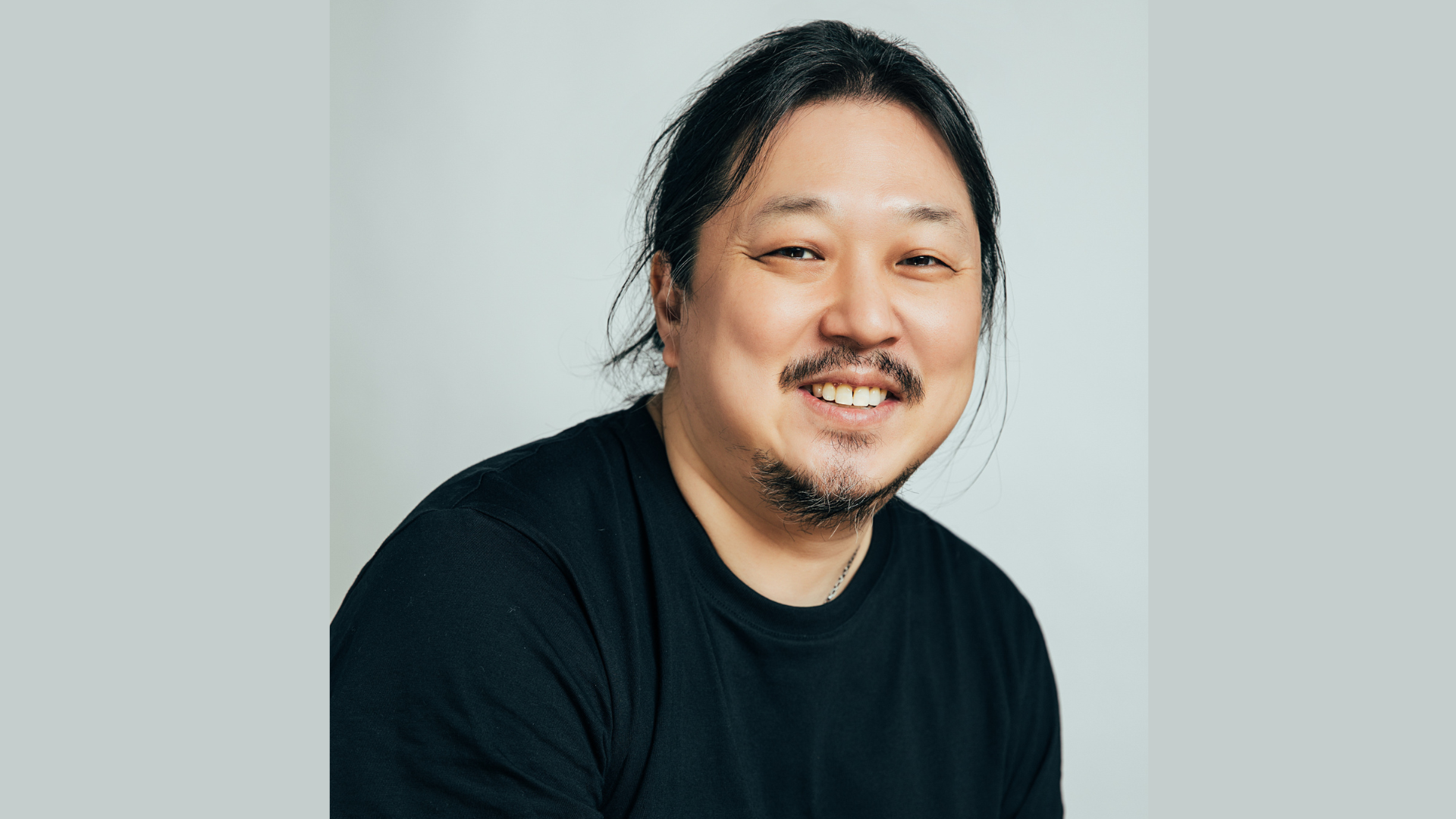
For over two decades, the New York Asian Film Festival (NYAFF) has stayed at the forefront of Asian cinema in North America. Going into its 24th year, NYAFF is a project designed to remind the world that Asian cinema is here to stay and thrive, providing platforms for both well-established and rising filmmakers. At the helm of this meaningful festival is Samuel Jamier, a Korean French curator, filmmaker, and consultant whose passion and vision for Asian cinema drive NYAFF forward.

AHN had a chance to interview the talented Jamier on the festival’s inspiration and mission, and the future of Asian American Pacific Islander (AAPI) and Pan-Asian cinema.

Samuel Jamier | President and Executive Director of the New York Asian Film Festival and Foundation

Bridging Cultures Through Film

Over the course of his well-established career, Jamier has proved himself to be an avid enthusiast for Asian cinema who shows a clear commitment to its artistry and cultural authenticity. Jamier has gone from Chargé de Mission for the Cultural Services of the French Embassy, through his experience working with The Korea Society, The Japan Society, to becoming the guiding force behind NYAFF. 

As a Korean adoptee raised in the idyllic Brittany of northwestern France, it is natural that his journey was one of cultural navigation and a lingering yearning for heritage connections. All this lifelong commitment to Asian cultures made it intriguing to learn where it all began—turns out not all those who wander are lost.

I was always drawn to stories that challenge conventions, that shake you awake in the middle of the night. My inspiration came from literature, philosophy, and cinema—works that make your heart pound and your mind race like you’ve had too much caffeine.

Traveling and living in different countries in my 20s rewired my brain. Experiencing cinema across different cultures made me realize the immense power of storytelling. I was particularly struck by the underrepresentation of Asian narratives in global film industries, which fueled my drive to bridge that gap through my work at NYAFF and beyond.

Jamier, a Korean adoptee raised in France, has dedicated his career to championing Asian cinema and bridging cultural gaps through storytelling.

Leading a “nomadic” life throughout his 20s has reframed his understanding of storytelling, endowing him with the severely underrated power of Asian narratives in global media. That realization has become some sort of a push for him to challenge stereotypes and redefine Western perceptions of Asian cinema beyond just kung-fu flicks and arthouse genres. 

Breaking Barriers for Asian Filmmakers

Hollywood has become a benchmark for world cinema. It only took a few seconds to look up “film classics” on Google, and most of the recommendations would be Hollywood/ Western. As he revealed that one of his greatest challenges lies in “shifting global perceptions of Asian cinema” and “the industry’s gatekeeping,” his answer underscores a limited spotlight on Asian narratives. 

Historically, Western audiences have viewed Asian films through a narrow lens, often limited to action-packed martial arts films or slow, contemplative arthouse works. This raises concerns over “typecasting” Asians in movies and hindering the potential of the world’s largest region. Through NYAFF, Jamier has worked tirelessly to push back these outdated preconceptions and aimed towards a broader, more nuanced appreciation of Asian storytelling.

Jamier is reshaping global views on Asian cinema, breaking stereotypes and opening doors for new voices worldwide.

Jamier has also successfully secured various global distribution deals for Asian filmmakers, shedding light on emerging talents to international audiences. Back in 2020, the pandemic took over New York City, leaving many film festivals canceled and filmmakers struggling. 

Recognizing the urgency and devastating impact, Jamier and his team at NYAFF quickly adapted, launching virtual screenings and digital initiatives to keep Asian cinema in the spotlight. His commitment to dismantling industry gatekeeping and evolving Asian narratives has provided new opportunities for talents from Asia and the diaspora to gain recognition at major festivals and in Hollywood.

A Bridge Between East and West

Through his work at NYAFF and his consultancy firm, SMLX Consulting, Jamier has become a key figure in ensuring cultural authenticity in Hollywood. He never stops encouraging studios, filmmakers, and screenwriters to represent Asians, collectively drawing diverse and respectful depictions of Asian identities in movies. It’s not just about quantity—to Jamier, it’s about both: quality and quantity. 

Beyond curating films, Jamier is about to make his directorial debut with The Huntress, marking his first endeavor in filmmaking. The film, inspired by World War 2, was a powerful manifesto of women’s roles in resistance movements, bringing overlooked histories to the spotlight while challenging conventional war narratives of Southeast Asian stories on screen. His transition from festival curator to director is a testament to his commitment to elevating untold Asian stories on screen. 

The Future of Asian Cinema with New York Asian Film Festival 2025

Recent years have witnessed an interesting spike in Asian media—from K-dramas to anime—Asian cinema is “at an exciting turning point,” he shares. NYAFF remains dedicated to showcasing the depth and innovation of Asian storytelling, and Jamier encourages audiences to explore the incredible films emerging from Asia.

My mission is to bring authentic, compelling Asian stories to the forefront of global cinema. Whether it’s through NYAFF, my consulting work, or my filmmaking, I want to challenge outdated narratives and create new spaces for Asian filmmakers to be recognized and celebrated.

Jamier is championing a new era for Asian cinema, using NYAFF and beyond to spotlight bold, authentic stories and push the industry forward.

Looking ahead, the 24th edition of the New York Asian Film Festival is set to take place from July 11-27, 2025, promising a lineup that further expands the horizons of Asian storytelling. Jamier remains committed to fostering representation and creating new spaces for Asian filmmakers to thrive.

To support NYAFF’s mission and stay updated on the 2025 festival lineup, visit www.nyaff.org.
Related Articles

Nanxi and Tina

News

Blaze.tech Launches and Raises $3.5 Million Pre-Seed Round for AI-Powered No-Code Software Development

LOS ANGELES, January 11, 2023 — Blaze.tech, the smarter no-code platform that’s revolutionizing the way teams build web apps and tools, announced its official launch and has raised a $3.5 million pre-seed round led by Flybridge Capital and MaC Venture Capital. The round also included participation from investors and unicorn founders in enterprise SaaS including Vlad Magdalin (CEO, Webflow), Mada Seghete (Co-founder, Branch), Mark Schopmeyer (Co-CEO, CaptivateIQ), ACTAI Ventures, Sangha Capital, and Bill Tai. This funding round will accelerate Blaze’s growing customer base, increase the platforms’ integrations, and expand its AI capabilities. 

Today’s public launch follows a successful beta phase in which Fortune 500 companies and startups used Blaze to build dashboards, HIPAA compliant apps, complex workflows, automated invoice generators, and inventory management systems all without writing any code. Because of Blaze’s emphasis on security and its robust suite of enterprise security features, the company has found popularity with organizations in highly regulated industries like healthcare, legal, construction, transportation and logistics, and finance.

With Blaze’s AI-powered no-code platform, teams are able to create and launch highly custom and secure applications and internal tools in minutes. Blaze gives non-technical people the superpower to be entrepreneurial product builders with an intuitive all-in-one drag-and-drop interface and AI system. Blaze AI is powered by OpenAI’s GPT-3 model, the same one used by ChatGPT. App creators can tell Blaze AI to create complex workflows, automatic triggers, custom filters, advanced calculations, and more.

Blaze improves operations and productivity, and with pre-built integrations into Airtable, DocuSign, Freshdesk, Google Sheets, Salesforce, Stripe, Shopify, and many more tools, users can build multiple apps on top of their existing tech stack.

The no-code/low-code market is one of the fastest growing markets (from $25 Billion to $187 Billion in 2030), and Blaze’s unique positioning is enabling teams to build software with complexity, customizability, and security that otherwise would require writing code.

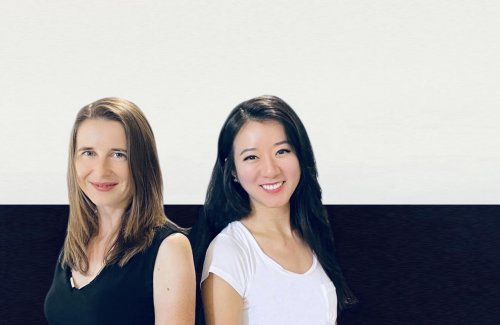
“We’re so excited to maximize the talents of people inside organizations by giving them the ability to solve business problems with software,” said Nanxi Liu, Co-CEO of Blaze. “We’re seeing individuals supercharge and significantly increase the efficiency of their team’s operations with Blaze.”

“Our users can implement their app’s business logic in just a few clicks because Blaze has done all the difficult work on the technical side to provide a platform that generates intuitive front-ends and secure, scalable back-ends,” said Tina Denuit-Wojcik, Co-CEO of Blaze.

“We are thrilled to support the Blaze team in their mission to create powerful tools and dashboards without the need for expensive engineering resources,” said Adrian Fenty, General Partner and Co-Founder of MaC Venture Capital. “Nanxi and Tina have the business acumen to be huge disruptors in the industry, and because they’ve experienced these challenges first-hand, we know Blaze is building a top-tier product.”

“Nanxi and Tina are exceptionally talented founders with deep insights into the needs of Blaze’s customer base. Having watched how well they led and capital efficiently managed their prior company to significant success, we were delighted to invest in this dynamic duo,” said Chip Hazard, General Partner and Co-Founder of Flybridge Capital.

Additional investors in the round include Dean Schnider (Partner, Najafi Companies), Felicia Curcuru (CEO of Binti), Holly Liu (Co-Founder, Kabam), Lin Capital, Michael Einziger (co-founder of the band Incubus), Mike Lu (co-founder of Triller), Root and Shoot Ventures, Socially Financed, and The K Fund.

About Blaze.tech

Blaze.tech is the smarter no-code platform that’s revolutionizing the way teams build web apps and tools. Blaze’s AI-powered platform improves operations and productivity by enabling non-technical people to build and launch custom software in minutes, without writing any code! From dashboards and workflows to portals and more, Blaze’s all-in-one-builder has pre-built integrations, security and reliability. 

Blaze is headquartered in Los Angeles and was founded in 2022. The founders, Nanxi Liu and Tina Denuit-Wojcik, previously founded Enplug, a leading digital signage software, which was acquired in 2021.

For more information, visit Blaze.tech.

Press Contact:

press@blaze.tech 

Press release documents here.

Image Source: Mila Supinskaya Glashchenko / Shutterstock

News

Indian-American’s Thriving Community Create A Positive Impact In North Texas

The rising population of Indian-Americans in North Texas is proving to be a strong force. Indian-Americans like Singh have permanently shaped North Texas’ cultural landscape in a variety of fields, including technology, education, and politics.

Tony Singh grew up with a father in the Indian Navy and moved every couple of years. Today, he’s settled in Little Elm, and even elected as councilman to serve his new neighborhood. Singh established initiatives to benefit Little Elm residents, while actively and regularly volunteering himself.

Most Indian-American employees work in only three industries: computer science and mathematics, management, and health care. Among all immigrants, Indian-Americans are the highest earners in the state. For this reason, Dinesh Hooda came to Texas in 2011 in search of employment.

Dinesh Hooda’s family had trouble adjusting until he attended India Association of North Texas’ Indian Independence Day. Through this, they established friends with Indian-Americans in North Texas who share similar experiences and struggles. Hooda is currently Uber’s senior technical program manager.

The fastest-growing ethnic group in the state is Asian, with Indian-Americans making up the majority of the group. Texas has the second-largest population of Indian Americans in the nation overall. This group will expand even more in the upcoming years, which could have a significant impact in the area. 

And while there are many struggles and difficulties to face as immigrants in the state, there are also lots of groups and communities willing to reach out to help one another and make each other feel welcome and at home.

Image Souce: olliecantos.com

News

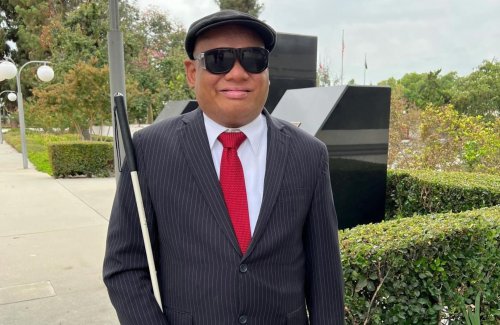
Blind Filipino-American Civil Rights Attorney Gets Elected As West Covina City Council Member

Filipino-American Ollie Cantos, who was born with a visual impairment, is now taking his experience and knowledge to West Covina City Hall.

In 1997, he graduated from Loyola Law School in Los Angeles with a law degree. He served as a staff attorney at the Disability Rights Legal Center after graduating. He also held various roles as a civil rights attorney in the Washington, D.C. government before the coronavirus emerged.

Now, he is a sworn-in member of the West Covina city council and is looking forward to contributing back to his community, where he was raised by his Filipino immigrant parents.

“My excitement level is off the charts because this represents the culmination of a lot of hard work of countless people that got us here and when we look at the opportunities that are ahead of us to unite, and to be supportive of making the city better, this day is also historic,” Cantos said in an interview.

Cantos will collaborate with a fellow Filipino on the current city council, as Letty Lopez-Viado, the first Filipino-Mexican mayor of the city, was also elected unopposed in November. She was first elected to the city council in 2018 and served as mayor of the city from 2020 to 2021.

“Though he can’t see with his eyes, he sees with his heart,” Lopez-Viado said of Cantos as she got sworn in. “He’s a very intelligent, well-spoken gentleman, and I’m very excited to work with him.”

Image Source: Considered Objects

Stories

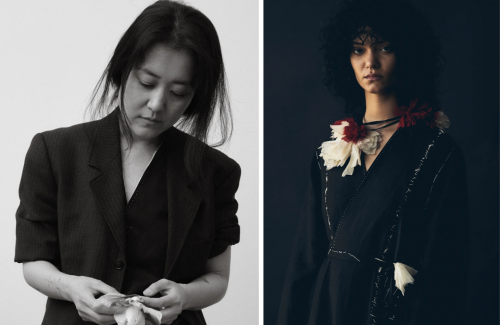
Japanese-American Designer Sara Sakanaka Revamps Vintage Kimonos Into Modern Clothing

Each of us has a unique way of imparting the memories, stories, and mementos we want to pass on to our future generations. As for 39-year-old Japanese-American designer Sara Sakanaka, the way is by incorporating ancient tales into modern clothing.

In her studio in Brooklyn, Sara preserves a little drawstring bag that her grandmother sewed for her decades ago. One of Sakanaka’s oldest mementos, this heirloom represents a long-standing ideology and was made from leftover fabric.

You will also find in her studio, folded stacks of rescued textiles waiting for her to stitch them into something new, exactly like her grandmother used to do as a hobby.

After her grandmother passed away, Sara began studying the kimonos she had inherited from her. She realized that giving these garments a second chance through reconstruction was a means of healing and re-establishing her identity and cultural roots.

Her initial creation was a classic, collared, button-down shirt. She embroidered a tiered patchwork flower fashioned from leftover silk scraps inside each garment she produced.

“There’s this whole idea that objects have lives,” she says in a Vogue interview. “I like to see every piece as a truly considered object in that way,” thus, naming her label as Considered Objects.

Considered Objects offers tapered silk slacks, oversized coats, two-toned vests, draped dresses, and hand-sewn accessories. Each item is made of recyclable materials, and within each garment is a silk scrap flower and a tag. Each shirt comes with a drawstring bag, a keepsake designed to be handed on like the one she inherited from her grandma.