
News

January 24, 2025

SHARE:

Credits: Patricia Ratulangi Vice President, Global Communications Nielsen

In recent years, food shows featuring Asian chefs and cuisines have seen a surge in popularity, capturing the attention of diverse audiences around the globe. This trend highlights the growing appetite for cultural representation and inclusivity in entertainment. As we celebrate Lunar New Year—a holiday deeply rooted in food traditions—it’s the perfect time to reflect on how Asian representation in food media resonates with viewers and drives mass viewership.

Food shows featuring Asian chefs and cuisines highlight cultural diversity, resonating with audiences and driving viewership, especially during Lunar New Year celebrations.

Food shows stand out as a medium where culture, tradition, and storytelling intersect seamlessly. Programs like Top Chef, which has featured contestants such as Melissa King and Hung Huynh, and The Great American Recipe, where home cooks celebrate diverse culinary heritages, showcase the rich variety of Asian cuisines and the personal narratives behind them. These stories invite viewers to connect with the cultural roots and contemporary adaptations of dishes they may have never experienced before.

2024 Viewing MinutesAsianTotal U.S.
Top Chef‎‎  ‎ 458.0 million5.7 billion
The Great American Recipe‎ ‎ ‎ 9.8 million84.5 million
Chrissy & Dave Dine Out‎‎  ‎ 9.2 million61.4 million
Dinner Time Live with David Chang‎ ‎ ‎ 67.4 million430.1 million
Source: Nielsen audience measurement: Jan 1 – Nov 30, 2024

Lunar New Year exemplifies the central role food plays in cultural celebration. From dumplings symbolizing wealth to fish representing prosperity, the holiday is a sensory feast steeped in meaning. By spotlighting Asian chefs and their innovative approaches to dishes that represent their heritage, food shows bridge the gap between cultural nuance and modern audiences. 

A Tết (Vietnamese Lunar New Year) tray filled with traditional Vietnamese dishes for Lunar New Year, symbolizing happiness and peace.

The success of Asian-centered food programming aligns with broader audience preferences for authenticity. Nielsen data reveals that 63% of viewers are more likely to support brands and content creators that authentically represent diverse communities. For mass audiences, this means a greater willingness to engage with shows that go beyond superficial portrayals and offer genuine insights into Asian culinary arts.

The viewership data highlights the significant appeal of food shows among both Asian audiences and the broader U.S. audience, underscroring the growing đemand for authentic, inclusive food shows that celebrate diverse cultures.

Nielsen Chart A
Nielsen Chart B

As Lunar New Year festivities fill homes with the aroma of traditional dishes, the increasing visibility of Asian representation in food shows reminds us of the universal power of food to connect people across cultures—one dish, one story at a time.

Related Articles

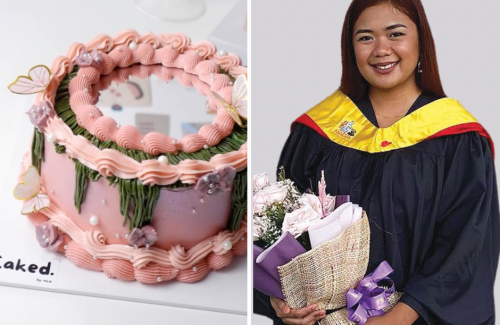
Image Source: Amberlyns Cake / Danica Lynne Casta

Uncategorized

How An Engineering Graduate Trades Hard Hats For Pastry Becomes 6-Figure Baker

For Danica Lynne Casta, an engineer by profession turned baker, success was hers after she risked taking a big step outside her comfort zone. She now manages her online cake business under “Amberlyns Cake.”

The Filipina baker had just graduated from university when the pandemic struck. Danica began to reconsider her professional goals in baking when her family had financial difficulties, so she looked for a short-term position in the online world.  

Danica had limited experience in baking. But through hard work, she persisted in her quest to become a better baker until she became well-known for her delicious “bento cakes”.

The bento cakes were not only delicious but also the perfect size and price for those watching their spending. She also recently launched a “Selfie Mirror Cake” featuring a real mirror on top of the cake. So, you can take one-of-a-kind mirror selfies while taking a snap of your scrumptious cake.

In only one month, she turned a profit into double digits. At that moment, she knew that baking was her true calling in life. “I told my family that I was quitting my job and would be a full-time baker from now on,” she told The Philippine Star, a digital newspaper in the Philippines.

As of writing, Amberlyns Cake (@amberlynscake) got over 178k followers on Instagram and Facebook.

Image Source: CNBC Make It

Uncategorized

25-year-old Who Earns Half A Million Per Year Proves That No One Is Too Young To Be A Real Estate Investor

This millennial will inspire you with his quest for financial independence. Sahil Mehta earns $515,000 a year flipping houses in addition to his full-time job at Golden Gate Sotheby’s.

Mehta grew up in a low-income household. He moved to California at 16, where he started college and graduated early to launch a successful career in real estate. Today, he has already put five rental apartments into the real estate market in Berkeley and has been able to make a profit from them.

He acknowledges that prospective investors require substantial capital even to enter the game. One essential thing he considers in investing his money is making deposits into a personal retirement account. Now, Mehta puts a lot of money into himself and puts away about $10,000 monthly for real estate investments. 

The 25-year-old also invests $1,500 per month, while most financial advisers recommend saving 10% to 15% of income for retirement. Brilliant move to put some of it in an IRA, where it can multiply at 6% to 8% every year.

O’Leary, chairman of O’Shares ETFs and a judge on the new CNBC show “Money Court,” was impressed by Sahil Mehta’s connotations to stock market strategies. “That’s what you’re putting aside for your nest egg when you turn 65.”

Made with Canva

Uncategorized

Eight Trailblazing Asian Women Who Are Slaying It In Startups

When it comes to closing the gender equality gap in entrepreneurship, many barriers remain to be addressed. However, female entrepreneurs in the startup industry are now rising and have been taking center stage.

Fortune recently released a list of the 15 Most Powerful Women in Startups based on PitchBook valuation data. 

Eight women on the list are notable Asian women who are either founders of highly valued startups where they hold important jobs or chief executives of highly valued firms.

Without further ado, here are the most powerful women in charge of the most valuable private companies in the world today.


Melanie Perkins

Cofounder and CEO, Canva

Valuation: $26 billion

The Malaysian-Austrailian cofounder and CEO of design software maker Canva was valued at $40 billion in 2021, which makes it the highest-valued female-founded startup in the world. Launching their new office product, the company is ready to take on Microsoft and Google.


Divya Gokulnath

Cofounder and director, Byju’s

Valuation: $22 billion

Gokulnath cofounded India’s most valuable startup, Byju’s. The firm’s aim is to make learning engaging and effective by leveraging deep pedagogy and cutting edge technology.


Miranda Qu

Cofounder and president, Xiaohongshu

Valuation: $20 billion

Based in Shanghai, the social e-commerce app Xiaohongshu (translation: “Little Red Book”) has been key to the rise of experiential shopping in China. The innovative platform integrates the authentic content shared by its community with commerce, quickly becoming one of the most popular destinations for making lifestyle decisions.


Ruchi Kalra

Cofounder and CFO, OfBusiness; cofounder and CEO, Oxyzo

Valuations: $5 billion (OfBusiness); $1 billion (Oxyzo)

Kalra along with her husband Asish Mohapatra, cofounded the carbon management business OfBusiness and the digital lender Oxyzo. OfBusiness provides India’s SMEs access to cash flow-based financing for buying raw materials through its NBFC ‘Oxyzo Financial Services’.


Adi Tatarko

Cofounder and CEO, Houzz

Valuation: $4 billion

The Israeli-American cofounder and CEO started the home remodeling and design platform where people can browse and save beautiful photos of inspiring home, as well as find and hire the right design and construction professionals.


Eynat Guez

Cofounder and CEO, Papaya Global

Valuation: $3.7 billion

Papaya Global is a payroll platform trusted across 160+ countries and all types of employment. Based in Israel, Guez cofounded the startup after a long career in global workforce management.


April Koh

Cofounder and CEO, Spring Health

Valuation: $2 billion

Koh became the youngest woman to run a multibillion-dollar company when the startup hit its $2 billion valuation in 2021. With the mission to eliminate every barrier to mental health, Spring Health offers mental health care services as an employer-provided health benefit.


Jinglan Wang

Cofounder and CEO, Optimism

Valuation: $1.7 billion

Optimism is an Ethereum-based decentralized infrastructure platform that allows for instant transactions and scalable smart contracts.The company valued at $1.7 billion as it worked to scale Ethereum.

Image Source: Natalie Naudus

Uncategorized

This Mom Took a Career Switch and Is Now Making Six Figures as a Book Narrator

Natalie Naudus’ voice actor journey began when she realized that narrating audiobooks could be a promising career option. She found that audiobooks were one of the fastest-growing areas of content creation and that most of them were recorded by voice actors in high-quality at-home studios. 

The mother of two decided to pursue it as a new career because she believed that many aspects of the genre she cherished as a classical singer could be incorporated into this new line of work. She now earns six figures annually.

Natalie’s husband helped her set up a home studio. A platform called ACX, which connects narrators with authors, agents, and publishers, gave her her first book job. To make her name and voice more well-known within the community, she started going to events related to book narration. 

During the 2020 pandemic, she decided to share snippets of her book narrator life on Tiktok and Instagram. She wishes others could appreciate this profession as much as she does. This exposure increased her popularity and fan base. Book gigs from publishers who wanted to hire her to publish her works also began to flood in. With this strong online presence, she acknowledged it as one of the most important decisions she has ever made for her professional advancement.

Currently, she still manages to put in a productive 40 hours a week between recording, administrative duties and reading up on material for her next book. Major publishers typically offer her a starting rate of $225 per finished audio hour. 

After three years as a voice actor, she finally reached the six-figure mark in earnings and enabled her to purchase the land for their mountaintop home, as well as upgrade her recording booth.

Natalie had recorded almost 400 books over five years. She is also an award-winning audiobook narrator of more than 250 titles.  Her story shows that taking a chance on a new career path can pay off in ways one never expects.– “It was a difficult decision to give up my opera dreams. But I wouldn’t be where I am today if I hadn’t left it behind and taken this chance.” she tells CNBC’s Make It.