News

February 6, 2025

SHARE:

The Ascension to Power

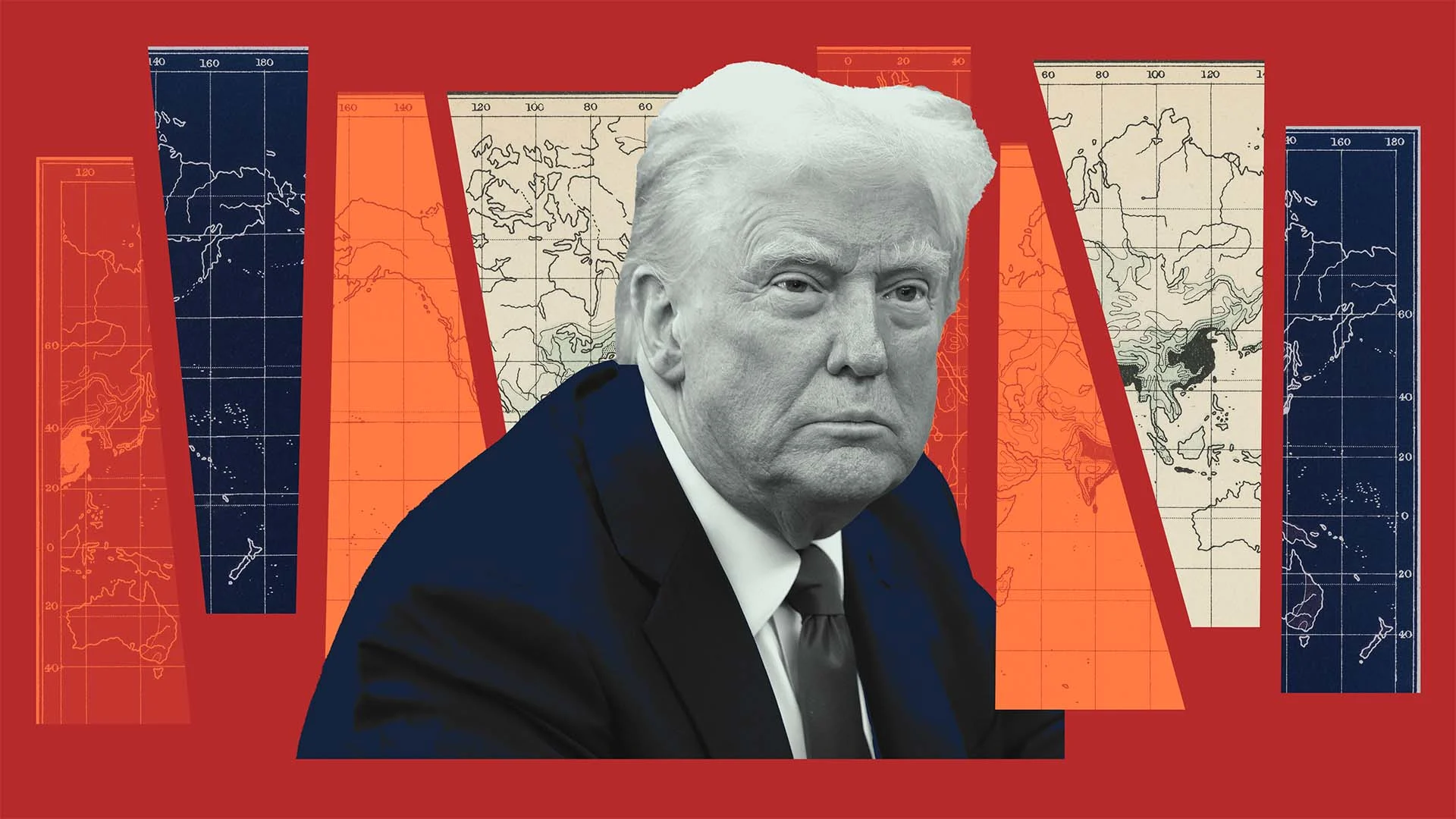
As Trump is re-elected, new reforms and policies are taking shape. Among them is his threat to impose a 25% tariff on Mexico and Canada, alongside a 10% tariff on China—claiming these countries allegedly failed to address illegal immigration and co-conspirators for illegal fentanyl distribution in the United States (US). 

Yet the article is not to stir political debate but to explore the ramifications of these tariffs on consumers and Asian countries. While many news outlets have focused on the potential setbacks in the affected countries, few have explored how others might either suffer or benefit from the situation. Hence, this piece shall highlight how Trump’s ascension to power might become the best opportunity for some Asian economies.

The Price of Tariffs

The Guardian defines a tariff as a tax imposed on foreign goods entering a country. As the world’s largest importer, the US brought in $3.2 trillion worth of goods in 2022, with imports from Canada, Mexico, and China totaling $1.2 trillion in 2023. Trump takes pride in this idea, believing the US government would receive more revenue through these tariffs, coining tariffs as the “most beautiful word in the dictionary” in an interview with Bloomberg. 

Brown University Professor of Economics Şebnem Kalemli-Özcan disagrees by arguing, “For many economists, tariff is actually the worst word in the dictionary.” She explains that ultimately American consumers and businesses will pay the price. As a trade-deficit nation, the US imports more than its exports. According to the Tax Policy Center, a 60% levy on Chinese goods accompanied by a 20% worldwide tariff could raise the costs for the average US household to up to $3,000 in 2025.

As companies face higher costs for goods, they often transfer those expenses to consumers through price increases. This can reduce consumer spending, which in turn lowers business investment and may lead to job losses.

Jason Miller, a professor of supply chain management at Michigan State University reaffirms such claims stating, “Because of the combination of these three countries, it’s going to be difficult to go down an aisle of a grocery store and not see some sort of inflationary effect.” Capital Economics projected that the newly announced tariffs could drive annual inflation up from 2.9% to as much as 4%.
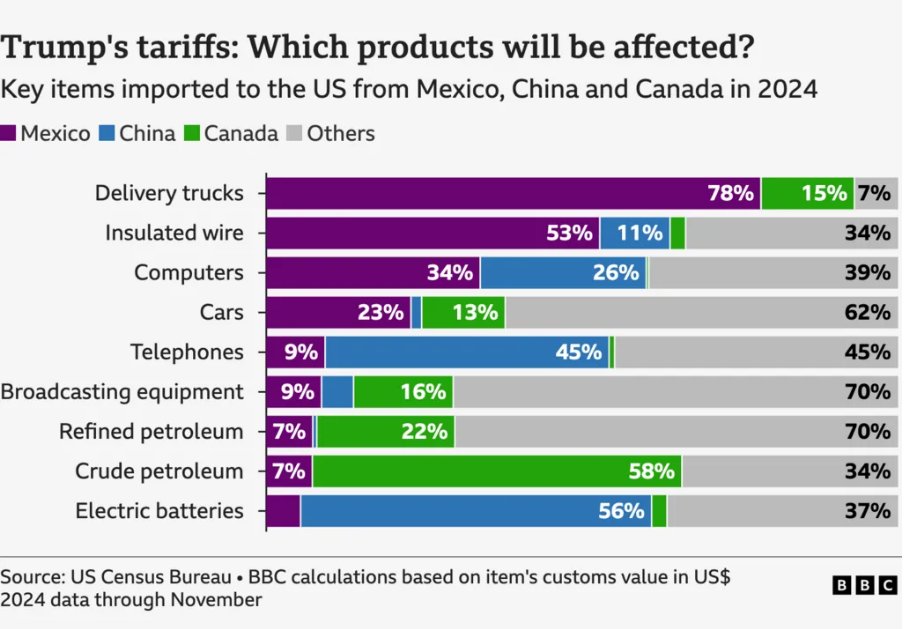
Products affected by Trump’s Tariffs (Image source: BBC)

Nevertheless, Trump’s tariff threats carry weight, as they could impose significant economic pressure on targeted countries, prompting businesses to relocate. According to the BBC, Chinese factories with 500 workers have shrunk to just 200 employees, while American buyers are already exploring alternative manufacturing hubs in neighboring regions outside of China.

Business owner Huang Zhaodong, who recently relocated his factory, told the BBC that customers had pressured him to move production overseas. He agrees with their concerns, estimating that a 10% tariff increase could cost him an additional $800,000 in earnings. “Manufacturing clothes in China under these tariff conditions is simply unsustainable,” he said.

A Victor Emerges

Cases like Mr. Huang’s have proved the challenges that Trump’s tariff has imposed on countries like China. The beginning of the Trump trade war has led businesses to flee to Southeast Asian nations, most notably Vietnam. 

While other Southeast Asian nations also benefit from shifting supply chains, Vietnam has emerged as a top destination due to its growing industrial capacity and strategic location. The country recently rose to become the Association of Southeast Asian Nations (ASEAN) champion with an estimated 40% of all ASEAN exports to North America being from the country alone. Though it is difficult to quantify how many businesses have relocated from China, BBC reports that major brands like Puma, Nike, and Adidas have already moved production to Vietnam. Sources from Vietnam Briefing indicate Intel and Samsung have rapidly ramped up their investment in Vietnam and are projected to reach $100 billion in revenue by 2050. Propelled by robust exports and foreign investments, Vietnam’s economy has recently grown by 7.09%, reaching $476.3 billion—outpacing the 5.05% expansion seen in 2023.

It is debatable whether Trump’s glare will graze upon this nation. Experts debate whether he will target Vietnam with tariffs, as his trade policies often focus on countries with a trade surplus. In 2024, Vietnam held the third-largest trade surplus with the United States at $104.6 billion, accounting for nearly 30% of its total exports. This substantial trade imbalance makes Vietnam a potential target for Trump’s tariff threats. In this scheme, the nation might experience radical changes due to trade balances, exchange rates, supply chains, and foreign direct investment (FDI). However, Vietnam is more likely to benefit from US-imposed tariffs. This prediction is supported by trends from Trump’s first term when the country experienced significant economic growth due to an influx of manufacturers and factories relocating to Vietnam. 

Despite lingering skepticism, Trump has maintained a favorable view of Vietnam. As early as 1980, Trump publicly opposed the Vietnam War and visited the country twice during his first term. His business ventures have also extended to Vietnam, with his organization partnering with Kinh Bac City Development Holding Corporation (KBC) to develop a $1.5 billion complex in Hung Yen Province. Meanwhile, his new confidante, Elon Musk, has positioned Vietnam a key production hub for SpaceX’s Starlink satellite internet project, shifting suppliers and manufacturing from Taiwan to Vietnam to reduce geopolitical risks.

Reversing these investments may be impractical or simply too late. The confidence that both Trump and Musk have placed in Vietnam highlights the country’s growing role in global supply chains. Amid rising geopolitical tensions, Vietnam’s diplomatic strategy—often referred to as the “bamboo policy” for its balance of resilience and adaptability—has strengthened its international position. As long as the country continues to wisely navigate political and diplomatic negotiations and steer clear of populist pitfalls, Vietnam is well-positioned to sustain its economic growth and global influence.
Related Articles

14a43197-8fdf-4db7-bc59-5931ce26eb91

Stories

The Healing Power of the 27-Foot Buddha over New York City by Vietnamese Artist Tuan Andrew Nguyen

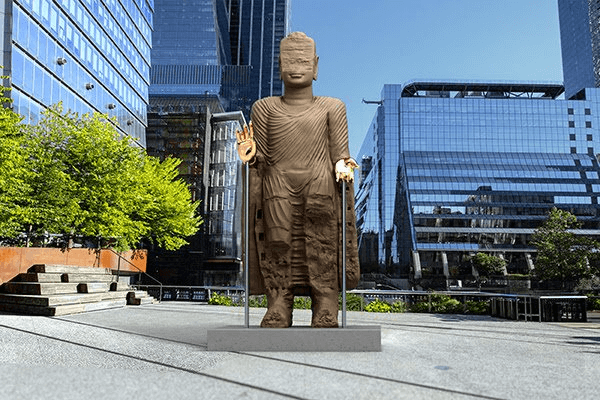
New York City is a place defined by constant noise and fast movement. Starting next spring, a 27-foot-tall Buddha statue will be installed on the High Line Plinth to change that atmosphere.

This 27-foot-tall sculpture is the latest installation on the High Line Plinth, towering over the city as a beacon of reflection. Created by Vietnamese artist Tuan Andrew Nguyen, it represents a profound intersection of ancient spirituality and modern history.

Titled ‘The Light That Shines Through the Universe’, the piece acts as a medium for healing and ancestral memory. More than just a statue, it represents an architectural prayer offered to a city that never stops moving.

Image Source: Art Asia Pacific

Historical Acupuncture: Healing Global Wounds

Tuan Andrew Nguyen describes his creative process as “historical acupuncture,” a method of using art to target and release the pressure of buried traumas. 

By placing this massive Buddha in one of the most active public spaces in the world, Nguyen addresses the deep-seated wounds of war, displacement, and erased histories. 

The sculpture serves as a physical needle intended to stimulate the collective memory of the public, forcing a confrontation with the ghosts of the past. In a city built on constant reinvention, this work insists on the importance of looking back to move forward.

Image Source: The High Line

Weapons into Wisdom: The Alchemy of Brass

The most poignant detail of the sculpture lies in its hands, which are not merely carved but recast from a darker history. 

Nguyen utilized brass artillery shells recovered from war-torn landscapes, melting down the literal tools of death to forge sacred gestures of compassion. This transformation represents a literal and figurative alchemy, turning the debris of violence into a silent blessing for New York City. 

Through this act of recycling and redemption, the artist proves that even materials born of destruction can be repurposed to serve a higher, more peaceful calling.

Image Source: The Collector

A Global Refugee: Resilience in Sandstone

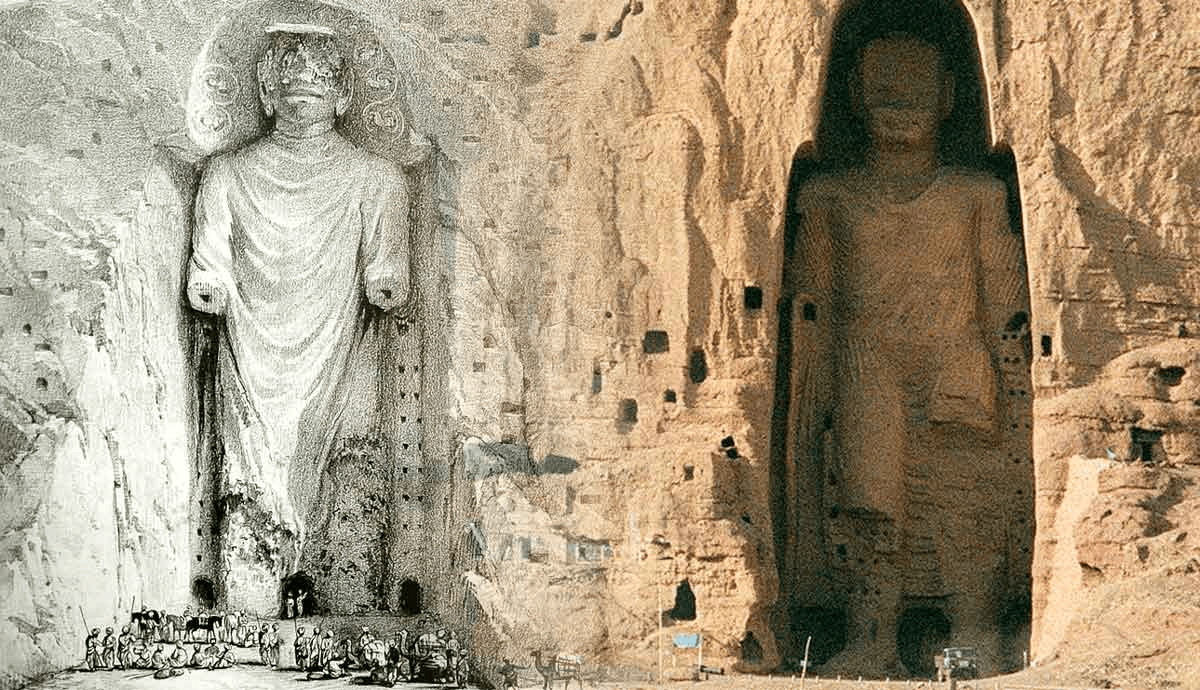
Carved in sandstone, the figure pays a haunting tribute to the Bamiyan Buddhas of Afghanistan, which were destroyed by the Taliban over two decades ago. 

Nguyen reimagines the spirit of those lost monuments as a “global refugee,” traveling from a workshop in Vietnam to find a temporary home in the heart of Manhattan. This journey mirrors the displacement of millions, turning the sculpture into a symbol of cultural endurance. 

It stands as a towering promise that while physical stone can be shattered by hate, the resilience of our shared human heritage remains fundamentally unbroken.

Learn more about Tuan Andrew Nguyen here:

📍Website

image

Stories

The Fighter Mentality Driving Anthony Kwok, CEO and Co-Founder at ZILIO, to Fix Fashion’s Most Overlooked Problem

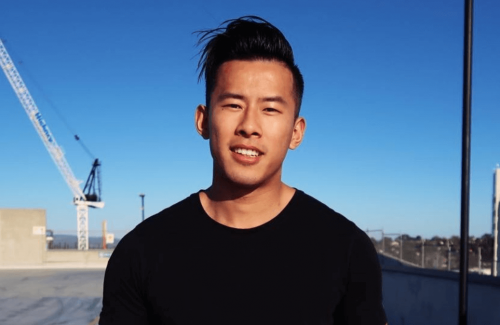
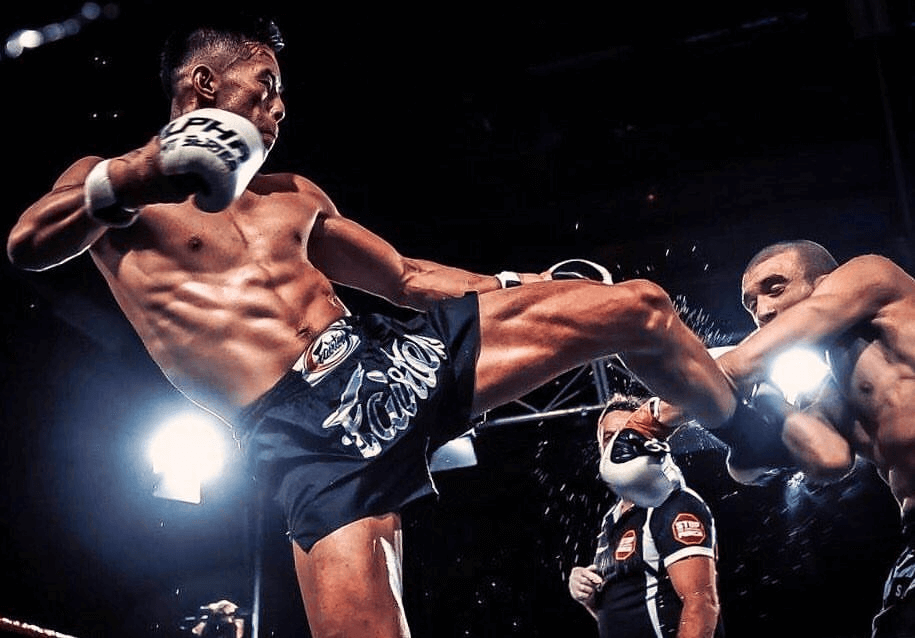
Anthony Kwok’s journey didn’t begin in a boardroom. It began in places that demanded discipline, resilience, and the ability to keep going when things got uncomfortable. First in the ring as a professional fighter, and later through a medical crisis that reshaped how he approached both life and leadership.

Those experiences now shape how Anthony runs ZILIO, a fashion tech company building AI-powered sizing solutions for brands and uniform providers. What looks like a startup on the surface is really the result of years spent learning how pressure exposes real problems, and how frustration often points to what needs fixing most.

At ZILIO, Anthony brings that mindset to one of fashion’s most overlooked challenges: the perfect fit. Not just as a sizing issue, but as a confidence issue that affects how people show up, move through their day, and feel in their own skin.

The Lessons That Carried Him Through

Before stepping into the tech world, Anthony spent his years as a professional fighter competing on FoxSports. Growing up Asian in a predominantly white environment, he felt he had to work twice as hard to be seen. This drive eventually led him to the ISKA Victorian Title. However, his toughest fight came outside the ring when he suffered two strokes the same year he founded ZILIO.

Walking away would have been understandable. Instead, Anthony leaned into the discipline he learned as a fighter. As he puts it, “Being a professional fighter taught me one non-negotiable principle: Never quit. No matter what. That philosophy carried me through recovery and continues to guide how I build today.”

Solving the “Booty Short” Problem

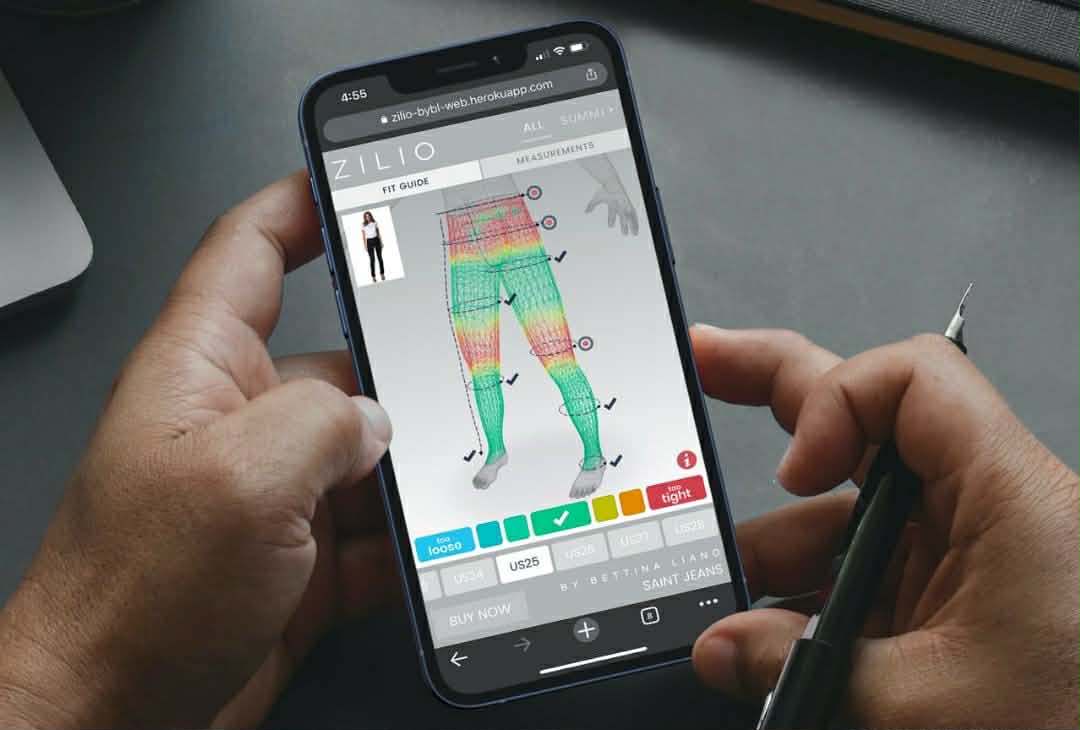
The idea for ZILIO was born from personal frustration. As an athlete with a specific build, Anthony found online shopping to be a constant gamble. He still remembers ordering gym shorts that arrived fitting like “booty shorts,” an experience that made him wonder why we can dress video game avatars perfectly but struggle to do the same in real life.

ZILIO solves this by replacing confusing size charts with accurate AI recommendations. The company started with corporate uniforms, where poor fit creates massive operational headaches for brands like Coles and Australian Unity. The impact was immediate. ZILIO has helped partners cut returns by 40% and significantly boosted customer engagement by giving them a fit they can trust.

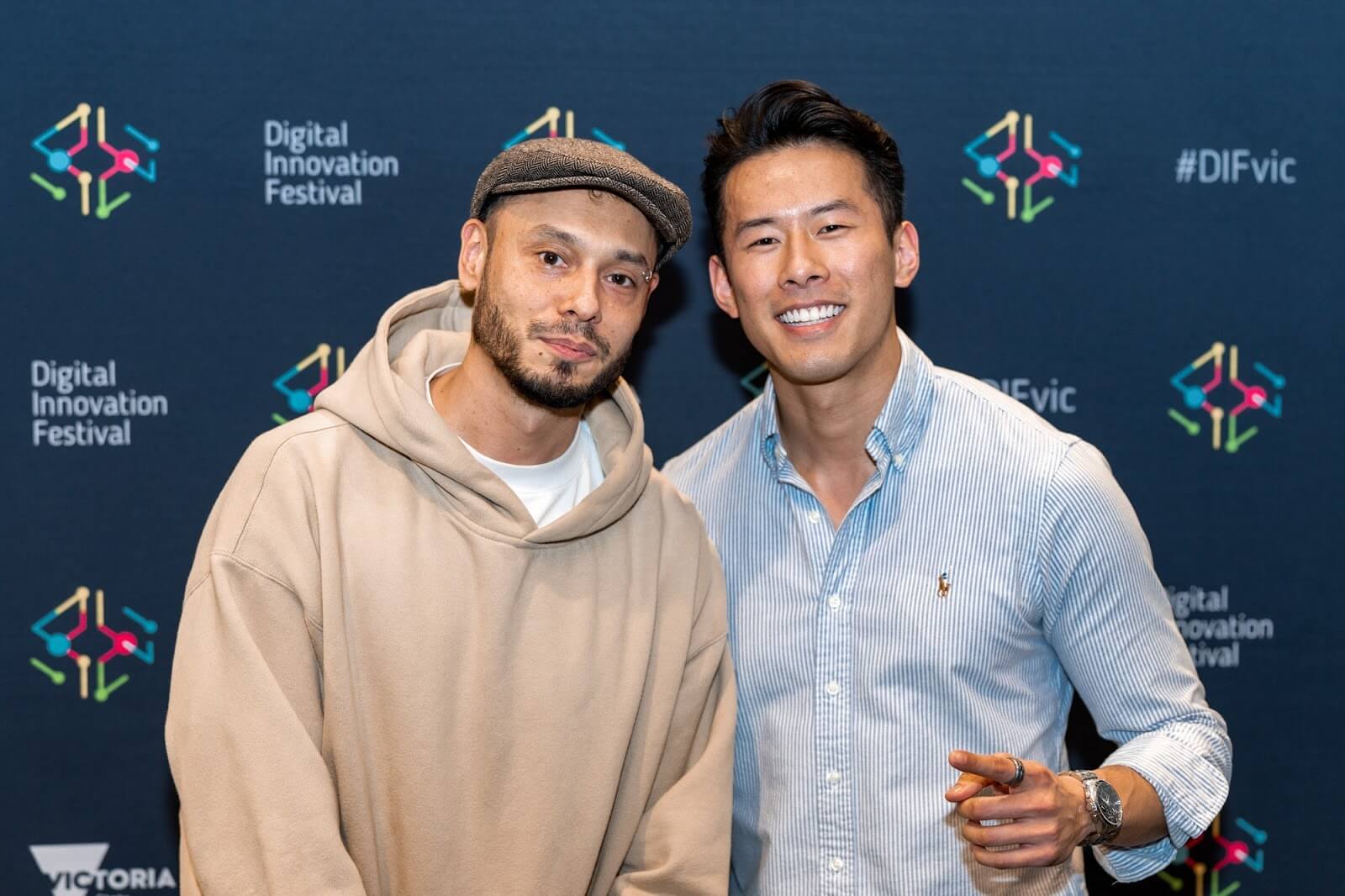
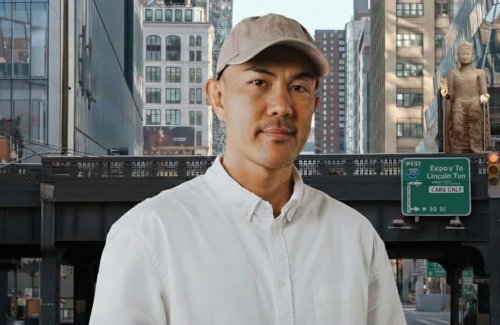
Anthony Kwok (right), CEO and Co-Founder of ZILIO

Helping People Stop Second-Guessing Their Bodies

For Anthony, this mission is personal. He knows that standard size charts often fail people with diverse backgrounds and body types, including many in the Asian community. His goal is to make sizing “invisible” so that people can focus on their style instead of their anxiety.

“Fashion is deeply emotional, and a bad sizing experience can stop someone from exploring style altogether,” Anthony explains. “ZILIO exists to navigate that complexity and give people clarity and confidence, regardless of body type or background.”

With $500,000 in funding and awards like the B&T 30 Under 30, Anthony is proving that a kid with a big imagination can change a global industry. Whether it’s through his upcoming 3D virtual fitting rooms or his work with major brands like Rebel Sport, he is making sure that the next time you shop online, you’re buying a piece of clothing that actually fits your life.

Discover more about Anthony Kwok here:

📍LinkedIn📍Instagram

Learn more about ZILIO here:

📍Website📍Instagram

5fb9cf02-106f-4637-a666-2db06176ce94-jpeg

Stories

From War Survivor to Literary Leader: The Remarkable Rise of Amy M. Le, CEO of Quill Hawk Publishing

Amy M. Le, CEO of Quill Hawk Publishing, has built her life around stories that matter. Not the polished kind that skip the hard parts, but the honest ones shaped by loss, survival, and growth. Her journey reflects how personal history can quietly become a source of strength.

Every stage of Amy’s life pushed her to adapt and redefine what success looked like. She learned early that resilience is not loud or dramatic, but steady and intentional. Over time, those lessons shaped the way she approaches both writing and leadership.

Today, Amy’s work centers on creating space for voices that are often overlooked. Through publishing and community-building, she helps others turn lived experience into stories that resonate far beyond the page.


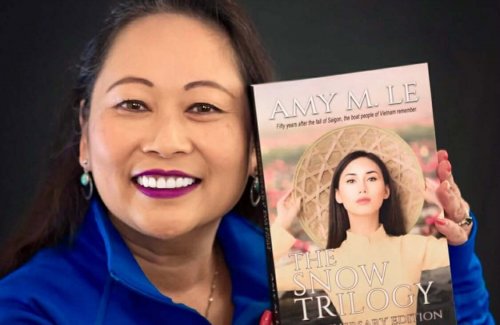
Photo courtesy of Amy M. Le, CEO of Quill Hawk Publishing

Born in War, Saved by Courage

Amy M. Le was born during the final months of the Vietnam War, a period defined by intense fear and systemic instability. As an infant, she faced a life-threatening heart condition that put her future in jeopardy before it had truly begun. Because medical resources were scarce in a war zone, her survival was never a guarantee.

Driven by a mother’s fierce love, her family made the harrowing choice to flee Vietnam in search of safety and essential medical care. This escape carried enormous risks, yet it was fueled by an unwavering hope for a life free from conflict. That courageous decision ultimately changed the trajectory of Amy’s life, setting her on a path toward a new world.

Photo courtesy of Amy M. Le (far right), CEO of Quill Hawk Publishing

A New Life and a Turning Point

Their journey eventually led them to Seattle, where Amy underwent the life-saving heart surgery she so desperately needed. This successful procedure gave her much more than physical health; it provided a second chance and a profound sense of purpose. With this renewed vitality, she grew up determined to make the most of every opportunity her new home provided.

Following this recovery, Amy spent over twenty years navigating the high-pressure tech industry to build a stable and successful career. However, the trajectory of her life shifted once again when she faced the devastating loss of her mother. In the wake of this grief, she turned to writing as an essential lifeline to heal her heart and rebuild her sense of identity.

Photo courtesy of Amy M. Le, CEO of Quill Hawk Publishing

Turning Story into a Mission

That personal healing became The Snow Trilogy, a powerful book series telling the true story of her family’s escape from Vietnam and their new life in America. The books resonated deeply with readers who saw their own stories reflected in its pages. What began as personal healing became a collective connection.

Inspired by that impact, Amy founded Quill Hawk Publishing, a hybrid company built to empower authors without stripping away their creative freedom. In just three years, the company has grown to support 70 authors from Seattle to Sydney, proving that no matter where you begin, you can always rewrite your story and help others tell theirs too.

Discover more from Amy M. Le here:

📍Instagram

Learn more about Quill Hawk Publishing here:

📍Website

40748b69-2f96-4629-bbbe-b024579ea217-jpeg

Stories

4 Creative Ways Trysen Kaneshige Uses Art to Keep Aloha Alive

Some artists create for attention or fleeting trends, but Trysen creates with intention, guided by a deep sense of responsibility to the culture that shaped him. Growing up in Hawaiʻi, he learned that Aloha is not just a feeling, but a way of living rooted in care, respect, and connection.

That belief now guides both his art and his creative studio, Inspire to Create Media. Through murals, design work, and storytelling projects, Trysen uses his business as a platform to protect culture while helping others share their stories with intention.

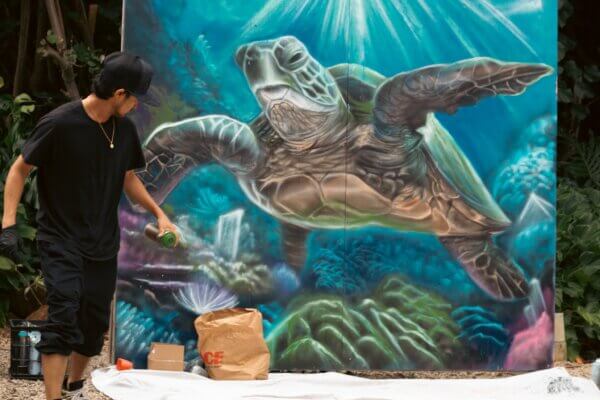
1. Reviving Local Stories Through Murals


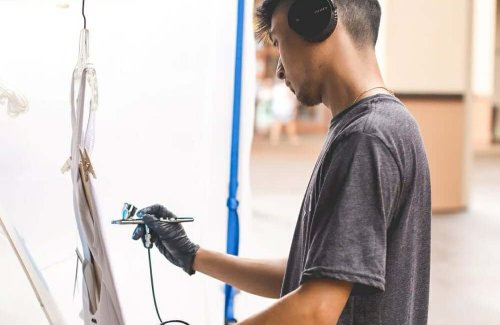
Photo courtesy of Trysen Kaneshige, Founder of Inspire to Create Media

At the core of Trysen’s work is listening. On Kauaʻi, he spends time learning from residents about their histories, struggles, and sources of pride before creating any artwork. This approach reflects the values he also brings into Inspire to Create Media, where storytelling always begins with people.

The murals that follow are rooted in real voices. They transform blank walls into visual records that help locals feel represented and allow visitors to understand the island through the community’s lived experience.


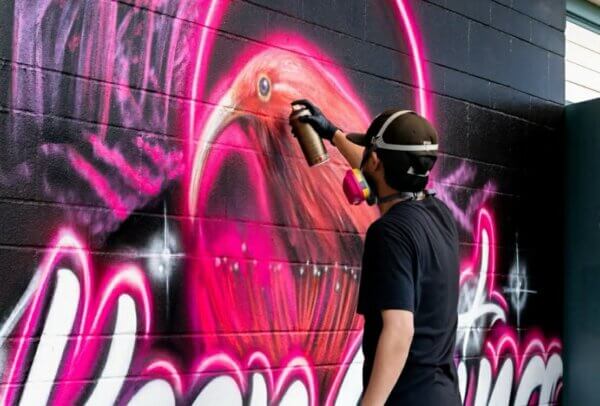
2. Designing With Aloha in Mind


Photo courtesy of Trysen Kaneshige, Founder of Inspire to Create Media

Aloha influences how Trysen collaborates, how carefully he considers each element, and how much intention goes into every decision. Design, for him, is about respect as much as aesthetics. That same mindset shapes the design work produced through Inspire to Create Media. 

Whether creating branding, apparel, or custom visuals, his goal is to make work that feels warm and grounded. Each piece is designed to reflect care, balance, and a sense of home rather than fleeting trends.


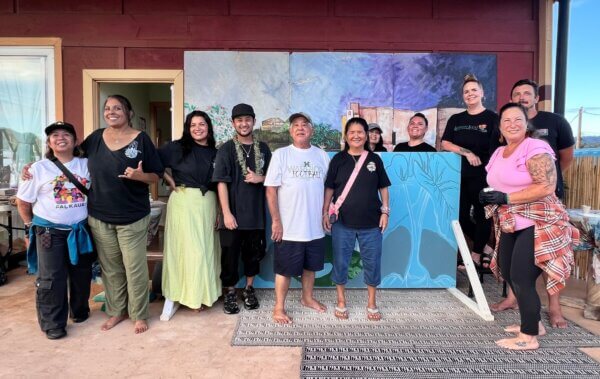
3. Empowering Youth and Community Spaces


Photo courtesy of Trysen Kaneshige (fourth from left), Founder of Inspire to Create Media

Beyond client work, Trysen uses both his art and his studio to invest in the next generation. Through partnerships with schools and wellness programs, Inspire to Create Media supports projects that turn shared spaces into places for expression and growth.

By involving young people in the creative process, he helps build confidence and identity. These initiatives focus less on the final product and more on giving youth a voice and a stronger connection to their roots.


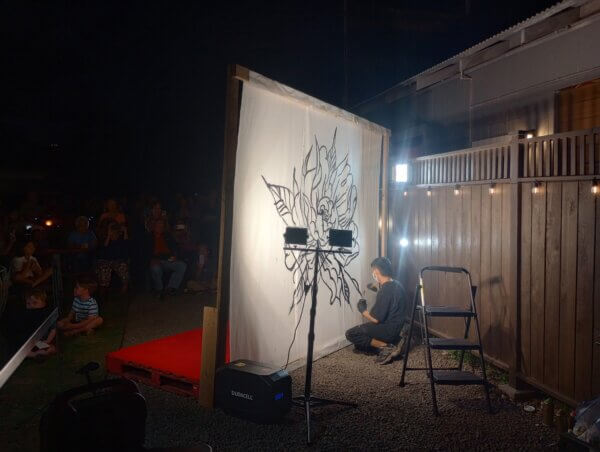
4. Building a Global Bridge From Island Roots


Photo courtesy of Trysen Kaneshige, Founder of Inspire to Create Media

While his work is deeply rooted in Hawaiʻi, its reach continues to grow beyond the islands. Through collaborations with global brands like Volcom and OluKai, Trysen shares an authentic island perspective with a wider audience.

These partnerships amplify his message without compromising its foundation. By staying grounded in culture, he shows that it is possible to connect with the world while remaining true to where you come from.


Photo courtesy of Trysen Kaneshige, Founder of Inspire to Create Media


Carrying Aloha Forward

At its core, Trysen’s work—through his art and his studio, Inspire to Create Media—is an ongoing act of care. Through each project, he honors his home, uplifts his community, and uses creativity as a way to carry Aloha forward with intention, respect, and lasting impact.

More than anything, his work reflects a belief that culture is something you actively protect and pass on. By choosing collaboration over ego and meaning over trends, Trysen ensures that Aloha is not only preserved, but lived, felt, and shared with future generations.

Discover more from Trysen Kaneshige here:

📍Facebook

📍Instagram

Learn more about Inspire to Create Media here:

📍Website

📍Instagram