News

February 6, 2025

SHARE:

The Ascension to Power

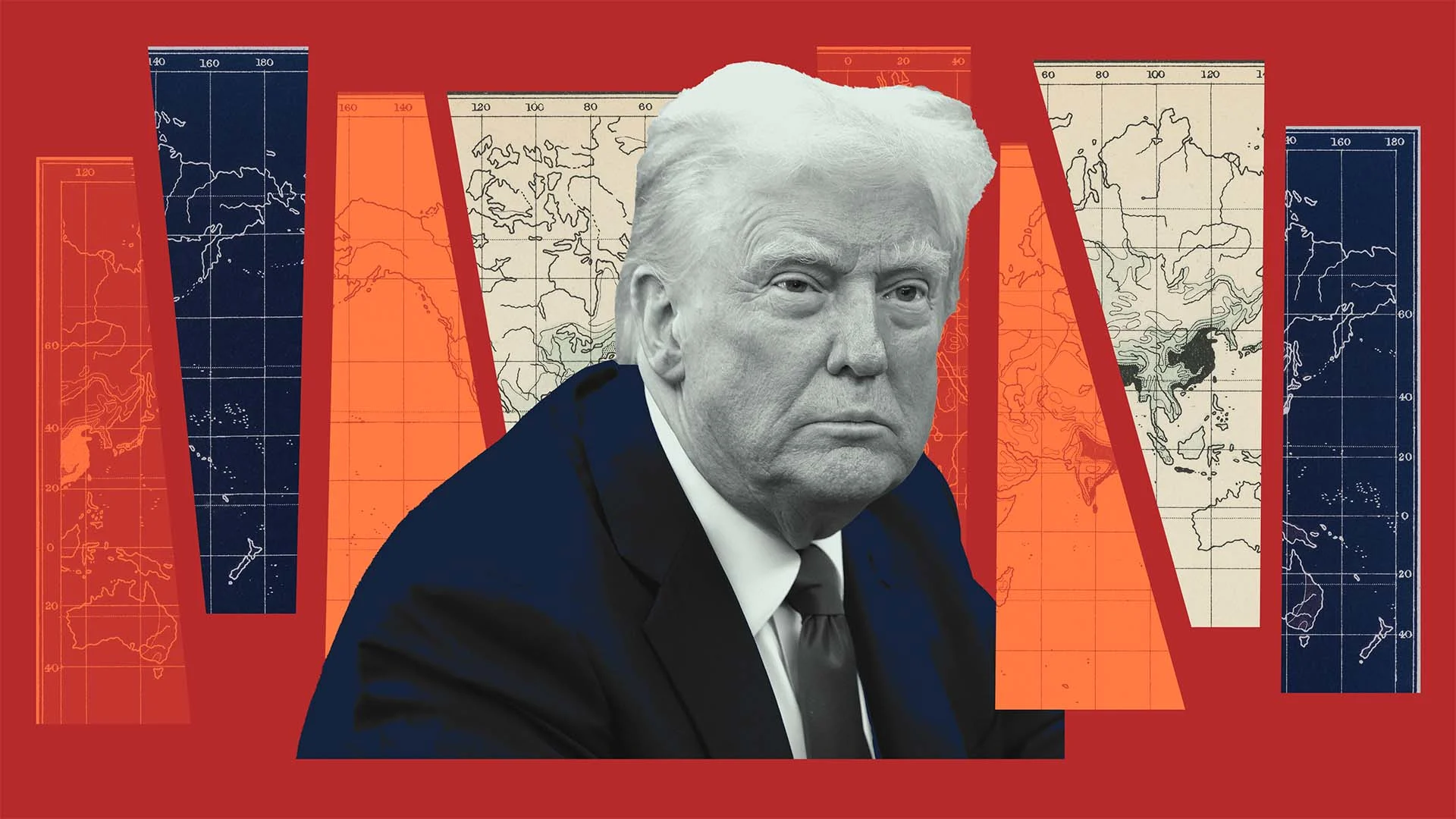
As Trump is re-elected, new reforms and policies are taking shape. Among them is his threat to impose a 25% tariff on Mexico and Canada, alongside a 10% tariff on China—claiming these countries allegedly failed to address illegal immigration and co-conspirators for illegal fentanyl distribution in the United States (US). 

Yet the article is not to stir political debate but to explore the ramifications of these tariffs on consumers and Asian countries. While many news outlets have focused on the potential setbacks in the affected countries, few have explored how others might either suffer or benefit from the situation. Hence, this piece shall highlight how Trump’s ascension to power might become the best opportunity for some Asian economies.

The Price of Tariffs

The Guardian defines a tariff as a tax imposed on foreign goods entering a country. As the world’s largest importer, the US brought in $3.2 trillion worth of goods in 2022, with imports from Canada, Mexico, and China totaling $1.2 trillion in 2023. Trump takes pride in this idea, believing the US government would receive more revenue through these tariffs, coining tariffs as the “most beautiful word in the dictionary” in an interview with Bloomberg. 

Brown University Professor of Economics Şebnem Kalemli-Özcan disagrees by arguing, “For many economists, tariff is actually the worst word in the dictionary.” She explains that ultimately American consumers and businesses will pay the price. As a trade-deficit nation, the US imports more than its exports. According to the Tax Policy Center, a 60% levy on Chinese goods accompanied by a 20% worldwide tariff could raise the costs for the average US household to up to $3,000 in 2025.

As companies face higher costs for goods, they often transfer those expenses to consumers through price increases. This can reduce consumer spending, which in turn lowers business investment and may lead to job losses.

Jason Miller, a professor of supply chain management at Michigan State University reaffirms such claims stating, “Because of the combination of these three countries, it’s going to be difficult to go down an aisle of a grocery store and not see some sort of inflationary effect.” Capital Economics projected that the newly announced tariffs could drive annual inflation up from 2.9% to as much as 4%.
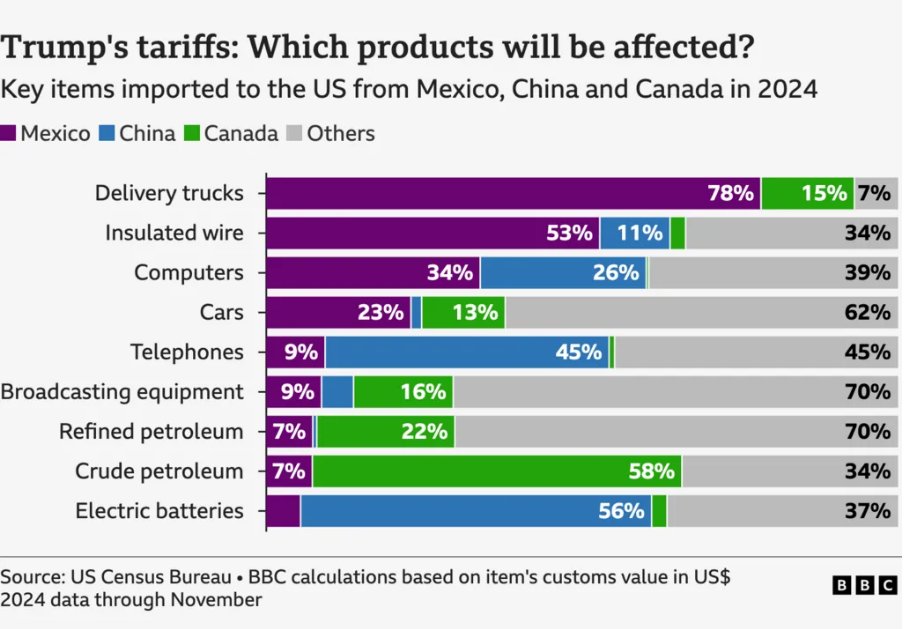
Products affected by Trump’s Tariffs (Image source: BBC)

Nevertheless, Trump’s tariff threats carry weight, as they could impose significant economic pressure on targeted countries, prompting businesses to relocate. According to the BBC, Chinese factories with 500 workers have shrunk to just 200 employees, while American buyers are already exploring alternative manufacturing hubs in neighboring regions outside of China.

Business owner Huang Zhaodong, who recently relocated his factory, told the BBC that customers had pressured him to move production overseas. He agrees with their concerns, estimating that a 10% tariff increase could cost him an additional $800,000 in earnings. “Manufacturing clothes in China under these tariff conditions is simply unsustainable,” he said.

A Victor Emerges

Cases like Mr. Huang’s have proved the challenges that Trump’s tariff has imposed on countries like China. The beginning of the Trump trade war has led businesses to flee to Southeast Asian nations, most notably Vietnam. 

While other Southeast Asian nations also benefit from shifting supply chains, Vietnam has emerged as a top destination due to its growing industrial capacity and strategic location. The country recently rose to become the Association of Southeast Asian Nations (ASEAN) champion with an estimated 40% of all ASEAN exports to North America being from the country alone. Though it is difficult to quantify how many businesses have relocated from China, BBC reports that major brands like Puma, Nike, and Adidas have already moved production to Vietnam. Sources from Vietnam Briefing indicate Intel and Samsung have rapidly ramped up their investment in Vietnam and are projected to reach $100 billion in revenue by 2050. Propelled by robust exports and foreign investments, Vietnam’s economy has recently grown by 7.09%, reaching $476.3 billion—outpacing the 5.05% expansion seen in 2023.

It is debatable whether Trump’s glare will graze upon this nation. Experts debate whether he will target Vietnam with tariffs, as his trade policies often focus on countries with a trade surplus. In 2024, Vietnam held the third-largest trade surplus with the United States at $104.6 billion, accounting for nearly 30% of its total exports. This substantial trade imbalance makes Vietnam a potential target for Trump’s tariff threats. In this scheme, the nation might experience radical changes due to trade balances, exchange rates, supply chains, and foreign direct investment (FDI). However, Vietnam is more likely to benefit from US-imposed tariffs. This prediction is supported by trends from Trump’s first term when the country experienced significant economic growth due to an influx of manufacturers and factories relocating to Vietnam. 

Despite lingering skepticism, Trump has maintained a favorable view of Vietnam. As early as 1980, Trump publicly opposed the Vietnam War and visited the country twice during his first term. His business ventures have also extended to Vietnam, with his organization partnering with Kinh Bac City Development Holding Corporation (KBC) to develop a $1.5 billion complex in Hung Yen Province. Meanwhile, his new confidante, Elon Musk, has positioned Vietnam a key production hub for SpaceX’s Starlink satellite internet project, shifting suppliers and manufacturing from Taiwan to Vietnam to reduce geopolitical risks.

Reversing these investments may be impractical or simply too late. The confidence that both Trump and Musk have placed in Vietnam highlights the country’s growing role in global supply chains. Amid rising geopolitical tensions, Vietnam’s diplomatic strategy—often referred to as the “bamboo policy” for its balance of resilience and adaptability—has strengthened its international position. As long as the country continues to wisely navigate political and diplomatic negotiations and steer clear of populist pitfalls, Vietnam is well-positioned to sustain its economic growth and global influence.
Related Articles

The Spruce Eats-jpg

News

Vietnamese-Owned Food Brand Takes Over Whole Foods’ Instant Noodle Aisle with Bold Asian Flavors

Omsom is a vibrant Asian food brand, owned by Vietnamese sisters Vanessa and Kim Pham, that has been on a mission to reclaim and celebrate the true flavors of Asian cuisine.

Aside from providing delicious food, Omsom aims to promote and educate on the richness of Asian-American culture on a national scale. Since its founding in 2020, the brand has fearlessly embraced its heritage, evident in its bold brand names, products, and engaging storytelling across digital and physical channels.

Now, Omsom is making waves by expanding its presence in Whole Foods with its latest offering, Omsom Saucy Noodles. These flavorful noodles come in enticing varieties such as Soy Garlic, Coconut Lemongrass Curry, Garlic Black Pepper, and Chili Sesame, priced at $4.99 MSRP. Last year, Omsom introduced its line of sauces, including Krapow, Vietnamese BBQ, Yuzu Misoyaki, and Spicy Bulgogi, to Whole Foods stores nationwide.

Omsom’s expansion to Whole Foods is an important milestone since it allows the brand to reach a bigger audience and migrate from online presence to in-store availability. Customers may now readily access Omsom products locally and get a taste of the vivid Asian flavors thanks to the fast expanding community of over 175,000 people.

Omsom competes in the instant noodle market that is dominated by well-known brands like Kraft Heinz and Nissin Foods, but the company distinguishes itself by providing convenience and quality. Unlike the conventional dry powder seasoning found in many instant noodle products, the company takes pleasure in providing sauces of restaurant-quality.

“But at the end of the day, I think when you’re playing in a category like noodles, like it’s got to be the taste; it’s got to be the product. And I think we’re bringing something really unique to the category,​” Kim Pham explains to Food Navigator.

Featured Image Source: The Spruce Eats

LA Times-jpeg

News

How a Local Grocery Turned into One of The Largest Supermarket Chains in The US

99 Ranch is a beloved Asian supermarket chain turned into a national powerhouse, under the management of the second-generation owners, Jonson and Alice Chen.

Established in 1984 in Westminster by their Taiwanese immigrant father, Roger Chen, the grocery store has now evolved into one of the largest Asian supermarket chains in America, with 58 stores in 11 states and its headquarters in Buena Park, California.

Catering extensively to ethnically Chinese communities, 99 Ranch Market has become more than just a grocery store for many Asian Americans in California. The name “99 Ranch” carries a double meaning: “ranch” symbolizes freshness, while “99,” pronounced “jiu jiu” in Mandarin Chinese, conveys longevity – signifying the company’s pursuit of near perfection with a commitment to constant improvement.

Jonson and Alice Chen represent the new generation of leadership steering the nearly 40-year-old grocery chain’s expansion across the United States. As children, they spent countless weekends at the store and their childhood experiences provided them with valuable insights and knowledge.

Today, the company grows most of its produce on specialty farms across the United States and Mexico, with a team of over 7,000 employees, 82% of whom are bilingual, to cater to the diverse needs of their customers.

According to Yahoo FInance, Part of 99 Ranch’s success lies in its responsiveness to the changing tastes of its customers. As trends evolve, the company actively includes Filipino ingredients, skewers, and spicy Sichuan flavors in their offerings.

As the Chen siblings carry the legacy of 99 Ranch forward, their commitment to serving their community and striving for excellence remains steadfast, ensuring the supermarket chain’s continued success on a national scale.

Featured Image Source: LA Times

tatler asia - maia & elaine-jpeg

News

These Dynamic Female Duos are Redefining the Food and Beverage Industry

The food and beverage industry, long dominated by men, is witnessing a transformation as a new wave of young female duos are making their mark and reshaping the sector to reflect their own vision. These inspiring women are blending their Asian heritage with a global upbringing and a willingness to take risks, showcasing the power of collaboration and innovation.

Elaine Chen and Maia Mah perfectly demonstrate this, as the regional director and creative director of Fukien Old Wine, a 181-year-old Chinese cooking wine brand. They organized a cocktail pop-up event at Soho House Hong Kong, combining traditional Chinese wine with modern trends.

Despite facing initial skepticism from their male-led head office, Chen and Mah are determined to introduce new ideas and adapt to societal changes. The success of the event surprised their colleagues, highlighting the duo’s ability to think outside the box.

Meanwhile, in Taiwan, Square Jao, a production designer, and her partner Lily Lin opened Plants Eatery, the country’s first gluten-free, whole-food restaurant. After the Fukushima disaster, Jao and Lin embarked on a mission to promote sustainable eating and raise awareness about the impact of food choices on the environment.

While vegetarianism is already popular in Taiwan, Jao and Lin’s restaurant offers strictly plant-based, gluten-free options, avoiding processed mock meats. Aside from their restaurant, they also published a cookbook in hopes to influence culinary schools to embrace plant-based and gluten-free cuisine, according to Tatler Asia.

In Japan, Eri Miyagi and Miki Nomura, both third-culture kids raised in the US, co-founded Cabi, a condiment brand aimed at introducing the flavors of Japan to Gen Z and Millennial home cooks. Cabi’s debut seasonings, including umami dashi soy sauce, sweet yuzu vinegar, and zesty sansho peppercorn miso, are designed to be versatile and cater to the modern urban lifestyle.

The rise of these female duos serve as an inspiration for a lot of underrepresented individuals, and remind us that with the proper determination and great collaboration, anything is possible.

Featured Image Source: Tatler Asia

seattle opera-jpeg

News

‘Bound’ Premieres at Seattle Opera Illuminating the Struggles and Triumphs of Asian Americans

Huang Ruo’s captivating chamber opera, “Bound,” made its highly anticipated premiere at Seattle Opera’s Tagney Jones Hall.

The opera sheds light on the enduring discrimination faced by Asian Americans, a social issue that has persisted since the enactment of the Chinese Exclusion Act in the late 1800s. Huang Ruo, a prominent Chinese composer, openly explores these themes, creating a thought-provoking, visually stunning, and musically intense work. Teaming up with librettist Bao-Long Chu, a Vietnamese poet, both artists made their Seattle Opera debuts, showcasing their impressive talents and expertise.

“Bound” narrates the experiences of second-generation Asian immigrants who grapple with their cultural heritage while striving to be fully embraced as Americans. Inspired by the true story of a high school student imprisoned due to truancy, the opera delves into the conflicts between individual aspirations and familial obligations. 

The characters in “Bound” are intricately bound in their own ways. Diane Tran, the protagonist portrayed masterfully by Karen Vuong, grapples with the rules and expectations of being a second-generation Asian adult, constantly torn between her family, work, and education. Khanh, Diane’s mother, haunted by guilt and memories, remains tied to her immigrant past. Judge Moriarty, who sentences Diane to imprisonment, represents an unjust system lacking empathy and understanding.

Huang shared with The Seattle Times that he aspires to fill every performance with a diverse audience, showcasing how opera reflects the lives and times of contemporary society. He firmly believes that opera is not solely for the elite few, as it reflects the diverse experiences of many.

Featured Image Source: Seattle Opera