News

February 6, 2025

SHARE:

The Ascension to Power

As Trump is re-elected, new reforms and policies are taking shape. Among them is his threat to impose a 25% tariff on Mexico and Canada, alongside a 10% tariff on China—claiming these countries allegedly failed to address illegal immigration and co-conspirators for illegal fentanyl distribution in the United States (US). 

Yet the article is not to stir political debate but to explore the ramifications of these tariffs on consumers and Asian countries. While many news outlets have focused on the potential setbacks in the affected countries, few have explored how others might either suffer or benefit from the situation. Hence, this piece shall highlight how Trump’s ascension to power might become the best opportunity for some Asian economies.

The Price of Tariffs

The Guardian defines a tariff as a tax imposed on foreign goods entering a country. As the world’s largest importer, the US brought in $3.2 trillion worth of goods in 2022, with imports from Canada, Mexico, and China totaling $1.2 trillion in 2023. Trump takes pride in this idea, believing the US government would receive more revenue through these tariffs, coining tariffs as the “most beautiful word in the dictionary” in an interview with Bloomberg. 

Brown University Professor of Economics Şebnem Kalemli-Özcan disagrees by arguing, “For many economists, tariff is actually the worst word in the dictionary.” She explains that ultimately American consumers and businesses will pay the price. As a trade-deficit nation, the US imports more than its exports. According to the Tax Policy Center, a 60% levy on Chinese goods accompanied by a 20% worldwide tariff could raise the costs for the average US household to up to $3,000 in 2025.

As companies face higher costs for goods, they often transfer those expenses to consumers through price increases. This can reduce consumer spending, which in turn lowers business investment and may lead to job losses.

Jason Miller, a professor of supply chain management at Michigan State University reaffirms such claims stating, “Because of the combination of these three countries, it’s going to be difficult to go down an aisle of a grocery store and not see some sort of inflationary effect.” Capital Economics projected that the newly announced tariffs could drive annual inflation up from 2.9% to as much as 4%.
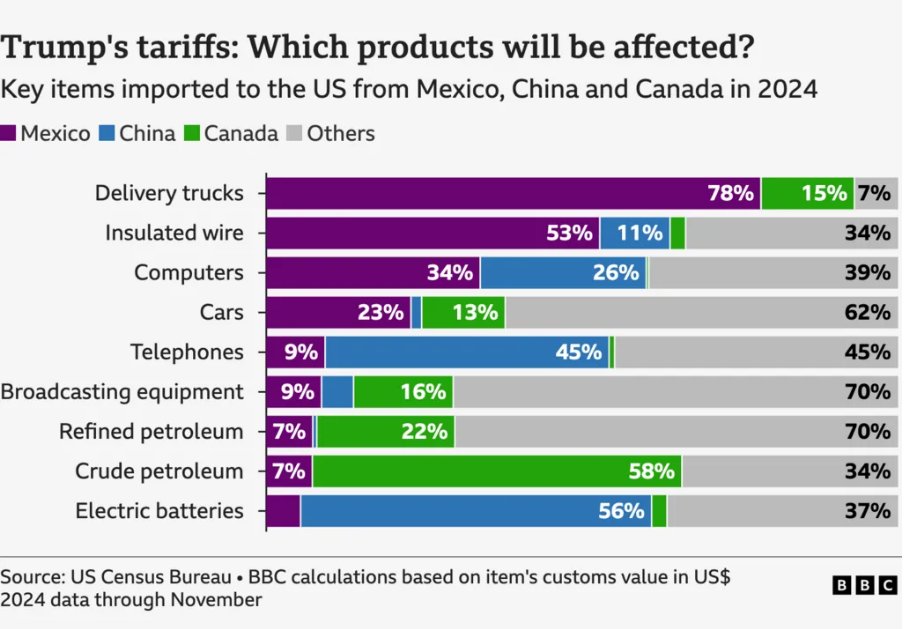
Products affected by Trump’s Tariffs (Image source: BBC)

Nevertheless, Trump’s tariff threats carry weight, as they could impose significant economic pressure on targeted countries, prompting businesses to relocate. According to the BBC, Chinese factories with 500 workers have shrunk to just 200 employees, while American buyers are already exploring alternative manufacturing hubs in neighboring regions outside of China.

Business owner Huang Zhaodong, who recently relocated his factory, told the BBC that customers had pressured him to move production overseas. He agrees with their concerns, estimating that a 10% tariff increase could cost him an additional $800,000 in earnings. “Manufacturing clothes in China under these tariff conditions is simply unsustainable,” he said.

A Victor Emerges

Cases like Mr. Huang’s have proved the challenges that Trump’s tariff has imposed on countries like China. The beginning of the Trump trade war has led businesses to flee to Southeast Asian nations, most notably Vietnam. 

While other Southeast Asian nations also benefit from shifting supply chains, Vietnam has emerged as a top destination due to its growing industrial capacity and strategic location. The country recently rose to become the Association of Southeast Asian Nations (ASEAN) champion with an estimated 40% of all ASEAN exports to North America being from the country alone. Though it is difficult to quantify how many businesses have relocated from China, BBC reports that major brands like Puma, Nike, and Adidas have already moved production to Vietnam. Sources from Vietnam Briefing indicate Intel and Samsung have rapidly ramped up their investment in Vietnam and are projected to reach $100 billion in revenue by 2050. Propelled by robust exports and foreign investments, Vietnam’s economy has recently grown by 7.09%, reaching $476.3 billion—outpacing the 5.05% expansion seen in 2023.

It is debatable whether Trump’s glare will graze upon this nation. Experts debate whether he will target Vietnam with tariffs, as his trade policies often focus on countries with a trade surplus. In 2024, Vietnam held the third-largest trade surplus with the United States at $104.6 billion, accounting for nearly 30% of its total exports. This substantial trade imbalance makes Vietnam a potential target for Trump’s tariff threats. In this scheme, the nation might experience radical changes due to trade balances, exchange rates, supply chains, and foreign direct investment (FDI). However, Vietnam is more likely to benefit from US-imposed tariffs. This prediction is supported by trends from Trump’s first term when the country experienced significant economic growth due to an influx of manufacturers and factories relocating to Vietnam. 

Despite lingering skepticism, Trump has maintained a favorable view of Vietnam. As early as 1980, Trump publicly opposed the Vietnam War and visited the country twice during his first term. His business ventures have also extended to Vietnam, with his organization partnering with Kinh Bac City Development Holding Corporation (KBC) to develop a $1.5 billion complex in Hung Yen Province. Meanwhile, his new confidante, Elon Musk, has positioned Vietnam a key production hub for SpaceX’s Starlink satellite internet project, shifting suppliers and manufacturing from Taiwan to Vietnam to reduce geopolitical risks.

Reversing these investments may be impractical or simply too late. The confidence that both Trump and Musk have placed in Vietnam highlights the country’s growing role in global supply chains. Amid rising geopolitical tensions, Vietnam’s diplomatic strategy—often referred to as the “bamboo policy” for its balance of resilience and adaptability—has strengthened its international position. As long as the country continues to wisely navigate political and diplomatic negotiations and steer clear of populist pitfalls, Vietnam is well-positioned to sustain its economic growth and global influence.

Related Articles

ezgif.com-webp-to-jpg (2)-jpg

News

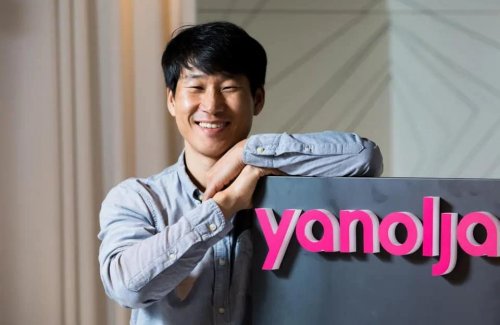
Lee Su-jin’s Rise from Motel Janitor to Billionaire Entrepreneur with Yanolja

Lee Su-jin, the founder and chairman of Yanolja, one of the world’s leading hotel booking sites, has a remarkable journey from being a motel janitor to amassing a net worth of $1.2 billion. 

Yanolja, a Korean phrase meaning “Hey, let’s play,” began its operations in 2007 and quickly evolved into a popular travel app, boasting over 57 million downloads worldwide.

Lee had a challenging upbringing, losing his parents at a young age and spending most of his childhood with relatives. At the age of 23, Lee found himself working as a janitor at a love hotel, which offers short-term accommodations at hourly rates.

But despite the difficult circumstances, Lee saw an opportunity to save money and invest in stocks. He even attempted a salad business, which unfortunately didn’t work out. However, these experiences laid the groundwork for his future in the hospitality industry.

The love hotel business faced societal stigmas and challenges in the early 2000s, particularly with the passage of an anti-prostitution law in South Korea in 2004. Lee aimed to make love hotels more appealing to a broader audience, emphasizing safety, convenience, and affordability, eventually skyrocketing Yanolja’s success.

The company achieved “unicorn” status in 2019, reaching a valuation of over $1 billion during a funding round. SoftBank Vision Fund 2 further bolstered Yanolja’s growth by acquiring a minority stake for $1.7 billion at a $6.7 billion valuation. Speculation about an IPO arose, but the company prioritized the industry’s post-pandemic recovery.

Beyond its travel booking services, Yanolja expanded its offerings to include Yanolja Cloud, an AI-powered software for hospitality and leisure platforms. Currently, its combined software platforms serve 19 million users, facilitating booking, travel, and property management operations.

 As Yanolja continues to make strides in the global travel industry, its impact extends far beyond its bottom line, transforming an entire sector and enriching the experiences of travelers worldwide.

Featured Image Source: Forbes

ezgif.com-webp-to-jpg (1)-jpg

News

Anjali Barman is the Only Indian Woman at Stanford University’s Special Program and This is How

From a small town called Raniganj in Bengal to the prestigious Stanford University, Anjali Barman’s journey is truly amazing.

She became famous for making an app called ‘Ema’ that lets people chat with their friends. And now, she’s the only Indian woman chosen for the special program at Stanford University.

Anjali kindly shared how she got into Stanford with Local 18 so that other Indian students can learn from her experience. According to her, Stanford has two types of classes for executives. One is for individuals who want to learn something specific. They apply on the university’s website, and if they’re chosen, they get a notification. Some short courses can also be done online.

The second type is for bosses like CEOs and directors. Their organizations apply for them to go to Stanford. Stanford also picks some cool start-up companies from all over the world and invites them. Anjali’s start-up was one of the lucky ones.

Anjali got the invitation because her company did really well. It became famous in other countries, not just India. Stanford noticed how quickly her company grew, and they wanted her to join their program.

Stanford will pay for everything, including her research, study costs, and even her stay there. Anjali is leaving for California soon, and her story shows us that with hard work and smart ideas, we can achieve big things no matter where we come from.

Featured Image Source: Indian Express Bangla

erik (1)-jpeg

Stories

How Erik Sun’s Unwavering Passion for Food Led Him to Entrepreneurship

Erik Sun is a lot of things. More than a businessman, he is a spearfisher, hunter, chef, and now farmer of the finest meats.

Erik is part of restaurants Bestia and Bavel located in Los Angeles, head chef of Intercrew in Koreatown, and 2 more restaurants in San Francisco. The focuses of the restaurants are fun, vibrant vibes with original recipes and unique takes on food.

He is also the founder of Pursuit Farms, perhaps the most interesting of his ventures yet. What started off originally as direct purchasing at the Japanese Auctions to import Wagyu Beef has transformed into a full farm that will support his most anticipated Asian BBQ with Mangalitsa Pork (think Iberico, but even bigger and more dynamic), and fat-tail sheep (so legendary, the first three US Presidents had flocks of these sheep).  

When it comes to ingredients, Erik only chooses or raises the best. 

And to make his pursuit of food even more delicious, he recently launched his new business, XXHEAT – a high-quality seasoning powder to take your food to the next level.

He learned some of the ingredients of this powder from a master chef from Sichuan and decided to blend 5 different chilies and 2 of the highest quality Sichuan peppercorns available in all of Asia.

ERIK AND HIS LOVE FOR SPEARFISHING

Erik Sun grew up in Orange County, California, where he discovered his deep passion for spearfishing and the ocean’s treasures.

What started as a personal hobby soon became a business venture, as he began making spearguns in South Africa and connecting with fellow underwater hunters worldwide. Erik’s love for spearfishing allowed him to experience the physical and mental aspects of diving in a single breath, with each day on the water offering new adventures.

His inspiring story showcases how pursuing one’s passion can lead to remarkable achievements and a lasting impact on a global community.

CONNECTIONS MADE OVER FOOD

Erik Sun’s journey into the food business began with a memorable encounter at a renowned Los Angeles restaurant helmed by the esteemed Italian chef, Gino Angelini. Captivated by the exceptional dining experience and the sommelier’s generous pouring of wine, Erik felt compelled to reciprocate the hospitality in his own unique way.

Determined to express his gratitude, Erik made a bold promise to the sommelier: “I’m going to bring you some fish.” With that, he embarked on a mission to deliver an assortment of seafood delicacies, including lobster, scallops, scorpionfish, and octopus.

When he presented the bountiful catch to the sommelier, the sommelier said, “Show up for dinner tomorrow.” Erik told him that those were for him but the sommelier insisted on inviting him over saying, “If you don’t show up for dinner, you’re never allowed back here.” He prepared an extraordinary feast using the ingredients Erik had brought and they have been friends ever since.

The sommelier turned out to be Ori Menashe. And when Ori expressed his desire to open his own restaurant, Erik was the first to pledge his support, eventually becoming a partner of Bestia Restaurant, and occasionally cooking there.

CHALLENGES THAT ERIK FACED

Erik encountered a lot of challenges while establishing his businesses, particularly in the demanding landscape of San Francisco. The process of obtaining permits and navigating the intricacies of building regulations proved to be a daunting task. The estimates provided by architects and project managers fell significantly short of the actual time required to transform a small coffee shop into a larger restaurant.

To compound matters, the unexpected arrival of the COVID-19 pandemic brought construction to a grinding halt, and Erik dealt with some fraudulent contractors. Shifting his focus away from construction woes, he channeled his energy into enhancing the customer’s journey and creating memorable dining moments.

ABOUT XXHEAT SEASONING

XXHEAT is Erik’s latest venture, introducing a distinctive blend of seasonings that promises to elevate the flavor profiles of various dishes, particularly when used on the grill. The inspiration for this unique blend came from Erik’s desire to infuse meats, including Sichuan fried chicken, with boldness and aromatic richness. The reception of XXHEAT has been overwhelmingly positive, with its captivating fragrance and exceptional taste capturing the attention of culinary enthusiasts.

Erik uses XXHEAT on 烧烤, the Chinese term for barbecue skewers. Unlike many alternatives that offer one-dimensional flavors, XXHEAT boasts a blend of the top two peppercorns and a harmonious combination of five blended chilies.

ERIK’S ADVICE TO FELLOW HUSTLERS WHO WANT TO START A BUSINESS

  1. Start and figure it out – There’s always going to be naysayers but if you believe in it, give it a shot and live with no regrets. Problems will come? Figure them out. Not starting is a worse problem. It’d be like playing poker and never playing a hand, just losing your ante every round.
  1. Research and Development – For me, eating is my “research” and then getting back to the kitchen is the “development.” Try all the top that’s available in your sector and figure out how to make it better.
  1. Customer Service – Focus on your customers and when you get negative feedback, do your best to fix it. At one point, we had a lot of shipping issues and UPS / Covid-related delays. Turning a bad situation into good is powerful and having people who rave about your company/service will keep you in business.

CONNECT WITH ERIK

Pursuit Farms Website: pursuitfarms.com

Pursuit of Food Website: thepursuitoffood.com

XXHEAT Website: xxheat.com

Instagram: @pursuitoffood @pursuitfarms @xxheatofficial

Memphis Flyer-jpg

News

Tuyen Le’s Inspiring Journey from Being a Reluctant Server to a Beloved Chef and Restaurant Owner

Tuyen Le, the owner of Tuyen’s Asian Bistro, has come a long way from her days as a server at her family’s old restaurant, Saigon Le.

Tuyen’s mother opened Saigon Le in 1992. She joined her family at the restaurant, planning to only stay for a day. But she ended up dedicating over 30 years to the establishment. Saigon Le became renowned for its unique dishes, like the little-bitty egg rolls wrapped in lettuce with a special sauce that attracted celebrities like Woody Harrelson, Cybill Shepherd, and MTV’s Jeff Buckley.

When she was working as a server in Saigon Le, Tuyen had a gambling addiction which was evident in the way she served. According to Memphis Flyer, Tuyen didn’t like being a server, but her mother forced her to be one, saying that she can’t say no to her mama.

When Tuyen decided to quit gambling, she turned to cooking. She claimed that she didn’t know she was good at it, until everything she cooked turned out to be good.

Eventually, Tuyen pursued other ventures and started a seafood restaurant named “New Orleans Seafood,” where she served crab legs, lobster, and other items, but no Asian food. However, economic challenges, exacerbated by the pandemic, led to its closure.

Customers were longing for the return of Saigon Le’s authentic Vietnamese flavors, so Tuyen opened Tuyen’s Asian Bistro. Located at 288 North Cleveland, the tiny restaurant focuses solely on Vietnamese cuisine.

Though Tuyen’s Asian Bistro may be small, it is undoubtedly big on flavors and hospitality. Tuyen ensures that every guest feels welcomed and cherished throughout their dining experience, treating them as family.

Featured Image Source: Memphis Flyer