News

March 14, 2025

SHARE:

While Trump claims tariffs will significantly impact the countries they target, experts argue that consumers and businesses will bear the brunt of the consequences.

Research by The Budget Lab at Yale University estimates that price levels may rise to 2% this year, equivalent to $3,000 per average household. Another report from D.C. stated that the new tariffs on China affect about 14% of U.S. imports and may raise costs to $25 billion annually. As the tariff war escalates, everyday consumers will face even higher prices.

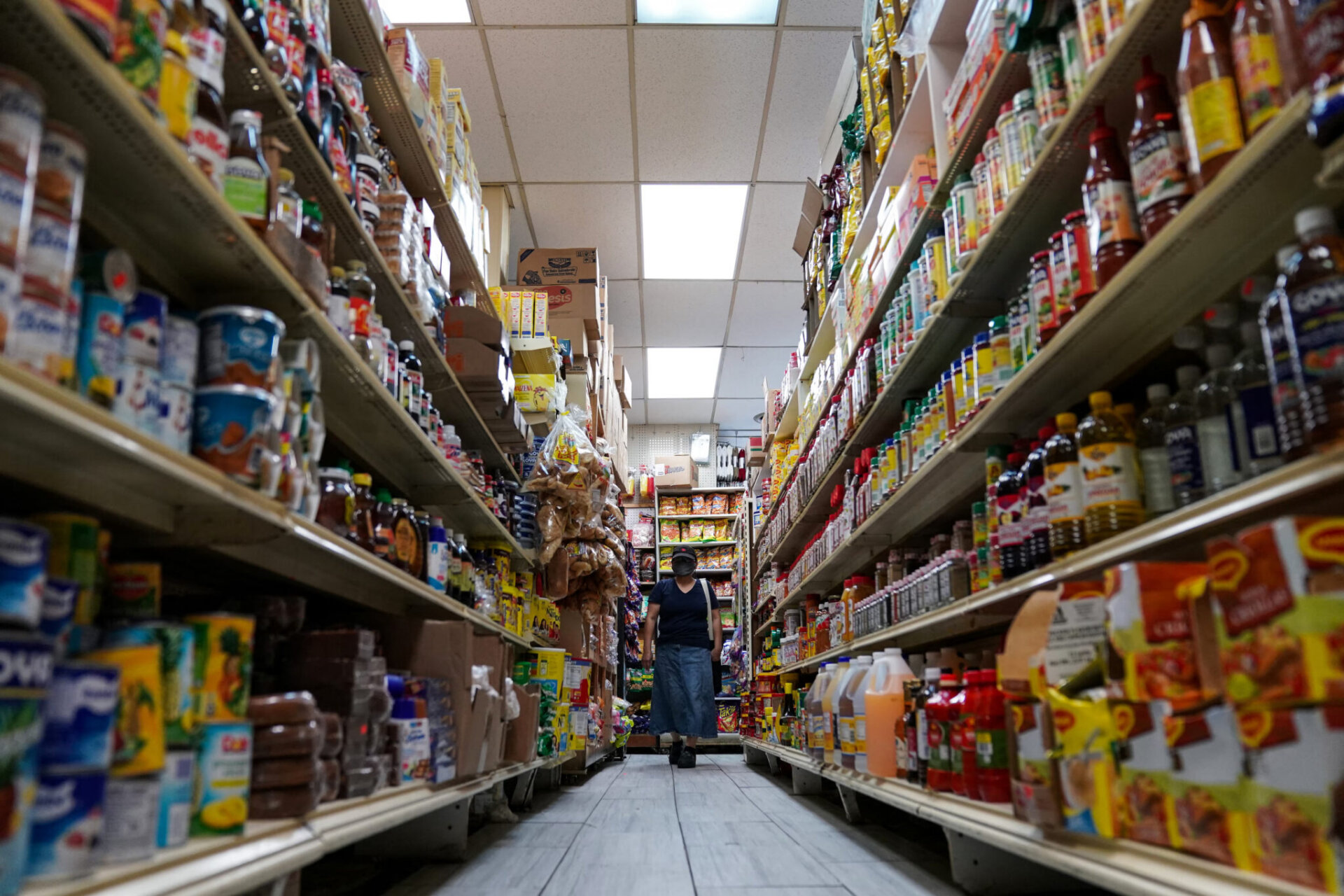
Asian American communities and businesses are particularly vulnerable. In New York’s Chinatown, 28% of residents already live below the poverty line. With many companies relying on imports from Asia, owners are uncertain about their survival.

Mott Street in Manhattan's Chinatown (Image source: NBC News)
Mott Street in Manhattan’s Chinatown (Image source: NBC News)

“Here in Chinatown, especially, we have many elderly residents on fixed incomes,” says Edward Lau, owner of a traditional medicine shop in San Francisco’s Chinatown. With 90% of his stock sourced from Hong Kong and China, he worries, “If it gets very expensive, their spending power will be lower. Chinese immigrants will ultimately be harmed the most.”

Taylor Chow, owner of American Tai Wah Trading Corp, adds, “The Chinese community in Chinatown has been hit hard most because we consume a lot of imported ingredients. A lot of products only come from China. Even if manufacturers try to move their production line to Vietnam, to Malaysia, to Singapore, it’s not that easy.”

Supply chain disruptions and rising costs are straining small Asian American businesses. Since the community depends on these shops for cultural goods, they, too, will feel the pressure.

Mei Lum, owner of Lum’s Store, the longest-operating business in Manhattan’s Chinatown, explains, “Our working-class community here in Chinatown is definitely, in these circumstances, always being hit the hardest. And a lot of them have told me that their solution to mitigating these circumstances has been to eat those costs and only raise those prices by a smidgen, just to make sure they’re affordable for the people that frequent their establishments. How long can they sustain that?”

Mandy Lau helping a customer pick ginseng (Image Source: The Chronicle)

The erosion of these businesses could lead to cultural loss, impacting food, traditions, and ceremonial products. Lucas Li, whose family runs Lion Trading in San Francisco, specializing in feng shui and spiritual supplies, says, “When they get expensive, it makes it harder for Chinese people, for their families to maintain those traditions and do it at the proper steps. When customers shop at local businesses and small businesses, they’re not just buying a product, they’re basically investing in the community, supporting families, and protecting our traditions.”

Large online retailers like Shein, Temu, and AliExpress are also affected. While it is unclear how much product prices will rise on these e-commerce platforms, experts predict delivery delays and price hikes due to tariffs. Youssef Squali, an analyst at Truist Financial, notes, “The vast majority of these orders are valued less than $800, which means all or virtually all of them are going to get caught in that.”

Ultimately, Asian Americans may feel the greatest impact. As Linda Chao, a resident of Oceanview, states, “When there are tariffs, it won’t fall on China, it’ll fall on us. It can’t be helped. I also don’t have time to go and protest. I feel there’s nothing we can do.”

Sources: NBC News, The Chronicle, AP News, University of Virginia, The Guardian

Related Articles

Image Source: Brendan Duong

Stories

A Secret Business Purchase Grew Into A Multi-million Dollar Enterprise

Tess Nguyen who is a trained physiotherapist was searching Gumtree, Australia’s marketplace, for a physiotherapy clinic to buy. Instead, a sleepwear ad called Midnight Mischief captured her eye, “I’d never heard of personalised pyjamas, and I was pretty up-to-date with trends, so I sent an inquiry,” she told 7life.

She consulted her friends who have accounting and business experience and told Tess it was worth nothing and advised her not to buy it. However, she liked the pyjamas’ style and name, plus she was able to bargain the business down to $15,000. So, a month later she bought the business.

Tess kept the purchase secret from her family. The business was going slow during the first two years, and running the business while working as a full time physiotherapist, took its toll.

When 2020 hit, the business was ready for the huge demand prompted by COVID and people staying at home. The big moment was when TV presenter Jules Sebastian posted a photo of herself wearing Midnight Mischief pyjamas.

The brand grew 165% in the year to July 2021. And Tess has gone from pyjama girl to Pyjama Queen – selling a set every 10 minutes. The designs retail for about $99.95 – and her sleepwear empire is now turning over $2.3 million.

“I’m so glad I did it and I’d tell anyone else to do the same,” Tess told 7Life, “Just go for it. You can figure it out as you go along. It’s worked for me.”

Image Source: Chris Pizzello/ Invision /AP file

Stories

Awkwafina Knows Best About How She Is Still More Financially Great Living On $500 A Month

Even though the Crazy Rich Asians actress’ wealth is likely in the millions, she believes that a mere $500 per month is sufficient to cover her expenses.

The 32-year-old actress recently told Harper’s Bazaar that her money philosophy goes back to when she was building her Awkwafina musical and comedy persona, which she used as an outlet for her creativity while she worked a day job in book publicity.

Her grandmother brought her up in a one-bedroom apartment in Queens, New York. Because her family’s restaurant went out of business and they were forced to sell their home, she has developed a greater appreciation for monetary gain than any other aspect of her life.  

Awkwafina remembers that funds were tight at home and that she would stay up late with her grandma, who worried about paying the bills.

She also claims that despite being in a better financial position to support her family and herself, she still maintains a just-the-basics mentality. The actress has been known to buy clothes at Target and not spend much money on anything. She set out with the simple objective of covering her living expenses. 

She explains to Harper’s Bazaar, “I went into this mode off, if I can make $500 a month, that’s all I need.” 

Awkwafina’s motivation and success are attributed mainly to her refreshingly optimistic view of financial considerations. She has kept herself busy acting in the years since, including launching her comedy series on Comedy Central and becoming the first Asian-American actress to win the Golden Globe for best actress for her lead role in the 2019 drama “The Farewell.”

Image Source: Photograph by Ken Richardson Boston Magazine

Stories

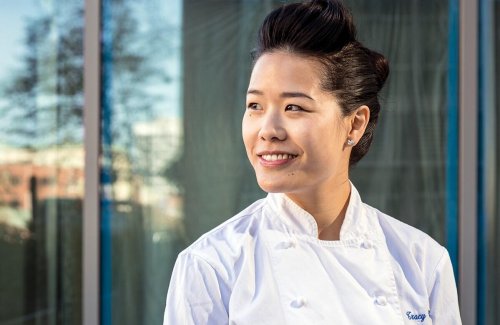
Chef Tracy Chang Gives Back To The Community Through The Language Of Food

Restaurateur Tracy Chang started the nonprofit Off Their Plate and Project Restore Us through the COVID-19 pandemic in 2020. 

The owner of the Japanese tapas restaurant,  PAGU, started Off Their Plate as a way to feed healthcare workers, and Project Restore Us sends nutritious and culturally appropriate grocery boxes to families living in food deserts. Both groups work to support local kitchens run by women and BIPOC and volunteers.

As a chef, Tracy also finds herself more in tune with customers than ever before. As someone who grew up lactose intolerant, she sources ingredients responsibly and remains mindful of the way guests feel after they leave her restaurant. This is also part of her restaurant’s ethos.

Her grandmother has also influenced Tracy’s cooking. Although her grandmother didn’t speak English, she spoke the language of food really well, said Tracy, and that was something that always resonated with her.

For Tracy, her personal experience has definitely come into play — trained in Spain but worked at a Japanese restaurant, and she grew up with a lot of Japanese and Taiwanese food, “The menu at PAGU is autobiographical and about my experience learning very specific dishes and techniques from people like my grandmother, my mentor and some of the chefs I’ve worked with.” she told TimeOut.

Image Source: CNN

Stories

Young Tech Startup Founders In Asia Make Mental Health Support Accessible To Break Stigma

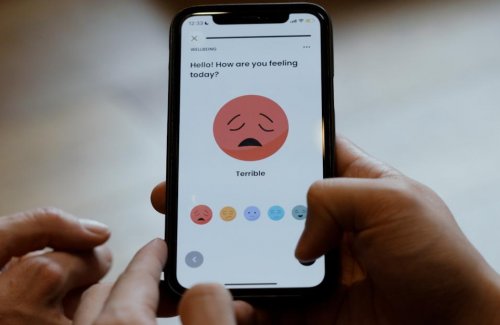
Breaking down societal stigma and creating a new mental healthcare system for the Asia-Pacific area are two of Theodoric Chew’s objectives, founder of the digital mental health app, Intellect.

Founded in 2019, the mobile app frequently monitors users’ moods, delivers rescue sessions and exercises, and lets them chat with therapists in real-time. 

The 26-year-old explained that mental health is just as important as physical health, “You and I face things like stress, burnout, sleep issues, and relationship struggle as well.” he told CNN, “ That’s where actually a lot of us should start working on our mental wellbeing.”

Since early 2020, the startup serves over 3 million Asia-Pacific users in 15 languages. According to CNN Business, the Singapore-based mobile app has raised $20 million in its Series A funding, the largest amount raised by a mental health start-up in Asia.

Early this year, Singapore and Jakarta-based digital mental healthcare start-up, Ami, has raised at least $3 million from a number of investors, including Meta, the owner of Facebook. The firm was founded by Justin Kim, a Forbes 30 Under 30 Asia alum with Beknazar Abdikamalov.

Both digital mental health companies are targeting employers in their business models, where companies can subscribe to provide staff unlimited, private access to their services.

According to the WHO, depression and anxiety disorders cost the global economy $1 trillion a year in lost productivity. In March, it was reported that anxiety and sadness surged 25% worldwide in the first year of the pandemic.