News

March 14, 2025

SHARE:

While Trump claims tariffs will significantly impact the countries they target, experts argue that consumers and businesses will bear the brunt of the consequences.

Research by The Budget Lab at Yale University estimates that price levels may rise to 2% this year, equivalent to $3,000 per average household. Another report from D.C. stated that the new tariffs on China affect about 14% of U.S. imports and may raise costs to $25 billion annually. As the tariff war escalates, everyday consumers will face even higher prices.

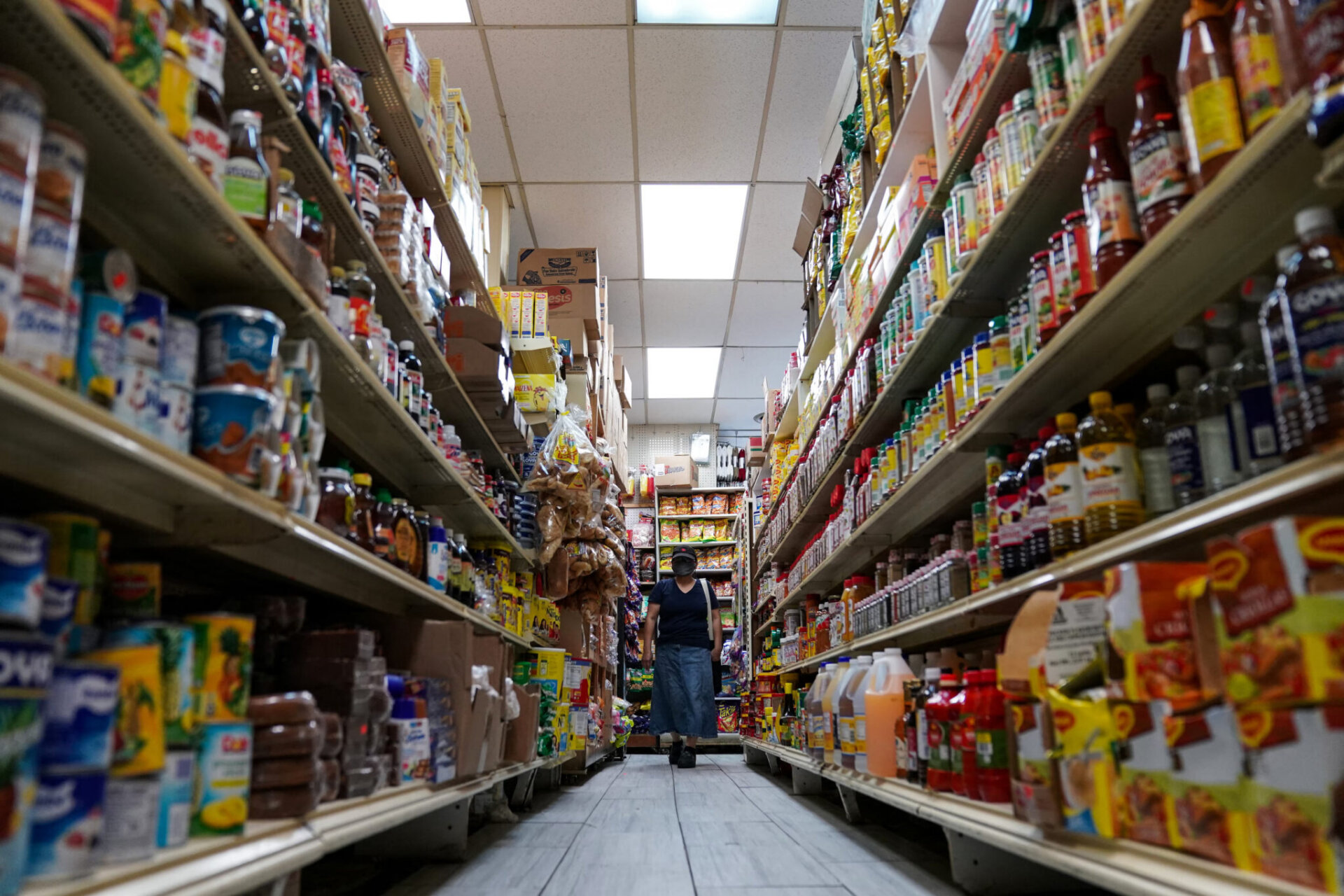
Asian American communities and businesses are particularly vulnerable. In New York’s Chinatown, 28% of residents already live below the poverty line. With many companies relying on imports from Asia, owners are uncertain about their survival.

Mott Street in Manhattan's Chinatown (Image source: NBC News)
Mott Street in Manhattan’s Chinatown (Image source: NBC News)

“Here in Chinatown, especially, we have many elderly residents on fixed incomes,” says Edward Lau, owner of a traditional medicine shop in San Francisco’s Chinatown. With 90% of his stock sourced from Hong Kong and China, he worries, “If it gets very expensive, their spending power will be lower. Chinese immigrants will ultimately be harmed the most.”

Taylor Chow, owner of American Tai Wah Trading Corp, adds, “The Chinese community in Chinatown has been hit hard most because we consume a lot of imported ingredients. A lot of products only come from China. Even if manufacturers try to move their production line to Vietnam, to Malaysia, to Singapore, it’s not that easy.”

Supply chain disruptions and rising costs are straining small Asian American businesses. Since the community depends on these shops for cultural goods, they, too, will feel the pressure.

Mei Lum, owner of Lum’s Store, the longest-operating business in Manhattan’s Chinatown, explains, “Our working-class community here in Chinatown is definitely, in these circumstances, always being hit the hardest. And a lot of them have told me that their solution to mitigating these circumstances has been to eat those costs and only raise those prices by a smidgen, just to make sure they’re affordable for the people that frequent their establishments. How long can they sustain that?”

Mandy Lau helping a customer pick ginseng (Image Source: The Chronicle)

The erosion of these businesses could lead to cultural loss, impacting food, traditions, and ceremonial products. Lucas Li, whose family runs Lion Trading in San Francisco, specializing in feng shui and spiritual supplies, says, “When they get expensive, it makes it harder for Chinese people, for their families to maintain those traditions and do it at the proper steps. When customers shop at local businesses and small businesses, they’re not just buying a product, they’re basically investing in the community, supporting families, and protecting our traditions.”

Large online retailers like Shein, Temu, and AliExpress are also affected. While it is unclear how much product prices will rise on these e-commerce platforms, experts predict delivery delays and price hikes due to tariffs. Youssef Squali, an analyst at Truist Financial, notes, “The vast majority of these orders are valued less than $800, which means all or virtually all of them are going to get caught in that.”

Ultimately, Asian Americans may feel the greatest impact. As Linda Chao, a resident of Oceanview, states, “When there are tariffs, it won’t fall on China, it’ll fall on us. It can’t be helped. I also don’t have time to go and protest. I feel there’s nothing we can do.”

Sources: NBC News, The Chronicle, AP News, University of Virginia, The Guardian
Related Articles

Image Source: UPS Mag

News

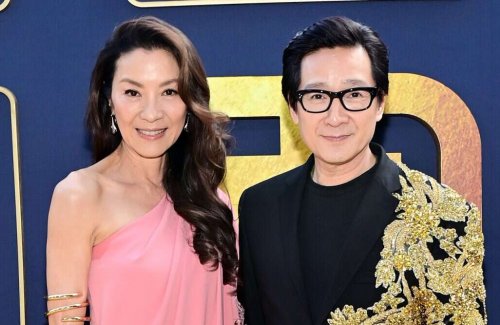
American Born Chinese: Michelle Yeoh and Ke Huy Quan Continue To “Ninja-kick” The Barriers For Asian Actors To Hell

“I think we’ve broken that glass ceiling, we’ve ninja-kicked it to hell,” said Michelle Yeoh on a panel for the Television Critics Association on Friday. “And hopefully it will never come back, broken like Humpty Dumpty pieces.”

Michelle was born in Malaysia and was a major Hong Kong action movie star before moving to America to a vastly different Hollywood landscape. She said that there were no roles out there that represented Asians before, the Hollywood situation has been improving for Asian actors and directors.

Yeoh reunites with her “Everything Everywhere” co-star and fellow Globe winner and Oscar favorite Ke Huy Quan in “American Born Chinese.”

Quan broke out as a child actor but eventually dropped out of acting because the roles were so scarce. He said that it was challenging to be an Asian actor as there were not many opportunities. It didn’t work out for him for two decades, but the landscape has changed.

According to Quan, the audience may react to the show with various emotions. Some are going to be upset, while others might find it humorous. He claimed that he experienced a vast range of feelings while portraying his character.

American Born Chinese was based on the 2006 graphic novel of the same name by Gene Luen Yang, follows struggling student Jin Wang (Ben Wang), who meets a Chinese-born student and is pulled into a supernatural world that includes Yeoh as the undercover Goddess of Mercy and Daniel Wu as the Monkey King. The series is set to premiere on Disney+ in 2023.

Image Source: The Harvest Official Trailer - YouTube

News

Upcoming ‘The Harvest’ Movie Features a Hmong Family and the Strength and Endurance of their Bond

Recently, Asian Americans are receiving a lot of praise in both film and television. The fact that Asian Americans are becoming more visible is fantastic, but most of these movies just focus on Chinese Americans, which is limiting for other Asians, particularly South and Southeast Asians.

This is what inspired Caylee So’s The Harvest, highlighting the Hmong community, illustrating how similar and yet dissimilar this culture is to what western society considers to be “Asian.”

The synopsis of the movie is that, Thai Moua returns to his family’s home in Southern California after several years of living in San Francisco to find his entire world in chaos.Thai and his family maintain a brave façade while witnessing the debilitating effects of his father Cher’s kidney failure. Thai is torn between trying to please his father and wanting to live his own life, between being a good son and growing up, but most of all, he is conflicted about keeping the cause that has kept him away for so long a secret.

The Harvest addresses the tenacity and endurance of family ties and how they can carry us through even the most trying times in a powerful and sympathetic way.

Doua Moua, who plays Thai and also wrote the compelling screenplay, said in a press statement, “As an actor, I was told my type of Asian does not fit into the narrative of America, which led me to writing narratives that I wanted to tell. I want to redefine what diversity really means and that is inclusion in front and in back of the camera.”

The show stars Doua Moua (Mulan & Gran Torino), Perry Yung (Warriors & The Knick), Dawn Ying Yuen, Chrisna Chhor, Lucas Velazquez, Hua Lee, Alfonso Caballero, Tomas K Thao, Mai Moua, Tsabmim Xyooj, Kue Lee, Chai Yang, ZhongKhang Yang, Mary Ly, Amery K Thao, Anneston Pisayavong, Arianna Rivas, Blake Kevin Dwyer, Greg Yoder, Christine Lin, and Tress Glenn.

The Harvest is not yet scheduled for release.

Image Source: Bloomberg

Stories

Mala Gaonkar – The Woman in Charge of the Biggest Hedge Fund Launch

With $1.8 billion under management, Mala Gaonkar’s SurgoCap Partners began trading and made history as the largest debut of a woman-led hedge fund in the industry’s history.

SurgoCap Partners invests in technology’s influence on financials, industrials, healthcare, and corporate data. The 20-person company bets on and against equities and can invest 25% of its assets in privately held enterprises.

At an investor conference in June, Gaonkar expressed her support for ServiceNow Inc., an enterprise software provider that aids in workflow automation.

Born in the US and raised in Bengaluru, India, Mala was a Kauffman Fellow. After graduating from Harvard with an MBA and economics degree, she founded Lone Pine in 1998. Later, she managed technology, media, internet, and telecom bets as a portfolio manager. She led the firm’s long-only funds.

She is also a founding trustee of Ariadne Labs, the Queen Elizabeth Prize for Engineering, the Tate Foundation, and Surgo Ventures, a charity that produces data-driven social and health solutions.

She is setting aside $100 million in capacity at SurgoCap for smaller endowments, foundations, and organizations that support marginalized populations or address climate change. She has amassed $35 million thus far.

Mala signed the Giving Pledge that she would devote the majority of her wealth to charitable causes.

Image Source: Legacies of War

News

First Lao-American and Millennial To Sit As Chair Of The US Campaign To Ban Landmines – Cluster Munition Coalition

Legacies of War (LoW) CEO Sera Koulabdara is the new Chair of the US Campaign to Ban Landmines – Cluster Munition Coalition (USCBL-CMC). She will be the first millennial, BIPOC, and afflicted nation native to assume the job.

LoW is the only worldwide U.S. advocacy and educational organisation that addresses the repercussions of the American Secret War in Laos and its battles in Cambodia and Vietnam during the Vietnam War, including UXO disposal and victim/survivor support.

Héctor Guerra, Director of International Campaign to Ban Landmines (ICBL), has welcomed LoW, acknowledging their work as a great example of global collaborative efforts in supporting communities affected by landmines and cluster munitions.

According to Mary Wareham, Arms Advocacy Director of Human Rights Watch, there could not be a better placed organization to coordinate the USCBL-CMC than LoW, as it is committed to ensuring that the US joins and adheres to the international treaties prohibiting antipersonnel landmines and cluster munitions.

CEO of Roots of Peace, Heidi Kuhn, also recognized how fortunate USCBL-CMC is to have Sera as Chair, with her unique qualifications as a leader in mine action, and her family heritage in Laos as the basis of her passion. She claimed that Sera brings a renewed spirit of home to the UXO campaign.

Sera shared in her bio in LoW’s website, that she hopes to make a positive difference in the lives of the people in her father’s beloved homeland, Laos, and to create hope for future generations.