News

March 14, 2025

SHARE:

While Trump claims tariffs will significantly impact the countries they target, experts argue that consumers and businesses will bear the brunt of the consequences.

Research by The Budget Lab at Yale University estimates that price levels may rise to 2% this year, equivalent to $3,000 per average household. Another report from D.C. stated that the new tariffs on China affect about 14% of U.S. imports and may raise costs to $25 billion annually. As the tariff war escalates, everyday consumers will face even higher prices.

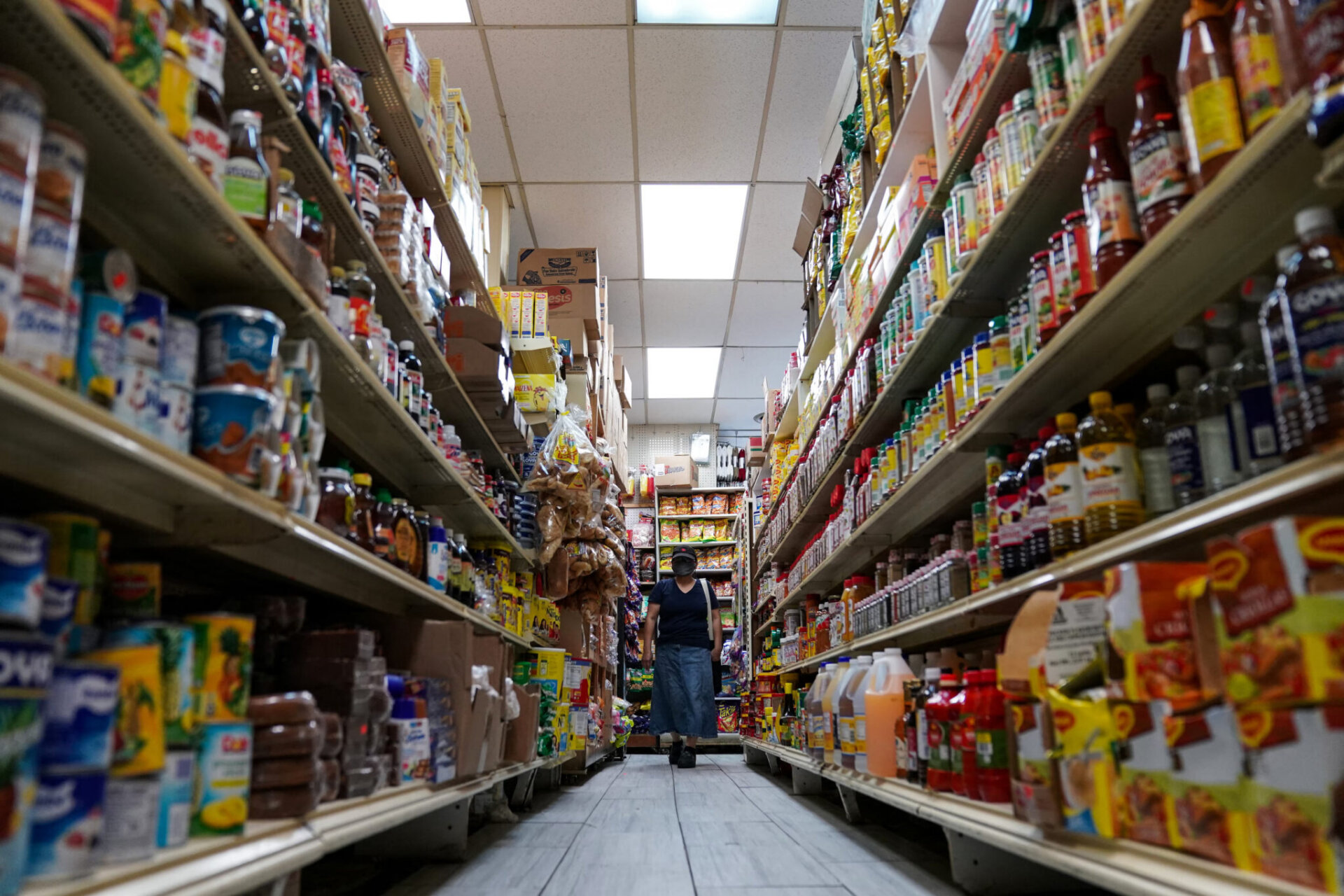
Asian American communities and businesses are particularly vulnerable. In New York’s Chinatown, 28% of residents already live below the poverty line. With many companies relying on imports from Asia, owners are uncertain about their survival.

Mott Street in Manhattan's Chinatown (Image source: NBC News)
Mott Street in Manhattan’s Chinatown (Image source: NBC News)

“Here in Chinatown, especially, we have many elderly residents on fixed incomes,” says Edward Lau, owner of a traditional medicine shop in San Francisco’s Chinatown. With 90% of his stock sourced from Hong Kong and China, he worries, “If it gets very expensive, their spending power will be lower. Chinese immigrants will ultimately be harmed the most.”

Taylor Chow, owner of American Tai Wah Trading Corp, adds, “The Chinese community in Chinatown has been hit hard most because we consume a lot of imported ingredients. A lot of products only come from China. Even if manufacturers try to move their production line to Vietnam, to Malaysia, to Singapore, it’s not that easy.”

Supply chain disruptions and rising costs are straining small Asian American businesses. Since the community depends on these shops for cultural goods, they, too, will feel the pressure.

Mei Lum, owner of Lum’s Store, the longest-operating business in Manhattan’s Chinatown, explains, “Our working-class community here in Chinatown is definitely, in these circumstances, always being hit the hardest. And a lot of them have told me that their solution to mitigating these circumstances has been to eat those costs and only raise those prices by a smidgen, just to make sure they’re affordable for the people that frequent their establishments. How long can they sustain that?”

Mandy Lau helping a customer pick ginseng (Image Source: The Chronicle)

The erosion of these businesses could lead to cultural loss, impacting food, traditions, and ceremonial products. Lucas Li, whose family runs Lion Trading in San Francisco, specializing in feng shui and spiritual supplies, says, “When they get expensive, it makes it harder for Chinese people, for their families to maintain those traditions and do it at the proper steps. When customers shop at local businesses and small businesses, they’re not just buying a product, they’re basically investing in the community, supporting families, and protecting our traditions.”

Large online retailers like Shein, Temu, and AliExpress are also affected. While it is unclear how much product prices will rise on these e-commerce platforms, experts predict delivery delays and price hikes due to tariffs. Youssef Squali, an analyst at Truist Financial, notes, “The vast majority of these orders are valued less than $800, which means all or virtually all of them are going to get caught in that.”

Ultimately, Asian Americans may feel the greatest impact. As Linda Chao, a resident of Oceanview, states, “When there are tariffs, it won’t fall on China, it’ll fall on us. It can’t be helped. I also don’t have time to go and protest. I feel there’s nothing we can do.”

Sources: NBC News, The Chronicle, AP News, University of Virginia, The Guardian
Related Articles

cnn-jpeg

News

TikTok Invests Billions to Drive E-Commerce Success in Southeast Asia

TikTok, the popular short video app owned by ByteDance, has announced plans to invest billions of dollars in Southeast Asia in a bid to boost its e-commerce business.

The move comes as TikTok aims to capitalize on its large user base in the region and address concerns over data security. With a collective population of 630 million, half of whom are under 30 years old, Southeast Asia represents a key market for TikTok, attracting over 325 million monthly visitors to the app.

Despite its impressive user numbers, TikTok has struggled to convert its popularity into significant e-commerce revenue in Southeast Asia, facing tough competition from established players such as Shopee, Lazada, and Tokopedia.

To address this challenge, TikTok CEO Shou Zi Chew revealed the company’s plans to invest billions of dollars in Indonesia and the broader Southeast Asian region over the next few years. While a detailed breakdown of the investment plan was not provided, TikTok intends to focus on training, advertising, and supporting small vendors interested in joining its e-commerce platform, TikTok Shop.

Chew emphasized that TikTok’s content is becoming more diverse as the platform expands beyond advertising into e-commerce. This evolution enables consumers to make purchases directly through the app during live streams. In Indonesia, TikTok’s largest market in Southeast Asia, the platform already hosts 2 million small vendors selling their products. The region’s e-commerce transactions reached nearly $100 billion in 2022, with Indonesia alone accounting for $52 billion of that figure, according to Reuters.

While Southeast Asian governments have not imposed major bans on government devices, TikTok has faced scrutiny regarding its content. In 2018, Indonesia briefly banned the app due to concerns over inappropriate content, while Vietnam has expressed concerns about the platform’s impact on local culture and tradition.

Despite the challenges posed by established competitors and data security concerns, TikTok remains committed to expanding its presence in Southeast Asia and tapping into the region’s vibrant e-commerce market.

Featured Image Source: CNN

the toronto star-jpg

News

Olivia Chow Makes History as First Chinese-Canadian Mayor in Toronto

Olivia Chow has emerged as Toronto’s first Chinese-Canadian mayor, ending over a decade of conservative rule and ushering in a new progressive era for the city.

Olivia was 13 years old when she first arrived in the country as an immigrant. Now, at 66, she has achieved a remarkable feat, surpassing 102 candidates to become Toronto’s first Chinese-Canadian mayor.  During her campaign, she focused on addressing the housing affordability crisis and pledged to raise the city’s low property taxes while providing support for tenants.

Upon taking office, Olivia faces opposition from Ontario’s premier, Doug Ford, who had warned that her victory would be an “unmitigated disaster.” Ford’s brother, Rob Ford, previously served as mayor of Toronto but faced controversy due to a video showing him smoking crack cocaine and a cancer diagnosis.

Throughout her career, Olivia has served as a member of parliament for the New Democratic Party, a Toronto city councilor, and a school board trustee. She also campaigned alongside her late husband, Jack Layton, who ran for mayor in 1991 and later became the leader of the opposition in Canada.

Olivia assumes the role of mayor at a challenging time for Toronto. The city, with a population of 2.7 million and a metropolitan area of nearly 7 million, is grappling with surging rents and a budget deficit of approximately $1.5 billion. Public safety concerns have also grown, particularly following a series of violent attacks on individuals using the public transit system.

According to The Guardian, Olivia is expected to be a champion for transit, as well as for walking and cycling – she does not have a driving license – and has promised to turn the tide on years of low-tax austerity politics enacted by her conservative predecessors.

Featured Image Source: The Toronto Star

vogue sg-jpg

News

Daniel Wu Shines Spotlight on Asian Cultural Icons in ‘American Born Chinese’

Daniel Wu, known for his roles in “Into the Badlands” and “Westworld,” is thrilled to bring Gene Luen Yang’s celebrated graphic novel, “American Born Chinese,” to a wider audience through its screen adaptation.

In a Zoom interview with UPI, Wu expressed his excitement about introducing the action-comedy story to a broader mainstream audience. The series, which is now streaming on Disney+, follows the journey of Jin Wang (played by Ben Wang), a teenager navigating the challenges of fitting in at his high school against the wishes of his traditional parents (portrayed by Yeo Yann Yann and Chin Han).

“The screen adaptation that was done by Kelvin Yu is amazing in integrating these three disparate story lines,” Wu said to UPI.

When Jin meets Wei-Chen (Jimmy Liu), a Chinese immigrant and the secret son of the legendary Monkey King (portrayed by Wu), their intertwined destinies set the stage for a captivating narrative.

Wu emphasized the significance of showcasing the iconic Monkey King character to a different audience, highlighting the character’s deep-rooted connection to Asian culture. By doing so, he hopes to reveal the Asian “superheroes” and idols from his own childhood to viewers who may not be familiar with these cultural icons. 

According to UPI, Wu found a personal connection to the Monkey King character as a father himself. Reflecting on his experiences during the COVID-19 pandemic and the challenges of distance learning, he humorously described himself as a “Tiger Dad.”

“I realized that I am part Tiger Dad and that I am strict on my kid and then I need to let go,” he said to UPI. “This character is dealing with that same situation.”

Wu is working alongside Michelle Yeoh who portrays Guanyin the Goddess of Mercy. Despite knowing each other for two decades, this project marked their first collaboration, making it even more special.

With its visually spectacular action sequences and heartfelt storytelling, the series offers a distinctive viewing experience that can be cherished by families across generations.

Featured Image Source: Vogue SG

tatler asia-jpeg

News

A Korean Immigrant’s Journey to Becoming a Beauty Industry Icon

Toni Ko is a first-generation Korean immigrant who has made an indelible mark in the business world as the founder of NYX Cosmetics and a champion of women-run brands.

Toni is the visionary behind NYX Cosmetics and a fierce advocate for women-run brands. With her relentless work ethic and unparalleled business acumen, she has carved a path to success that has earned her a well-deserved place among Forbes magazine’s Richest Self-Made Women.

Despite facing numerous challenges after moving to California in 1986, the language barriers and unfamiliar surroundings, she thrived on the difficulties and developed a resilient character. She drew from her family’s background in the cosmetics industry to launch NYX Cosmetics in 1999 with $250,000 in seed money from her parents. Her vision was to provide high-quality cosmetics at affordable prices, bridging the gap between luxury and affordability.

Toni used social media to propel NYX Cosmetics to remarkable success. The brand gained traction through partnerships with influential beauty creators on platforms like YouTube, capturing a younger audience and solidifying its place in the market. In 2014, L’Oréal acquired NYX Cosmetics for an estimated $500 million.

Driven by her passion for empowering women, Toni established the Toni Ko Foundation in 2014. Through this foundation, she supports organizations dedicated to uplifting underprivileged children and championing women’s empowerment. In addition, she actively invests in women-owned businesses through her venture capital firm, Butter Ventures, fostering the growth and success of fellow female entrepreneurs.

Toni has been lauded with prestigious accolades, including the WWD Beauty Inc. Brand of the Year award for NYX Cosmetics and her inclusion on Forbes’ esteemed list of Richest Self-Made Women. More than a businesswoman, Toni is a beacon of inspiration, paving the way for a future where women’s voices are amplified and their dreams are within reach.

Featured Image Source: Tatler Asia