‘Raya and the Last Dragon’ Actress and Director Unveils New Production Company To Uplift Marginalized Community’s Emerging Filmmakers
News
December 1, 2022
SHARE:
Kelly Marie Tran and Carlos López Estrada, the lead character and co-director of the latest Walt Disney film Raya and the Last Dragon, have created a new production company, Antigravity Academy (AGA) dedicated to developing and producing movies, television, theater, and short-form material from and about individuals from traditionally marginalized communities.
AGA appointed Jared Stern’s “A Stern Talking To” former vice president of cinema and television Winsor Yuan to lead its film and television section.
As for the short form, such as music videos, advertisements, and branded content, Doug Klinger, co-founder of Internet Music Video Database and Reprobates agent and executive producer, will be in charge.
The Antigravity Academy will also serve as a training ground for new filmmakers entering the production industry.
The novice filmmakers’ movies will be chosen, produced, and packaged under the direction of former Sundance Institute head of Artist Community and AGA founding partner Abiram Brizuela.
Tran and Estrada were quoted in the Hollywood Reporter as saying, “We couldn’t be happier about providing a creative home for emerging filmmakers looking for a window into this often insular industry.”
The two also stated they had learned from their experiences how crucial it is to establish a network that can assist with starting up.
“We are looking forward to partnering up with the most inspiring independent voices coming from communities that have been historically overlooked and helping them usher their stories into the world,” the two added.
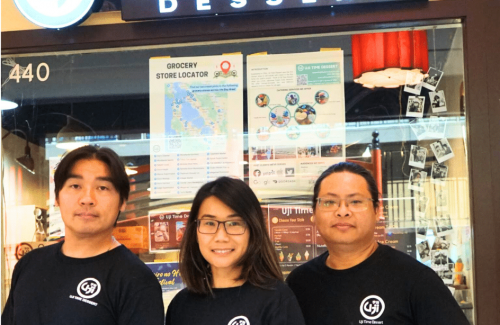
Sharon Ku, born and raised in Hong Kong, is one of the co-founders behind Uji Time Dessert, a delightful dessert store in the Bay Area.
Sharon has been working in the food industry for the past 15 years since she graduated from UC Berkeley with a major in Nutrition Science.
Through Uji Time Dessert, Sharon and her team bring together the best of East Asian flavors and desserts, making them accessible to everyone. The pop-up store’s authenticity and creativity garnered massive success, and it became the first dessert shop of its kind in the Bay Area.
In an interview with Asian Hustle Network, Sharon Ku shared her journey as an entrepreneur. Read through as we discover how she turned her passion into a thriving business, and how she found inspiration within the community.
HOW IT ALL STARTED
Uji Time Dessert opened its first pop-up store in April 2016. Together with John Ip and Benson Leung, we have been taking far east flavors and desserts and making them mainstream in the Bay Area. Our famous Fish Cone, called Taiyaki, is our take on the traditional Japanese dessert in the shape of a fish, usually filled with red bean paste. The pop-up was a great success because of its authenticity. Uji Time Dessert was the first dessert store selling Taiyaki soft serve in the Bay Area.
Uji Time Dessert loves to combine and meld elements from multiple traditional desserts to create affordable treats for everyone. Our goal is simple – think of Uji Time Dessert when you crave Japanese fusion-style desserts.
Uji Time Dessert regularly offers Instagrammable, fun, and delicious desserts and ice cream for all ages. It has transformed into a full-scale dessert cafe, from Fish Cone (Taiyaki), black sesame soft serve, lychee ice cream mochi, Matcha Latte, Earl Grey puddings, to Hojicha and Genmaicha ice cream. Depending on the season, Uji Time Dessert offers limited production seasonal flavors, such as strawberry rose and lavender in soft serve or ice cream.
During COVID, we connected with many local businesses to do cross-promotion and share resources. We offer our stores as pick-up locations for other business owners. Other business owners help to promote our brand and products.
In 2022, Uji Time Dessert expanded its footprint to Seattle, Washington, and Albuquerque, New Mexico. Uji Time Dessert continues to seek opportunities to serve our customers.
NAVIGATING THROUGH THE COVID-19 CHALLENGES
COVID hit hard across Bay Area San Francisco in 2020. Our sales dropped to 0% as we only sold soft-serve ice cream. Our stores were forced to close for 3-12 months. We closed two stores permanently.
Despite COVID-19 challenges, we expanded from 0 to 25 local supermarkets. Closing three stores didn’t stop us; we opened three new locations and have more coming in Palm Springs and New Mexico with our licensed partners.
These difficulties brought our team closer and made us stronger. From a small ice cream shop, we now distribute to various locations in the Bay Area. The growth and partnerships showcase our resilience and quality. I’m inspired and confident in our continued success.
SUPPORT AND INSPIRATION WITHIN THE COMMUNITY
I’m grateful to the Asian Hustle Network community for sharing inspiring stories of persistence, and for the connections I’ve made in this group.
I met Jing who has a passion for helping small businesses, the owner of Kaya Bread, and other inspiring individuals. Connecting with like-minded entrepreneurs and supporting my brand growth has been invaluable.
Once again, I want to express my gratitude to the Asian Hustle Network for providing a platform that facilitates learning, sharing, and gaining inspiration. I am truly thankful for the opportunity to be part of this community and to share my story of resilience, growth, and the joy of forging connections to support others in building their own brands.
Processed with VSCO with fa1 preset
VALUABLE LESSONS AS A SUCCESSFUL ENTREPRENEUR
I would suggest everyone not to give up.
We should not focus on what might stop us from achieving our goals. We should think of what we can do to make a change. Don’t be afraid and try to reach out. Many experienced entrepreneurs would love to share their experiences and thoughts with you.
Tina Tang’s path to entrepreneurship is a captivating story of self-discovery and determination. Initially climbing the corporate ladder in IT Consulting, she soon realized that her true calling lay in the world of startups.
The turning point came when she embarked on her graduate school journey, where she felt the world open up before her, setting the stage for her entrepreneurial adventure. This pivotal moment led to the birth of Bristles, an innovative startup that has introduced a mobile app for DIY home projects.
Growing up, Tina found solace in expressing herself through art. Her parents spoke Cantonese at home, and when she started school, she didn’t know much English. Drawing helped her to express herself because it was easier for her than speaking.
Tina ended up with a career in engineering because she was good at math, but her creative side didn’t go away. Later on, when she worked with machine learning and computer vision, her artistic side came back.
Her background in IT Consulting equipped her with invaluable skills for her entrepreneurial journey. Tina’s proficiency in technical problem-solving was complemented by her newfound ability to understand clients’ pain points and devise tech-based solutions.
According to WRAL TechWire, Bristles came from Tina’s desire to bridge the gap between technology and creativity. She saw how AI could make art better, so she used machine learning and computer vision to help people express their creativity in home design.
Tina Tang’s journey from office worker to startup founder is an inspiring story about following your passions and trying something new. Her story serves as an inspiration for aspiring entrepreneurs or anyone interested in the stories behind successful businesses.
South Korean delivery giant, Baemin, has expanded its business horizons by venturing into the world of beauty in Vietnam. The company recently unveiled its very own beauty brand, Lazy Bee, offering a range of skincare and makeup products. This strategic move helps Baemin in diversifying its services beyond food delivery while capitalizing on the growing popularity of K-beauty trends in Vietnam.
Lazy Bee’s product lineup consists of 11 items, including facial masks, lipsticks, and toner pads. The brand’s core mission is to provide accessible and effective beauty solutions tailored to the specific needs of Vietnamese consumers. With Vietnam’s humid climate and environmental factors affecting skin, Lazy Bee focuses on creating products that address these challenges. The brand’s formulations are enriched with natural ingredients, such as calendula and red ginseng, sourced from Korea to cater to the local climate and skin types.
In its current phase, Lazy Bee products are exclusively available through the Baemin app, catering primarily to customers in Ho Chi Minh City. Baemin is actively working to enhance the user experience within the app. Additionally, the brand is organizing on-ground events in Ho Chi Minh City, offering customers the opportunity to personally experience their beauty products.
Looking ahead, Lazy Bee has ambitious plans for expansion. The brand aims to extend its reach through online sales platforms like Lazada, Shopee, and TikTok Shop in the coming months. Furthermore, Lazy Bee intends to establish a physical presence by collaborating with beauty retail chains and convenience stores. The brand is set to broaden its footprint by entering the Hanoi market and offering nationwide shipping, firmly positioning itself as a contender in Vietnam’s dynamic beauty industry.
In a candid discussion on mental health in sports at the Billie Jean King National Tennis Center, the four-time Grand Slam singles champion Naomi Osaka shared her personal battle with depression and how it made her “very scared of social media.” She has been an outspoken advocate for mental health in sports, and her revelations shed light on the challenges athletes face both on and off the court.
Osaka’s journey to becoming a vocal advocate began with her withdrawal from the 2021 French Open due to depression and anxiety. This incident had a significant impact on the discourse surrounding mental health in sports, prompting a much-needed conversation. During the panel discussion, which included luminaries like Olympic swimmer Michael Phelps, U.S. Surgeon General Vivek Murthy, and Dr. Brian Hainline, Osaka discussed various aspects of mental health, including the role of social media.
Osaka admitted that somewhere along the line, she got very scared of social media. This fear highlights the immense pressure athletes face in the digital age, where the relentless scrutiny of their personal lives can exacerbate mental health struggles.
During her hiatus from tennis, taken for her mental well-being and the birth of her daughter, Shai, Osaka gained a new perspective on her career. She emphasized the need to cherish every moment in the sport she loves and encouraged others to reach out for support when facing mental health challenges. She revealed to ESPN that she has plans to play again at the Australian Open next year in January.
As Osaka continues to use her platform to promote change, the sports world is gradually recognizing the significance of prioritizing mental health alongside physical performance.