News

March 23, 2025

SHARE:

Love, Bonito and Asian American Girl Club have joined forces to launch the TrailBlazer Collaboration—a tribute to Asian American women breaking barriers, redefining leadership, and inspiring future generations. This campaign celebrates five extraordinary women, each donning a unique limited-edition Love, Bonito x Asian American Girl Club blazer that serves as a true reflection of their confidence, resilience, and identity.

Meet the Trailblazers:

  • Ally Maki – Actress, Advocate, and Founder of Asian American Girl Club, Ally embodies power and purpose in the RuchedReady® Rachel Blazer—made for the woman who rolls up her sleeves and gets things done
  • Sherry Cola – Comedian, Actress, and Storyteller, Sherry embodies authenticity in the Alya Boxy Crop Blazer, a reflection of her bold humor and vibrant energy.
  • Amanda Nguyen – Astronaut and Founder of Rise, Amanda exudes resilience and advocacy in the RuchedReady® Lapelles Soft Blazer, a symbol of strength and justice.
  • Michelle Kwan – Olympic Figure Skater and Diplomat, Michelle showcases her grace and determination in the RuchedReady® Classic Regular Fit Blazer, a nod to her unwavering spirit both on and off the ice.
  • Paravi – Popstar and Actress, Paravi brings her dreamy vibes and fearless creativity to the RuchedReady® Aera Slim Blazer—because bold artistry deserves a bold fit.
The Trailblazers (from left to right): Michelle Kwan, Ally Maki, Sherry Cola, Amanda Nguyen, Paravi

A Mission-Driven Collaboration

“At Love, Bonito, we share a common mission with Asian American Girl Club—to champion and uplift Asian American women in spaces where they have long been underrepresented,” said Dione Song, CEO of Love, Bonito. “This Trailblazers collaboration is a tribute to the trailblazers shaping industries, breaking barriers, and inspiring communities worldwide.”

A Pin with Purpose

Every detail in this collection carries a deeper meaning. Each blazer from the collaboration comes with a custom pin set representing a trailblazer’s journey:

  • The Phoenix – A symbol of resilience and rebirth, reminding women of their power to rise after every challenge.
  • The Sakura – Representing renewal and growth, celebrating transformation and new beginnings.
  • The Ginkgo – A timeless emblem of endurance and strength, honoring those who stand firm in adversity.

Now More Than Ever

“Asian American women have always driven powerful change, though our stories have often gone untold,” said Ally Maki, Founder of Asian American Girl Club. “Through Trailblazers, we’re affirming that our impact and leadership across all industries has always been—and will continue to be—undeniable.”

Join the Movement

Discover the TrailBlazer Collection at https://www.lovebonito.com/us/global/trailblazers-aagc 

About Love, Bonito: 

Love, Bonito is the leading female-founded fashion brand in Southeast Asia, dedicated to empowering women through thoughtful, versatile designs. With a deep understanding of the modern woman’s needs, Love, Bonito creates timeless and functional pieces that blend style with confidence. More than just a fashion brand, Love, Bonito is committed to fostering a strong, supportive community—championing women in every stage of their journey through representation, storytelling, and purpose-driven initiatives.

About Asian American Girl Club: 

Asian American Girl Club (AAGC) is a cultural force and community-driven brand dedicated to amplifying the voices and experiences of Asian and Asian American women. Founded by actress Ally Maki, AAGC creates space for connection and representation through fashion, media, and storytelling. With a mission to break stereotypes and celebrate identity, AAGC is more than a brand—it’s a movement empowering the next generation to be seen, heard, and unapologetically themselves.

Credits: Love, Bonito x Asian American Girl Club
Related Articles

Image Source: The Denver Post

News

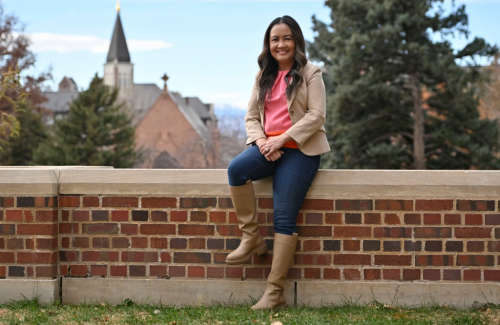
Denver’s Vietnamese Refugees Share New Life While Keeping Family’s Heritage

Because of the chaos that was happening in their homeland in the 1970s, thousands of Vietnamese fled and some, later on, found a home in Colorado.

The melancholic memory is still fresh for Nga Vương-Sandoval, who, at the age of three, had to temporarily stay in refugee camps in the Philippines, Guam, and Arkansas.

She was with the about 2 million people who were unhoused and still have from within the shock of their suffering. 

It had been very challenging for them as they had to leave behind the good life they have in Vietnam and even depart from their relatives in order for them to leave safely.

Starting their life all over again, Denver has become a home to the 24,000-man Vietnamese Americans.

After being able to establish their community and found a home in the place, Nga said “I’m proud to say that it’s the city that I love, it’s the state that I love.”

Meanwhile, Vo, a 21-year-old grandchild of a Vietnamese who grew up in Aurora after his grannies and parents left Vietnam in the 1990s to seek a better life, had the experience of living in “a very diverse place.”

Knowing very little about his family’s past in Vietnam, he conducted a research project to unleash an “inherently American story,” according to him. 

Enabling people to have a glimpse of the refugees from a different perspective, Vo made use of his relatives as objects of his photography.

“Even though we moved here, they still lived a very Vietnamese life,” Vo said in Denver Post, 

It was also in his research that he found out how the majority of his family members were able to escape Vietnam while being robbed of cash and gold on their way.

He also mentioned how his family kept their culture by still practicing them in Denver which contributed to what America is, a place with diverse cultures. 

Despite having to start from scratch, they were able to begin life anew and even owned an Asian supermarket, Asian cinema, and Truong An Gifts.

His family also started the Far East Center shopping mall in 1987, home to him and his cousins and even to the Asian community.

Image Source: Silicon India

News

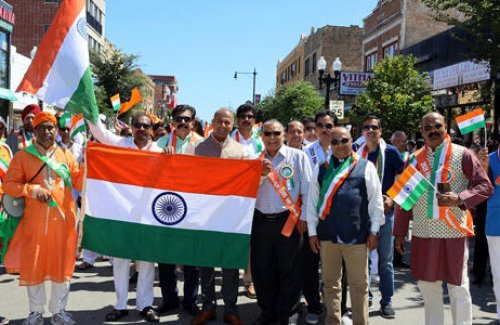
South Asians Found Second Home in Devon Avenue’s “Little India”

At Devon Avenue in Chicago, immigrants from India discovered a taste and comfort of their home country.

The area, commonly referred to as “Little India,” has served as a shelter for Indians who miss their culture.

Finding a home in it, Indians such as National Indo-American Museum board member Beverly Kumar, go there every now and then, especially when she craves Kalakand, a traditional Indian fudge.

According to Kumar, “It’s very comforting knowing that just 14 miles away from my house, there is an essence of Little India.” She also mentioned how reminiscing it is to see familiar sights, sounds, scents, and flavors when visiting Devon Avenue since it makes her feel as though she has never left home.

The area not only became a haven for Indians, but also for other South Asians who opened grocery stores, sari and jewelry stores, as well as many other enterprises in addition to food stores.

In the middle of 1960s, the place it became the second and fourth-largest enclave for Indian and Pakistani Americans, respectively.

The Federal Immigration and Naturalization Act of 1965 ushered in the first wave of South Asian immigration, which established settlements for South Asian professionals in Chicago, while the second phase arrived in the 1980s and 1990s.

Psychotherapist Ranjana Bhargava was one of the first immigrants who yearned for vegan food and searched for spices to sate her craving for Indian cuisines, which she found at Mexican places.

Between the first and second waves, businesses such as The Sari Palace sari store and Indian grocery stores began to thrive there.

Since then, a new community has been created where Indians continue to practice their culture through activities like viewing Indian movies, getting together, playing instruments, performing traditional dances, and eating.

The once Jewish-dominated place became a mainly Indian community which captivated more visitors where one can meet not only Indians but people of different races.

Image Source: Olivier Koning / Honolulu Magazine

Stories

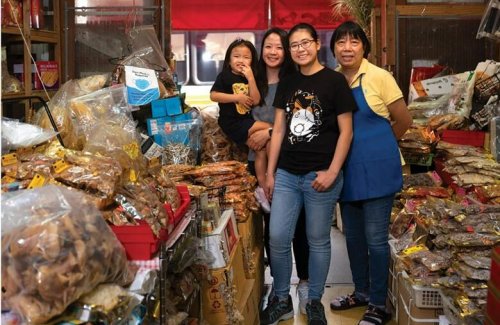
Chinatown’s Oldest and Most Respected Businesses Proudly Carried On By Next Generation

The blood of entrepreneurship runs through the veins of Chinatown’s Chinese food business owners, as three of the longest-running businesses have their children enter the management fields of their family business.

Tony and Selina Chun, together with Alan and Helen Chun, who have been in the business for decades, fully trusted their children to run the meat market company they bought in the 1980s.

The older generation passed it down to their children believing that they would treat it the same way they had after 40 years of building and creating the Chinatown cornerstone with crispy roast pigs, burnished roast ducks, and glazed char siu along with butcher store and seafood vendor.

Frankie, 35, and his cousins are now in charge of running the company that they established through diligence and thrift. Given that they have a family business to manage, Frankie has known since then that he won’t take long in any career.

He was reported in Honolulu magazine as saying, “I knew that anything I was going to pursue wasn’t going to be lengthy, because the family would always ask us back for support.”

He and his cousins learned the operations as a result of early exposure to the business and used them as a means of support, which pleased their parents, especially when they took their first vacation in four decades.

Meanwhile, Liana Fang, whose parents Wesley and Jie Mei Fang founded Sing Cheong Yuan Bakery, assists in running the business.

The pair bought the bakery from its original owners and then expanded it by bringing in more goods. The homemade goods were prepared using original family recipes that they later improved.

The 27-year-old claims she adores Chinatown but acknowledges that she is more passionate about cooking than baking. “It’s so authentic. I love Asian food, the fresh markets, the mom-and-pop shops,” she said.

Completing the list, the 33-year-old daughter of Sun Chong supermarket co-owner Ann Sung also contributes to management of the business.

Sun helps them sell their products and other items by marketing it online and by helping accomplish other stuff needed in the business.

Sun, who grew up at the shop with her cousins, said that their business is like a thread that can connect generations. She also claimed that coming home after studying abroad was like paying back her mother, who had done everything for her. Sun plans to update and improve her mother and aunt’s traditional business structure.

Image Source: Yahoo! Life

Stories

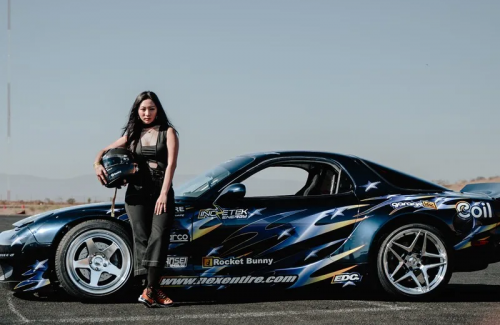
29-Year-Old Drift Racer Sara Choi Excels With Prowess In Male-Dominated Industry

Sara Choi, a South Korean drift racer, is one of the rare female drift racers who compete on an equal or even higher level with men in the automotive industry.

“Men have egos. Men have pride,” says Choi upon knowing that some guys dislike her. 

The 29-year-old was taken care of by a gang of automobile kids after leaving her Hawaii home at 15 and this is when she first acquired her curiosity and passion in cars.

Cool as she is, Choi drives a car at 70 mph while it “drifts” due to oversteering and also has to deal with microaggressions and crude remarks about her body as a drift racer.

Being one of the few women of color who is so skilled at it, vehicles are more than simply a hobby, a source of celebrity, or a source of income to her. Not only did she find a great deal of thrill when she drives sideways at high speed, but a new family as well.

“In Hawaii, we only have three freeways. Every Wednesday and every weekend, they would host a “car cruise meet” at the military base, which was everyone—sometimes up to 200 or 300 cars—going on the freeway and just racing. I would always go with my friends to that,” Choi said in Cosmopolitan. 

When Choi got her first full-time work at a tuning shop, she got a 1999 Civic through her boss, which she paid for with every paycheck. This marked the beginning of her passion for cars. 

After being introduced to drifting, she traveled to Japan, the country where the practice first emerged, years later. After completely experiencing the pleasure of drifting there, she grew passionate about it to the point that it became not only a hobby but a career.

Choi revealed that she is still debating whether or not to compete because it is a male-dominated field and that she is experiencing psychological difficulties.

She is currently concentrating on running racing events to keep the fire going.

One big achievement she had in the arena was when she created the Acura mod, a vehicle she worked on for three months for the SEMA exhibition in Las Vegas.

Additionally, Choi encouraged other women who want to pursue drift racing to “Just do it,” adding that they should put themselves out there to connect with individuals in the field.