

News

July 11, 2023

SHARE:

The ongoing Covid-19 pandemic has increased the obstacles facing Asian American, Native Hawaiian, and Pacific Islander (AAPI) women-owned enterprises.

Despite being a fast-growing group of business owners, AAPI women confront structural challenges and have limited access to capital, which is made worse by the pandemic’s effects on sectors like dining, retail, and personal care services. According to Hello Alice, their access to financial resources is further hampered by language problems and a lack of banking connections.

AAPI women have borne the harshest economic consequences of the Covid-19 crisis, including business closures, job losses, and increased caregiving responsibilities. However, data on their experiences remains limited and fragmented. AAPI Women’s Equal Pay Day highlights the persistent wage gap, with AAPI women earning $0.92 for every dollar earned by white men, according to the National Women’s Law Center. This wage gap, if unaddressed, could result in AAPI women losing around $267,000 over a 40-year career.

AAPI women also face significant challenges in accessing grants, loans, and capital, despite their entrepreneurial potential. Only a small fraction of federal funding provided through programs like the Paycheck Protection Program reaches AAPI-owned businesses.

FoundHer, a small business accelerator founded by Gloria Lau and Bella Hughes, aims to bridge this funding gap. It focuses on Native Hawaiian, Pacific Islander, and Asian women entrepreneurs in Hawaii, providing non-dilutive grant funds and resources to support their businesses.

Historical patterns indicate that women of color, including AAPI women, are often the first to feel the negative effects of economic downturns and the last to recover, but despite all the obstacles, AAPI women entrepreneurs exhibit resilience and resourcefulness.
Related Articles

Image Source generocity.org

Uncategorized

Founder of Penn Asian Senior Services Im Ja Choi Passed Away At 73

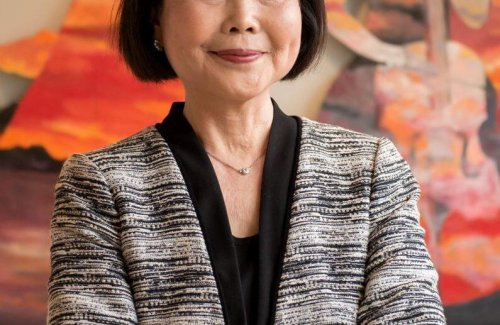
A well-known supporter of Asian American seniors and the founder and emeritus CEO of the nonprofit Penn Asian Senior Services, Im Ja Choi,  passed away on Wednesday, June 22, from lung cancer in a South Korean hospital, she was 73. 

A memorial service will be conducted on July 16 at 3:00 pm at the Evergreen Center in Philadelphia. Contributions in her name will be appreciated.

Ms. Choi was born in Seoul, South Korea in 1948, majored in literature, and graduated from Korea University. She moved to Philadelphia after marrying her childhood friend Jung Choi in 1971, where she studied organizational dynamics at the University of Pennsylvania. She was a top-producing real estate agent in the 1980s and 1990s. 

She started Penn Asian Senior Services in 2004 to help Asian American elders with linguistic and cultural obstacles. Because she couldn’t get home care for her mother, and after hearing horrible experiences from other caregivers, she founded the charity that provides in-home care and homemaking services in over two dozen languages.

She undertook the fundraising efforts and strategic planning of the nonprofit, for which the charity received grants from the U.S. Department of Health and Human Services and numerous organizations. 

Moreover, she has also opened an adult day care for immigrants with language and cultural barriers, a state-licensed vocational school for entry-level Asian health-care workers, and a seniors community center. 

In 2013, she received the Ellis Island Medal of Honor from the National Ethnic Coalition of Organizations. The Independence Blue Cross Foundation president Lorina Marshall-Blake wrote that the region needed more health visionaries like Im Ja Choi. Ken Yang, CEO of Penn Asian Senior Services, said Ms. Choi’s care, generosity, and love for her family and community matched her innovative leadership.

She was also recognized by the governor as a 2014 Distinguished Daughter of Pennsylvania for her “extraordinary service and achievements to the Commonwealth.” In the same year, she gave the commencement address at Penn State Abington where she quoted “Where there’s a will, there’s a way.”