News

February 5, 2025

SHARE:

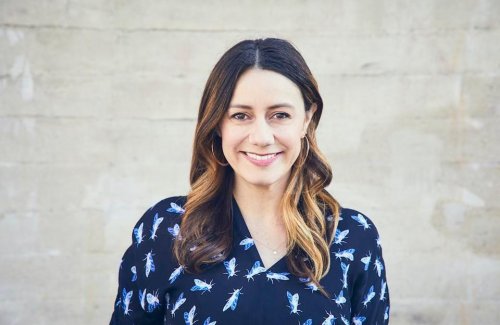
Most people often overlook long-term care until they are older or faced with no other choice. Unfortunately, by that point, it may already be too late. Lily Vittayarukskul was pursuing a degree in aerospace engineering when she witnessed both her oldest brother and mother battle with an illness that required extensive long-term care. The situation became even more challenging when her aunt was later diagnosed with terminal colon cancer. The seek for quality care became daunting, even for those fortunate enough to have some form of insurance.

As a member of a Cambodian immigrant family, Lily experienced the challenges of caregiving firsthand, but the financial burden became unbearable. In a recent interview with TechCrunch, she exclaimed,  “It wiped us out financially.” The profound emotional and financial impact of the experience ultimately led her to shift her focus to genetic and data science.

Finally, in December 2021, she decided to take action by founding Waterlily, a San Francisco-based startup aimed at helping individuals and financial advisors navigate long-term care planning through cost modeling and funding strategies. Using artificial intelligence (AI) to forecast a family’s future long-term care needs and expenses, Waterlily predicts a family’s future long-term care needs and expenses, guides them in creating a care plan, and identifies the most suitable ways to finance it. Options may include purchasing life insurance with a long-term care rider, investing in a dedicated LTC policy, utilizing annuities, or self-funding.

Lily explains, “Most people begin thinking about long-term care between the ages of 65 and 70, or only when they need it, but by then, it can be too late.”

Leveraging more than 500 million data points and machine learning algorithms, Waterlily delivers highly personalized care and cost predictions. The platform forecasts when long-term care may be required, how it will unfold, and the potential expenses involved. Lily proudly states, “We have formal data-sharing agreements with long-term care providers, government databases, academic research studies, and individual users.”

Waterlily’s vision is undeniably compelling, and Lily isn’t the only one who sees its potential. She initially launched the company as a solo founder, but it soon caught the attention of angel investor Evan Ehrenberg, the former founder of Clara Health. Evan became intrigued by Waterlily’s early research and the industry’s reaction. Curious, he tested the platform himself and was stunned by its long-term care predictions—so much so that he hired a personal trainer, adjusted his diet, and revised his financial plans. Impressed by its impact, Evan, who became MIT’s youngest neuroscience PhD, officially joined Waterlily as a co-founder.

Evan Ehrenberg [left] and Lily Vittayarukskul [right] together (Image Source: Evan Ehrenberg)

Lily believes Waterlily differentiates itself from competitors by providing a more personalized experience through deep predictive modeling integrated into a user-friendly platform. Although it only launched in March 2024, the company’s monthly recurring revenue (MRR) has already grown to more than 22 times its initial level. Waterlily now serves eight major clients, including several Fortune 100 insurance carriers and Prudential.

Looking ahead, Waterlily aims to expand its services to include disability, critical illness, hospital indemnity, and Medicare planning, enabling families to make more informed health coverage decisions. Additionally, the company is exploring opportunities for international growth, with plans to enter markets in Asia, Canada, and the U.K.

John Kim, former president of New York Life and investor of Waterlily, sees the platform as the first AI-native guidance tool addressing one of the most pressing challenges of an aging American population.

Kim concluded, “Long-term care insurance is a growing and largely underserved need among trusted advisors today. Waterlily’s guidance tool stands alone in its ability to provide customized, personalized recommendations for long-term care needs. I believe it will be a game changer for the LTC insurance marketplace.”


Related Articles

Image Source: Christopher DeVargas / Las Vegas Magazine

Uncategorized

Jo Koy Makes History As The First Ever Comic Main Attraction At T-Mobile Arena

After Jo Koy’s recent successes, including the release of his two wildly popular Netflix specials,” In His Elements and Comin’ In Hot”, and the publication of his autobiographical debut book, entitled “Mixed Plate: Chronicles of an All-American Combo”, he is set to star as the first comic main attraction at Las Vegas’ T-Mobile Arena on November 19.

This year, the Filipino-American actor-comedian embarked on his first nationwide arena tour for Easter Sunday, a feature film based on those personal anecdotes and his other comedic content that hit theaters which also starred Lydia Gaston, Eugene Cordero, Tia Carrere, and Lou Diamond Philipps. 

It was a life-changing experience for the 51-year-old, and he plans to continue creating films from behind the camera and helping other Filipinos, Asian Americans, and artists from different races.

Jo Koy first experienced comedy while still a student in Las Vegas and will return to the same city to fulfill his dream of becoming the first primary comic attraction to play at T-Mobile Arena.

“When I play T-Mobile Arena, I discover that I’m the first cartoonist to ever do it, which is sort of cool,” he told Las Vegas Magazine, “There are other venues in Las Vegas, including some very large ones, but T-location Mobile’s right on the Strip has a unique appeal,” Jo Koy adds.

He also mentioned that performing at arenas and other famous places abroad is beyond anything he could have imagined and that the realization of it drives him crazy.

After finishing the book and movie he’s been working on for several years, Jo Koy said that the process was challenging because there were many obstacles and firsts to tackle; it was the first time a Filipino actor portrayed the main character in a Hollywood production. He felt good about himself and appreciated Dreamworks and Universal for helping him.

“I want to keep creating. I want to highlight the other talent that is out there because I have been addicted to being in front of the camera,” Jo Koy continued, “Knowing how difficult it was for me, I want to keep the door open and showcase more potential, not just Filipino talent but talent from other countries and races that want to be recognized — I want to see what I can do to help make it happen.”

Jo Koy also disclosed that he has his eye on a number of up-and-coming stand-up comedians, such as Matteo Lane, with whom he is now working, Asif Ali, and JR De Guzman.

Image Source: Wu Tsai Foundation

Uncategorized

Brooklyn Nets Owners Launched The Largest Business Accelerator for Minority-led Startups

After George Floyd’s controversial death in 2020, growing VC investments in businesses founded by people of color became a top priority. According to Crunchbase, just 2.4% of VC financing between 2015 and 2020 went to Black or Latinx enterprises. Funding for black entrepreneurs quadrupled to $1.8 billion in 2021. This year, however, saw a sharp decline in investments in minority founders.

Entrepreneur and co-owner of the Brooklyn Nets, Clara Wu Tsai, launched BK-XL, the biggest business accelerator that aims to support 12 startups founded by Black, Indigenous, and other minority founders in 2023 by investing up to $500,000.

In an interview with The Associated Press, Wu Tsai stated that a shortage of finance is a major barrier to wealth growth for BIPOC businesses. She and her husband Joseph Tsai believe investing in BK-XL would be the greatest approach to overcome this challenge and generate wealth for the entrepreneurs and the jobs they create.

Wu Tsai stressed that she aims to highlight the underutilized entrepreneurial potential in Brooklyn to assist the neighborhood get back on its feet. She also thinks that BK-XL will demonstrate to the rest of the nation that investing in Black businesses pays off and is a smart move.

She added that any money made from investments in the BK-XL startups will be put back into Brooklyn-based companies. “The best way to demonstrate our faith in Brooklyn and Black-owned businesses,” she continued, “is to invest in them and demonstrate to the rest of the world that they are wise financial decisions.”

Prior to the release of BK-XL, Tsai’s Social Justice Fund also introduced “EXCELerate” last year, which offered no-interest loans to Black-owned small companies in need of assistance in order to recover from the closures caused by the COVID-19 pandemic.

As part of her strategy to leverage a combination of investments and donations to achieve goals for the neighborhood, she stated that BK-XL will shortly be followed by a philanthropic grant program to assist other businesses in Brooklyn.

All Brooklyn-based, BIPOC-led firms may submit a BK-XL application starting on December 5. But only companies in industries where the Tsais have the expertise, like e-commerce, will be approved.

Image Source Ken Chan Facebook

Uncategorized

Pandemic Turns Filipino Actor Ken Chan Into A Serial Entrepreneur

Ken Chan, a 29-year-old Filipino actor, proves that the pandemic has not only caused bad things but has also brought good fortune to some, being a celebrity-turned-entrepreneur after losing his job during the crisis.

Ken swiftly expanded his franchised iFuel gas station with 10 branches in different parts of the country in just a year. He also opened Cafè Claus, a Christmas-themed café, which has extended into three branches around Metro Manila, Philippines.

Nonetheless, he also braved the wellness industry with his Aromagicare Luxury Massage Chair. He mentioned that his triumph is also because of saving and spending wisely. 

Ken said he had taken to heart the financial lesson his parents had taught him wherein he learned not to overspend on himself.

During his recent interview, Ken said that he takes pride in the fact that he rarely makes purchases for himself and even makes the most of his cars while they are still roadworthy.

The actor realized during the pandemic that artists should secure their fallback in case they lose their jobs in the industry.

Image Source: Koury Angelo / Forbes

Uncategorized

Rejections Didn’t Stop Kinside CEO Shadiah Sigala To Reach A Stellar Entrepreneurial Career

Shadiah Sigala co-founded HoneyBook, a $2 billion financial management software platform for small businesses, motivated by her ability to negotiate uncertainty while gathering information and making decisions.

When Shadiah was a child, her Mexican mother together with her two siblings moved to southern California. Despite most of her family members being unable to attend college, she was an honor student whose lifelong ambition was to acquire the greatest degree of education.

Shadia attended Pomona College for Latin American Studies and Harvard Kennedy School for public policy. As a result, she established a strategy for reaching goals she wasn’t sure about.

Before becoming an accomplished millennial, she finished her master’s degree and became the highest-earning member of their family as a project manager at Aetna, a health insurance company, where she learned about entrepreneurship, realized she is a “builder,” and thought starting her own company was the best option.

However, Shadia realized that she wouldn’t be happy there since she wouldn’t be valued. Shadia ultimately started a personal chef business in 2010, using her Pomona College alumni network to find well-off grads who wanted someone to cook for them.

In 2012, another realization occurred to her that cooking wasn’t for her. Shadiah then decided to move with her then-husband to San Francisco and found tech. She arranged informative interviews with everyone in the sector and learned that the problem she wanted to tackle was one she’d experienced as a business owner: no effective method to handle backend logistics like emails, payments, and bills.

With the three Israeli business people who have a similar concern as hers, they decided to digitize all these tedious procedures that micro small firms must complete to free them up to genuinely focus on doing what they love.

Using that concept, Shadia established HoneyBook in 2013 and worked there for five years according to CNBC.

As her most recent business, Shadia co-founded Kinside in 2018, a child-care marketplace that is available to employees that offers new parents a centralized location to look for daycare in their neighborhood, which has reached over $16 million, according to Crunchbase. 

Letting fear and excitement be one’s guide and being open-minded is what Shadia advises to other aspirants. According to her, opportunities that “feel like they are beyond your pay grade” are exactly how stellar is made.