News

February 5, 2025

SHARE:

Most people often overlook long-term care until they are older or faced with no other choice. Unfortunately, by that point, it may already be too late. Lily Vittayarukskul was pursuing a degree in aerospace engineering when she witnessed both her oldest brother and mother battle with an illness that required extensive long-term care. The situation became even more challenging when her aunt was later diagnosed with terminal colon cancer. The seek for quality care became daunting, even for those fortunate enough to have some form of insurance.

As a member of a Cambodian immigrant family, Lily experienced the challenges of caregiving firsthand, but the financial burden became unbearable. In a recent interview with TechCrunch, she exclaimed,  “It wiped us out financially.” The profound emotional and financial impact of the experience ultimately led her to shift her focus to genetic and data science.

Finally, in December 2021, she decided to take action by founding Waterlily, a San Francisco-based startup aimed at helping individuals and financial advisors navigate long-term care planning through cost modeling and funding strategies. Using artificial intelligence (AI) to forecast a family’s future long-term care needs and expenses, Waterlily predicts a family’s future long-term care needs and expenses, guides them in creating a care plan, and identifies the most suitable ways to finance it. Options may include purchasing life insurance with a long-term care rider, investing in a dedicated LTC policy, utilizing annuities, or self-funding.

Lily explains, “Most people begin thinking about long-term care between the ages of 65 and 70, or only when they need it, but by then, it can be too late.”

Leveraging more than 500 million data points and machine learning algorithms, Waterlily delivers highly personalized care and cost predictions. The platform forecasts when long-term care may be required, how it will unfold, and the potential expenses involved. Lily proudly states, “We have formal data-sharing agreements with long-term care providers, government databases, academic research studies, and individual users.”

Waterlily’s vision is undeniably compelling, and Lily isn’t the only one who sees its potential. She initially launched the company as a solo founder, but it soon caught the attention of angel investor Evan Ehrenberg, the former founder of Clara Health. Evan became intrigued by Waterlily’s early research and the industry’s reaction. Curious, he tested the platform himself and was stunned by its long-term care predictions—so much so that he hired a personal trainer, adjusted his diet, and revised his financial plans. Impressed by its impact, Evan, who became MIT’s youngest neuroscience PhD, officially joined Waterlily as a co-founder.

Evan Ehrenberg [left] and Lily Vittayarukskul [right] together (Image Source: Evan Ehrenberg)

Lily believes Waterlily differentiates itself from competitors by providing a more personalized experience through deep predictive modeling integrated into a user-friendly platform. Although it only launched in March 2024, the company’s monthly recurring revenue (MRR) has already grown to more than 22 times its initial level. Waterlily now serves eight major clients, including several Fortune 100 insurance carriers and Prudential.

Looking ahead, Waterlily aims to expand its services to include disability, critical illness, hospital indemnity, and Medicare planning, enabling families to make more informed health coverage decisions. Additionally, the company is exploring opportunities for international growth, with plans to enter markets in Asia, Canada, and the U.K.

John Kim, former president of New York Life and investor of Waterlily, sees the platform as the first AI-native guidance tool addressing one of the most pressing challenges of an aging American population.

Kim concluded, “Long-term care insurance is a growing and largely underserved need among trusted advisors today. Waterlily’s guidance tool stands alone in its ability to provide customized, personalized recommendations for long-term care needs. I believe it will be a game changer for the LTC insurance marketplace.”

Related Articles

medium-jpeg

News

Phantila Phataraprasit: Embracing Thai Culture and Sustainability in Furniture

In the transition from dormitory living to her own apartment, Phantila Phataraprasit found herself grappling with a challenge familiar to many recent graduates: the quest for affordable, stylish, and eco-friendly furniture. Sustainability has played a significant role throughout her life due to her mother’s involvement in running eco-friendly lodges in Thailand.

Phataraprasit and her college friend Caitlin Ellen teamed up to start Sabai – a Thai word that means feeling comfortable and relaxed. Sabai is a direct-to-consumer furniture company that prioritizes sustainability without sacrificing affordability.

Sabai’s core mission revolves around empowering young professionals to align their values with their furniture choices. For them, achieving true sustainability involves more than using eco-friendly materials.

Their sofas, crafted in a family-owned North Carolina factory, feature Sustainable Forestry Initiative (SFI)-certified wood, recycled fiber fill, and upcycled fabrics, free from harmful chemicals. They introduced a “Repair Don’t Replace” program and a buyback initiative to ensure longevity and affordability.

After initially diversifying into various home furnishing categories, Sabai recognized that sustainability remained the driving force for their customers. They refocused their efforts on seating, catering to those with unique aesthetic preferences. This strategic shift enables them to deliver on their core sustainability promise while offering diverse design options.

Aside from this, Sabai also understands the importance of forming meaningful connections with customers. Furniture is intimate, and Sabai recognizes that today’s generation cares deeply about their living spaces.

By amplifying their sustainability initiatives and engaging with consumers, Sabai aims to inspire a lot of people to live a more sustainable lifestyle.

Featured Image Source: Medium

005_min_1_scaled.0-jpg

News

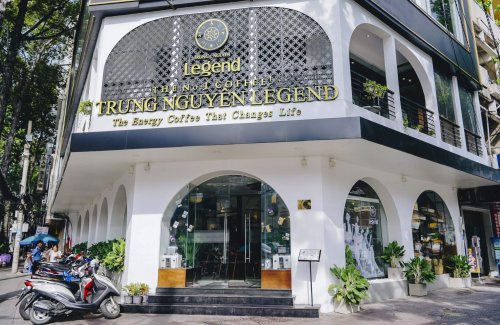
Trung Nguyên Legend Cafe Introduces Vietnamese Coffee From Saigon to U.S.

Adding a fresh chapter to its storied history, the esteemed Vietnamese coffee chain, Trung Nguyên Legend Cafe, has ventured across the Pacific to Westminster, Southern California.

With nearly three decades of experience and a robust presence in Vietnam comprising four factories and 110 stores, Trung Nguyên has also made its mark on the global stage, with distribution networks spanning over 60 countries.

Trung Nguyên Legend Cafe proudly serves phin- and espresso-based coffee drinks, crafted exclusively from 100-percent Vietnamese-grown Robusta and Arabica beans. The menu caters to diverse tastes, featuring an array of espresso-based classics such as lattes, mochas, and cappuccinos, alongside quintessential Vietnamese specialties like cà phê trứng (Vietnamese egg coffee) and cà phê chồn (civet coffee). Patrons can relish the brand’s signature dine-in coffee service, elegantly presented on ornate wooden trays, a unique experience now accessible in the U.S.

Jennie Tang, representing H & L Wholesale Food Corporation, the Los Angeles-based distribution company behind this franchise venture, underscores the essence of Vietnamese coffee culture. Beyond being a mere beverage, it embodies the art of connecting with one another while savoring the moment.

Trung Nguyên Legend Cafe is located at 9039 Bolsa Avenue #101, Westminster, CA 92683. The cafe welcomes visitors daily from 7 a.m. to 5 p.m., promising an authentic Vietnamese coffee experience.

Featured Image Source: LA Eater

337065635_5962298030490632_6699761041658586964_n-jpg

Stories

A Doctor’s Journey of Following His Passion and Becoming a Full-Time Comedian

In the world of comedy, they say that laughter is the best medicine, and for Dr. Jason Leong, this couldn’t be more true.

Up until 2010, Jason Leong’s life had followed the typical Asian narrative.

He had been a straight-laced kid, never earning anything less than an A in his exams. He secured a scholarship to pursue Medicine and eventually became a doctor in Malaysia.

Despite his initial success, the harsh reality of the workforce hit Jason hard. As a junior doctor, he endured grueling 36-hour shifts at least six times a month, with 100-hour workweeks becoming the norm. Sleep deprivation, constant hunger, overwhelming stress, and meager pay plunged him into the lowest point of his life. But things were about to change.

One day, he stumbled upon an opportunity for a monthly open mic show in Kuala Lumpur, the first of its kind in Malaysia. His wife encouraged him to try out. So he took 2 days off from work, drove 4 hours to the venue, and performed his first 5-minute standup. He left the stage saying to himself, “I want to do this forever.”

In 2011, Jason transferred to Kuala Lumpur and did regular gigs while being a full-time doctor. He loved being a doctor by day and a comedian by night, but it was still a lot of work for him. So in 2014, he made the big leap and did a not very Asian thing.

He quit being a doctor.

Having experience in the medical field not only informs Jason’s comedy, but it also makes his style a bit more unique. “The rigors of being a doctor made me all the more grateful to be able to tell jokes for a living,” he said.

At first, Jason didn’t tell his parents that he quit his job as a doctor. His parents now know of his career shift and support his journey wholeheartedly, with his mother saying, “If this comedy thing doesn’t work out, at least you have something to fall back on.” 

Jason’s comedy has since blossomed with two successful Netflix specials, “Hashtag Blessed” and “Ride With Caution.”

He boasts a portfolio of five solo one-hour specials, having graced stages at the Melbourne International Comedy Festival, featured on Comedy Central and Just For Laughs in Montreal, and won at the 7th Annual International Hong Kong Comedy Competition.

Jason is set to perform his solo show BRAIN DRAIN in Los Angeles on September 29 and San Francisco on October 4.

“Making a move to my passion and the arts is something that has allowed me to find real meaning in my work. I hope to inspire others within the Asian community to take the same risks and reach their real potential,” Jason shared with Asian Hustle Network.

CONNECT WITH JASON

Facebook: Dr. Jason Leong

Instagram: @drjasonleong

Tiktok: @drjasonleong

News

How Wang Xiaokun Turned His Milktea Business into a Billion-Dollar Success

Wang Xiaokun, a 40-year-old Chinese entrepreneur, has achieved a remarkable feat by becoming a billionaire through his milk tea venture. He is the visionary founder of Cha Panda, a Chinese tea chain.

Recent funding rounds have catapulted his tea business’s valuation to an impressive $2.1 billion. Forbes estimates Wang’s personal fortune at a staggering $1.1 billion, primarily due to his substantial 60% ownership stake in the Chengdu-based beverage chain.

Over the past three years, Cha Panda has experienced rapid expansion, now boasting an extensive network of over 7,000 stores. The chain is known for its signature beverages, including mango pomelo sago, taro bubble tea, and jasmine milk green tea, all offered at an affordable price point of $3.60 or less, as reported by Forbes.

Notably, Wang’s wife, Liu Weihong, has also enjoyed a substantial increase in her wealth, with an estimated fortune of $700 million, thanks to her 33% ownership stake in the company. She plays a pivotal role as the chair of the supervisory committee, responsible for overseeing Cha Panda’s daily operations, as indicated in a preliminary prospectus filed with the Hong Kong Stock Exchange. 

According to MSN, the roots of Cha Panda trace back to 2008 when Wang began selling fruit and bubble tea from a modest shop near a school in Chengdu, known for its spicy cuisine and as the home of giant pandas. Over the subsequent decade, Wang diligently expanded Cha Panda’s network of stores to 531 by 2020. However, the pivotal moment occurred when he embraced a franchising model.

Today, Cha Panda focuses on crafting beverage recipes and supplying ingredients like fruit and tea leaves to Cha Panda-branded beverage shops. This innovative approach allows Wang to maintain lower operational costs compared to competitors like Hong Kong-listed Nayuki Holdings, which grapple with higher employee salaries and rental expenses for their directly operated stores.

Featured Image Source: India Times