How a Cambodian American Entrepreneur Founded a Long-Term Care Platform
News
February 5, 2025
SHARE:
Most people often overlook long-term care until they are older or faced with no other choice. Unfortunately, by that point, it may already be too late. Lily Vittayarukskul was pursuing a degree in aerospace engineering when she witnessed both her oldest brother and mother battle with an illness that required extensive long-term care. The situation became even more challenging when her aunt was later diagnosed with terminal colon cancer. The seek for quality care became daunting, even for those fortunate enough to have some form of insurance.
As a member of a Cambodian immigrant family, Lily experienced the challenges of caregiving firsthand, but the financial burden became unbearable. In a recent interview with TechCrunch, she exclaimed, “It wiped us out financially.” The profound emotional and financial impact of the experience ultimately led her to shift her focus to genetic and data science.
Finally, in December 2021, she decided to take action by founding Waterlily, a San Francisco-based startup aimed at helping individuals and financial advisors navigate long-term care planning through cost modeling and funding strategies. Using artificial intelligence (AI) to forecast a family’s future long-term care needs and expenses, Waterlily predicts a family’s future long-term care needs and expenses, guides them in creating a care plan, and identifies the most suitable ways to finance it. Options may include purchasing life insurance with a long-term care rider, investing in a dedicated LTC policy, utilizing annuities, or self-funding.
Lily explains, “Most people begin thinking about long-term care between the ages of 65 and 70, or only when they need it, but by then, it can be too late.”
Leveraging more than 500 million data points and machine learning algorithms, Waterlily delivers highly personalized care and cost predictions. The platform forecasts when long-term care may be required, how it will unfold, and the potential expenses involved. Lily proudly states, “We have formal data-sharing agreements with long-term care providers, government databases, academic research studies, and individual users.”
Waterlily’s vision is undeniably compelling, and Lily isn’t the only one who sees its potential. She initially launched the company as a solo founder, but it soon caught the attention of angel investor Evan Ehrenberg, the former founder of Clara Health. Evan became intrigued by Waterlily’s early research and the industry’s reaction. Curious, he tested the platform himself and was stunned by its long-term care predictions—so much so that he hired a personal trainer, adjusted his diet, and revised his financial plans. Impressed by its impact, Evan, who became MIT’s youngest neuroscience PhD, officially joined Waterlily as a co-founder.
Evan Ehrenberg [left] and Lily Vittayarukskul [right] together (Image Source: Evan Ehrenberg)
Lily believes Waterlily differentiates itself from competitors by providing a more personalized experience through deep predictive modeling integrated into a user-friendly platform. Although it only launched in March 2024, the company’s monthly recurring revenue (MRR) has already grown to more than 22 times its initial level. Waterlily now serves eight major clients, including several Fortune 100 insurance carriers and Prudential.
Looking ahead, Waterlily aims to expand its services to include disability, critical illness, hospital indemnity, and Medicare planning, enabling families to make more informed health coverage decisions. Additionally, the company is exploring opportunities for international growth, with plans to enter markets in Asia, Canada, and the U.K.
John Kim, former president of New York Life and investor of Waterlily, sees the platform as the first AI-native guidance tool addressing one of the most pressing challenges of an aging American population.
Kim concluded, “Long-term care insurance is a growing and largely underserved need among trusted advisors today. Waterlily’s guidance tool stands alone in its ability to provide customized, personalized recommendations for long-term care needs. I believe it will be a game changer for the LTC insurance marketplace.”
The path to success in content creation is never paved with roses, and no one understands this quite like Ami Desai. From her beginnings in broadcast journalism to becoming a well-known beauty and lifestyle influencer, Ami has shaped her career through authenticity, adaptability, and a strong dedication to representation.
As an Indian-American raised in Los Angeles, Ami grew up as a first-generation South Asian immigrant, a generation that deeply felt the need for greater South Asian representation in the media. After earning her degree from UC Berkeley and a master’s from Boston University, she built a solid media foundation through roles at CNN and Inside Edition. During this time behind the scenes, she discovered her passion for on-camera hosting, eventually landing her dream role as the host of the first digital show for Oprah.com. In 2011, Ami made a pivotal move by hosting a luxury travel show in India, which allowed her to reconnect with her roots and gain international exposure.
Simultaneously, Ami began building her own beauty business with her family. She went on to become one of the first South Asian content creators to collaborate with major brands like Toyota and Pampers on large campaigns, while also highlighting important Indian traditions and holidays such as Diwali. Recognizing the lack of representation for her ethnicity in the media and beauty industries, Ami founded her life’s mission, merging her experiences as a host, makeup artist, and mom to help other women advocate for themselves while balancing various roles. This gap in representation became her motivation to amplify underrepresented voices and promote diversity.
In 2016, Ami took a leap of faith, leaving traditional media behind to forge her own path in the influencer space. Despite pitching herself as a contributor or expert to various outlets, she faced rejection, which drove her to create her own content on social media platforms. Through this experience, she realized that content creation involved more than just posting visually appealing images—it required strategic planning, engagement tracking, and brand pitching. Even as the industry pushed her to narrow her niche, Ami confidently embraced her multifaceted identity, sharing content that reflected her life as a mother, beauty expert, and entrepreneur. This authenticity deeply resonated with her audience, ultimately helping her build a loyal fanbase connecting creators and audiences.
In the latest episode of the Creators Podcast, presented by Asian Hustle Network in collaboration with Meta Prosper, Ami shares a story of resilience, adaptability, and a deep dedication to her community. Whether you’re an aspiring content creator, a beauty lover, or someone who enjoys learning about authentic journeys, this episode is filled with valuable insights and inspiration.
The original “Charlie’s Angels” was a successful hit, not only because it made $93 million and grossed more than $264 million at global offices, but it also created exposure for Asian American representation.
Lucy Liu plays Alex Munday, a strategist, expert martial artist, and agent. Munday’s parents were Havard professors of economics and philosophy, and she, at an early age, was a child prodigy excelling at chess, equestrianism, fencing, archery, and gymnastics. Besides that, she holds a medical degree, spent her teenage years learning with a Tibetan guru, danced with the Stuttgart Ballet, and was a part-time aerospace engineer and on-call consultant for NASA.
Lucy Liu as Alex Munday in ‘Charlie’s Angels’ (Image source: ‘Charlie’s Angels’ – 2000)
Does the entire introduction sound familiar? Swap out the name Alex Munday for your overachieving Asian cousin, sibling, or the “top Asian kid” your parents always compare you to, and you’d likely end up with a strikingly similar description.
It is undeniable that contemporary films, comedies, memes, and other forms of content have taken extensive lengths to represent Asian culture. Yet, they have also perpetuated a troubling stereotype. To complicate matters, many within the Asian community unknowingly reinforce these portrayals, cementing these narratives even further.
The article’s purpose is not to mock or diminish the accomplishments of any individual, community, or effort in striving for representation and equality. On the contrary, it is essential to celebrate the contributions of the many talents and media that have significantly advanced global awareness and appreciation of Asian culture and heritage. Hence, the article wishes to provide a nuanced perspective on contemporary topics while providing debate on the norms, beliefs, and habits created in our society.
What is the Model Minority Myth?
According to the University of Michigan, Densho, and other sources, after World War II, the United States underwent significant changes in its laws and policies to address mounting international criticism of racial prejudice and ongoing protests from ethnic communities within the country.
“Success Story, Japanese American Style” by William Petersen (Image source: Smithsonian APA)
As PBS illustrates, new regulations like the Chinese Exclusion Act shifted toward dismantling exclusionary measures and advocating for Asian communities and immigrants, particularly skilled and educated migrants. The University of Michigan further exemplifies, articles like “Success Story, Japanese American Style” by William Petersen began to appear – praising how despite years of racial prejudice and discrimination, Japanese Americans were still able to achieve great socioeconomic status thanks to hard work and other cultural values of discipline and compliance to social hierarchy.
By focusing on the facets of income, education level, and low crime rates as the definition of success instead of underlining economic and social factors, Asian Americans are often portrayed as hardworking, disciplined, and intelligent—a concept scholars refer to as the model minority.
Model Minority Myth in Silencing Activism
While this stereotype may appear beneficial on the surface, Ted-Ed, in collaboration with Densho, emphasizes that there are no “good” stereotypes. As cited by PBS, cultural historian Robert G. Lee argues that such inclusion does not promote equity but instead undermines activism and disregards the struggles of other marginalized groups.
This is significant because the model minority myth obscures disparities within the diverse Asian American community, perpetuating the misconception that Asian identity is monolithic, often reduced to just China, Korea, and Japan. Furthermore, the stereotype marginalizes individuals who fail to meet its expectations, silencing those who speak out against it.
Societal pressure on Asian individuals (Image source: Kamanaoleeward)
For instance, an Asian student with subpar grades might be labeled as lazy rather than being understood in the context of contributing factors like economic hardship or family struggles. The danger of accepting “positive” stereotypes lies in their ability to perpetuate harmful narratives and create unrealistic standards, fostering a cycle of self-framing that damages both individuals and the broader Asian community.
When Representation Unintentionally Reinforces Stereotypes
Let’s use another example to understand this dichotomy.
Ke Huy Quan, the American actor of Vietnamese descent, is well known in the notorious “Indiana Jones and The Temple of Doom”, “Everything Everywhere All At Once”, and “Loki” Season 2. His selection as an exemplar highlights how his journey encapsulates the model minority stereotype and demonstrates how Asian communities may unconsciously perpetuate such narratives.
In “Indiana Jones and the Temple of Doom”, Quan portrays Short Round, a clever Japanese sidekick aiding Dr. Jones on his adventures. Ironically, this character aligns with the early stages of the model minority stereotype. Short Round comes from a disadvantaged background, surviving through pickpocketing, but his association with Dr. Jones transforms him into a more thoughtful and capable individual, elevating his social status by the film’s conclusion.
In “Everything Everywhere All At Once”, Quan embraces the archetype of the modern Bruce Lee or Jackie Chan—a martial arts expert and mentor to the protagonist, reminiscent of Mr. Miyagi in “The Karate Kid”. Finally in Loki Quan plays Ouroboros, a lovable and intelligent technician who once was a writer and a teacher of theoretical physics at Cal Tech.
Ke Huy Quan (Image source: The Independent)
In a meta and somewhat ironic twist, both Ke Huy Quan’s career and the roles he portrays reflect how Asians may unknowingly perpetuate the stereotypes they are often subject to. While Quan’s rise to fame is a testament to his dedication and perseverance, his portrayal of characters like the “witty young sidekick” learning from a Caucasian hero, the martial arts mentor, and the intellectual expert, inadvertently reinforces the very tropes that have shaped the Asian image in media. Despite his immense talent and the love he has earned within the Asian community, these roles contribute to the ongoing cycle of cultural expectations and representation.
Breaking the Myth of the Model Asian
It is entirely debatable that it is not the fault of the actors. We admire Ke Huy Quan for his remarkable journey and his representation of the Asian community. Nevertheless, through observing content produced by modern media, one will recognize certain tropes from the Asian community.
Steven He satirizes Asian parents, Jimmy O. Yang joking about Asian habits, Lily in “Pitch Perfect”, Rajesh Koothrappali in “The Big Bang Theory”, Louis and Jessia Huang in “Fresh Off The Boat”, and the list goes on. Even the news you see about an “Asian underdog politician” rising to power or the “overlooked Asian business owner” continues to reinforce these themes. While these portrayals are well-intended, they still fall into a pattern of representation that, ironically, reflects the very stereotypes they aim to challenge.
These stereotypes create an environment of competition and segregation in the Asian community, where individuals feel pressured to conform to a specific image. To maintain an idealized representation, certain behaviors become expected, specific careers are favored, and everyone feels compelled to excel in particular areas.
A ramification of this mindset would be far-reaching. For example, economic struggles may be ignored, as the stereotype dictates that all Asians should be successful. Mental health issues among children are dismissed because it is assumed that the Asian parenting and education system naturally fosters resilience. Furthermore, social problems like drug use or teenage pregnancy are seen as impossible within this community because Asians are stereotypically perceived as disciplined and morally upright. These misconceptions, while seemingly small, perpetuate harmful beliefs and ultimately hinder inclusivity, reinforcing negative stereotypes that shape the broader perception of the Asian community.
Shaping Our Own Story in Media and Beyond
“There are more Asians than any kind of race on the planet. That means we are the majority, we dictate normal behavior,” Ronny Cheng states in his comedy skit.
Asia comprises 59% of the world’s population, hence we are the majority. However, this work is not a manifesto calling for the unification of an ideal but serves as a reflection of the society we live in. The media plays a pivotal role in shaping our perception. The argument is not to elicit a conspiracy theory but to help readers ponder the question, how do we want to be represented? Thanks to pioneers like Lucy Liu and Ke Huy Quan, the Asian community has gradually won more exposure from media outlets. Now, it is the turn of the new generation to represent the Asian community in all its diversity and complexity.
“We dream of going to America, to change our lives, we believed. But my life changed so much. I felt sad about life, didn’t know the language, and didn’t know the roads. I had no friends, so I felt very sad.” – Phong, a Vietnamese American expat interviewed by the Pew Research Center.
“I sometimes, just a little, wish that I would disappear so that my parents and my sister could be better off.” – Nolan, an Asian American interviewed by the Pew Research Center.
Dreams vs. Reality
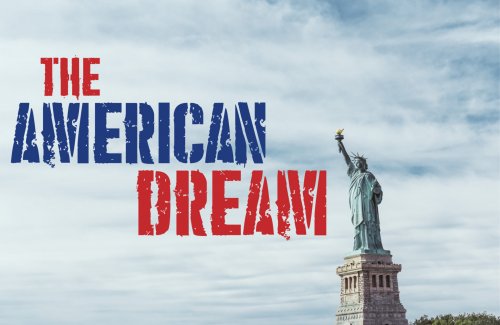
The American Dream is often celebrated as a path to success, yet its reality is far more nuanced. Tales of rags to riches from Asian peers suggest its promise, but the Pew Research Center reports that one in ten Asian Americans still live in poverty as of 2024. The issue lies not solely in the Dream itself but in how it is constructed and understood.
For many Asians, the American Dream is synonymous with upward mobility achieved through hard work and resilience—a belief that effort alone can overcome systemic barriers. But resilience, by its nature, demands enduring hardship and accepting foreignness, perpetuating a narrative that reinforces isolation and discrepancy.
The American Dream is synonymous with upward mobility achieved through hard work and resilience (Image Source: Roberto Parada)
The Illusion of Gold
The idolization of a Western nation paved in gold is an illusion that perpetuates xenophobia and the model minority myth. This ideological flaw is alluring and dangerous. We have all heard heartbreaking stories of illegal labor exports and stowaway immigrants. Yet we tend to remember the rags-to-riches stories because it is comforting to view ourselves as the ones who might make it. All while labeling these immigrants as illegal, the other, the individual Asian Americans who will live in poverty. But by doing so, we have fallen trapped in the American Dream, clawing our way to the top for the sake of others.
After the pandemic, anti-Asian and hate crimes have increased. The encounter paints a reflection of our society, there is no line between the one and the other nine, we are Asians and that is our identity. Then is the American Dream a lie? Not necessarily—but it is far from universal.
Community as the Key
Like all dreams, it is what we make of it. Whether in America, Asia, or any part of the world, opportunities coexist with difficulties. Moving to another country means tackling obstacles such as language and cultural barriers alongside the burden you once had at home. Statistics show that 61% of Asian adults seek family and friends when facing financial burdens. This can become challenging when migrating to a new country.
The key lies in recognizing that success is not achieved alone. Building networks and fostering solidarity within communities can challenge the isolating demands of resilience and redefine the Dream as a collective effort toward meaningful progress.
The American Dream is both a beacon of hope and a paradox. For many Asian Americans, the pursuit of upward mobility comes with sacrifices that are often overlooked. Yet, success doesn’t need to be a solitary journey. By embracing shared struggles and fostering a supportive community, one can find hope by redefining what the American Dream truly means.
Year of the Snake has arrived, and Chicago’s Gangnam Market slithered into the year with an exciting two-day celebration on January 25 and 26. Since its launch in December 2024, Gangnam Market has quickly established itself as one of Chicago’s go-to spots for Asian culinary delights. This event further solidified Gangnam Market’s vision of bringing Asian culture forward.
The 28,000-square-foot “American-Asian hybrid” grocery store has gathered communities of diverse backgrounds into one place, all honoring and embracing the rich traditions of the Lunar New Year. The weekend celebration offered attendees an exciting lineup of activities, from electrifying cultural performances to mouthwatering food.
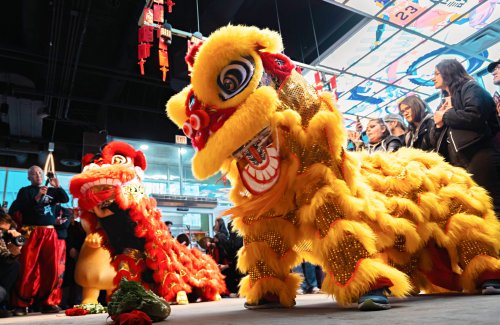
One of the event’s prominent features is the lion dance and drumming performance by Yu’s Lion Dance Sports Association of Chicago, captivating audiences with an energetic and meaningful display of fortune and prosperity. Adding a playful touch, Pokémon characters also held special meet-and-greets that attracted children and fans alike. (Who doesn’t love Pokémon anyway?) Guests also received lucky red envelopes with coupons for exclusive prizes at the event.
Lion dancers, drummers, and Pikachu captivate the crowd at Gangnam Market’s Lunar New Year celebration.
Food lovers were definitely not left out, with live demonstrations of Tanghulu-making (Chinese candied fruit skewers) and more than a dozen market vendors offering a taste of classic and contemporary Asian delights, with free food and drink samplings.
One of the event’s sweet treats is Tanghulu – candied fruit on skewers with a crispy sugar coating.
Reflecting on the successful turnout, Gangnam Market owner Kenny Yang expressed his gratitude for the community’s eager participation and commitment to heritage preservation. “We were overwhelmed and humbled by the incredible response, and thank all who came out to celebrate Lunar New Year with us.”