News

February 5, 2025

SHARE:

Most people often overlook long-term care until they are older or faced with no other choice. Unfortunately, by that point, it may already be too late. Lily Vittayarukskul was pursuing a degree in aerospace engineering when she witnessed both her oldest brother and mother battle with an illness that required extensive long-term care. The situation became even more challenging when her aunt was later diagnosed with terminal colon cancer. The seek for quality care became daunting, even for those fortunate enough to have some form of insurance.

As a member of a Cambodian immigrant family, Lily experienced the challenges of caregiving firsthand, but the financial burden became unbearable. In a recent interview with TechCrunch, she exclaimed,  “It wiped us out financially.” The profound emotional and financial impact of the experience ultimately led her to shift her focus to genetic and data science.

Finally, in December 2021, she decided to take action by founding Waterlily, a San Francisco-based startup aimed at helping individuals and financial advisors navigate long-term care planning through cost modeling and funding strategies. Using artificial intelligence (AI) to forecast a family’s future long-term care needs and expenses, Waterlily predicts a family’s future long-term care needs and expenses, guides them in creating a care plan, and identifies the most suitable ways to finance it. Options may include purchasing life insurance with a long-term care rider, investing in a dedicated LTC policy, utilizing annuities, or self-funding.

Lily explains, “Most people begin thinking about long-term care between the ages of 65 and 70, or only when they need it, but by then, it can be too late.”

Leveraging more than 500 million data points and machine learning algorithms, Waterlily delivers highly personalized care and cost predictions. The platform forecasts when long-term care may be required, how it will unfold, and the potential expenses involved. Lily proudly states, “We have formal data-sharing agreements with long-term care providers, government databases, academic research studies, and individual users.”

Waterlily’s vision is undeniably compelling, and Lily isn’t the only one who sees its potential. She initially launched the company as a solo founder, but it soon caught the attention of angel investor Evan Ehrenberg, the former founder of Clara Health. Evan became intrigued by Waterlily’s early research and the industry’s reaction. Curious, he tested the platform himself and was stunned by its long-term care predictions—so much so that he hired a personal trainer, adjusted his diet, and revised his financial plans. Impressed by its impact, Evan, who became MIT’s youngest neuroscience PhD, officially joined Waterlily as a co-founder.
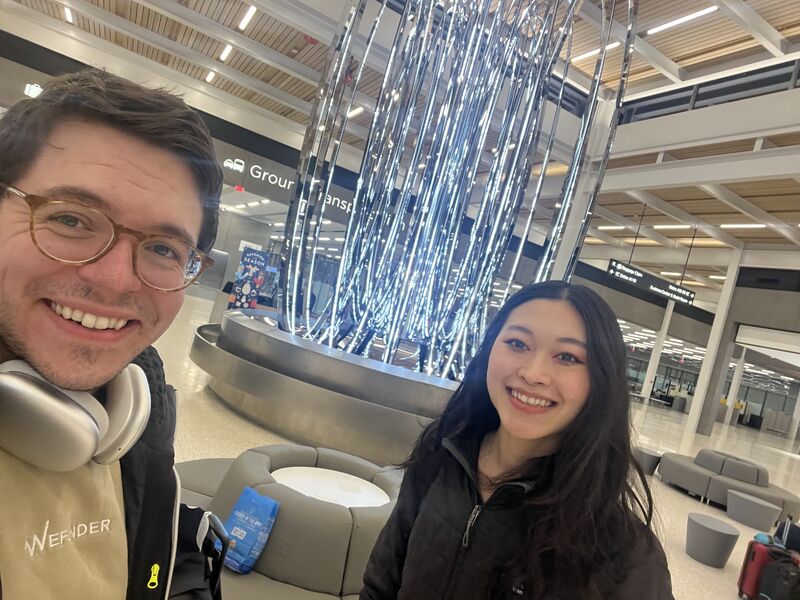
Evan Ehrenberg [left] and Lily Vittayarukskul [right] together (Image Source: Evan Ehrenberg)

Lily believes Waterlily differentiates itself from competitors by providing a more personalized experience through deep predictive modeling integrated into a user-friendly platform. Although it only launched in March 2024, the company’s monthly recurring revenue (MRR) has already grown to more than 22 times its initial level. Waterlily now serves eight major clients, including several Fortune 100 insurance carriers and Prudential.

Looking ahead, Waterlily aims to expand its services to include disability, critical illness, hospital indemnity, and Medicare planning, enabling families to make more informed health coverage decisions. Additionally, the company is exploring opportunities for international growth, with plans to enter markets in Asia, Canada, and the U.K.

John Kim, former president of New York Life and investor of Waterlily, sees the platform as the first AI-native guidance tool addressing one of the most pressing challenges of an aging American population.

Kim concluded, “Long-term care insurance is a growing and largely underserved need among trusted advisors today. Waterlily’s guidance tool stands alone in its ability to provide customized, personalized recommendations for long-term care needs. I believe it will be a game changer for the LTC insurance marketplace.”


Related Articles

250506_AHS-EMAIL-MKT-jpg

Blogs, Technologies

Zero-Click Content: The Secret to Boosting Your Brand Visibility

Not every SEO win needs a click. With zero-click content, you can build visibility, authority, and trust—right from the search results. Here are 3 ways to make it work for you:

Answer Questions Directly

Create concise, clear answers to common search queries to increase your chances of landing in featured snippets.

Answer Questions Directly

Use Structured Data

Implement schema, a special code to help search engines understand your content better.

Prioritize Value Over Clicks

It’s not always about Google and clicks. Utilize your social content that gives immediate value to build authority and encourage users to seek you out.

Why Asian Hustle Solutions?

Want your brand to show up, stand out, and stick—even without the click? At Asian Hustle Solutions, we create zero-click content that builds trust fast and keeps you top of mind. Let’s make your digital presence work smarter.

If you want to learn more about our services, visit the Asian Hustle Solutions website at asianhustlenetwork.com/services/

250428 (2)-jpg

Blogs, Ideas

Turn Clicks Into Customers: 3 Essential Tips With Asian Hustle Solutions

Creating a website is an easy task, but turning the visitors into loyal customers may take more than that. Here are three tips to help you bring in more customers.

Build Trust Fast

“Show, don’t tell.” People are not going to believe you just because you say big words. Actions matter. Include your portfolios, testimonials, or reviews. People buy from brands they trust.

Build your brand symbol.

Capture Leads Immediately

“Seize the moment.” When leads show any initial interest, don’t just sit still and do nothing. Offer them a freebie (discount or resource) in exchange for their email. Stay in touch and build a fun process to guide them towards a purchase.

Capture Leads Immediately

Make Buying Easy

Simplicity is key. Clear calls-to-action, smooth checkout processes, and multiple payment options make it easy for visitors to say “yes.” Don’t expect leads to commit if the purchase process lasts over three working days.

Why Asian Hustle Solutions?

Getting traffic is just the start—we help you turn visitors into loyal customers. With smart strategies, optimized designs, and proven tools, Asian Hustle Solutions empowers your business to grow faster and stronger online.

If you want to learn more about our services, visit the Asian Hustle Solutions website at asianhustlenetwork.com/services/

250423-jpg

Blogs, Development

Search Intent: The Overlooked SEO Metric That Beats Algorithm Updates

Before choosing SEO keywords, you’ve likely considered high-volume terms and difficulty metrics. But to weather never-ending algorithm updates, search intent might be your golden ticket. Here’s why:

Customer Intention

The most critical factor in keyword selection—it ensures your content aligns with what customers actually need (not just what they search).

customer_intention

Relevance

A keyword may be popular but irrelevant to your brand. Focus on phrases that mirror your customers’ pain points and your solution.

relevance

Existing Ranking

Overlapping words can lead to cannibalization. For every new content, use fresh keyword sets to re-optimize existing assets and further align with customer needs.

existing_ranking

Why AHN Solutions?

Matching keywords to customer search intent requires strategy. We craft bulletproof SEO plans to ensure your success.

If you want to learn more about our services, visit the Asian Hustle Solutions website at asianhustlenetwork.com/services/

Luxury Goods

News

The Price of Perception: What You’re Paying for in Luxury Goods

What makes a luxury product cost so much? The short answer is perceived value. But perception is a fragile thing: it shifts, it evolves, and when it does, things begin to get complicated.

Take a luxury handbag, for example. Whether it’s Gucci, Prada, Louis Vuitton, or Hérmes, many of us are willing to spend thousands for that one beautifully crafted accessory. Why? Because we associate these brands with European sophistication, centuries of artisanal craftsmanship, and impeccable quality. We buy more than a bag; we buy into a story.

Now, imagine buying a bag labeled Made in China. If it’s affordable, you might not care. But if it has a luxury price tag? You might pause. The label alone could influence how you value the item.

The kicker is: Remember the bag you treasure from your favorite luxury brand? Based on the claims of factory workers and viral TikTokers, many high-end luxury products are manufactured in China, then shipped to Europe, to be relabeled and sold as European-made.

This controversial debate has sent the internet into a tailspin, asking: Are we paying for craftsmanship or the illusion of origin?

This is where soft power comes into play. It shapes how we see the world. We look at Hollywood movies and see the U.S. as a place filled with great dreams. We see the beautiful K-pop stars and K-drama idols, and we want Korean beauty products to fulfill our desire to be pretty like them. Customers don’t crave an expensive handbag because it’s objectively better; they buy it because of what luxury products emotionally and symbolically mean to them.  

But in the wake of trade wars and rising consumer awareness, people are beginning to question the true value behind the price tag. Is it about where the product is made, or where we believe it’s made?

Whether this TikTok trend is a fleeting controversy or a wake-up call, one thing is certain: when perception changes, so do buying habits. And that could reshape the entire future of an industry.

https://www.tiktok.com/@sen.bags_/video/7494196205917097262?q=made%20in%20china&t=1745296877126