News, Stories

August 22, 2022

SHARE:

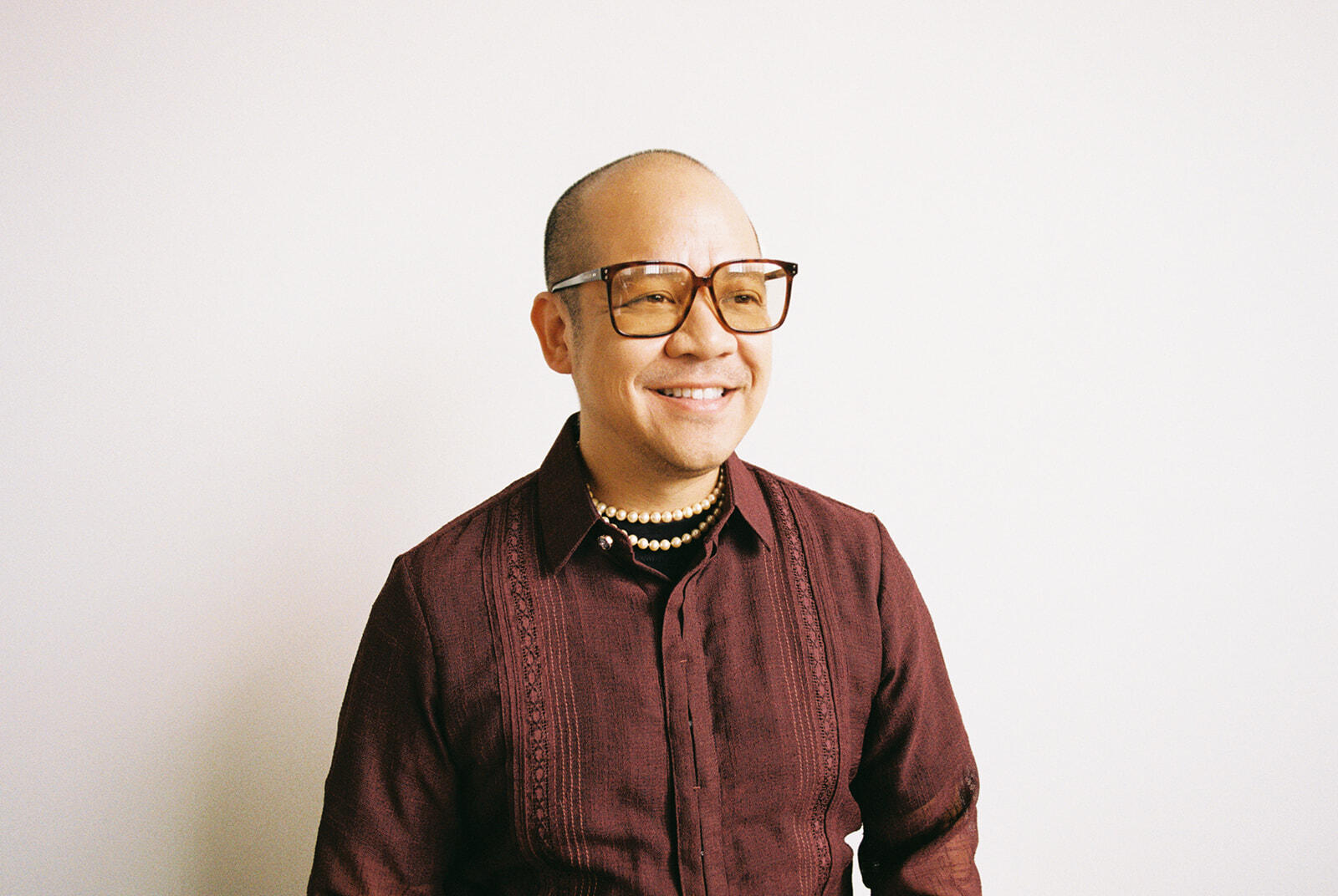
Jeremiah Abraham, the founder and CEO of Tremendous Communications, had bumps in the road in getting to where he is today. Starting his business right before the pandemic, he doubted the path that he created and considered quitting everything that he was doing. But with mentors along his side and his determination to uplift the AAPI community, his company has contributed to protecting and celebrating the Asian American and Pacific Islander communities when they needed it the most.

Working at renowned companies like Disney and Warner Bros., Jeremiah has spent years hustling at the intersection of technology and entertainment. Using his talent in marketing, he has constantly shed light on the AAPI community by promoting films such as Everything Everywhere All At Once and co-producing the Filipino American musical drama film Yellow Rose. He still finds ways to balance work and life by tearing down the systematically ingrained notion of working from 9 to 5.

In this one hour interview, Jeremiah lays out his story of how he entered this industry, experiencing ignorant approaches to different cultures in a white dominant workplace, and his immense passion for AAPI representation.

Blend of Tech and Entertainment

I got my degree in computer engineering from UC Irvine and that was when I needed to decide what I wanted to do in life. I wanted to make a difference in technology back then, so I got that degree. One of my first jobs was in the aerospace industry. I was working there and I realized that I was just really bad at math. I didn’t think I could realistically pursue this as a long-term career. It was one of those moments where you had to have this introspective, realization, or catharsis about what you thought you were going to be and what you want in life.

Then I found this blend of tech and entertainment, which I was always interested in. I ended up being a front-end developer for Disney, which was a nice blend of the programming skills that I learned from school and the entertainment brands that I’ve always admired. Social media was still fairly new at these companies. This was back in 2007, and I would say that the biggest leap from this tech world to this communications world was when I discovered a Master’s program for Digital Social Media and Online Communities at USC. So I worked at Disney full-time, and at night I tried to get my master’s degree. I knew in my head what I wanted to build for myself and that was this intersection.

An intersection of my interest in engineering and social dynamics is interesting because a lot of people didn’t know why I even majored in computer engineering and minored in sociology. Engineers build societies, but you can’t build it without understanding it first. I ended up pursuing this even more and realized that I had a knack for marketing which I ended up pursuing after receiving my degree at USC.

Uplifting the Filipino Community

After I got my master’s degree, I decided to pursue my thesis project as a full-on business venture, which was an online community and editorial group for Filipino Americans called BakitWhy.com. Uplifting the Filipino community has always been a constant in my life. Since high school, I was part of a Filipino club where we celebrated our culture and volunteered for Filipino community organizations. I knew that whatever I did, whether it was engineering or marketing, was in the service of our people.

So I started this website and it was one of the first, if not the first, Filipino American digital destinations for editorial and news content. We were covering events and a new emerging digital identity among the Filipino American community. I called this the golden age of Filipino YouTubers back in 2007. These were the days of HappySlip, NinjaDrops, ndtitanlady, and more. We were able to rally this community both on the digital side and also offline to develop not just a thriving company and brand, but a lifestyle destination that people could relate to. I wanted to create something wonderful for us.

One of the things that I pride Tremendous on is that we’re not just there to engage the AAPI community as a business, but we primarily want to instill genuine progress and impact. We are immersed in our Asian American community. We don’t clock out after a certain time and say “Sorry we’re done today Asians, it’s five o’clock and we’re not going to do anything anymore.” No, this is our life. This is what fulfills us and I think it helps set our campaigns apart. The way we communicate and interact with our clients also influences the strategy we give to them because we’re not just looking at numbers, we’re looking at people. We are all about uplifting authentic Asian American experiences, diasporas, stories and narratives. For us not to be authentic with that presence in our daily lives would be hypocritical.

One of the things that I pride Tremendous on is that we’re not just there to engage the AAPI community as a business, but we primarily want to instill genuine progress and impact

– Jeremiah Abraham

Marketing in a White Dominant Setting

There was one instance where I was the only person of color in the room at a large entertainment company, still very green and inexperienced. I didn’t feel like I had the authority and the voice to chime in and redirect these senior leaders of this space. And they’re sitting around going like, “Hey, it’s February next month. It’s almost Black History Month. What can we do?” And then someone just started listing off all the movies in their catalog that had some resemblance of Black narrative. And I’m just like, “All right, well, that’s very top-level. But what more can we do? Can we bring in more people who actually represent this community in the room and have a conversation about it?” That situation really helped me realize that we needed to be part of that room of decision-makers. Being there that day sparked a drive in me that I’ll never forget.

One of the things that I had issues with while leading the publicity and marketing for Yellow Rose before we got acquired by Sony Pictures, was that people didn’t understand what Filipinos were, that our stories were relatable to all moviegoers, and that we were equally as valuable in Hollywood. People couldn’t wrap their brains around this and asked “Why is a Filipino family living in Texas? Do they really sing country music like that? Will non-Filipinos even relate to this?” They were seeing the Filipino diaspora within one specific lens instead of embracing the spectrum of the Filipino experience. They didn’t realize that there are mechanisms that historically pushed us to these areas that we’re thriving in, to these places where they may not think that there is a large thriving Filipino community. The lead characters are Filipino American, but the story is universal. If you took the lead characters out and made them Latinx or Black, for example, you would still have the same emotion. You’d still have the same humanity. You’d still have the same story. It just so happened that these people are Filipino. This is one of the things that Jo Koy discusses during his  interviews for Easter Sunday. The movie isn’t about Filipinos, it’s a movie about his family and his mom. That’s one of the biggest things I appreciated about this film. It’s a story for everyone.

The first movie that I ever saw when I moved to the United States was Superman 2 with my dad and that’s always ingrained in my head. I was in such awe of this superhero and I’ve always wondered how impactful it would have been if Superman was Filipino. That would have made such a big difference for me growing up. I love Christopher Reeve as Superman, but imagine if it was a Christopher Santos or a Christopher Dela Cruz in that heroic cape instead! Today I’m so happy that our next generation can enjoy seeing themselves as heroes with films like Shang-Chi and people like Iman Vellani as Kamala Kahn making a difference.

I think it’s incredibly important for us to make these decisions on how we are portrayed and valued for ourselves, with representation across every part of the process –  behind the camera, in front of the camera, in business and below the line. We can bring these little nuances of authenticity to these stories that are so important and help shape the next generation of folks who want to do this work. 

They were seeing the Filipino diaspora within one specific lens instead of embracing the spectrum of the Filipino experience. They didn’t realize that there are mechanisms that historically pushed us to these areas that we’re thriving in, to these places where they may not think that there is a large thriving Filipino community.

– Jeremiah Abraham

A Chronicle of Starting a Business Right Before a Pandemic

Starting a business at the cusp of a global pandemic was a big lesson in resilience. There is a lot of strategy, planning, introspection and decisions that need to be made behind the scenes. I had been planning Tremendous for years. I spent so much time creating the structure of it, the business strategy, forecasting our trajectory and all those things that you need to help lay the foundation of a business… then the pandemic hit and I needed to shift very quickly.

Tremendous incorporated in 2019 and started to plant the seeds of studio partnerships. When we were ready to sign a couple of contracts, all the major movie studios suddenly shut down. I had to take a step back and I realized the mission of Tremendous is not rooted in movies and entertainment, but it exists to uplift the visibility of Asian Americans as a whole. We couldn’t work in entertainment at the time but that didn’t stop us from working within the community. That’s when we helped support Racism is a Virus, and co-founded Unapologetically Asian and CollaborAzian. We used our expertise to help uplift Stop AAPI Hate. We were able to leverage our network and our skills and our desire to make change in this very crucial moment of the Asian American community.

There certainly were many surprises along the way. I pitched this movie that was supposed to come out on January 2021. We were ready! We put this beautiful deck together, we brainstormed, we strategized. And then they told me, “Hey, we’re going to make an announcement today that this movie is going to be pushed to January 2022.” I was like, “What am I going to do for a year?” It’s a lot of those things that I learned as an entrepreneur that it doesn’t necessarily go how you forecast, even though you spend so much time strategizing and pulling numbers. And that’s fine because that will push you to be more dynamic as a business and help you imagine new, creative avenues for yourself. But for me, it was a lesson in resilience, being flexible, and not beating yourself up too much for things that are outside of your control.

I had to take a step back and I realized the mission of Tremendous is not rooted in movies and entertainment, but it exists to uplift the visibility of Asian Americans as a whole.

– Jeremiah Abraham

Confinements that Pull us Back

There were many moments where that lingering voice of doubt made me wonder if this was the right path for me. Should I go back to a safe, stable job with benefits and a retirement plan? What if I end up losing all my money in this venture? Is it okay that I decided not to work today?

Even now, I can make my own schedule. I can wake up at noon if I wanted to and keep working until 2:00 am or just take a random afternoon off. And that’s my choice to make. But because I’ve been so conditioned to think that the limits of my brain power need to be confined between nine to five, having this new freedom came with a sense of guilt.

I have such a hard time realizing that you don’t need to operate within those confines to be productive and successful and fulfilled. I just have to keep reminding myself that it’s okay to permit yourself to watch Netflix for an hour at 2:00 pm for you to refocus and recenter. It’s okay that you’re sleeping in until 11:00 am or 12:00 pm today because you worked until 1:00 am last night. I have to keep reminding myself that nobody is telling you what you need to do except for yourself. That’s the life of an entrepreneur and I’m still learning how to adjust to this new level of control, even today.

Shining Leadership Skills for Better Productivity

Throughout the years, I have applied my learning lessons in leadership – especially with how I lead my team and how I conduct business. Sometimes we have many projects to work on at the same time, sometimes we have less. I’ve always told my team, as long as you get your stuff done and you are communicative and responsive, then I’m good with that.

I really encourage them to explore their interests, experience life and bring those experiences back to the company. This helps bring fresh, new ideas during our brainstorms and campaigns. One of the things that I took away from working as a Marketing Director at Condé Nast is that they encouraged you to go travel. Travel changes you, it opens up your mind. It allows you to experience new things so you can bring that experience back into your editorial piece or your marketing strategy.

I’ve never liked the idea that you need to clock in at 9:00 am every day or else you’re considered a bad employee. Just because I’m sitting there physically doesn’t mean I’m mentally there. I’ve never understood that kind of leadership where it’s more important to appease other people and make them feel better about themselves because of your presence. It’s those antiquated expectations and older ways of doing business that I’m constantly reshaping for Tremendous. As long as we get our projects done, we don’t miss meetings, and our clients are happy… who cares if you sleep in an extra hour that day?

Travel changes you, it opens up your mind. It allows you to experience new things so you can bring that experience back into your editorial piece or your marketing strategy.

– Jeremiah Abraham

People that helped along the way

I never had one specific mentor during my career. Instead, I’ve had some amazing senior executives who have taught me different aspects of my leadership skills. One of them taught me negotiation skills, another taught me how to properly communicate my ideas in a meeting, another pushed me to be more assertive with what I need to succeed in a business setting. I’ve really taken these lessons and made them my own.

One of these executives is Terra Potts, who is the Executive Vice President of Worldwide Marketing at Warner Bros. Pictures. We kind of grew up at WB together back in the day. She taught me how to stand up for your worth in situations where people may not immediately see it. I take that into every negotiation that I am part of. Teal Newland, my Senior Vice President at Condé Nast Entertainment helped me hone my creative eye and incorporate different perspectives in my marketing campaigns. Diane Paragas, who is the director of Yellow Rose, mentored me in the filmmaking process. These are just some of the people who empowered me in my journey and I’m happy to give back to others who are working with me today.

Another friend of mine is Jose Antonio Vargas, who is the Founder of Define American. We had many check-ins during the pandemic and I told him straight up once that I was thinking about quitting because I didn’t know if I was doing the right thing. No studios hired me, no movies went out, the movies that were supposed to be in theaters were going out into streaming services. And it was hard for me to see what was coming down the line and the larger picture of it all. He gave me some tough love and said “Jeremiah, you’re building something that doesn’t currently exist. Obviously you’re going to run into these situations where the solution isn’t immediately there because you have to make it up for yourself.” I never thought about it that way. If the path has not always been taken, obviously you have the flexibility and the responsibility to forge a new one to create something that never existed before. That conversation inspired me to realize that I can’t hold myself to the same standard that I had before because I’m creating new standards for myself now. That helped shift my thinking and my perspective about it and, honestly, helped shape the development of Tremendous. I could have easily quit because of the pandemic, but I would have regretted it the rest of my life.

I would encourage people to pursue multiple avenues of mentorship. It was very valuable to me to learn from many very skilled individuals, not just one. And you never know where your new life lesson is going to come from or which experience you’re going to value for years to come. For me, it was the guidance of many people that helped me get to where I am today.

I can’t hold myself to the same standard that I had before because I’m creating new standards for myself now.

– Jeremiah Abraham

How to reach out

I am @jerabraham on Instagram and Twitter, and Tremendous is @tremendous_comm on all those platforms as well.

Interviewed by Tiff Soga
Related Articles

aura team (screenshot)-png

Stories

How These Immigrant Brothers Created a Revolutionary Mental Wellness Platform

At the helm of Aura, one of the world’s largest mental wellness content platforms, is Steve Lee, the co-founder and CEO with an inspiring story to tell.

Steve’s journey began as an immigrant in the United States, facing the challenges of language and cultural barriers. However, it was his parents’ bitter divorce, entangled in unfamiliar Korean laws, that deeply impacted his life. Witnessing his mother’s mental health struggles, Steve recognized the need for support and the stigma surrounding mental wellness, particularly within the Asian community.

Initially on a pre-med track at UC Berkeley, Steve’s true passion emerged through his involvement in founding non-profit organizations and self-reflection. Together with his brother Daniel, who shared the same vision, Steve embraced entrepreneurship as a means to create a societal-level impact. Thus, Aura was born.

With a grand vision to help a billion people find peace, Aura set out to democratize access to the knowledge and expertise of coaches and therapists. They created a platform that enabled coaches worldwide to record their voices and generate high-quality audio content from the comfort of their homes.

Aura is a revolutionary two-sided platform, comparable to Spotify and Netflix, that empowers coaches and therapists worldwide to create engaging mental wellness content. In contrast to earlier wellness apps functioning as content studios featuring only a limited number of coaches, Aura stands out by offering an extensive range of content and creators.

The platform goes beyond mere curation, with coaches hosting live streams and providing personalized 1-1 coaching sessions, making Aura the ultimate all-in-one destination for individuals seeking mental wellness support.

Aura proudly boasts the world’s largest mental wellness library, encompassing a wide array of topics including sleep, life coaching, cognitive-behavioral therapy (CBT), spirituality, breathwork, and much more. Additionally, Aura has fostered a thriving community where users can engage in live events hosted by coaches and benefit from one-on-one coaching sessions.

The platform’s commitment to offering comprehensive content, live engagement, and personalized support has revolutionized the way individuals access and experience mental wellness, firmly establishing Aura as a game-changer in the industry.

Aura has achieved unprecedented success and garnered recognition from reputable sources. In 2017, Aura was prominently featured in TechCrunch’s launch feature, drawing attention to its innovative approach. The following year, the platform received the prestigious honor of being listed in Apple’s “Best of Apps,” solidifying its reputation as a top player in the mental wellness space. To fuel further expansion, Steve secured significant venture capital funding from esteemed investors such as Cowboy Ventures and SkyDeck.

The impact of Aura’s efforts can be seen in the numbers and testimonials. Users flock to the platform, spending hundreds of millions of minutes engaging in meditation and self-care activities each year. This remarkable level of engagement demonstrates the profound influence Aura has on individuals’ well-being.

Steve extends a generous invitation to those who prioritize mental health to avail themselves of a special offer. By using the code “TOGETHERAHN” at aurahealth.io/redeem, individuals can gain free access to Aura for one year. While there is a limit to the number of available codes due to security measures, Steve encourages interested parties to reach out to him should the code become unavailable. More information about Aura can be found at aurahealth.io.

CONNECT WITH AURA

Website: aurahealth.io

Instagram: @aurahealthhq

Jed Rodriguez

Stories

How a Veteran’s Military Experience Led To Raising Healthcare Awareness Through Lifestyle Brand

Jed is a first-generation Filipino-American who was born in Los Angeles, California and later on moved to San Diego when he was a teenager. He has spent 11 years in the military, serving as a Navy Corpsman for the Marines and later became a specialized X-ray tech. He was deployed to different countries like Afghanistan, Qatar, Japan, Philippines, Vietnam, Guam, Palau, and Solomon Islands. It was this during this time that he witnessed the need for better medical care in the world.

He always had an entrepreneurial mindset that started off early in high school, when he created a local clothing brand. This transitioned to his adult life where he continued to make fashionable lifestyle wear mixed with fitness culture.  Although he had a passion for creating merchandise for others to wear, he wanted to create something that would have a deeper meaning and have the ability to help more people. He realized that he could combine his entrepreneurial mindset with his TikTok audience and quickly discovered that he could reach more people.

He started to use his newfound influence to raise awareness about issues that he is passionate about, and that’s when he realized he could do more. 

This sparked an inspiration for him to rebrand his long-time lifestyle clothing line into RADDEPT. With every sale, his company donates 10% to a charity that provides radiological services in underserved communities around the world. His goal is to make fashionable clothing for healthcare workers while also making a positive impact on the world.
Jed is proof that one person can make a significant impact on the world. His story reminds us that even the smallest actions can lead to something greater. We all have the power to create positive change in the world, and it’s never too late to start.

HOW THE MILITARY MOLDED ME AS THE PERSON I AM TODAY

The military helped me mature as a person. People always compare their “10-year transformation,” how they have changed physically, and honestly, mine was a complete mental 180. I grew up as a child of a single mother. We were pretty poor, and at times we were homeless, bouncing around to my mom’s friend’s houses. She worked in the real estate realm, and the companies she worked for were either shutting down or downsizing due to the economy. 

I started rebelling around high school so she kicked me out to live with my uncle in San Diego. He was a prior Corpsman in the Navy and became a solid role model. Eventually, after high school, I worked as a Certified Nursing Assistant for 3 years while attempting to complete the prerequisites for nursing school. I ended up joining the Navy so I could have nursing school paid for when I finally applied.

What was supposed to be a 4 year in and out Naval career, turned into an 11-year career that molded me into the person I am today. I excelled with being able to do the grunt work while developing excellent leadership traits. I used my background to help mentor the junior personnel and still continue that habit to this day. I remain in contact with peers, mentors, and mentees, and they all have a significant impact on my life.

THE BIGGEST BARRIERS IN HEALTHCARE

With my military experience, I have noticed that the biggest barrier to accessing quality healthcare for underserved communities is their access to ancillary services. During my last deployment to pacific countries, I recognized that the host nation’s patients had access to primary care visits and surgeries, but the patients had to pay out of pocket for ancillary services like medical imaging.

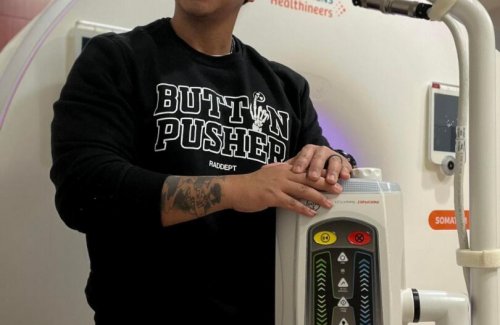
If you asked me about the significance of radiology before I ended up in this role, I would have laughed and said, ”They don’t do anything but push buttons.” But after completing school, I learned that Radiology has a significant impact on medical treatment – from early detection for diagnosis to being the eyes in the operating room or figuring out the next step for lifesaving intervention.

This deployment opened my eyes to the fact that many patients outside the United States are seriously prone to a lot of diseases that are uncommon in our country. Healthcare quality (although heavily scrutinized by the media) is actually pristine in America and we are lucky to have all these safety protocols in place.

With my military experience, I have noticed that the biggest barrier to accessing quality healthcare for underserved communities is their access to ancillary services.

jed rodriguez

RAISING AWARENESS FOR ANCILLARY SERVICES THROUGH RADDEPT

The first step I hope to achieve this year is to establish a community with my brand RADDEPT. The power of a community can achieve great accomplishments. My first milestone this year is to give 10% of each purchase to charity. I hope to collaborate with more people to be able to give more.

I plan to shine light on the effectiveness and importance of ancillary services. There is always a spotlight on becoming a doctor or a nurse. I plan on creating relatable merchandise for ALL healthcare workers. I’d like to be able to create products that I could donate to countries like the other ones I have previously traveled to and administered care to.

ONE DAY AT A TIME

My biggest advice for someone who wants to make a positive impact on the world but doesn’t know where to start is to take the first step and go for what they want.

One thing that always resonated with me was “Lay one brick a day and eventually, you would have built a well.” This is how I tackle the majority of my life goals. Small baby steps and take it one day at a time. If I keep focusing on the bigger picture, then it becomes overwhelming. Small daily/weekly goals and all those combined will help accomplish the bigger goals.

Also, surround yourself with like-minded individuals. Have mentors and mentees, everything you learn is important, but it is more important to spread the knowledge to the next person!

My biggest advice for someone who wants to make a positive impact on the world but doesn’t know where to start is to take the first step and go for what they want.

jed rodriguez

CONNECT WITH JED RODRIGUEZ

Social media is super important in today’s society. One thing I have learned from having my previous brand for years was the power of ad spending and email marketing. Now, I realized that TikTok could also act as a running ad, and I plan to maximize social media by influencer marketing and collaborating with other creators in the healthcare niche, in order to drive awareness and change.

Tiktok: jroddynotricch

ig: radxdept

www.raddept.com

ThePhysioRaver

Stories

Physical Therapist’s Making A Difference With A Mission To Keep Ravers Dancing For Until They’re 80 Or Beyond

Meet Joyce Ai, a woman with a passion for two seemingly different things – healing and raving. By day, she’s a physical therapist, helping patients recover from injuries and regain strength. But by night (and on weekends), she transforms into something of a superhero: ThePhysioRaver.

That’s right! Joyce is a hardcore raver, and she’s on a mission to help others in the raving community party safely, including DJs, shufflers, and ravers. With her extensive background in strength and conditioning, Joyce is uniquely qualified to help fellow ravers stay healthy, fit, and injury-free.

Her ultimate goal? To keep herself and other ravers stay in top shape so they can keep dancing until they’re 80, or beyond!

Read through as Joyce dives into her journey, explores her passion for both healing and dancing, and let’s learn how she’s using her skills to make a difference in the world as ThePhysioRaver. So turn up the volume, lace up your dancing shoes, and get ready to rave – Joyce-style!

THE STORY OF ‘THEPHYSIORAVER’

I was born and raised in Guangzhou, China, where I spent most of my childhood before my parents and I immigrated to Canada.

I got into physical therapy because I thought the human body was super interesting. I took a human anatomy dissection course in my first year of college. I was amazed by how all the tissues, fascias, tendons, and ligaments were connected.

I have also always enjoyed being active and staying fit, so physical therapy seemed like the natural pathway for me. As I continue to work in this field, I’ve also discovered that the more fulfilling part of this job is being able to help people and truly make a difference in their lives, which is super meaningful and rewarding. 

WORKING WITH THE RAVING COMMUNITY

What I love the most about working with the raving community is that we share a common culture and love for music. Music and live concerts are a big part of my life. Whenever I go to an event, I know everyone there comes to vibe out, enjoy the music, and take a break from their busy lives. Whenever I encounter a patient in the clinic who is also a raver, we always instantly hit it off and become best friends. Wouldn’t you want to be able to work with all of your best friends?

The most common injuries for ravers are back pain, knee pain, and foot pain. The most common injuries for shufflers are knee pain and ankle pain. The most common injuries for DJs are usually neck, shoulder, jaw, and back pain.

My treatment philosophy is that everything we do is goal oriented. There is a clear end goal in mind, and knowing these individuals’ goals helps me reverse engineer a solution to help them get there. In that way, my job is really cool because what it looks like for every patient is going to be different depending on their personality, their hobbies, their injury history, their demographics, and most importantly their goals and aspirations.

THE ROAD AHEAD FOR ‘THEPHYSIORAVER’

For now, this is a side hustle that I am doing that I eventually want to turn into a full-blown full-time business. I’m currently trying to produce consistent and high-quality educational content to bring more awareness to the importance of health and wellness in the raving community.

I have been connecting to some other accounts with a similar niche to potentially collaborate, and spread more awareness that way. I also plan on being more present in the local community, setting up booths at community events, and shuffle dance competitions to help broadcast my services.

FINDING HER CALLING

The most rewarding aspect of my work is making people feel heard. A lot of the time, the raving community tends to be an underserved community. 

People who get hurt in a mosh pit tend to cover up the real reason they got hurt and tell the doctor something else to save themselves from embarrassment. When asked about goals, people also tend to not list “being able to last through a whole festival” as one of their goals, because most of the time, they will be told off by their doctors or physical therapists to “just don’t go to these festivals”.

Moreover, since I am an avid shuffler myself and have gone through my fair share of shuffling-related aches and pains, I am uniquely equipped to help this community rehab and reach its goals, something that a traditional physical therapist with no shuffling experience is not quite prepared to do. This is why they are always very appreciative when talking to me because I actually listen to their stories, relate to their pain points, and genuinely want to help them get better so they can go raving and dancing all night long. 

The biggest lesson that I gleaned from this experience is to never stop trying and to always take consistent, uncertain action. I had a lot of doubts before launching this business. My inner critic kept telling me “but Joyce, you’re an academic, you’re not a businesswoman, and there is no way you’d be an entrepreneur.” Then, when I finally overcame that obstacle, my inner voice kept saying “you are creating a problem that does not exist. There is a reason why no one has done this yet because ravers, shufflers, and DJs do not need your services”.

It wasn’t until I got my first client that finally these voices were getting smaller. They still pop up from time to time, but I know that I am staying true to myself and my mission. This is corny, but you miss 100% of the shots you don’t take. If I never made the leap to put myself out there, I would have never had the opportunity to work with this population that I have been truly called to serve.

If I never made the leap to put myself out there, I would have never had the opportunity to work with this population that I have been truly called to serve.

-Joyce ai
cw4

Stories

Bay Area Dance School Teaches Students To Embrace Asian Roots, Showcases Culture To NBA Halftime

Christina is a dancer and the studio director of Lisa Performing Arts located in Bay Area. Through her dance performances, she tells stories about Chinese culture, including the ways people live, their mannerisms, and their unique clothing, all while passing down their unique stories from generation to generation.

Christina’s journey has been filled with success and opportunities for her dancers to showcase their Asian American dance styles. They have competed at international competitions, premiered on NBC TV, and performed at various high-caliber events. Most recently, they were given the privilege of performing a halftime show for the NBA Golden State Warriors.

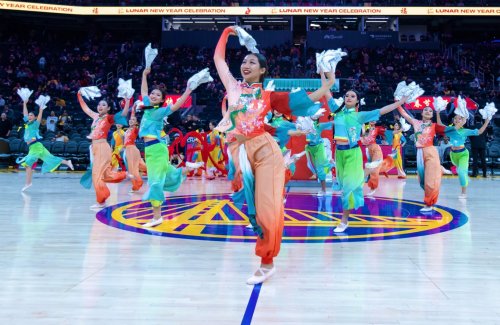
The troupe brought a unique and cultural experience to the game featuring the dynamic handkerchief dance, graceful and fluid movements of the ribbon dance, and intricate lantern dancing. The performance was the first of its kind, featuring “authentic Chinese dance” and a combination of fusion styles they have learned.

Read through as Christina delves deeper into the creative process of choreographing a new dance, her recent performance at the NBA Golden State Warriors halftime show, and the importance of celebrating one’s cultural identity.

BRIDGING THE GAP BETWEEN AMERICAN AND ASIAN CULTURES

Growing up as an Asian American, I experienced a lack of representation of Chinese culture in mainstream American platforms and faced the challenge of reconciling my traditional Chinese culture with the dominant American culture, which often excluded Asian Americans and perpetuated stereotypes.

I found solace in Chinese dance — a beautiful and intricate art form often overlooked in mainstream American platforms. My passion for bridging the gap between American and Asian cultures began when I started learning Chinese dance, which surprised me because not many people knew about it beyond the “lion dance.”

Chinese dance involves advanced technique, beautiful costumes, and a variety of unique dance styles, including Mongolian, Tibetan, Dai, Classical, and more. However, I noticed a lack of appreciation for Chinese dance at school rallies, outside performances, and dance competitions.

As I grew older, I realized that to bridge the gap between American and Asian cultures, I needed to find a way to blend the two in a way that was accessible and appealing to both. I was inspired by the success of Bollywood dance in America and dreamed of Chinese dance becoming just as popular. To achieve this, I realized it was necessary to incorporate elements of mainstream styles such as “contemporary” movements, technique, and storytelling, while adding our own Chinese dance elements such as costuming, music, and style.

I worked to create an “East meets West” fusion style of dance that combined both American and Chinese elements. I hoped to bring together teachers and dancers of both backgrounds to learn and appreciate each other’s styles and create unique fusion styles as Asian Americans.

Through my work in Chinese dance, I have seen a growing interest and appreciation for the art form from people of all ethnicities. I am proud to have helped spread awareness and understanding of Chinese culture and have given a voice to Asian Americans in the performing arts world.

Looking forward, I hope to continue to promote authentic representations of Chinese dance in mainstream media and to build a more diverse and inclusive society by encouraging greater cultural understanding and appreciation. My goal now is to form connections with Hollywood networks to ensure that authentic Chinese dance is portrayed in film and music videos and to prevent cultural appropriation.

I believe that the performing arts provide a universal language through which we can all communicate and that by embracing and celebrating our cultural identities, we can build a more harmonious and united world.

BEING ASIAN IS A STRENGTH, NOT A WEAKNESS

My interest in dance began at a young age. My mother was a professional dancer in China who opened her own dance studio in the US. I was exposed to a variety of dance styles, which allowed me to form strong friendships with people of all ages and backgrounds. Through dance, I not only learned about movement and performance, but also about teamwork, leadership, and resilience.

As I grew older, I became passionate about promoting and showcasing Chinese culture through dance. Chinese dance is a unique and vibrant art form with a rich history and tradition. It has a diverse array of costumes, props, and ethnic styles, as well as stunning technical skills, it was a hidden gem waiting to be shared on a larger platform. I felt that it was important to share this cultural identity with others and to show that being Asian is a strength, not a weakness.

Today, I am proud to say that our studio is well-known and respected in the Bay Area. Through our performances and outreach, we have been able to promote Chinese culture and inspire others to celebrate their own cultural identity.

I felt that it was important to share this cultural identity with others and to show that being Asian is a strength, not a weakness.

-Christina Wang

THE CREATIVE PROCESS

When choreographing a new dance, my creative process starts with considering the group of dancers I’ll be working with for the season. I think about each dancer’s individual strengths and how to create unity among the group. This includes deciding on a dance style that fits the group and identifying which dancers will perform which roles.

I then search for songs that will sound intriguing to the audience and consider modernized versions of traditional Chinese music if possible. Next, I find costumes that are in-season and on-trend to bring a contemporary Chinese feel to the performance. I also draw inspiration from trending technical work and group lifts that can work well with the group, as well as any props we may be using. The movements and facials themselves tell the story, and I choose ethnic styles that reflect the particular cultural traditions we’re exploring.

When creating a production piece, I try to tell a story that is easily understood by the audience. To achieve this, I brainstorm ideas inspired by TV shows, movies, and Chinese folklore that can be given an added twist through the use of props. For example, for our piece “The Legend of Avatar: East meets West,” we used props to tell the story of using Earth’s four elements.

Production pieces are more complex to choreograph, as I need to think about how different sections will mesh, color coordination for costumes, smooth transitions between segments, and how to coordinate rehearsals for a large group of people. I also need to consider which parts of the performance to cut or keep, depending on whether we’re performing for a competition or for a show. It’s a true team effort, with many people involved behind the scenes, including visionaries, teachers, prop makers, parents, costume designers, music editors, and dancers who make the vision come to life.

A PRICELESS MEMORY

The dance troupe’s recent halftime show performance for the NBA Golden State Warriors was a truly special and memorable experience. As the first Chinese dance studio to put on a full dance production at the Chase Center, it was an incredible honor to be able to showcase Chinese culture on such a large platform. While martial arts and lion dance have been featured in the past, Chinese dance had never been given the same opportunity until now.

This milestone not only allowed us to introduce Chinese dance to a wider audience who may not have seen it before, but it also provided a priceless memory for our dancers.

BREAKING DOWN CULTURAL BARRIERS

In addition to positive feedback on our technique and performances, we’ve also received comments on how our troupe’s performances have helped to promote cultural awareness and diversity. 

People have expressed appreciation for the opportunity to learn about Chinese culture through our dances, and many have shared how our performances have inspired them to explore and appreciate their own cultural heritage. We’ve also received word that our performances have helped to break down cultural barriers and build bridges between different communities. It’s all very encouraging and it keeps us motivated to continue doing what we do.

EMBRACING YOUR CULTURAL IDENTITY

For young Asian Americans who may be struggling with their cultural identity, my advice is to embrace your uniqueness and find your community. Don’t be ashamed or embarrassed about your heritage, as it is a valuable part of who you are.

Surround yourself with like-minded individuals who share your values and can help you grow. You can seek out cultural groups or organizations in your area, attend cultural events, or connect with others through social media.

Additionally, try to think outside the box and find creative ways to integrate your cultural identity with what people are already comfortable with, while highlighting the unique aspects of your heritage. 

Finally, don’t be afraid to take risks and pursue your passions, even if they may not fit the mold of traditional expectations. By embracing your cultural identity and celebrating your heritage, you can become stronger and more confident and inspire others to be the same.

Don’t be ashamed or embarrassed about your heritage, as it is a valuable part of who you are.

-Christina wang

VISION FOR THE FUTURE

Looking ahead, my vision for the future of my dance troupe and work in promoting Asian culture is to continue expanding our reach and impact. One of my top goals is to provide more opportunities for our dancers to perform at high-caliber events such as the White House, the Olympics, and major award shows like the Oscars and Grammys.

Beyond these major platforms, I hope to see Chinese dance become a more integrated part of the arts and cultural scene, potentially even becoming part of school curriculums to expose young people to this beautiful art form at a young age.


In the long term, I would love to take our work to the next level by establishing a Chinese American dance studio with a dance-specific talent agency sector, through which casting directors would be able to select dancers who can perform authentic Chinese dance for film, media, and commercials. This would create more opportunities for dancers to showcase their skills and help to further promote and introduce Chinese culture to a bigger audience.