News

August 21, 2023

SHARE:

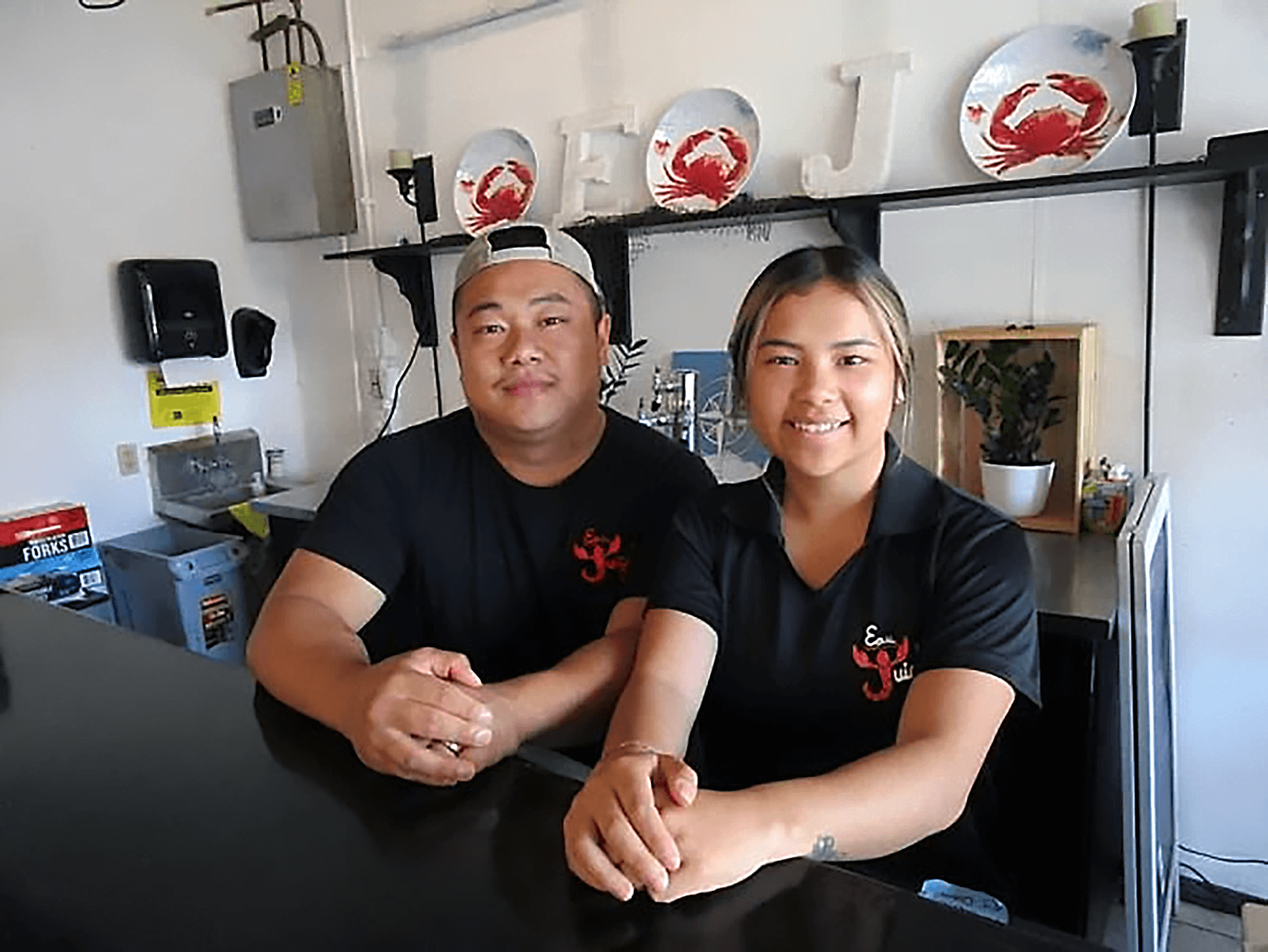
Bringing a delightful blend of Asian-inspired Cajun seafood to the city, Eau Juicy-La Crosse has been making waves since its opening on July 14. The minds behind this exciting venture are Xavier Yang and his fiancee, Yer Thao, who express their satisfaction with the positive response received from the community.

Through this venture, Yang and Thao have gained valuable insights into the preferences of local residents. Yang shares his observations with La Crosse Tribune, stating, “We’ve noticed that here, a lot of people like snow crab.” Located at 412 Main St. in downtown La Crosse, the restaurant has become a focal point after the closure of Soula’s Cuisina at the end of June.

Building on their prior experience, Yang and Thao operated their first Eau Juicy restaurant in Eau Claire from July 2021 to September 2022. Their success has paved the way for the next chapter, as they plan to open another Eau Juicy establishment in nearby Altoona come spring, according to La Crosse Tribune.

Unveiling the favorites on their menu, patrons are drawn to the head-off shrimp and the sumptuous Dillybob Special platter. This elaborate feast includes 4 to 5 pounds of shrimp, mussels, crawfish, and snow crab, complemented by four servings of corn, potatoes, and a generous portion of sausages. This feast is designed to cater to the appetites of two to four individuals.

Aside from seafood, the menu boasts a diverse array of options, ranging from wings and french fries to egg rolls and a variety of sides such as corn, potatoes, sausages, sticky rice, and sweet rolls. The dining experience is further elevated by an array of sauces, allowing patrons to tailor their meals to their preferences. Additionally, the restaurant offers catering services to ensure their delectable offerings are a highlight of special occasions.

Looking ahead, Yang and Thao are eager to expand their beverage options. Pending the acquisition of a city liquor license, they plan to introduce beer, wine, and cocktails to complement their culinary offerings, enhancing the overall dining experience.

Featured Image Source: La Crosse Tribune

Related Articles

Image Source: Business Insider / Linkedin

Stories

These Two South Asian Millenials Are Breaking Cultural Barriers To Empower Women’s Financial Freedom and Literacy

“Our culture has countless strict gender roles, one of which is that men manage money and women don’t,” Aashka Piprottar, the founder of Boss Betis, told Wealthy Wolfe’s Parween Mander over email. “So while men get to discuss money openly and proudly, women, if they ever discuss it, do so in hushed, quick voices.”

Those gender roles convinced Aashka from a young age “that I was just destined to be ‘bad with money’ and I would just have to rely on my father — and then in the future, probably my husband — to manage the money for me,” she adds. 

Boss Betis is a community-based platform to destigmatize the conversation around money, specifically the unique challenges faced by desi women. The platform wants to instill that financial freedom and literacy are essential to women’s empowerment. 

While Wealthy Wolfe is a digital financial coaching & education platform for women of color from immigrant upbringings specifically.

Aashka also told Parween that she’s unlearned the harmful money narratives of her childhood through working in the wealth management and financial wellness space.

By 27, Parween had a $150,000 net worth, so she could support herself and her parents without feeling burdened. She advised that we must put on our financial oxygen masks first, as well as to start a  “Parent fund” account to save money for our families in case they need it, “This is a way to set a financial boundary so that you don’t feel resentful or sabotaged if they require funds from you.” Parween wrote on Business Insider.

Understanding the complexity of the South Asian culture, Parween has helped one of her clients to set up strategic savings accounts to separate her money, while still contributing funds when her client’s parents asked for it.

Parween affirms that cultural expectations and narratives play a huge role in their ability as South Asian women to make different decisions, especially when it comes to their money and building wealth. 

Image Source: Omakase Restaurant Group

Stories

Omakase Restaurant Group: How These Two Immigrants Went From Dishwasher And Busboy To Co-Founders

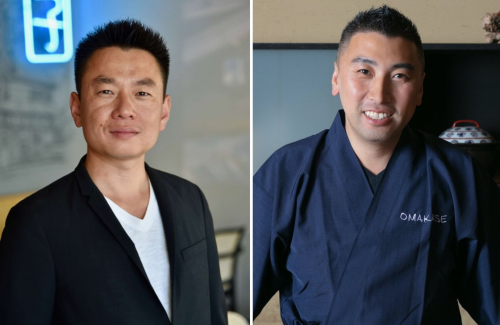
Kash Feng, co-founder and CEO of Omakase Restaurant Group, moved to the Bay Area at age 18. He was the only child of factory workers, so when he moved to the U.S. in 1999 with his buddies, he borrowed $20,000 from relatives and friends, promising to return them.

Feng started working as a dishwasher at a Chinese restaurant in the East Bay, and was quickly promoted to busboy. He progressed through various industrial occupations, frequently juggling three jobs at once, while also taking English classes.

In 2007, he met Jackson Yu, who eventually became his business partner and executive chef of Omakase sushi restaurant. Like Feng, Yu also had modest beginnings. At 16, he and his parents left China and moved to the Bay Area. 

Yu was a Japanese buffet busboy and gas boy on his days off. He was once asked to help out when the sushi chef cut his fingers one day. Yu then became so skilled that he could manually shape 2,000 identically sized sushi rice balls per day. Other sushi establishments took notice of this, including the well-known Ebisu in the Sunset, where he worked for five years to master sushi making.

They were both 26 when they decided to start their own restaurant business, Live Sushi, pooling all their savings and borrowing from relatives. Their restaurant was a hit from the beginning. Eventually, they were able to pay off all their loans, and the rest is history.

Now, Omakase Restaurant Group is an ever-growing empire, with different establishments all over San Francisco.

Image Source: Shark Tank

Stories

Software Engineer Turned Crocheting Hobby Into A Six-figure Business Takes $450k Deal on ‘Shark Tank’

Justine Tiu, a former Google Classroom software engineer, started crocheting to unwind after work. After realizing its appeal, she and her ex-Wall Street director husband, Adrian Zhang, launched The Woobles, a crochet kit company.

On Friday’s “Shark Tank,” the two explained the hobby’s vast appeal. The firm made $3.1 million last year and $5.3 million since launching two years ago.

All five Sharks quickly decided they wanted a piece of the company, and they showed they were willing to betray their business partners to get it.

The Woobles is a crafting kit company that offers patterns, step-by-step video tutorials, and all the materials needed to do amigurumi crochet, a Japanese fiber art form, even if you are a complete beginner. Once your kit arrives with all the materials, a login code gives you step-by-step written and video instructions to make your craft and helpful hints when you get stuck.

Tiu and Zhang ultimately received a $450,000 investment offer from sharks Mark Cuban and Lori Greiner. In exchange, the company, which at the time of filming was on pace to generate $7 million in yearly sales, gave Cuban and Grenier a split of 6% equity.

Image Source: FOX5 New York

News

Manhattan’s Chinatown Receives $20M Funding For 11 Post-pandemic Revitalization Projects

Manhattan’s Chinatown is one of the neighborhoods that has been impacted the most severely by the pandemic.

New York Governor Kathy Hochul unveiled eleven transformational projects that would be part of the initiative to help the Chinatown community reopen corridors, restaurants, businesses, and cultural institutions. 

The projects include:

  • Renovating Kimlau Square
  • Beautifying the Park Row connection to Chinatown
  • Upgrading a section of Sara D. Roosevelt Park
  • Installing murals and light projection art throughout Chinatown
  • Expanding light-up Chinatown street lanterns
  • Opening a community health & wellness center
  • Reopening the childcare and family support center at Smith Houses
  • Creating a Building Upgrades Fund
  • Creating a Chinatown welcome arch/gateway
  • Establishing Asian Culinary Arts of New York
  • Establishing the Chinatown Cultural Welcome Center

“These critical investments will transform the neighborhood and create a more vibrant and inviting destination for locals and visitors alike while enriching the neighborhood by improving foot traffic, economic and cultural activity.” Governor Hochul said in a statement.