Asians Are Strong’s Annual Event Shines Light On Protecting And Empowering Asian Women This March
News
March 7, 2023
SHARE:
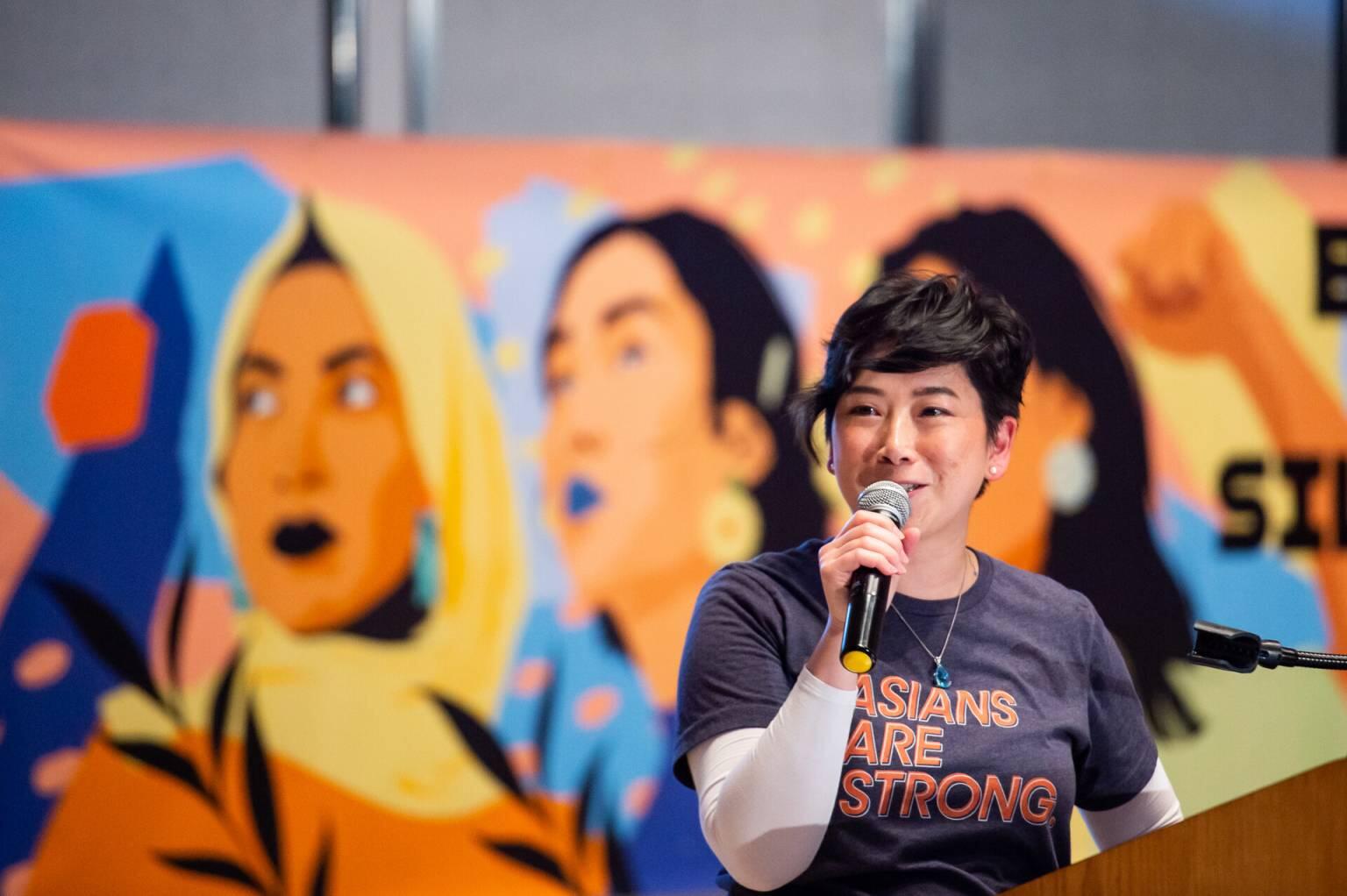
This historic event on March 12th, Sunday, at the iconic Ferry Building in San Francisco, seeks to spotlight the unique experiences and challenges of Asian women both in the past and present.
Asians Are Strong’s founder, Hudson Liao, shared that last year’s event was inspired by the national day of remembrance for the 6 Asian women victims who were murdered during the Atlanta Spa Shootings in 2020.
Shinhong Byun (center), president of the Korean American Bar Association of Northern California, is comforted by friends and family after an emotional address during the ‘Break the Silence’ event at the Asian Art Museum on March 16, 2022. (Beth LaBerge/KQED)
‘Our Time’ is the only event of its kind that solely focuses on Asian Women. Attendees can expect to see 20+ resource groups for Asian women, an interactive, global art project, a live podcast taping of the renowned May Lee show, a stand-up comedy set by rising star Jiaoying Summers, speeches from Asian women leaders like Helen Zia and Gia Vang (co-founder of The Very Asian Foundation), and panel discussions with Asian women business leaders like Victoria Fu (CEO of a skincare brand, Chemist Confessions).
Left to right: May Lee, Jiaoying Summers, Gia Vang, Victoria Fu
In addition, there will be free self-defense workshop led by TUFF Love, poetry readings, resource tabling from community groups like the Asian Women Shelter and Narika, an art exhibit dedicated to historical Asian women figures.
Asians Are Strong’s mission is to empower and protect Asian and Pacific Islanders, which aligns with the event’s goals. It is crucial to highlight the experiences of Asian women in mainstream discourse to prevent their experiences from going unnoticed and forgotten, “Representation is the only way to break stereotypes.” said Liao.
Interested individuals can support the organization’s mission beyond attending the event by signing up to be a volunteer, and supporting their programs including free self-defense workshops for the elderly. The organization also accepts donations.
Liao also urges people to be engaged and active with organizations like Asians Are Strong and other groups that they will be showcasing at the event., “We would also love help to amplify this event so all Asian women and our allies can come to be a part of history.
For those unable to attend in person, they will have a live stream of the event so that anyone, anywhere in the world can participate in this historic celebration.
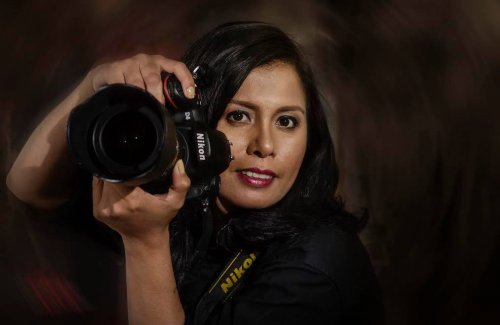
Her passion for art started at an early age, and she fell in love with photography when she got her first camera in elementary school. However, like many artists, she was told that there was no money in art and decided to pursue a different career path.
She went back to photography when she purchased her first digital camera in 2003. As a mother with a young baby, she started Cubrix Photography during the recession in 2008 and posted on Craigslist with her son as a sample portfolio.
Today, she specializes photographing in newborns, marriage proposals, weddings, and Bar Mitzvahs – “pretty much the milestones of their life” as she says. Madeline’s unique perspective on storytelling in photography and her empathy for others makes her work truly stand out.
In this interview, Madeline shares her most memorable moments as a photographer, how her Filipino heritage shapes her work and her personal and professional goals as an evolving artist.
PURSUING ART DESPITE ADVERSITIES
I was born & raised in Pangasinan, Philippines. Art has been a huge part of me growing up. My loving mother thought I had a great left hand when it came to art and sent me to art class at the early age of 7. Since then, I can see art everywhere through my eyes. I developed an interest in photography when I was in elementary years, my first camera was Kodak Ultralite (Film).
Throughout the years, I was told, there is no money on art. So, I have set aside my passion and pursued a different career path. By 2003, I purchased my first digital camera. Photographing became my hobby again, I would capture the beauty of nature, my favorite being sunsets.
I started Cubrix Photography when the recession began in January 2008. My first child was only 1-month-old back then when I started taking his photos with little to no props. With no incoming income from my previous web development firm, I have to rapidly think, my camera was my only valued asset I have left which makes money. I immediately started posting on Craigslist LA/SF/IE/OC – on a daily basis with my son as a sample portfolio. That’s how I first started to get my first batch of clients.
My children – Dylan and Kyla
By 2nd quarter of 2009, I drove to San Francisco once a month to sustain my daughter’s baby formula & diaper supply for Dylan & Kyla. There was a season, I had barely any bookings and I was forced to sell some of my photography equipment so we can go to Costco to buy our necessities. By the year 2009, I was nominated and rank the top 5 out of 32 portrait photographers in Los Angeles. LA City Voter. The awards continue 2011 (3/57), 2012 (1/61), 2013 (1/45) & 2014 (2/29)
Expertise picked Cubrix Photography as one of the top 23 out of 1,336 newborn photographers serving Los Angeles (2017 & 2018)
As of today, my business runs based on “referrals/word of mouth”, I average 10-14 sessions per week including newborns, baby milestones, family, headshots, marriage proposals & special events. I still travel to San Francisco yearly, expanded to Great Neck, NY for the past 3 years, and travel 2x a year. I amcurrently I’m on my 4th batch in the newborn + children Photography workshop in Manila Philippines this July 2023.
INCORPORATING STORYTELLING INTO PHOTOGRAPHY
I was once taught by my first mentor, Alex Hernandez from Lifetouch, “Paint with light”. You may have some astonishing pictures that are technically perfect; however, there are two more elements that make a strong image even much stronger. The images should evoke strong emotional feelings in the viewer’s psyche.
Calasiao, Pangasinan
CAPTURING MORE THAN JUST PICTURES: THE MOST MEANINGFUL MOMENTS AS A PHOTOGRAPHER
So many, I feel each session, event, or newborn workshop I photograph was all memorable for me. But there were few who really stood out the most.As a portrait photographer, I trained myself to be emotionless despite what was happening during the time of the documentary.
I had this newborn session many years ago, while I was doing my craft, out of the blue, the mom started crying. Her husband passed away recently. I had no words to say and kept doing my job. I keep telling her baby was so beautiful – her dad will be so proud of her someday.
Yearly, I teach newborn workshops in the Philippines. While I was telling my students the profits were donated to a charity that makes special shoes for claw feet babies. It was hard for me to finish my speech – I was so emotional as I taught them the importance of giving back whenever your life is very comfortable.
On a lighter note, for this one-year-old boy’s milestone, every time I sing, he gives me a bad look. When I stop singing, he will stop the grin. I don’t have a talent for singing at all!
The little boy giving me his bad look
At events – Photographing 25 Billionaires during a private meeting event – one of the guests was Bill Gates. I was so nervous I didn’t even say hi and shake his hands!
STAYING INSPIRED AND CONTINUING TO GROW AS A PHOTOGRAPHER
Surround Yourself with Success: Physically surround yourself with successful photographers. Go to photo conferences, and meet-ups, join a mastermind, and go to photography events and photo walks. If these don’t exist in your area, start them.
Booking signing with Anne Geddes, world-renowned baby photographer for 35 years. Belly Baby and Beyond: A Collaborative Conference
HOW MY FILIPINO HERITAGE SHAPES MY WORK AROUND THE WORLD
Filipinos have extremely strong cultural empathy. I would like to think that we would never have been able to succeed across such a varied portfolio of countries (across six continents) without embodying this very strong Filipino value.
PERSONAL AND PROFESSIONAL ROADMAP AS AN EVOLVING ARTIST
Personally, to stay healthy and be able to photograph my children’s newborns. To be able to get grants and build 20 libraries per year for our children’s charity – JollyBox Philippines.
Jollybox Philippines
Professionally, to be the first South/North East Asian Nikon USA Female Ambassador. To achieve a Master’s in WPPI (Wedding & Portrait Photographers International ), currently at the associate level. To continue to teach newborns workshops in the Philippines on a yearly basis.
ADVICE FOR ASPIRING PHOTOGRAPHERS
An artist will always be an artist, in spite of everything. Pursue it, no matter what. No Matter what, you are emphasizing that you are definitely going to do it, even if there are obstacles or difficulties.
CONNECT WITH MADELINE
Whether you’re a fellow photographer or simply an admirer of stunning visual imagery, connecting with Madeline through social media and exploring her photography portfolios is a great way to stay up-to-date on her latest creations and gain inspiration for your own creative pursuits.
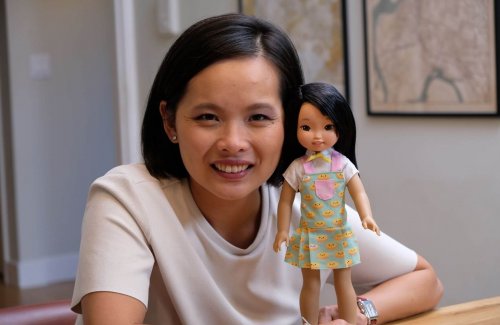
Meet Elenor Mak, the founder of Jilly Bing, a company that is changing the face of the dolls and toys industry. Her journey to creating Jilly Bing began with her desire to break down stereotypes and provide a positive reflection of Asian-American girls.
Elenor believes that toys play an essential role in helping children make sense of the world around them, and dolls are an essential tool in building self-esteem and self-acceptance. Her mission with Jilly Bing is to create a line of dolls and toys that accurately represent Asian-American children and help to nurture a deeper appreciation of Asian culture.
By involving children and families in the creation process of Jilly Bing, Elenor hopes to create a community that celebrates diversity and encourages a sense of belonging.
Read through as Elenor shared about her childhood as a first-generation Chinese-American, and her mission to create dolls that reflect the diversity of Asian American girls and promote cultural understanding.
FROM MACAO TO AMERICA
I am a first-generation Chinese-American. My Mom was born in Singapore, and my Dad was born in China. They met in Macao and immigrated to the US before I was born. Growing up, both of my parents worked as back-office postal clerks, which required grueling night shifts and strenuous manual work. Their limited English disqualified them from jobs that would have been easier, like a front-desk clerk.
Despite that, my Mom firmly believed in only speaking Chinese (Cantonese) at home and even sent me to Saturday classes for Mandarin. As an adult, I am so grateful for my Mom’s insistence that I am fluent in her native language because it helps me remain connected to my heritage.
MY MOTHER MADE SURE I HAD A VOICE
As a young child, I was rather shy. By contrast, my Mom is a strong, outgoing woman. But being a non-English-speaking immigrant, she lost her “voice.” She would make me challenge adults when she didn’t get the right change at a shop or something was wrong with an order she had placed. Perhaps because of this, I came out of my shell by the time I was in second grade.
Looking back, I believe my Mom was determined to make sure I knew I had a voice or say in matters, even as a kid, so that I would not be afraid to use my voice as an adult.
My daughter’s voice is Loud with a capital “L,” even at the age of 3, which is so at odds with the stereotypical representations of Asian girls and women as demure, pretty little things. I wanted to break down those stereotypes and create a doll that is similar to the Asian American girls we know and love
My mom was determined to make sure I knew I had a voice or say in matters, even as a kid, so that I would not be afraid to use my voice as an adult.
-Elenor Mak
A REFLECTION ON MY FIRST DOLL
I don’t recall my first impression of my first doll, named Ada, but she was a gift from my parents, and I was only 5 or 6 years old, so I’m pretty sure I was thrilled. She wore a baby bonnet, and I remember wanting to take care of her as any good Mommy would.
I also remember thinking that her blonde hair and blue eyes were so beautiful. Of course, I didn’t have those features, so on some level, I guess I wanted us to look more similar. My Mom tells a story that, one day, I took scissors to Ada’s hair because I wanted her hair to be like mine, which — like many Asian girls growing up in the 1980s — was a short bob. Long, blonde hair was something beautiful people had, something “other” people had. I do remember feeling like an “other” when I looked at Ada.
I took scissors to Ada’s hair because I wanted her hair to be like mine.
-Elenor Mak
THE IMPORTANCE FOR CHILDREN TO SEE THEMSELVES REFLECTED IN THEIR TOYS
Toys help children make sense of the world around them, and some of the first toys ever discovered are dolls that date back to 8,000 BC in Japan and 2,000 BC in Egypt. What is baffling to me is that the year is 2023, and missing from toy shelves in US stores are authentic-looking Asian dolls.
The ones that are available are cartoony-looking or dressed in very traditional clothing that does not reflect today’s Asian American children. Several dolls are brunettes with round eyes, an Asian-sounding name, and an upward swish of black eyeliner that supposedly creates Asian eyes.
While I was initially saddened by this, I’m now thrilled that I get to create a company that solves such a glaring error. We are so proud when parents see our first doll and say, “She looks like my daughter.”
HOW NOT HAVING A DOLL THAT LOOKS LIKE THEM AFFECT CHILDREN AS THEY DEVELOP SELF-ACCEPTANCE
When an Asian child walks into a national chain store and heads to the doll aisle, and sees lots and lots of dolls, but does not see a doll that looks like them, that is the moment that the first damage is done to their self-esteem and self-acceptance.
The moment they start to wonder, “Why not?” Or even worse, the moment they think, “Is there something wrong with me because I look Asian?”
DOLLS AS CULTURAL MIRRORS TO NURTURE DEEPER HERITAGE APPRECIATION
Role-playing with dolls, action figures, or even stuffed animals, help children sort through their emotions. When they pretend to be superheroes, they are trying to feel powerful. If you hear a child tell a stuffed animal to “wash your hands before dinner,” they are probably trying to make sense of their parent’s rules.
We want our dolls to help children understand their heritage. We are creating accessories that help recast their interpretation of Asian food, for example. It is not smelly and embarrassing, as I thought it was when I was in elementary school. Asian food is something that their doll loves to make and celebrate. If the doll herself plays with mini egg tarts or sushi rolls, the barrier to understanding is instantly lower.
As strange as it may seem, there is no one-stop-shop for parents who want to teach their kids about Asian cultures. It requires a lot of legwork to find resources, and parents are busy. In fact, 91%of Asian American parents we surveyed replied “yes” when asked, “Do you need help finding educational content to teach children about Asian culture and heritage?”
I want Jilly Bing to be the brand that makes it easy for parents to introduce and deeply explore every aspect of all Asian cultures.
INVOLVING CHILDREN AND FAMILIES IN THE CREATION PROCESS OF JILLY BING DOLL
When we were creating the prototype of the doll, we leaned on my children and our friends and family to see if our vision was resonating with them. To gather data, we surveyed adults through several social media networks that have huge followings. It was not a short survey, so I was amazed to see how many people gave us feedback; it was another moment when I knew we were striking a chord with many Asian adults who felt unseen as children.
Now we have the luxury of formalizing feedback with focus groups and people who want to support our mission of representation. We created an official Jilly Bing Ambassador Community for our strongest supporters, and we will turn to them for feedback on future dolls and new products.
It was not a short survey, so I was amazed to see how many people gave us feedback.
-Elenor Mak
WHAT MY DAUGHTER THOUGHT WHEN SHE FIRST SAW THE JILLY BING DOLL
Jillian was just shy about her third birthday when she saw the prototype of the doll. First, she did a big dramatic gasp, and then she said, “Me!” and hugged the doll so hard that its not-quite-fully-secured head popped off the body. At that moment, I knew we had a winner.
WHAT PARENTS ARE SAYING ABOUT JILLY BING
Much of the feedback is coming from adult women. Just like my daughter’s first reaction, they say they gasped out loud, and many say they proceeded to cry. I keep hearing, “This is the doll I always wanted when I was growing up.”
One woman captured how heartbreakingly wrong the status quo is: “Even in play, Asian girls have had to envision life as someone else … This vision is so much more than a toy, it is being seen!”
ADDRESSING THE NEED FOR INCLUSIVITY AND DIVERSITY IN THE TOY INDUSTRY
The toy industry needs a refresh, as do media companies that are creating content for children. It feels as though they are checking off boxes. They want to be able to say, “Look, we have an Asian doll. We have a Black doll.” Or “Here! We did a movie with Chinese immigrant parents and US-born kids.” But they are just doing the bare minimum.
I like to think Jilly Bing is the first company to take a holistic view of how representation can live and breathe within our children’s daily lives, instead of being compartmentalized inside a checkbox. My analogy is Paw Patrol. Those pups are everywhere, from socks to movies to enough toys to fill a football stadium.
If our vision becomes a reality, the fun, cheeky characters and accessories, books, and content that celebrate Asian American culture will be everywhere too.
What can consumers do to drive this change? I ask them to support us by purchasing a doll at www.jillybing.com and spreading the word. As the famous saying goes, “Be the change you want to see in the world.”
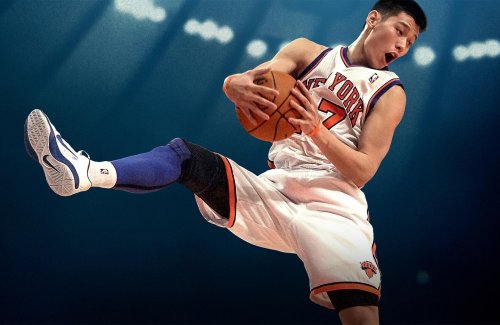
The Taiwanese-American basketball player Jeremy Lin features in the HBO documentary short 38 at the Garden, which has been nominated for an Oscar.
The documentary follows New York Knicks point guard Jeremy Lin’s remarkable 2012 season. Lin, an undrafted Harvard graduate, scored 38 points at Madison Square Garden against the Los Angeles Lakers, confirming his hot streak and the “Linsanity” craze.
38 at the Garden honors a turning point in Lin’s life and highlights a global phenomenon that went beyond basketball. The video contrasts the pride that the Linsanity era afforded Asian-Americans with the recent rise in anti-Asian sentiment.
38 At The Garden is a Mr. Fahrenheit and GTG Entertainment production. The film is directed by Frank Chi and produced by Travon Free and Samir Hernandez. Executive Producers, Patricia Sun, Brandon Chu, Kai Huang, Mike Lee, Dave Lu, and Paul Sri. For HBO, executive producer, Bentley Weiner.
Food is a way for us to connect and tell stories by engaging all of our senses. Nielsen Noodles is a series where we gather to share our own stories while discussing insights and current events over a bowl of instant noodles. We virtually shared a bowl of noodles with Michael Lai, CEO and Co-Founder of Famous Media Group and AsianFeed, along with Randall Yip, Founder and Executive Editor of AsAmNews; two trailblazers in AANHPI news and journalism.
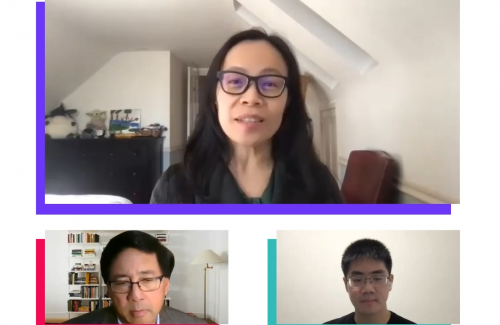
(Top) Randall Yip , (Bottom L-R) Patricia Paturangi, Michael Lai
Which noodle dish did you choose to bring to the conversation?
Randall brought a bowl of wonton noodle soup from his family’s favorite hole in the wall, sharing, “All of my favorite items thrown into one… I picked this because it reminds me of my mom … she loved to sit around the table and get the family together and just talk, that was her excuse to get the family together.”
Michael shares, “I brought my favorite brand of instant ramen, I usually add an egg and some bok choi… I always remember coming home from practice, my parents were a little too tired to cook so we all would eat instant noodles and share conversations about our days. Memories and nostalgia from childhood are what these noodles remind me of.”
Tell us about your news outlet, what is the story behind founding each of your outlets?
Randall recalled growing up in a time where the only Asian American role model on TV was Bruce Lee. While he and his friends idolized the kung fu star, he felt his community was missing critical daily representation in news.
“I wanted to share a different light, we tried to focus on Asian Americans who were role models breaking stereotypes. On the second front, we wanted to have a daily news site because Asian Americans were missing a news site where you could follow Asian American News on a daily basis. So from the very beginning, we’ve operated 365 days a year and we have not deviated from that, ” says Randall.
Michael comes from a different generation of representation. While striving for authentic storytelling connects both Michael and Randall, Michael aims to build a community of Gen Zers through short form, sociable content.
“We’re an Asian-centric digital media brand, founded just last year, and grown to more than 200,000 followers across social channels. Designed at conception as a media brand to celebrate the shared cultural experiences of the younger generations in America and around the world.
Growing up I was one of three Asian Americans in my entire school district, I often felt alienated from my Asian American identity. Outside of my parents, there weren’t really many opportunities for me to connect with others who shared my culture and ethnic background… My goal was to create a digital space that I feel I would have benefited from when I was younger, where stories that were important to me were the focus and where I could connect with others who shared similar cultural experiences.” says Michael.
Why is it so important that diverse media be well-represented in the industry?
Nielsen research has found that certain shows with diverse representation both in front and behind the scenes, attracted more of that audience group – we want more of what’s familiar. From a similar standpoint, it’s also important to have diverse-owned media equally represented in the media ecosystem.
“There are so many diverse community-centric stories to be told. The only way to make sure these stories are told in an authentic manner is for them to be told by members of the community in front of the camera, and behind the camera as well. It’s so important because there are so many cultural nuances and contextual clues that I think are important. Audiences these days can really tell when something is just superficial versus something that is truly authentic and a project designed to forward and advance the community,” notes Michael.
He continues to say, “Especially this younger generation growing up, I think there are so many independent content creators emerging, creating amazing content that resonates not only with their own individual community, but also with the broader community at large. I think that is super important, and a trend that will continue to really advance the representation.”
Why is it so important for advertisers to invest in Asian American-owned media?
When we think of advertisers, we often think of Fortune 500 companies and major brands but in a community, such as Asian Hustle Network, we have inspiring entrepreneurs building Asian American-owned businesses. This year Nielsen started a Diverse-owned Media Initiative to help raise visibility of diverse media suppliers so they have a fair and equitable chance to get in front of ad buyers.
Randall says, “I think the smart brands realize that they can’t continue doing what they have been doing. They need to expand their reach and customer base.”
Michael says, “[Advertisers] are really starting to realize that Asian Americans are an important audience too. I think we’re one of the most rapidly growing consumer demographics in terms of pace of growth and authentic messaging is important… For advertisers to want to connect with those audiences, I think it’s extremely important, specifically for Asian Americans, to diversify their marketing budgets to allocate some of that budget for those audiences.
Michael explains further “It’s not just Asian-Americans consuming this content, there are so many instances where K-POP, BTS, Blackpink, Squid-game, Korean dramas, as well as other Asian Entertainment groups. It’s just amazing how widespread it has become, it’s not just Asian-Americans, it’s really everybody is engaging as a whole in these stories that are inherently culturally Asian-based.
Final Slurp!
Michael and Randall have many things in common, especially their desire to champion equity in journalism, entertainment, and storytelling.
Randall urges up-and-comers: “Every brand comes with its own story, every entrepreneur has their own story to tell. Don’t be afraid to tell your story and don’t be afraid to pitch it to media outlets. You’re going to find that there will be a lot of interest…Be Inspiring!”
Media is where the unique stories and voices of our community can be found. As our community becomes even more diverse, providing opportunities for greater equity in media and enabling more diverse voices becomes even more critical. The people behind the stories who are from our community — from journalists to media owners — continue to stand together to open up more opportunities for future generations of storytellers. Thank you Michael and Randall for paving the way with your passion and commitment.