News

January 24, 2025

SHARE:

Japan has an old proverb: “The nail that sticks up gets hammered down.” 

While in China, there is a saying, “The higher the tree, the stronger the wind.”

In a critical lens, both idioms illustrate harmony and unity – a vital essence of Asian culture and heritage. Nevertheless, the proverbs also shed light on a contrasting school of thought: conformity and crab mentality. 

Crab mentality refers to the situation one can explore by placing a crab or a collective of crabs in a bucket. A lone crab can inevitably crawl out of the bucket, however, a peculiar scenario would arise if one situates a group of crabs in a bucket. As a crab tries to crawl out, the other crabs will pull it back down. If it tries again, the others will rip its claws off to ensure it can never do so again. Ultimately, no crabs can go anywhere besides the stew pot you are brewing. 

Crab in a bucket scenario (Image source: Microsoft Designer)

Crab in a bucket scenario (Image source: Microsoft Designer)

It is naivety to assume human beings are a unified collective group. History, wars, and jealous conflicts are testaments to human being’s selfishness. Hence, it is arguable that we are inclined to place ourselves above others, even if it means at the expense of our peers. Despite being a precarious thought, this insight opens new dimensions to understanding crab mentality in the human context. 

“Remember your cousin Timmy in China? He has 15 years of experience. He’s nine!” 

Steven He’s dad (played by Steven He) exclaimed.

Terms like “Asian-level difficulty,” “Tiger Moms,” and “Asian parents” have become widely recognized through memes, movies, and other mainstream media, serving as a lens for global audiences to understand and appreciate aspects of Asian culture. Yet, one community still paints a negative view of the Asian community, even discriminating against its individuals – and the answer is ironically the Asian community itself.

The purpose of this work is not to discriminate or criticize any peculiar group but to foster intellectual discourse and encourage reflection on societal dynamics and individual perspectives. The chosen quote embodies this intention, capturing four intertwined facets.

Understanding the concept of face is crucial when discussing Asian culture and heritage. Face serves as a societal construct that governs social interactions and determines one’s standing within a social hierarchy. It is a dynamic measure that can be given, earned, taken away, or lost, often extending beyond the individual to include family and friends. For those unfamiliar with this concept, here’s a simplified explanation:

  • A wife who earns a promotion gains face for herself in front of her boss, while also bringing face to her husband and parents through her achievement. 
  • Conversely, a student who performs poorly on an exam loses face among peers, and their parents, in turn, lose face within their social and familial circles.

Despite being debatable, visualizing face as a form of currency provides an interesting lens through which to examine crab mentality in Asian communities. Much like any valuable asset, currency must be earned, safeguarded, and strategically utilized. Losses, even those meant for long-term gains, are approached with caution and calculation. Consequently, individuals strive to enhance their reputation while using criticism to diminish the face of others.

The concept of face is deeply tied to education and parenting, playing a role in fostering crab mentality. Asian children are often raised to prioritize self-achievement above personal aspirations, adhering to predetermined paths for the “greater good” of the family. This emphasis on collective reputation often comes at the cost of individual dreams, reinforcing a mindset where personal success is weighed against familial expectations.

Parenting can affect mindsets, a reflection on Tiger Moms (Image source: Mims On The Move)

Parenting can affect mindsets, a reflection on Tiger Moms (Image source: Mims On The Move)

Indeed this is a generalized claim that leaves certain minorities for speculation, but the interplay between face and sacrifice is crucial in understanding the environment Asian children grow up. Literary works like Truyện Kiều (Tales of Kieu), a renowned Vietnamese poem, highlight traditional ideals through terms like cầm-kỳ-thi-họa—the four virtues defining a successful woman. Similarly, the stereotype of Asian children being expected to become doctors or lawyers has become a familiar cultural reference in contemporary discourse.

No parents want their children to grow up as bad people. Hence, it would be injudicious to blame parents and the system for a negative societal mentality. Yet, there are certain repercussions to sacrificing a child’s dream in return for a destined path to greatness. This leads to the third facet of crab mentality in Asian communities: A ramification for every child following the same success path means comparison and competition. 

Let’s revisit Steven He’s joke: Timmy is used as a benchmark for comparison. The only way for Steven to save face is by climbing the same ladder and offering Timmy a similar spiteful insult. This vicious cycle of comparison fuels crab mentality within families, peers, and the broader community. True to reality, Asian students often spend countless hours in extra classes and clubs to meet rigorous expectations. Tiger moms push their children to excel in every class as if their lives depend on it. There is no middle ground—you’re either a winner or a failure.

This brings us to the final facet: the absence of praise and apologies. Ironically, according to BBC and Vocal Media, Asia is home to some of the politest people in the world, with countries like Japan and Thailand leading the way. Despite this, hierarchy plays a pivotal role in relationship dynamics. To save face, many Asian parents rarely offer praise to their children. Astonishingly, when it comes to apologies, parents often go to great lengths to defend their actions rather than acknowledge their mistakes. 

A similar response can be seen in Asian workplaces, where higher-ups are more inclined to criticize and are far out of reach from their team members. Individuals will praise their peers and colleagues in hopes of receiving similar treatment instead of actual commemoration. Workers often segregate themselves into teams of interest to promote one another instead of collaborating as a group. These groups create outcasts who, despite their talents, are looked down upon and have their accomplishments taken or snuffed out by negative criticisms. This reluctance to give praise and apologize reinforces a mindset of self-achievement above all else. At first glance, mentality such as these are not wrong, but they leave cracks for detrimental thoughts of arrogance and selfishness – ultimately sustaining the crab mentality.

While this article explores the crab mentality within the Asian community, it is important to recognize that this negative mindset is not exclusive to any one group—it exists everywhere. The concepts of face, self-achievement, competitiveness, community, and sacrifice are what make Asian heritage unique and beautiful. This work argues that these cultural elements are not the root cause of the crab mentality, but rather, insights into why such a mindset may emerge. 

Related Articles

Source Image: Turis.app

Uncategorized

This CEO Transformed Lost Fishing Nets Into Sustainable One-Of-A-Kind Bikinis

Plastic pollution harms our planet and health, but thankfully, companies like Copenhagen Cartel are combating this environmental problem by converting lost or abandoned fishing nets into bikinis with a modern twist on an ancient textile tradition.

Copenhagen Cartel’s founder and ocean lover, Katrine Lee Larsen, was motivated to help mitigate the adverse effects of plastic use and came up with a “brilliant solution” destined to become a global superstar.

Launched in 2019, Copenhagen Cartel has produced swimwear and athletic wear from ocean waste plastic. The deadly ‘ghost nets’ that would otherwise waste away in the ocean and kill countless marine life can be put to good use in this way. Compared to making brand-new nylon, Copenhagen Cartel’s manufacturing process uses less energy and resources.

Larsen views each day as a fresh challenge while launching her own company. Moreover, as a true nature lover, she has been guided and helped by her purpose. She feels the entrepreneurial world is dominated by masculine values that leave little room for feelings and higher goals. However, her experience has shown that a focused, emotional strategy can be very beneficial. She believes a new era of entrepreneurs will emerge due to shifting to a mindset that values meaning over financial gain.

Larsen is an entrepreneur herself, and she has been through the experience of seeing the ocean being depleted of its resources. Despite this, she knows that there is still room for change, which drives her to continue to assist the environment and natural resources.

Image Source: Sean Berry

Uncategorized

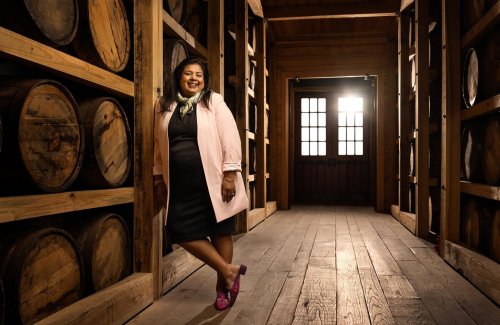
Ann Mukherjee: First Woman of Color CEO of Liquor Brands Shares An Incredible Outlook To Grow

Indian American Ann Mukherjee CEO and chairman of Pernod Ricard, has been a model for success and women’s empowerment. At 56 years old, she is currently managing the world’s second-largest seller of wine and spirits and is also renowned for top-shelf liquor brands such as Absolut, Jameson, and Malibu. In an industry dominated by men, she is the first woman of color to hold the highest position for alcoholic beverage brands.

As soon as she assumed the position of CEO in 2019, she realized that there was a stereotype rooted in an exaggerated machismo of being a self-confident leader. After giving it some thought, she concluded that those beliefs were not only completely false but also destructive, so she chose to disregard them. 

Mukherjee thought the most challenging part of being a CEO was knowing when to ask for help or admit you couldn’t do it alone. She believes it is essential for a leader to accurately understand herself and her people and then learn from them. Although confident in her abilities, she also recognizes the importance of showing humility and honesty.

She also reveals how her failure became the key to her success. She has become more resilient because she has learned to change course when necessary and take advantage of setbacks to advance. And while also acknowledging her drawbacks, she stresses the value of accepting failures. 

Her one piece of advice for anyone just starting in their career is, “Do not worry about fitting in, and do not be afraid to speak up, because when you have confidence in yourself, anything is possible,” she shared with CNBC’s Make It.

Mukherjee is well aware that to be an effective leader, she must first be able to love herself without condition, taking into account all of her attributes, including her strengths, weaknesses, opportunities, and threats. And with that comes the realization that knowing one’s shortcomings can better help one deal with and overcome those. This is the only way for her to achieve genuine personal and professional development.

Image Source: Forbes

Uncategorized

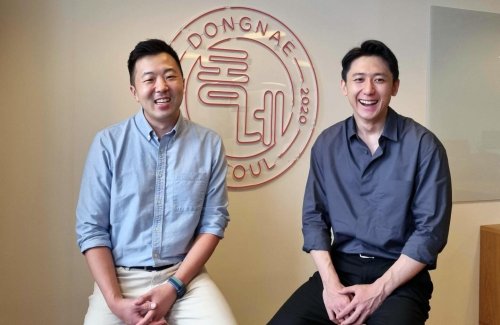
Korean Startup Dongnae Makes Apartment Hunting More Affordable And Accessible

Its key product, Dongnae FLEX, offers short-term, fully-furnished rentals with low deposits, appealing to fresh graduates or travelers unable to cough up the hefty deposits typically required of Korea’s apartments.

Former WeWork executives Insong Kim and Korean-American Matthew Shampine founded Dongnae in 2020. They are “Making it a better experience for the brokers, for the landlords, and especially for the tenants,”  Shampine said in an interview.

Dongnae has welcomed local and global investors. Its $21m series A funding round in March included Lyft and Doordash backer NFX, Airbnb backer MetaProp, and Korea’s oldest investment fund Daol Investment and Hana Financial.

More than 80% of Korean household wealth is in real estate, but it’s increasingly harder to become a homeowner. In Seoul, South Korea’s capital and most populated city, the average apartment price doubled between 2017 and 2021.

The startup company began as a listing platform for renters to book agency visits, but it was unsuccessful. Shampine believes the business model’s early failure generated “good and healthy” but painful reflections. According to Forbes, conversations with customers, brokers, and team members on the ground informed Dongnae’s goal of “becoming the supply, instead of hunting for the supply.” 

The firm switched to serviced apartments in July 2021. At the end of its current investment, the business had 60 apartment buildings; now it has 80 across 12 Seoul districts.

Dongnae wants to offer more home services to its residents in the future, taking advantage of Korea’s booming market for furniture and other lifestyle goods.

Image Source: gerryrobert.com

Uncategorized

Lush Enterprises CEO Kim-Manzolini Took Trading To The Next Level To Build Her Empire

Who wouldn’t want to engage in something that generates value? It took a while before you could achieve something like this. You had to be determined and keep going to get through the process. 

Think about how CEO Sun Yong Kim-Manzolini runs Lush Enterprises as an entrepreneur and, at the same, an investor. After working in the medical field for 33 years, she transitioned into entrepreneurship and trading options. She used her same can-do spirit and created opportunities.

All of her struggles, Kim-Manzolini told the USA Today, have helped to mold her into the woman she is today. She grew up as an orphan in Korea and was adopted by an American couple at 14. As an adult, she got into an unhealthy relationship but eventually got the courage to leave and move forward.

Kim-Manzolini knows that changing careers requires a great deal of hard work and self-control on her part. For years, she dedicated many hours per day to studying the ins and outs of the options trading industry and eventually mastered it. She simply had faith that she could pull it off, so she gave it her all without holding back.

Trading options expose investors to a diverse range of potentially significant risks. Even a single misfortune can completely wipe out a trader’s profits on the foreign exchange market due to the high risk associated with trading. But Kim-Manzolini did not let the challenges she faced discourage her, as she started gaining a new perspective on the situation. Instead of questioning why her experience was challenging, she adopted the mantra “Why not me?”

And as a result, she made $178,000 in her first year of live trading. Kim-Manzolini is now the owner of a multi-million dollar business. Her understanding of how to trade successfully was aided by the incredible commitment and sacrifice she made. 

The fact that Kim-Manzolini didn’t give up when it would have been simpler to do so is something for which she is grateful. She decided to focus on the positive aspects of the situation rather than ruminating on the potential downsides. She also put in a lot of time and energy and came up with a unique approach.