Navigating Pivots and Perseverance: Wei's Journey with Clipboard Health - AHN Media Group

Awaken* newsletter

July 18, 2024

SHARE:

Wei Deng is the Co-Founder and CEO of Clipboard Health, a company that connects healthcare facilities with local professionals who can work unfilled shifts. Since Clipboard’s inception in 2016, Clipboard Health has filled millions of shifts for thousands of facilities nationwide, putting millions of dollars in the pockets of healthcare professionals. Throughout her journey, Wei has never lost sight of her ultimate mission of helping people socioeconomically. In this interview with AHN, she discusses her upbringing and the early days of her founder’s journey.

HanYue: Tell us about the early days of Clipboard Health, what type of challenges did you have to overcome? 

Wei: It wasn’t called Clipboard Health when I started. It was initially a way to refinance student loans. I spent time talking to customers, figuring out who wanted to buy the fintech products, and talking to different customers again but I just didn’t feel the pull of the market, but I noticed that nurses wanted help finding a job. However, the hospitals only wanted to help people with experiences. So I pivoted to a clinical fellowship to help train nurses, figuring out what the clinical partners need, and help nurses find jobs. 

After pivoting through 6-7 different ideas – I finally landed on the Clipboard Health model, a marketplace that helps with nurse staffing. In the early days, we were very much focused on launching a product and talking to users.

Edwin: How do you judge when to pivot and when to stop working on an idea?

Wei: I wish there was a magic formula – but there isn’t. Having seen some other friends who have found PMF was helpful. For our products, our customers could live with it or without it. They didn’t have any strong opinions about it. That was a sign to me that it’s not working. For most ideas, I gave it to 3-6 months. What was frustrating is that sometimes you would have some initial glimmer of hope – some people are using it, and you wonder to yourself, is that a real sign?

For a good product, I found out that even if the product isn’t built out, people still want to use it, and people care about it a lot. You can feel the pull of the market. 

HanYue: There is clearly an unrelenting drive to pursue entrepreneurship, what kept you going during the early days? 

Wei: Quitting just never occurred to me. In the beginning, I mostly called the things I worked on projects, and when they didn’t work out,  I just never gave up.

Of course, there were frustrating moments: when I first went fundraising, I got told no 16 times. I was a solo founder, so there was no one to help me. I taught myself coding and sales to get started. I think the big realization is that even if you encounter nos and the product is not working, as long as you keep working and don’t quit, you are getting closer to a yes. 

HanYue: That was really inspiring – as long as you keep working, you are getting closer to a yes. Want to switch gears a little bit, how did you meet your co-founder? What was it like building out the initial team? 

Wei: In the early days, it was just me. My husband joined me after 3 years. By that time we already raised Series A, we were growing and had some traction. He initially joined to help out for 3 months, then stayed on for a few years.

Building out the team, we had a lot of trials and errors. We definitely made some mistakes – I had engineers whom you couldn’t get ahold of even when I was trying to fire them. We had one head of sales who built out our sales team but it turned out he was working for a competitor at the same time and was giving them our customer list, and all the people who worked for him were also working for the competitor. But luckily, some good people stayed and really they are what made us successful. 

HanYue: Tell us about the people who stayed. What made them successful? 

Wei: Oh, I love talking about this because it is what we look for during hiring. They have to care about the problem a lot. It is actually very obvious whether people are just here to collect paychecks, going through the motions, or if they really care about the problem. 

They are really curious. They are always looking for clues. If a customer says no, or churns, they are always digging in and figuring out why, instead of taking it as a given – oh they just didn’t want to use the product.

They also have ownership and initiative. They never just bring a list of problems. The best people I’ve had, they’ve brought me problems I didn’t know we had, and they’ve already thought about how to solve them. 

So initiative, ownership, and curiosity are our people and company values. 

HanYue: That’s wonderful to hear that there is such a close alignment between the people’s values and company values. What was your proudest achievement so far?

Wei: Honestly, I think it’s assembling a great team. We’ve gone through a lot of great pains in hiring, but now we have an awesome team to move together. Nowadays, even if I pull my foot off the gas, they are still serving our customers the best they can, and that is very special. 

The second thing is the customers we’ve been able to help, but that is honestly more of a proxy of how great our team is. 

HanYue: Tell us a bit about your upbringing. How has being Asian influenced your entrepreneurship journey and your general approach to life?

Wei: I grew up with my mom and my dad. We grew up in Kentucky, there were not a lot of Asians in Kentucky. 

My dad had this mentality: you don’t need permission to learn something. I remember trying to go to a national science fair – I was 16 and needed to learn calculus, but calculus was a college-level class and I was thinking, “Oh, maybe I can’t because I had to wait to learn calculus later.” My dad just said, get a textbook and figure it out yourself. That’s something I carried forward in life.

When I started, I didn’t have to have someone who knew how to code, I could just learn coding myself and get started. I never did sales before and didn’t have someone I could rely on for sales, but I could just pick up a phone and start doing cold calls. It’s the sense that nothing is beyond my reach, you don’t need to wait for the perfect moment or something/someone to depend on to get started. 

There weren’t many Asians in the area I was from. We stuck together but we were also super competitive with each other. There were two people in high school I was constantly competing against, and I think in a lot of ways it brought out the best in me. Personally, I am not competitive, but I found having someone neck-to-neck with you really makes me thrive. 

HanYue: Congrats on the unicorn status – it’s an incredible achievement! What suggestion do you have for founders who are still searching for product market fit out there?

The only thing that matters is to understand the customer’s pain points deeper than anything else. Rather than spending time on solutions, spend more time on understanding the problem. Actually, you might find that you are not even starting with the right customers – you might have to pivot a few times to find the right customers.

When you find them – look at their habits. People who are saying they want to lose weight, but if they are not going to the gym or tracking their calories or metrics, then weight loss is just not that big of a deal to them.

When talking to them, you need to look for: Are they spending money on it? Are they spending a lot of money but still can’t solve the problem? That is a potential area you can go to. The chances are that you can find a lot of good solutions –  you can have the greatest AI and greatest product, but if it is not solving a real problem, then no one will end up paying for the solution. 

Edwin: Are there mechanisms and processes you use to tease this information out? 

Wei: We just look at their behaviors. Are they spending money? Is the pain point really painful? 

When it came to staffing, it was obvious, that the customers we talked to were spending all of this money to putting together spreadsheets and tracking attendance. It was clearly a big pain point they wanted to solve. 

My father passed last year, I remember spending so much time looking for a caregiver for him. If someone gave me a set of solutions, even if not super built out – just a list of caregivers or a list of places that could care for him, I would definitely want to talk to that person. 

HanYue: Thanks for sharing a deeply personal moment with us. It really makes sense that as founders we needed to find the most painful problem to solve. Where do you go from here? What’s next for Clipboard Health?

Wei: Personally, I have two kids and I spend a lot of time with them. For the company, we want to continue expanding beyond healthcare professionals. We started with nursing – but we wanted to allow workers of all industries the benefits of flexibility and economic empowerment. 

At Clipboard Health, we also have an internal MBA-like program. If you are a product manager but want to learn, we will teach you cross-functional skills – engineering, sales, and other things.

The hypothesis is that eventually if people leave and want to go and start their own company, I could enable them to have a much broader scope than just their own focus. We have engineers doing sales, customer support, and product and they all love it because they get to implement and continue to broaden their scope. One of our heads of sales was a product manager – they kept asking questions and wanted to learn about sales so they got the chance to lean into their curiosity.

I want to scale this program up as the company scales up to develop people. Because if you invest in people internally, what you get is phenomenal: People who are already invested in your culture, and know your product really well have more methods to help your customers and grow better. 

Edwin: I see some parallels to your journey as well – the early days when you had to teach yourself coding and sales. One thing you talked about is expanding to verticals, how are you finding the new verticals? 

Wei: We have a more systematic approach: we read the Bureau of Labor Statistics, and try to look at professions that need help. Maybe some professions are losing steam, etc. We also have lots of customers in healthcare and there is a a surprising number of professions to fill up there – we need janitors to clean up, cooks to cook for the dining hall, servers and waiters, and trainers for physical therapy patients. There are some natural adjacent areas. Customers are providing those insights to us and where they need help.

Edwin: Are you afraid of losing focus? 

Wei: Focus is overrated, You should try to be good at some core competencies – but it all depends on how you define your core. if we define our core as a flexible labor marketplace, then we have lots of room to build. 

If you look at any ambitious company, they have a ton of products and they might seem totally unorthodox to each other. Amazing doesn’t look focused: they have AWS and it has nothing to do with selling books. Or if you think of people around you, some of them are good at maths, instruments and some type of sports. No one is like: you should only be good at math – people develop expertise in multiple areas. 

There is certainly a concern about chasing shiny new projects. We try to only pursue things that we have pre-thought out and really ask ourselves – do we want to be more ambitious than we currently are, or are we just chasing a shiny new object? 

Wei’s journey with Clipboard Health underscores the importance of persistence, adaptability, and deep customer understanding. Her story is a testament to the power of resilience in entrepreneurship, demonstrating that with unwavering determination and a keen focus on solving real problems, success is within reach. The AHN team thanks Wei for having this conversation with us! 

Related Articles

Blogs, Development

Understand Whether Your Website Is User-Friendly: 7 UX Pillars

User Experience, commonly referred to as UX, is a very broad term, which makes it hard to evaluate whether your website works with users.

As such, Peter Morville simplified UX into 7 core pillars, allowing a comprehensive evaluation of the UX:

  • Useful: It should have features that help users achieve certain goals easily.
  • Desirable: It should have add-on features that can cater to users’ specific wants.
  • Accessible: It should be usable by users with disabilities, and it is equally easy to use on mobile devices and laptops/PC.
  • Credible: It should be smooth, and there should not be any major bugs that disrupt the user experience.
  • Findable: It should showcase information clearly, allowing for easy navigation across the website.
  • Usable: As simple as it sounds, users should be able to use the website intuitively; the User Interface should be familiar.
  • Valuable: It should bring value to the user; it should help them save in some way, whether it is time, money, or effort. Simply, what do they gain by using your website (over going in-store, for example)?

Why Asian Hustle Solutions?

At AHS, we specialize in helping brands capture attention and inspire action — whether you’re launching a new product or scaling your business, we’ll guide you to marketing that resonates and delivers results.

If you want to learn more about our services, visit the Asian Hustle Solutions website at asianhustlenetwork.com/services/

an_tran_banc

Stories

An Tran Turned a Receptionist Job Into a 25-Year Journey to Executive Leadership in Banking

When you first meet her, you feel her warmth—grounded, welcoming, and full of passion. With over 25 years in the banking industry, An Tran, Market Executive at Banc of California, has become known not only for her distinctive leadership but also for the deep care she gives to her family—and for her dedication as a passionate skincare and self-care advocate.

Yet behind these roles lies a journey marked by resilience—a story not only of her own, but of many Vietnamese immigrants who navigated life in a new country with hope for a brighter future and the American dream.

An Tran | SVP Market Executive at Banc of California

A Humble Beginning, A Lifelong Commitment

Banking wasn’t part of her plan at the start of her career. In fact, her first job was as a receptionist at a bank in San Francisco. But she didn’t let that humble beginning define her. Fueled by passion, relentless effort, and the sense of responsibility that came from being the eldest of eight children, she turned what she lacked in experience into unstoppable drive.

“My professional life has always revolved around service and sales, with a natural inclination to care for others, perhaps stemming from my role as the eldest of eight,” she says. 

Over the years, she took every opportunity whenever she could to learn, grow, and serve her clients better. Her work ethic and trust-building skills propelled her forward, step by step, until she eventually became the Market Executive for Banc of California—a role she holds today with pride and purpose.

A Journey Rooted in Sacrifice and Survival

By her own admission, she doesn’t have any news-breaking stories. She is simply a daughter born to Vietnamese immigrants who came to America during the 1970s and ’80s. Yet it was her generation that first began to rise out of poverty, despite arriving in the U.S. with nothing in hand. “Through relentless hard work, we’ve not only achieved the American dream but also built the lives our parents envisioned for us when they first arrived,” she reflects.

Her family’s story, like so many others, is one of hope and sacrifice. And through years of determination and resilience, she has proven the grit and strength of her community—successfully building the life her parents once dreamed of when they left Vietnam.

An Tran has successfully built what her parents imagined for their children in the US. 

Facing Challenges with Grace and Grit 

Climbing the banking ladder over the past 25 years was no easy feat for a young woman like An. She faced unique hurdles—from skepticism to subtle sexism in the workplace.

But instead of letting those experiences hold her back, she used them as fuel to move forward.

“Every challenge throughout my life and career has been a positive force, shaping me into the person I am today,” she shares. “These experiences pushed me to find new ways to grow and overcome adversity. I believe challenges are essential for growth—without them, we can’t truly learn. Remaining a lifelong student, absorbing both small and significant lessons daily, is key. The moment you stop learning is the moment you stop achieving.”

An Tran has faced criticism with grace and determination, climbing the banking ladder step by step.

Empowering the Asian Community, One Role Model at a Time

From receptionist to executive, her journey is a remarkable one. But for her, the real achievements aren’t just titles—they’re the impact she’s had on others and the example she’s set for her children, her colleagues, and her community.

“I’m incredibly grateful to be where I am today, creating the life I envisioned and providing for my family in a way my parents dreamed of when we left Vietnam. My pride extends to every step of this remarkable path,” she says. 

She’s living proof. A former refugee who arrived in America with nothing is now leading in one of the most competitive industries in the country—and doing so with compassion, integrity, and purpose.

Connect With An Na Tran 

“My goal is to be a resource for the Asian community, showing that we are strong, career-driven, and incredibly successful.”

LinkedIn: An Na T.

AHS EMAIL ANGLE (1)-png

Blogs, Development

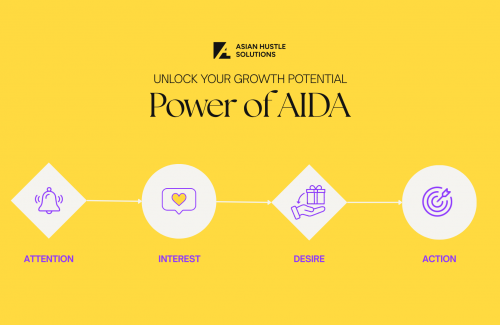
Unlock Your Growth Potential: Harness the Power of AIDA

Your audience is busy — if you want their attention, you need to earn it with a message that cuts through the noise.

AIDA is a time-tested framework that guides your messaging from first glance to final action, helping you craft marketing that actually converts.

  • Attention – Grab your audience with a bold headline, eye-catching image, or intriguing question.
  • Interest – Share a benefit or story that keeps them reading.
  • Desire – Build an emotional connection by showing how your product solves their problem or improves their life.
  • Action – End with a clear call-to-action so they know exactly what to do next.

Why Asian Hustle Solutions?

At AHS, we specialize in helping brands capture attention and inspire action — whether you’re launching a new product or scaling your business, we’ll guide you to marketing that resonates and delivers results.

If you want to learn more about our services, visit the Asian Hustle Solutions website at asianhustlenetwork.com/services/

KyLanActivewear-png

Stories

From Code to Culture: How Hải Bùi Left Tech to Build a Brand for Second Generation Asians

Embracing Heritage Through Style

Kỳ Lân is the first activewear brand deeply rooted in Asian aesthetics, created with a powerful mission: to empower second-generation Asians worldwide to embrace their heritage with pride. Born from Hải’s personal journey growing up Vietnamese in Hungary and struggling to find a sense of belonging, Kỳ Lân reflects what it truly means to live between cultures, and finally feel proud of that identity.

For Hải, Kỳ Lân isn’t just about clothing. It’s about rewriting the narrative for second-generation Asians and bringing Asian representation to the forefront of mainstream sports- and streetwear. 

Kỳ Lân’s mission is to help second-gens embrace their Asian heritage through clothing

The Meaning Behind Kỳ Lân: A Symbol of Heritage and Unity

Kỳ Lân is a mythical creature from Asian folklore, often described as having the head of a dragon, the body of a horse, and the tail of a lion. It symbolizes peace, prosperity, and good fortune. Versions of the Kỳ Lân appear in Vietnamese, Chinese (Qilin), Japanese (Kirin), Korean (Girin), and Thai (Kilen) cultures, highlighting the deep cultural connections shared across Asia.

Hải chose this name to honor that shared heritage. As part of his efforts to reconnect with his roots, he began volunteering in the Vietnamese community and eventually became the organizer of a 6,000-member Asian Meetup and Discord group. This community centered around 1.5-generation and second-generation Asians, those who either immigrated as kids or were born abroad to immigrant parents. Together, they explored questions of identity, belonging, and the desire to reconnect. These conversations sparked the idea for Kỳ Lân: a brand that celebrates Asian aesthetics but, more importantly, gives voice to the in-between experience many second-generation live daily.

Kỳ Lân is more than just a clothing brand, it’s a tribute to these stories and a movement towards proudly reclaiming culture.

Hải volunteering in his local Vietnamese community

The Origin Story: From Hungary to the U.S. and Back to His Roots

Growing up in Hungary in the 1990s, often as the only Asian kid in school, Hải vividly remembers the bullying, the stares, and the relentless pressure to fit in. Like many second generation Asians, he spent much of his youth trying to blend in, often distancing himself from his Vietnamese roots just to feel accepted.

It wasn’t until years later, after moving to the U.S., that everything shifted. For the first time, Hải saw second-generation Asians unapologetically taking up space, celebrating their identities through art, food, fashion, and film. Vietnamese cafés were opening everywhere, Asian artists topped the charts, and streetwear inspired by Asian heritage became more mainstream. Gradually, pride replaced shame.

He became proud to be Asian, and curiosity toward his culture blossomed.

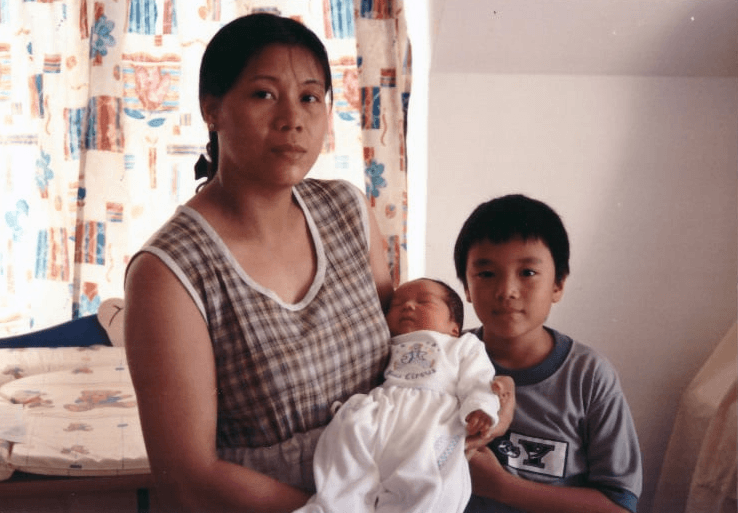
Hải, his little brother and his mom in Budapest

His parents’ story deeply influenced him, too. They immigrated to Soviet-era Hungary on scholarships and chose entrepreneurship over low-paying engineering jobs after graduation. Their hard work and resourcefulness deeply shaped Hải’s values, even though they initially encouraged him to take a safer path.

That growing sense of cultural pride deepened during a visit to Vietnam, where Hải saw relatives and locals running small storefronts straight from their homes. Every corner was buzzing with hustle. “That’s when it clicked,” he says. “Entrepreneurship is ingrained in our DNA. No wonder I felt this constant pull to build something of my own.” 

From Software Engineer to Fashionpreneur: Finding Purpose

For Hải, the realization that entrepreneurship was in his blood didn’t make the decision to quit his job any easier. Like many children of Asian immigrants, he grew up with a very clear definition of success which included stability, a good education and a respectable job. And he achieved exactly this: a successful career in software engineering, after decades of hard work and sacrifice from his parents, who had moved to Hungary in search of a better future.

For a while, he was unsure whether to commit to building a business or return to the comfort of a tech job. However, the dread he felt preparing for software interviews made it clear that he had to make some kind of business idea work, no matter what.

Like so many second-generation Asians, Hải carried an unspoken responsibility to make his parents’ struggles worth it, to succeed and stay on the path they paved.

Eventually, the pull toward his purpose was stronger than the fear of failure.

In a twist of fate, Hải is following in his parents’ footsteps. After immigrating to a foreign country and getting a degree in Engineering, he decided to leave it all behind and pursue Entrepreneurship.

Hải’s parents threw away their Engineering degree to open their heavy metal t-shirt business back in the ‘90s.

The Birth of Kỳ Lân: A Perfect Fit 

Inspired by his parents’ own clothing business selling heavy metal t-shirts at marketplaces, Hải worried initially that they might disapprove of him following a similar path. Instead, they became his biggest supporters once they saw his dedication.

While it might seem like a waste to throw away his engineering career, Hải’s background turned out to be a great asset in building Kỳ Lân. His time at Amazon Ads taught him how to run effective digital campaigns, his logistics experience at Convoy helped him navigate supply chains, and his coding skills meant he could build his own websites without outsourcing. Even his parents’ experience running a clothing business became unexpectedly useful. 

Looking at it all together, it started to make sense. This wasn’t him starting from scratch, it was him finally using all of his skills in one place.

A Movement Rooted in Identity, Representation, and Pride

Kỳ Lân is more than just activewear, it’s a cultural movement. It celebrates the rich fusion of Asian cultures and modern sportsmanship while giving second-generation Asians a platform to proudly reclaim their identities.

Through Kỳ Lân, Hải is not only creating clothing but also rewriting the story for second-generation Asians around the world – one that embraces heritage, community, and pride.

Kỳ Lân’s mission is to help second generation Asians embrace their heritage through clothing

Connect With Hải Bùi & Kỳ Lân Activewear

To celebrate Kỳ Lân’s pre-sale, Kỳ Lân is offering the Asian Hustle Network community an exclusive 20% off with the code AHN20 – valid for one week only.

Website: Kỳ Lân Activewear

IG: @kylan.athletics