Mom Entrepreneur Creates Asian American Doll After Seeing A Glaring Lack Of Representation On Toy Shelves - AHN Media Group

Stories

March 8, 2023

SHARE:

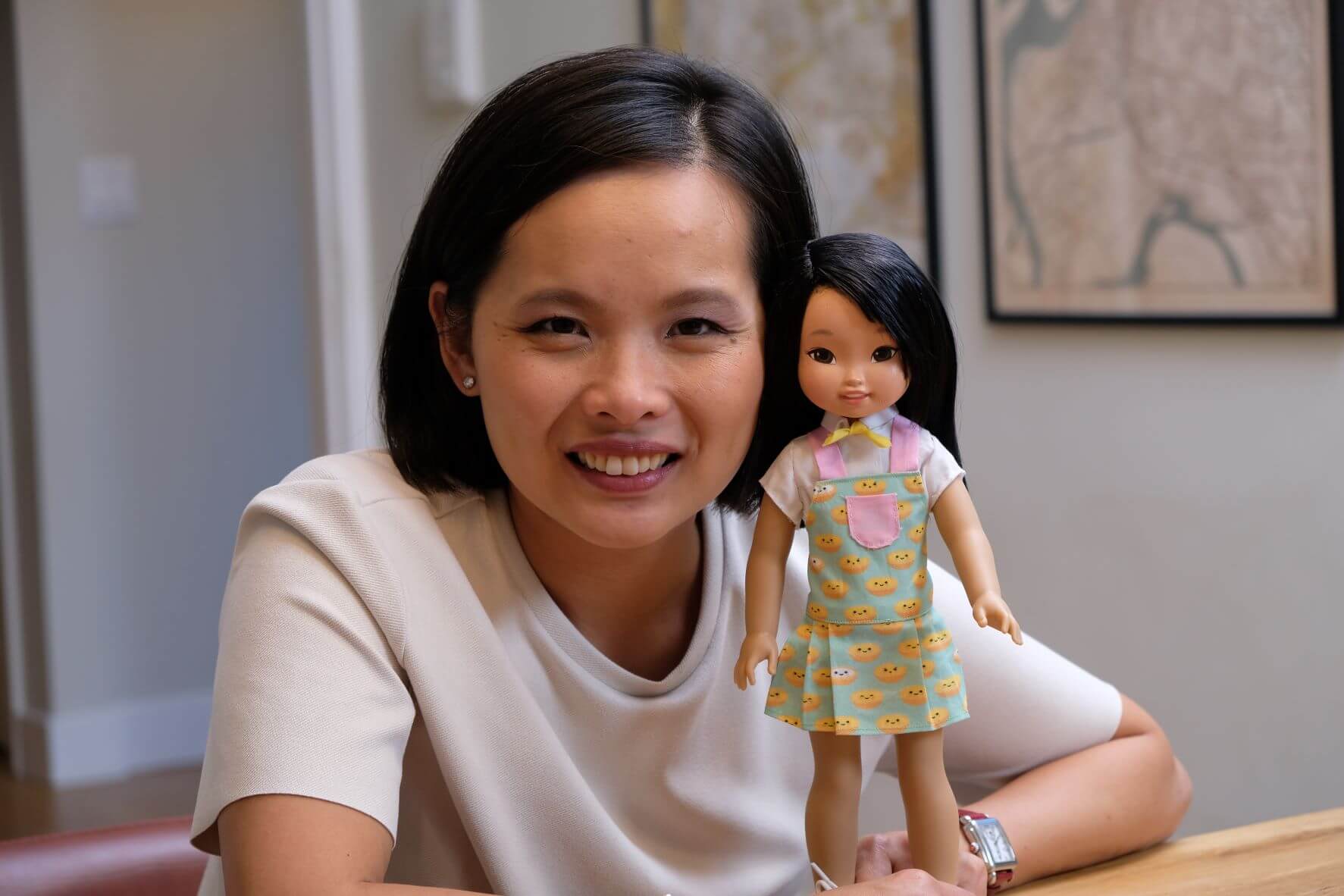
Meet Elenor Mak, the founder of Jilly Bing, a company that is changing the face of the dolls and toys industry. Her journey to creating Jilly Bing began with her desire to break down stereotypes and provide a positive reflection of Asian-American girls.

Elenor believes that toys play an essential role in helping children make sense of the world around them, and dolls are an essential tool in building self-esteem and self-acceptance. Her mission with Jilly Bing is to create a line of dolls and toys that accurately represent Asian-American children and help to nurture a deeper appreciation of Asian culture.

By involving children and families in the creation process of Jilly Bing, Elenor hopes to create a community that celebrates diversity and encourages a sense of belonging. 

Read through as Elenor shared about her childhood as a first-generation Chinese-American, and her mission to create dolls that reflect the diversity of Asian American girls and promote cultural understanding.

FROM MACAO TO AMERICA

I am a first-generation Chinese-American. My Mom was born in Singapore, and my Dad was born in China. They met in Macao and immigrated to the US before I was born. Growing up, both of my parents worked as back-office postal clerks, which required grueling night shifts and strenuous manual work. Their limited English disqualified them from jobs that would have been easier, like a front-desk clerk. 

Despite that, my Mom firmly believed in only speaking Chinese (Cantonese) at home and even sent me to Saturday classes for Mandarin. As an adult, I am so grateful for my Mom’s insistence that I am fluent in her native language because it helps me remain connected to my heritage.

MY MOTHER MADE SURE I HAD A VOICE

As a young child, I was rather shy. By contrast, my Mom is a strong, outgoing woman. But being a non-English-speaking immigrant, she lost her “voice.” She would make me challenge adults when she didn’t get the right change at a shop or something was wrong with an order she had placed. Perhaps because of this, I came out of my shell by the time I was in second grade.

Looking back, I believe my Mom was determined to make sure I knew I had a voice or say in matters, even as a kid, so that I would not be afraid to use my voice as an adult. 

My daughter’s voice is Loud with a capital “L,” even at the age of 3, which is so at odds with the stereotypical representations of Asian girls and women as demure, pretty little things. I wanted to break down those stereotypes and create a doll that is similar to the Asian American girls we know and love

My mom was determined to make sure I knew I had a voice or say in matters, even as a kid, so that I would not be afraid to use my voice as an adult. 

-Elenor Mak

A REFLECTION ON MY FIRST DOLL

I don’t recall my first impression of my first doll, named Ada, but she was a gift from my parents, and I was only 5 or 6 years old, so I’m pretty sure I was thrilled. She wore a baby bonnet, and I remember wanting to take care of her as any good Mommy would.

I also remember thinking that her blonde hair and blue eyes were so beautiful. Of course, I didn’t have those features, so on some level, I guess I wanted us to look more similar. My Mom tells a story that, one day, I took scissors to Ada’s hair because I wanted her hair to be like mine, which — like many Asian girls growing up in the 1980s — was a short bob. Long, blonde hair was something beautiful people had, something “other” people had. I do remember feeling like an “other” when I looked at Ada. 

I took scissors to Ada’s hair because I wanted her hair to be like mine.

-Elenor Mak

THE IMPORTANCE FOR CHILDREN TO SEE THEMSELVES REFLECTED IN THEIR TOYS

Toys help children make sense of the world around them, and some of the first toys ever discovered are dolls that date back to 8,000 BC in Japan and 2,000 BC in Egypt. What is baffling to me is that the year is 2023, and missing from toy shelves in US stores are authentic-looking Asian dolls.

The ones that are available are cartoony-looking or dressed in very traditional clothing that does not reflect today’s Asian American children. Several dolls are brunettes with round eyes, an Asian-sounding name, and an upward swish of black eyeliner that supposedly creates Asian eyes.

While I was initially saddened by this, I’m now thrilled that I get to create a company that solves such a glaring error. We are so proud when parents see our first doll and say, “She looks like my daughter.” 

HOW NOT HAVING A DOLL THAT LOOKS LIKE THEM AFFECT CHILDREN AS THEY DEVELOP SELF-ACCEPTANCE

When an Asian child walks into a national chain store and heads to the doll aisle, and sees lots and lots of dolls, but does not see a doll that looks like them, that is the moment that the first damage is done to their self-esteem and self-acceptance.

The moment they start to wonder, “Why not?” Or even worse, the moment they think, “Is there something wrong with me because I look Asian?” 

DOLLS AS CULTURAL MIRRORS TO NURTURE DEEPER HERITAGE APPRECIATION

Role-playing with dolls, action figures, or even stuffed animals, help children sort through their emotions. When they pretend to be superheroes, they are trying to feel powerful. If you hear a child tell a stuffed animal to “wash your hands before dinner,” they are probably trying to make sense of their parent’s rules. 

We want our dolls to help children understand their heritage. We are creating accessories that help recast their interpretation of Asian food, for example. It is not smelly and embarrassing, as I thought it was when I was in elementary school. Asian food is something that their doll loves to make and celebrate. If the doll herself plays with mini egg tarts or sushi rolls, the barrier to understanding is instantly lower. 

As strange as it may seem, there is no one-stop-shop for parents who want to teach their kids about Asian cultures. It requires a lot of legwork to find resources, and parents are busy. In fact, 91%of Asian American parents we surveyed replied “yes” when asked, “Do you need help finding educational content to teach children about Asian culture and heritage?”

I want Jilly Bing to be the brand that makes it easy for parents to introduce and deeply explore every aspect of all Asian cultures.

INVOLVING CHILDREN AND FAMILIES IN THE CREATION PROCESS OF JILLY BING DOLL

When we were creating the prototype of the doll, we leaned on my children and our friends and family to see if our vision was resonating with them. To gather data, we surveyed adults through several social media networks that have huge followings. It was not a short survey, so I was amazed to see how many people gave us feedback; it was another moment when I knew we were striking a chord with many Asian adults who felt unseen as children.  

Now we have the luxury of formalizing feedback with focus groups and people who want to support our mission of representation. We created an official Jilly Bing Ambassador Community for our strongest supporters, and we will turn to them for feedback on future dolls and new products.

It was not a short survey, so I was amazed to see how many people gave us feedback.

-Elenor Mak

WHAT MY DAUGHTER THOUGHT WHEN SHE FIRST SAW THE JILLY BING DOLL

Jillian was just shy about her third birthday when she saw the prototype of the doll. First, she did a big dramatic gasp, and then she said, “Me!” and hugged the doll so hard that its not-quite-fully-secured head popped off the body. At that moment, I knew we had a winner. 

WHAT PARENTS ARE SAYING ABOUT JILLY BING

Much of the feedback is coming from adult women. Just like my daughter’s first reaction, they say they gasped out loud, and many say they proceeded to cry. I keep hearing, “This is the doll I always wanted when I was growing up.”

One woman captured how heartbreakingly wrong the status quo is: “Even in play, Asian girls have had to envision life as someone else … This vision is so much more than a toy, it is being seen!”

ADDRESSING THE NEED FOR INCLUSIVITY AND DIVERSITY IN THE TOY INDUSTRY

The toy industry needs a refresh, as do media companies that are creating content for children. It feels as though they are checking off boxes. They want to be able to say, “Look, we have an Asian doll. We have a Black doll.” Or “Here! We did a movie with Chinese immigrant parents and US-born kids.” But they are just doing the bare minimum.

I like to think Jilly Bing is the first company to take a holistic view of how representation can live and breathe within our children’s daily lives, instead of being compartmentalized inside a checkbox. My analogy is Paw Patrol. Those pups are everywhere, from socks to movies to enough toys to fill a football stadium.

If our vision becomes a reality, the fun, cheeky characters and accessories, books, and content that celebrate Asian American culture will be everywhere too. 

What can consumers do to drive this change? I ask them to support us by purchasing a doll at www.jillybing.com and spreading the word. As the famous saying goes, “Be the change you want to see in the world.”
Related Articles

1-png

Stories

ChargerGoGo’s Next Chapter: GoGoSpark Brings AI-Powered Entrepreneurship to the Future of Work

ChargerGoGo built its nationwide phone charging network by betting on everyday entrepreneurs.

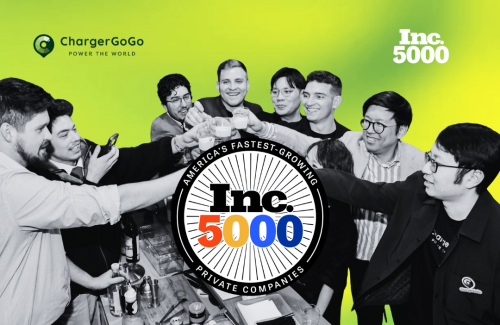
That bet is paying off. In 2026, ChargerGoGo landed at No. 744 on the Inc. 5000 (top 15%), No.5 in Las Vegas, and No.41 in AI and Data industry, the annual ranking of the fastest-growing private companies in America, after reporting 467% revenue growth over three years.

Led by founder and CEO June Zhu, the company has spent years helping local operators build businesses through its charging network. With GoGoSpark, it’s bringing AI into the picture.

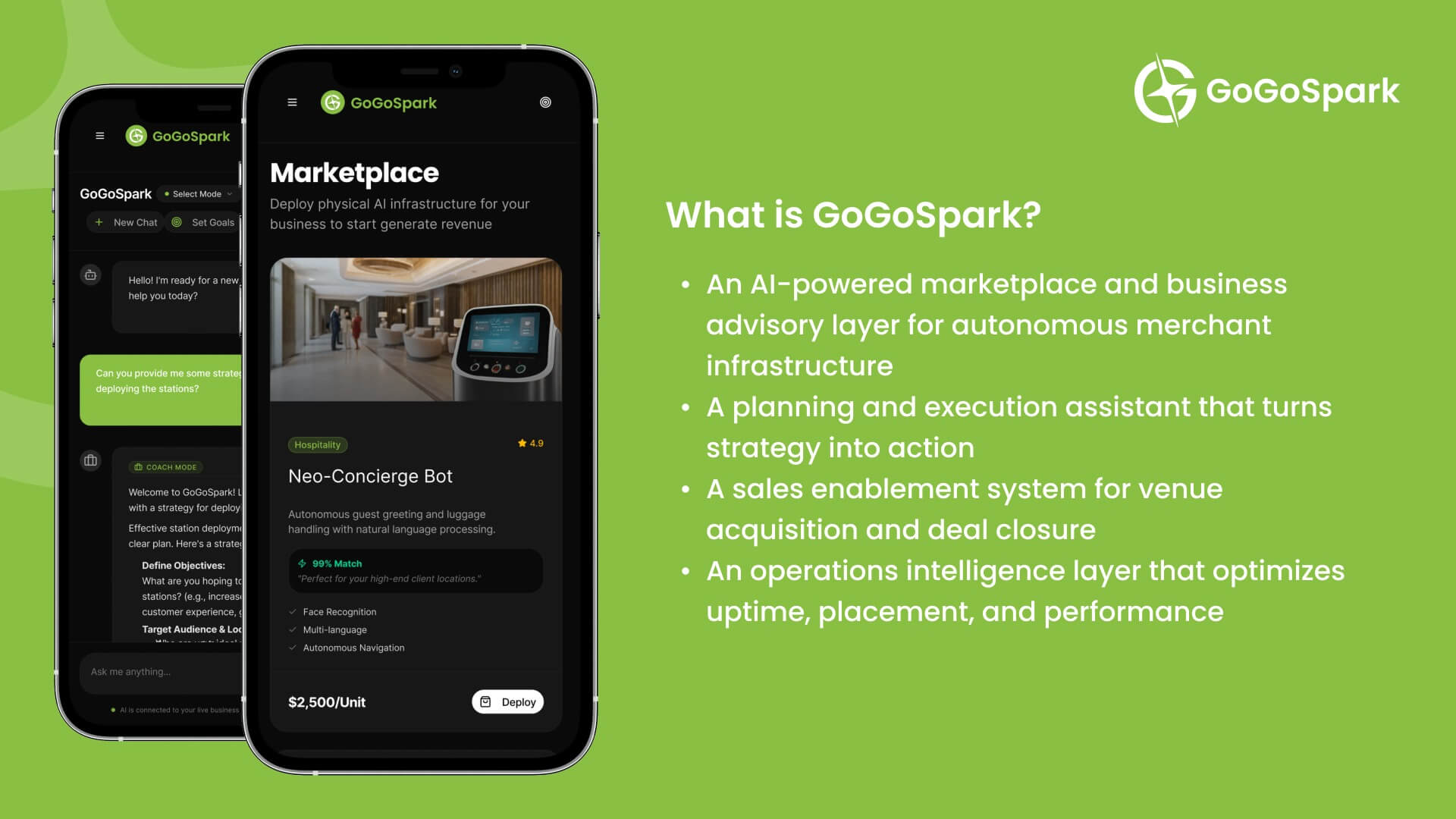
Launched at CES 2026, GoGoSpark is ChargerGoGo’s AI-powered business copilot and operations assistant, built to help operators handle the day-to-day work of running and growing their businesses.

What Does GoGoSpark Actually Do?

As AI reshapes the workforce, the next economic opportunity is not only about making employees more productive, it is about giving more people the tools to become business owners.

GoGoSpark was built around that mission.

ChargerGoGo believes the future of work will include a growing number of people, across both white-collar and blue-collar professions, who want to build independent income, own productive assets, and operate businesses of their own. But becoming an entrepreneur requires far more than capital or a good idea. New business owners need help with sales, operations, financial decisions, technology, strategy, and the hundreds of decisions that come with running a company.

GoGoSpark is designed to put that capability in their pocket.

Serving as an AI-powered COO and business mentor available 24/7, GoGoSpark can help entrepreneurs analyze performance, identify opportunities, improve sales, troubleshoot operational issues, understand financial decisions, and determine what actions to take next.

The vision extends beyond operating ChargerGoGo stations. ChargerGoGo is building GoGoSpark as an intelligent business platform that can lower the barriers to entrepreneurship and help everyday people transition from employees into capable, technology-enabled business owners.

In an economy increasingly shaped by AI and automation, ChargerGoGo believes AI should not simply replace work. It should help more people create, own, and participate in the businesses of the future.

GoGoSpark does not replace the entrepreneur. It gives the entrepreneur a COO, an advisor, and a mentor in their pocket—so they can make better decisions and build with greater confidence.

Five Years in the Making

GoGoSpark came out of five years of working directly with thousands of operators, partners, and small business owners.

Over that time, ChargerGoGo saw the same kinds of questions come up again and again: How do I sell this better? Why is one location outperforming another? What should I focus on next? How can I run this more efficiently?

Those real-world questions helped shape what GoGoSpark became.

Rather than building AI for the sake of having AI, ChargerGoGo built a tool around the work its operators were already doing.

As Zhu said when the platform launched, “GoGoSpark is built to be a business co-pilot, helping operators learn faster, operate smarter, and participate in the post-work economy.”

The Bigger Goal Behind GoGoSpark

The Inc. 5000 ranking is a milestone for ChargerGoGo, but Zhu has been clear that she wants the company’s growth to reach beyond ChargerGoGo itself.

When the ranking was announced, she pointed to a bigger goal: giving ChargerGoGo’s Distribution Partners the technology, infrastructure, business model, and support to grow companies of their own.

She even said she hopes to one day see those entrepreneurs make the Inc. 5000 themselves.

GoGoSpark is one way ChargerGoGo is trying to make that happen.

As AI becomes part of how companies sell, analyze data, plan, and operate, smaller business owners risk being left with fewer resources to compete. GoGoSpark brings some of those capabilities directly to the people running businesses on the ground.

ChargerGoGo’s acceptance into the NVIDIA Inception Program also marks another step in that direction as the company continues developing its AI technology.

“The future belongs to those who engage with their AI,” Zhu said at CES 2026. “Our mission is to make sure everyone has that chance.”

ChargerGoGo made the Inc. 5000 this year. If its operators eventually start appearing on that list too, GoGoSpark may have played a part in getting them there.

Discover how GoGoSpark is helping entrepreneurs grow smarter.

📍Website

image-png

Stories

The Day a Las Vegas Slot Machine Changed June Zhu’s Vision for Entrepreneurship

When June Zhu immigrated to the United States, she wasn’t chasing certainty.

She was chasing the possibility.

Like millions of immigrants before her, she believed in something uniquely American: that regardless of where someone came from, if they worked hard, solved real problems, and created value for others, they could build a better future.

That belief led her to found ChargerGoGo.

At first glance, ChargerGoGo looks like a portable phone charging company. Today, its network spans more than 6,000 locations across all 50 states, serving more than one million users.

But ask June what business she’s really building, and her answer is unexpected.

“I’m not trying to just build the biggest charging network,” she says. “I’m trying to build one of the largest entrepreneurship platforms.”

The Question Every Founder Faces

That vision wasn’t obvious in the beginning.

Like countless founders, June spent years trying to answer the same question that keeps entrepreneurs awake at night:

How do you build something nationally without billions of dollars from venture capital?

Every new market required more equipment.

Every new customer required more investment.

Growth always seemed tied to raising more capital.

The Las Vegas Moment

Then one ordinary afternoon in Las Vegas, while talking with her team, she witnessed something that unexpectedly gave her a new perspective.

A few teammates each pulled a small amount of cash from their wallets and decided to play a slot machine together.

Nobody risked very much.

If they lost, the downside was limited to a few hundred dollars each. But if they won, everyone shared in a prize far greater than they could have won individually.

“It wasn’t about the slot machine,” June recalls with a smile. “It was about the ownership.”

She watched people willingly contribute because everyone had a stake in the outcome.

At that moment, the question in her mind changed.

Instead of asking, “How can I raise enough money to own every charging station?”

She started asking, “Why should I own them all?”

What if every charging station could become an income-producing asset for a local entrepreneur?

That idea transformed ChargerGoGo.

Rather than building a company that owned every charging station, June built a platform where local entrepreneurs could own, operate, and grow businesses under a shared brand.

Every charging station became more than hardware. It became an opportunity for someone to build recurring income and grow a business within their own community.

Building an Entrepreneurship Platform

For June, that model reflects something she has admired since arriving in America.

“The greatest strength of this country isn’t just innovation,” she says. “It’s that ordinary people have the opportunity to become builders.”

Instead of measuring success solely by the size of the network, she measures it by how many entrepreneurs it helps create.

Through ChargerGoGo’s distribution partner model, local business owners can build recurring income while expanding the company’s nationwide footprint. As the platform grows, so does the number of entrepreneurs building businesses of their own.

Why Ownership Matters More Than Ever

That belief feels even more relevant as artificial intelligence reshapes the global workforce.

While much of the conversation focuses on jobs disappearing, June believes the more important conversation is about creating more owners.

“The future shouldn’t belong only to companies with the most capital or the most powerful AI,” she says. “Technology should lower the barriers for everyday people to own businesses, generate wealth, and create opportunities for their families.”

That’s why she believes entrepreneurship is becoming more important, not less.

Her vision extends far beyond portable charging.

She imagines a future where platforms, AI, and connected infrastructure allow millions of people to own income-producing businesses that once required millions of dollars to build.

Redefining the American Dream

For June, that’s what the American Dream has always meant.

Not that success is guaranteed.

But that ownership is possible.

Today, when people ask what ChargerGoGo does, she could talk about charging stations, technology, or nationwide expansion.

Instead, she prefers a simpler answer.

“We’re building a platform that helps more people become entrepreneurs.”

Because in the end, June Zhu isn’t trying to build a billion-dollar company.

She’s trying to help build thousands of million-dollar entrepreneurs.

Perhaps that’s the most powerful way to measure success: not by how much one person owns, but by how many owners they help create.

Learn more about ChargerGoGo here:

📍Website

image-png

Stories

How Stephanie Lau Jensen Turned a Personal Identity Journey Into CULTR, a Marketplace for Cultural Brands

Stephanie Lau Jensen grew up between Hawaii and California. Like many Asian American kids raised in predominantly non-Asian communities, she learned early how to move between worlds. Parts of her culture stayed in the background, not because she pushed them away, but because the environment made it easier to leave them there.

She later returned to Hawaii for college, where her father is originally from. Being there placed her in a community where Asian culture was woven into daily life through food, language, and family traditions. It was not a rediscovery, it was a reminder of what had always been hers.

Years later, as a mother of three and a founder with a background in commercial real estate investing, she built CULTR, short for Created for Culture. A curated marketplace for AAPI  and third-culture families raising kids between cultures, one that makes cultural products easy to find and part of everyday life, not just special occasions.

A Birthday Conversation That Changed Everything

The idea for CULTR took shape at one of Stephanie’s birthday gatherings. She was talking with a close friend about identity and culture when a childhood friend overheard the conversation and joked that Stephanie used to be one of them before she moved to Hawaii and really leaned into her Asian side.

Everyone laughed. Stephanie included. But the comment stayed. It put words to something she had been sitting with for years. Culture is not something that automatically transfers to the next generation. It has to be lived daily. If it is not in the house on a regular Tuesday, it probably is not there at all.

When she became a mother and started looking for books, clothing, and toys that reflected her culture, she saw the problem clearly. The products existed. The founders were there, but their work was scattered across small websites and Instagram pages, invisible to most families who needed them.

The Platform She Wished Had Existed

Stephanie’s background in real estate investing trained her to look closely at markets and recognize opportunity gaps. As she continued discovering founder-led cultural brands online, she saw a clear problem: families who wanted these products had no easy way to find them.

That realization led her to build CULTR, a curated marketplace that brings modern cultural brands from around the world into one central destination. The platform highlights independent founders, many from Asian and immigrant communities, whose products carry culture through everyday objects, from children’s books to home goods, apparel, even everyday products you would have never known were made by AAPI makers. With a refined, modern aesthetic, CULTR presents these brands in a way that feels contemporary, approachable, and deeply connected to heritage.

Building CULTR came with its own challenges because the platform did not fit neatly into an existing category. It sits somewhere between a retail marketplace and a cultural storytelling platform, which meant Stephanie had to develop the platform while also helping people understand the vision behind it.

Bringing Culture Into Everyday Family Life

For Stephanie, culture often lives in the smallest everyday objects. A children’s book written in the language your grandparents spoke, a toy tied to tradition, or a piece of clothing that carries a story can shape how the next generation understands identity and belonging.

Alongside CULTR, she is also building PenPals Collective, a project designed to spark global curiosity and connection for children, and launching a podcast called Series M that explores career, motherhood, and identity. Each project reflects her interest in connecting people across culture, family, and generation.

Through each project, and while raising three young children, Stephanie continues working toward the same goal: creating spaces where culture is not something people rediscover later in life, but something families live with every day.

Learn more about CULTR here:

📍Website

2

Stories

Billionaire Heir Enters Wall Street’s Hottest Trade With $480B in Assets

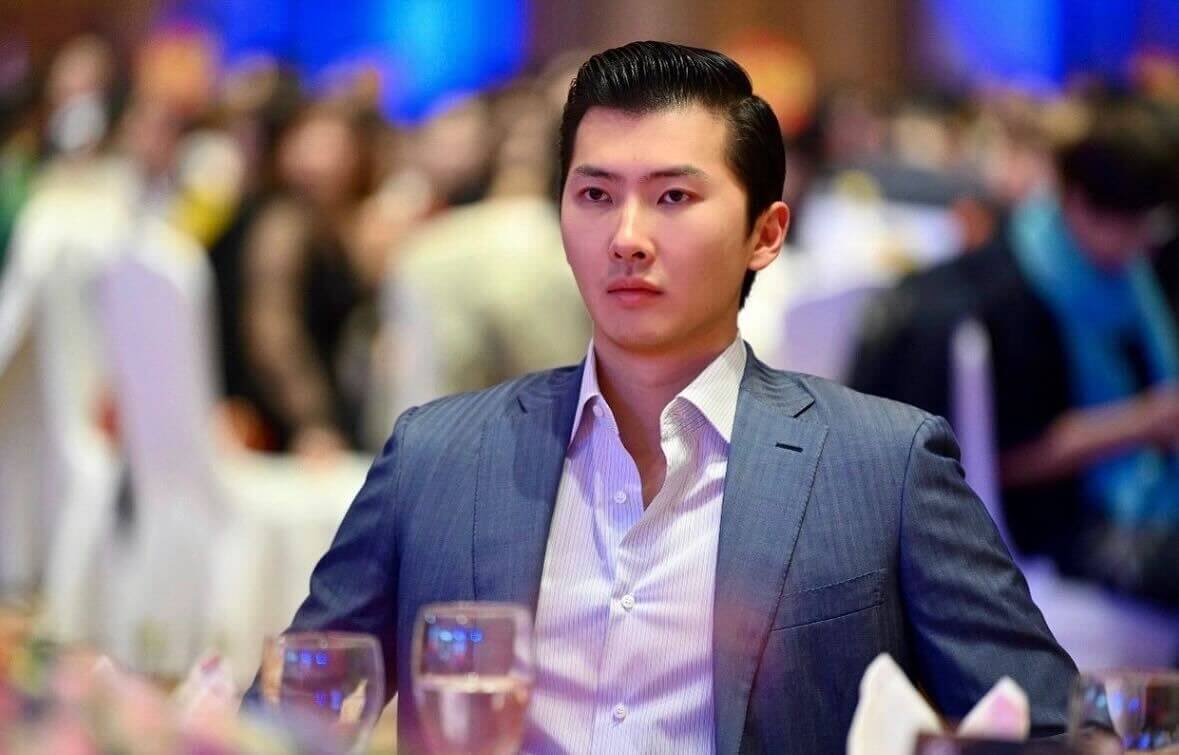
Andre Koo Jr. isn’t just inheriting a financial empire, he’s also reshaping what it looks like in a new era of investing. 

From Taiwan to New York, his latest move brings a centuries-old legacy into one of Wall Street’s fastest-growing spaces. 

With K8 Capital, he’s betting that the future of wealth lies in doing more than just one thing well.

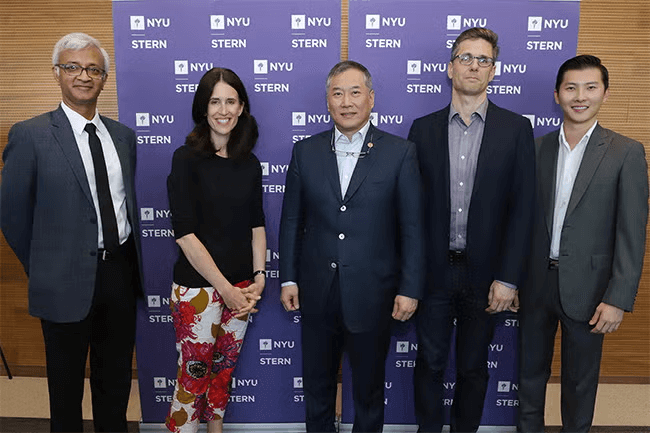
Image Source: NYU Stern

Building on a Financial Legacy

Andre Koo Jr. grew up in one of Taiwan’s most influential banking families, where scale and stability defined success. Today, that legacy spans a $16 billion family fortune and control of $480 billion in assets. But instead of staying within that system, he’s building something that looks very different.

K8 Capital, his new firm based in New York, is designed to be more flexible and forward-looking. It’s launching with a debut fund of at least $50 million, with a $500,000 minimum that signals who it’s built for. The focus is on US companies, along with early bets on AI and enterprise software, areas where growth is still taking shape.

Image Source: Sally Ride Science

A Dual Investment Approach

K8 is a fully integrated hybrid private credit and venture capital firm, combining short-duration, high-yield credit investments with long-term venture growth. Its dual strategy is designed to deliver both liquidity and capital appreciation, giving investors access to predictable income while still capturing venture upside.

What sets K8 apart is how it brings two distinct investment styles into one platform. It focuses on short-term credit deals that can generate returns relatively quickly, while also investing in startups that may take years to mature but offer strong long-term potential. This allows investors to earn steady income today while staying exposed to the companies shaping the future.

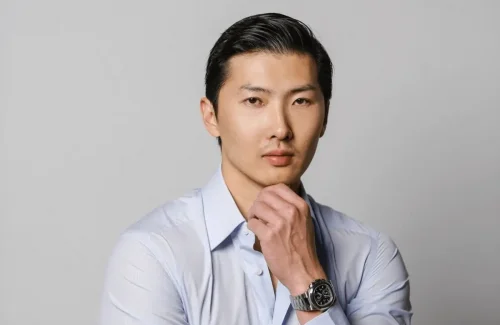
Image Source: @andrejrkoo (Instagram)

Entering a Rapidly Growing Market

Private credit has quietly grown into a market worth more than $1.5 trillion, as companies look beyond traditional banks for funding. Wealthy families like the Koos are moving in, seeing an opportunity to lend directly and capture higher returns.

K8 is already showing early signs of traction, with reported returns of at least 50 percent from short-term loans to US businesses. But for Andre, this isn’t just about performance. It’s also about carrying forward a legacy that began nearly 200 years ago with his ancestor Koh Lay Huan, while making sure it still matters in a very different financial world.

Learn more about K8 Capital here:

📍Website