







video
Uplifted Conference Las Vegas 2024 Recap | AHN
Bing Chen | Uplifted Conference Las Vegas 2024 | AHN
Jeenie Weenie & Johnny Ung | Uplifted Conference Las Vegas 2024 | AHN
Snigdha Sur | Uplifted Conference Las Vegas 2024 | AHN
AHN Podcast | S3 | EP209 | Rachel Lim
Tue Nguyen | Uplifted Conference 2024 | AHN
Article
News
Max Park, a 21-year-old Korean-American from Cerritos, California who lacked fine motor skills, as a symptom of his autism, emerged as the world’s fastest Rubik’s cube solver, setting a new world record of solving the cube in just 3.13 seconds.
According to NPR, Max faced motor skill difficulties during his preteen years as a result of autism, making even simple tasks like unscrewing a water bottle cap a challenge for him. Now, Max can solve a Rubik’s cube faster than most people can read a sentence.
During a recent competition in Southern California on June 11th, Max astounded the speedcubing community by setting a new world record for the fastest 3x3x3 Rubik’s cube time, clocking in at a mind-boggling 3.13 seconds. Matthew Dickman, the senior delegate for the United States and Canada at the World Cube Association, described Max’s achievement as the “holy grail of records.”
Max’s journey began at the age of 9 when he developed an interest in the Rubik’s cube. His mother, Miki, took the initiative to learn how to solve it herself through YouTube tutorials. Within a mere couple of days, Max solved the puzzle effortlessly. This newfound passion for cubing led him to participate in his first speedcube competition in downtown Los Angeles at the age of 10.

The popularity of speedcubing has surged in recent years, with over a dozen competitions held worldwide each weekend and a registered base of over 140,000 cubers from 140 countries. These events encompass various challenges, ranging from blindfolded solves to one-handed techniques.
However, the original 3x3x3 cube remains the centerpiece of the sport, attracting the most skilled competitors who have mastered hundreds of algorithms to conquer the puzzle. The speedcubing scene has become increasingly competitive, with participants continually pushing the limits, often beating their rivals by mere fractions of a second.
Schwan, Max’s father, said that his success gives a sense of hope for the parents too, that their child can find something they’re passionate about and it will help give them a sense of purpose.
As Max continues to break barriers, his impact extends far beyond solving a puzzle. His achievements serve as a symbol of determination, resilience, and the boundless potential that lies within each of us.
Featured Image Source: NPR

- 2 min read
News
Founded by Snigdha Sur in 2019, the Juggernaut is a subscription-based website that breathes life into forgotten histories and brings depth to current topics.
Sur was born in India and immigrated to the United States with her parents in 1990. Growing up in the Bronx and Queens, she experienced firsthand the lack of media outlets catering to South Asians of her generation. This led her to create a platform that would bridge the gap and provide authentic representation.
Sur’s journey towards launching the Juggernaut was marked by exceptional academic achievements and valuable professional experiences. After completing her undergraduate studies at Yale University, she embarked on a career in management consulting, working at prestigious firms like McKinsey & Company. She then pursued an MBA at Harvard Business School, where she honed her strategic acumen and entrepreneurial spirit.
Juggernaut’s mission is to uncover compelling stories that frequently go overlooked. The platform quickly gained traction, capturing the attention of a diverse audience eager for meaningful storytelling.
Sur faced her fair share of challenges along the way. During the COVID-19 pandemic, Sur adeptly adapted the platform’s focus, demonstrating resilience and a commitment to delivering the content that resonates most with the Juggernaut’s audience.
Looking ahead, Sur envisions a future where the Juggernaut becomes a household name, synonymous with South Asian storytelling and expertise. Drawing inspiration from successful media ventures like the New York Times and the Athletic, Sur envisions a platform that collaborates with major productions, offers narrative consultation, and produces compelling content across various mediums.
Featured Image Source: The Guardian
- 2 min read
News
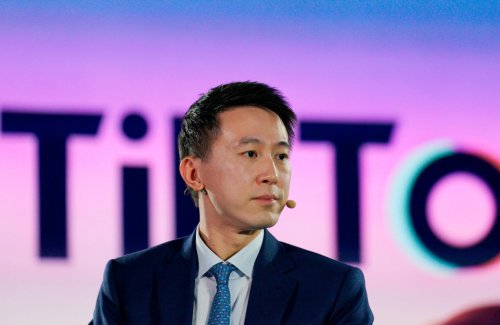
TikTok, the popular short video app owned by ByteDance, has announced plans to invest billions of dollars in Southeast Asia in a bid to boost its e-commerce business.
The move comes as TikTok aims to capitalize on its large user base in the region and address concerns over data security. With a collective population of 630 million, half of whom are under 30 years old, Southeast Asia represents a key market for TikTok, attracting over 325 million monthly visitors to the app.
Despite its impressive user numbers, TikTok has struggled to convert its popularity into significant e-commerce revenue in Southeast Asia, facing tough competition from established players such as Shopee, Lazada, and Tokopedia.
To address this challenge, TikTok CEO Shou Zi Chew revealed the company’s plans to invest billions of dollars in Indonesia and the broader Southeast Asian region over the next few years. While a detailed breakdown of the investment plan was not provided, TikTok intends to focus on training, advertising, and supporting small vendors interested in joining its e-commerce platform, TikTok Shop.
Chew emphasized that TikTok’s content is becoming more diverse as the platform expands beyond advertising into e-commerce. This evolution enables consumers to make purchases directly through the app during live streams. In Indonesia, TikTok’s largest market in Southeast Asia, the platform already hosts 2 million small vendors selling their products. The region’s e-commerce transactions reached nearly $100 billion in 2022, with Indonesia alone accounting for $52 billion of that figure, according to Reuters.
While Southeast Asian governments have not imposed major bans on government devices, TikTok has faced scrutiny regarding its content. In 2018, Indonesia briefly banned the app due to concerns over inappropriate content, while Vietnam has expressed concerns about the platform’s impact on local culture and tradition.
Despite the challenges posed by established competitors and data security concerns, TikTok remains committed to expanding its presence in Southeast Asia and tapping into the region’s vibrant e-commerce market.
Featured Image Source: CNN
- 2 min read
News
Olivia Chow has emerged as Toronto’s first Chinese-Canadian mayor, ending over a decade of conservative rule and ushering in a new progressive era for the city.
Olivia was 13 years old when she first arrived in the country as an immigrant. Now, at 66, she has achieved a remarkable feat, surpassing 102 candidates to become Toronto’s first Chinese-Canadian mayor. During her campaign, she focused on addressing the housing affordability crisis and pledged to raise the city’s low property taxes while providing support for tenants.
Upon taking office, Olivia faces opposition from Ontario’s premier, Doug Ford, who had warned that her victory would be an “unmitigated disaster.” Ford’s brother, Rob Ford, previously served as mayor of Toronto but faced controversy due to a video showing him smoking crack cocaine and a cancer diagnosis.
Throughout her career, Olivia has served as a member of parliament for the New Democratic Party, a Toronto city councilor, and a school board trustee. She also campaigned alongside her late husband, Jack Layton, who ran for mayor in 1991 and later became the leader of the opposition in Canada.
Olivia assumes the role of mayor at a challenging time for Toronto. The city, with a population of 2.7 million and a metropolitan area of nearly 7 million, is grappling with surging rents and a budget deficit of approximately $1.5 billion. Public safety concerns have also grown, particularly following a series of violent attacks on individuals using the public transit system.
According to The Guardian, Olivia is expected to be a champion for transit, as well as for walking and cycling – she does not have a driving license – and has promised to turn the tide on years of low-tax austerity politics enacted by her conservative predecessors.
Featured Image Source: The Toronto Star
- 2 min read