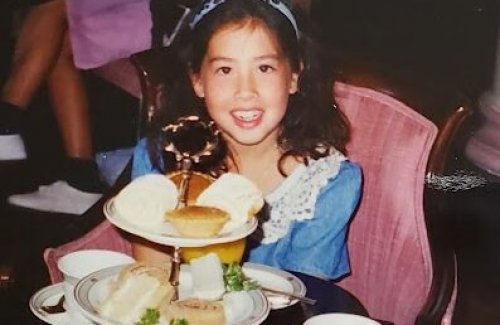
Christine Holmes grew up feeling different from her peers due to being a bi-racial Taiwanese-American.
Christine was often referred to as either the “Asian girl” by her non-Asian friends and the “White girl” by her Asian peers until eventually, they referred to her as “Whasian girl,” which she liked because it represented both of her ethnicities.
She struggled to embrace her cultural background and wished to be fully White. It took her long before she learned to love her identity and cultural heritage, but she did.
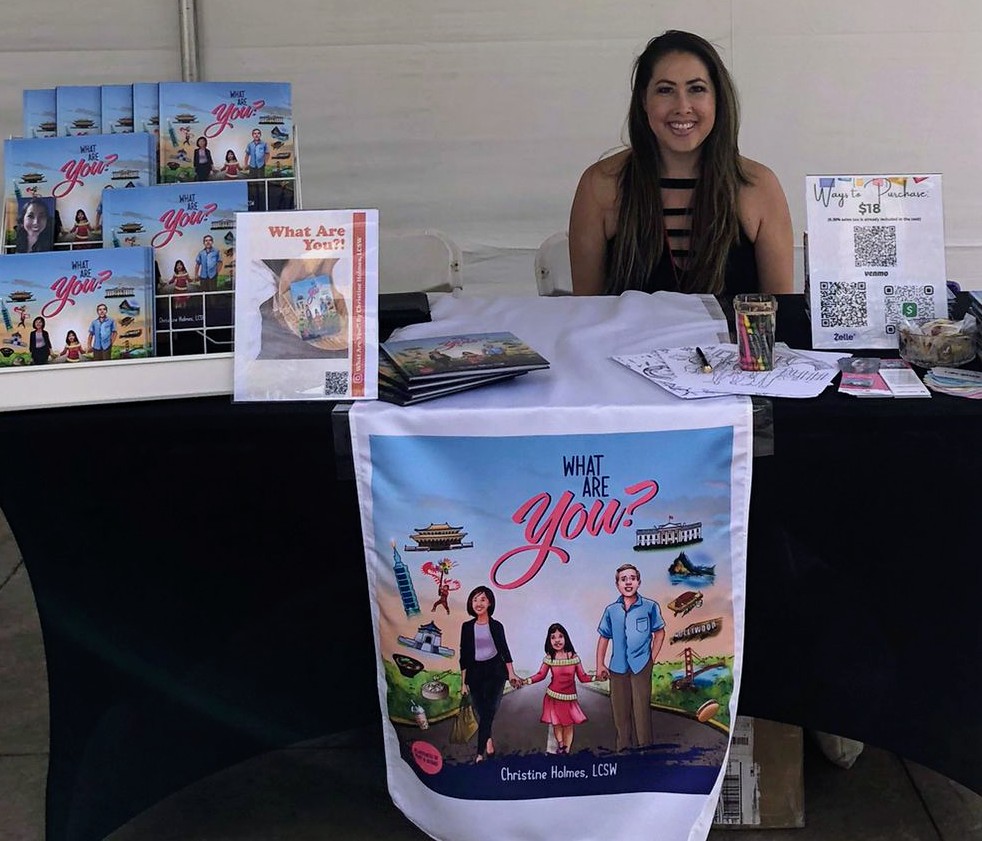
Inspired by her personal experiences, she wrote the book “What Are You?” to provide representation in children’s literature for mixed Asian children.
The book touches on her personal struggles with food and language, among other things, and highlights the importance of representation in literature for children who come from mixed cultural backgrounds.
GROWING UP WITH A TAIWANESE MOTHER AND AN AMERICAN FATHER
Christine grew up in Irvine, CA, where the population was predominantly white and Asian. However, there were very few mixed children, which made Christine feel very different from her peers, who were either fully White or fully Asian.

As a child, Christine was immersed in Chinese School, Chinese Choir, piano, and tennis, which made her feel even more different from her peers because most of them were fully Asian.
Christine’s dad, who is White but very much into Asian culture and a world-renowned Master of martial arts, made it very important for them that Christine knew her Taiwanese/Chinese culture. Christine’s mother cooked Chinese food for most dinners, and her first language was Mandarin.
Their home is filled with beautiful Chinese/Taiwanese antiques, and they used to visit Taiwan every year until Christine was in junior high/high school.
CHALLENGES OF BEING THE “WHASIAN” GIRL
“To my White friends, I was the Asian girl but to my Asian friends, I was the White girl until I got into high school and my friends decided to call me the “Whasian” girl which I preferred since it represented both of my ethnicities.”
Christine felt different from everybody growing up, which bothered her internally. In fact, she had a teacher in her Chinese school that wasn’t very nice to her because even though she can speak Chinese, she couldn’t write Chinese like the other children. This treatment left Christine feeling isolated and alone, until she eventually quit Chinese school altogether.

Her non-Asian friends also often made comments about the food her mom would bring to potlucks or the bags she would use to pack her lunch, making her feel ashamed of her culture. When her mom spoke Mandarin, her non-Asian friends would be offended and ask why she had to speak Mandarin in front of them. She would have to explain that it was sometimes easier for her mom to speak in her native language than speak English. This made her feel uncomfortable, and she would get angry at her mom for it.
At this point, she wished that she was fully White, perhaps because being White and blonde was considered the most beautiful when she was growing up. Her mom used to pinch her nose to make it look “taller” and less stubby like a typical Asian nose. Some of her Asian peers even told her that she was lucky to be at least half White compared to them being fully Asian.
THE TURNING POINT
It wasn’t until college that she fully embraced being mixed and started to love her identity. Christine found herself surrounded by a diverse group of friends who not only accepted her but celebrated her mixed heritage.
“In college, most of my friends were either mixed or of different ethnicities other than White or full Asian. And, they embraced me,” she said.
They appreciated the unique perspective she brought to the table and encouraged her to embrace her identity. For the first time in her life, Christine felt truly proud of her background and of who she is.
WRITING THE BOOK
Christine’s personal experiences served as the inspiration behind her book, “What Are You?” which is a story about her life growing up as a mixed-race individual in a predominantly white and Asian community.
Christine wrote the book when she realized there were no books that represented mixed Asian children. Despite being able to find books for her own children who are half Black, she couldn’t find any for children who were mixed Asian. So, she decided to create something that represented kids like herself.
“I think the part of the book that was most emotionally challenging was writing about the food and how embarrassed I was about my mom packing me Asian food even though I secretly loved it.” Christine admits to feeling a lot of guilt now as an adult for all the times she blamed and got mad at her mom as a child.

REPRESENTATION IN CHILDREN’S LITERATURE
Christine strongly believes in the power of representation and the need for diverse books that accurately reflect the experiences of mixed-race individuals. Having grown up without any books that reflected her own identity, she recognizes the importance of seeing oneself represented in literature.
She saw firsthand how much her own children appreciated books with characters that looked like them and had similar cultural backgrounds. Writing her book, “What Are You?”, she received overwhelming positive feedback from other mixed Asian individuals who wished they had a book like this when they were children.
Despite increased awareness and acceptance of mixed-race identities in modern times, Christine recognizes that children may still struggle with their identity and the pressure to choose one ethnicity over the other. Her book seeks to empower mixed-race children to embrace and celebrate all aspects of their identity.
OVERJOYED BY THE POSITIVE FEEDBACK
Christine initially had doubts about the book’s reception due to her own insecurities about putting herself out there. However, the encouraging and uplifting words from her readers have exceeded her expectations.
“I was featured on a TikTok page, twice, by someone with 1 million followers, who’s sister bought the book for her. She shared that my book had emotionally resonated with her in many ways. It was then that I realized the impact that my book has had on some people.”
HOPE FOR THE FUTURE
Christine hopes that her book will inspire readers to embrace their identity, no matter where they come from. She wants readers to know that they don’t have to choose between different cultural backgrounds and can be proud of their unique mix.
“I hope they embrace their cultural background, and they are proud of their roots.”
By highlighting her personal experiences, Christine hopes her book will contribute to a larger conversation about identity and belonging in our society today, and ultimately help break down barriers and build more inclusive communities.
CONNECT WITH CHRISTINE
Website: publishyourgift.lpages.co/christine/
Instagram: @whatareyoubook
Facebook: What Are You? Book
TikTok: @whatareyoubook
Growing up with stereotypical Asian tiger parents, Angie had always been interested in entrepreneurship but was constantly discouraged.
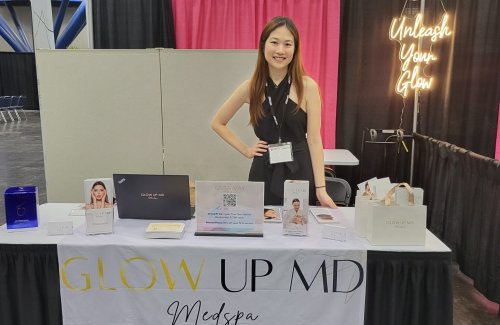
Angie Kim is the physician and CEO of Glow Up MD Medical Aesthetics and Wellness Practice. Her journey to success was far from easy. Angie grew up with traditional Asian immigrant parents who believed that taking risks in business was foolish.
She did all the stereotypical Asian things such as playing piano, being good at math, and going to a good college. She studied engineering and went on to complete medical school. And like most Asian women are expected to be, Angie was very quiet and had low self confidence.
But after completing her medical training, Angie realized that working for someone else was not what she wanted for her life. She refused to work for people without medical education and decided to take a chance on herself.
Starting her own business was an intimidating prospect for her. She had no background in business and had to navigate legal regulations, insurance requirements, and financial planning on her own. But with determination and persistence, she and her husband were able to set up a successful brick and mortar practice within just a few months.
Angie’s journey serves as a reminder that there is never a perfect time to start a business and that sometimes the best way to learn is by doing.
I DID IT ANYWAY
Even in middle school and high school, starting a business always piqued Angie’s interest. She had even presented a few ideas, such as a t-shirt business, to her parents when she was in middle school. Unfortunately, her parents always shot her ideas down, telling her they were stupid.
Angie’s parents have always been extremely risk averse and were against anything that required any type of investment with uncertain return. They wouldn’t even let her spend money to create a website.
Despite the discouragement, Angie was still very interested in entrepreneurship. She would constantly read articles about people who developed new apps or websites that became very popular. However, she had to put those aspirations on the backburner and focus on her education as her parents placed a high emphasis on education.
Even still, she would come up with ideas every so often and kept a list of these on her computer, hoping to return to them one day to get them started. “One thing that’s been constant since my childhood has been that whenever they told me I wouldn’t be able to accomplish something, I did it anyway,” she said.
BIGGEST CHALLENGES
Initially, one of their biggest challenges was trying to figure out the laws surrounding opening a medical practice. They looked at so many sources but kept finding contradicting or incomplete information.
The actual legalese was difficult to understand and they didn’t trust their interpretation of it. They finally spoke to a lawyer who confirmed what they understood. This allowed them to feel comfortable enough to continue on.
As of right now, the biggest challenge they’re facing is marketing and getting the word out. They are still trying to figure out the best way to do this. It has been mostly through trial and error. They are constantly trying different strategies, such as Facebook ads, in-person events, local SEO, local media and print, and direct mailing.

THE TURNING POINT
While working in the hospital, Angie began noticing little things over time that pointed towards the toxicity of the working environment, such as how little control and autonomy physicians have in taking care of their own patients, the backstabbing from other healthcare workers, and how physicians from other healthcare systems all had similar stories.
“I came to the realization that this would not change if I just changed jobs. The only solution was to start my own practice,” she said.
LOOKING BACK ON HER JOURNEY
The most rewarding aspect for Angie is the freedom to practice medicine the way it should be practiced. “I can spend as much time as I need to with patients. I don’t need to spend extra time trying to fight insurance companies. And my patients have been happy with their results,” she said.
She is hoping to grow her practice enough that she can open a second location and eventually franchise it, which would allow her to help even more patients and improve the healthcare system in her own small way.
“If I were to do it all over again, I would document my journey. I thought about it this time, but I felt like I didn’t know what I was doing the whole time.”

ANGIE’S ADVICE FOR OTHERS FACING SIMILAR CHALLENGES FROM THEIR FAMILIES
“People are always going to doubt you when you start, especially those closest to you. You can’t let that get to you. If it’s what you really want and you can’t stop thinking about it, then you should go for it. It’s going to be lonely and somewhat isolating when you start, but it’ll be worth it,” Angie said.
She believes that there’s always a way to solve a problem. If you feel like you’ve hit a roadblock, you can try looking at the problem from a different perspective.
Right now, Angie still hasn’t told her parents about her business and she’s waiting for the right time when she can finally tell them.
CONNECT WITH ANGIE
Instagram: @glowupmdspa
Facebook: Glow Up MD Medspa
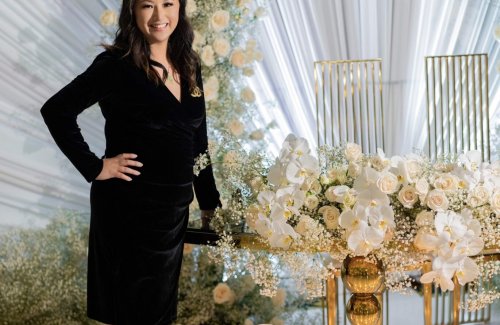
Dee Lee’s journey from being a middle school teacher to the founder of an award-winning event production company is a story that inspires us all to pursue our passion.
Despite facing various challenges and setbacks along the way, Dee persevered and learned from her mistakes, which ultimately led to her success. The road has been filled with ups and downs, but she never gave up.
Dee is a first-generation Teo-Chew Cambodian woman born in the United States. Her parents escaped from the Cambodian genocide and she is the oldest of three siblings. As a daughter of immigrants, she loves to use her platform to educate, inspire, and bless it forward to her AAPI community.
Join us as we explore the challenges Dee faced and the valuable lessons she learned on her journey towards success.
FROM MIDDLE SCHOOL EDUCATOR TO EVENT PRODUCTION COMPANY OWNER
Dee was a middle school teacher in the largest school district, Los Angeles Unified, starting full-time teaching at just 23 years old. She had a talent for grant writing for the various schools she worked at. However, Dee’s pivot came when her daughters were born, and she felt unsupported.
“I was doing events and photography as a hobbyist. I quickly learned that I found a new love and pursued it part time. Eventually I retired from teaching and opened my first LLC, got liability insurance, and the rest was history,” Dee said.
She faced a lot of challenges at first, mostly because she didn’t have enough business background to understand how to properly run a business. “Both my Bachelors and Masters were in education. I didn’t have a mentor. I learned a lot through trial and error.”
Eventually she found a network of event professionals that opened more doors for her. She started out in the Quinceañera market, where she made a name for herself as a designer in a Latino market. Although it was challenging, Dee thrived in it.
Along with the challenges she faced, she also encountered people who told her that she couldn’t make it. There was a time that she assisted a celebrity planner she admired, and was told that she was only good enough for small things. This was a devastating blow to Dee’s confidence. But despite these challenges, Dee persisted and emerged victorious. She continued to grow her business and inspire others with her journey.
MISTAKES SHE FACED ALONG THE WAY
Dee made a lot of entrepreneurial mistakes in the beginning of her journey. It was a new learning curve for her. She quickly learned why liability insurance was so important to have as a business owner, and she learned about quarterly taxes. She wanted to buy everything but she knew she shouldn’t.
“I still had a hobbyist attitude about pricing when I jumped into it full time. I didn’t know what market value was on anything and had to do a lot of research,” Dee said.
Networking was also a crucial part of her journey, as she learned the value of connecting with others in her industry and receiving valuable advice from them. Every piece of advice was like a gold nugget for her, and she took it all in. She was realistic with her expectations of growth and knew that success would not come overnight.
WHAT MOTIVATED HER DESPITE ALL HER SETBACKS
The honest truth about why Dee was so motivated and determined to succeed was the fact that she was the oldest daughter of her immigrant parents, and they thought that she was crazy to leave her profession as an educator and her two degrees. Even her cousins thought that she was just wasting her time in event planning.
She considered every mistake and situation as a learning experience, and worked tirelessly to establish herself and her business. Her goal was to become so successful that everyone would know who “Dee Lee” was.

HER CREATIVE PROCESS OF MAKING EACH EVENT UNIQUE AND PERSONAL TO EVERY CLIENT
When it comes to designing unique and personalized events for each client, Dee takes a meticulous approach. She is passionate about her work and loves the design process. She begins by sending her clients a list of discovery questions to help her gather information about their preferences and needs. She then schedules a virtual discovery call with her clients via Google Meet or Zoom, where she listens carefully to their ideas and aspirations.
Dee involves her clients in every step of the process, creating design boards together, and incorporating their personal preferences into the final product. Her approach is to make the process less transactional and more personable by humanizing the whole process.
Dee values building personal relationships with her clients, and they often embark on wedding planning and foodie adventures together. This helps her clients get to know her better, and it also enables Dee to understand her clients’ personalities and preferences. As a result, Dee is able to design events that are unique and tailored to each client’s needs.
ADVICE TO THOSE WHO WANT TO PURSUE THEIR PASSIONS AND THOSE WHO WANT TO ENTER THE EVENTS PLANNING INDUSTRY
Dee advises those who want to pursue their passions but don’t have the courage to do so to align themselves with a mentor to shadow. She emphasizes the importance of learning to do things the right way, which can be achieved by having a mentor who can guide and teach them. Dee also suggests networking and meeting new people, as it can lead to opportunities and connections in the industry. Community is important to growth.
Dee receives a lot of emails from people who want to shadow or become a wedding planner until they see it unfold live. She acknowledges that this kind of job is not for the faint of heart.
“There is a reason it is not made for everyone and it is one of the top ten most stressful jobs. You have to know how to think on your feet, fix things on the fly, in order to survive,” Dee said.
CONNECT WITH DEE
Facebook: Dee Lee Designs
Instagram: @deeleedesigns
Pinterest: Dee Lee Designs
TikTok: @deeleedesings