Media - AHN Media Group
podcast

Latest Episodes

Article
Elegant Cinematic Wedding Thumbnail HD 169 (1)-png

News

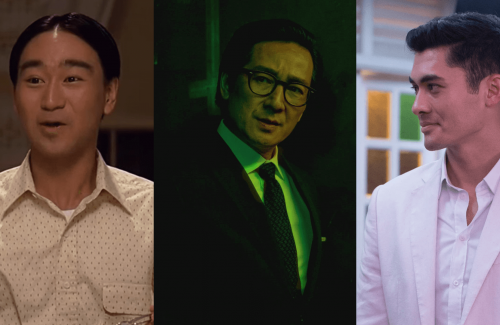
Film Portrayals of Asian Men Are Evolving Beyond Stereotypes

For years, Asian Americans have been documented as caricatures through the “white gaze.” They’re often depicted as emasculating tech geeks who are socially awkward, and lacking in romantic appeal, and, if they happen to like someone, they’ll get rejected quicker than they can solve 1+1. Just take a look at Long Duk Dong from Sixteen Candles (1984).

Long Duk Dong from the 1984 film Sixteen Candles, widely criticized for perpetuating negative Asian stereotypes, as his portrayal relies heavily on exaggerated accents and mannerisms (Image Source: Universal Pictures).

That seeming lack of nuanced portrayals was increasingly a benchmark for every Asian male cast- side characters that add no value but purely humor for the story. However, the rise of Crazy Rich Asians may not be the perfect stereotype-breaker; it definitely made a change in bringing Asian males to the forefront of romance.

According to a new study from the University of Southern California’s Annenberg Inclusion Initiative, there has been a considerable increase in AAPI characters in films, rising from 3.4% to 15.9% between 2007 and 2022. You can see this specific buzz in global blockbusters like Parasite and Everything Everywhere All at Once, which, along with the boom of K-pop, Squid Game, anime, and Indian cinema, contribute to the bursting allure of Asian entertainment. 

Simu Liu stars as the title character in Shang-Chi and the Legend of the Ten Rings (Image Source: Jasin Boland/Marvel Studios).

This was one of the few times Hollywood truly let Asians showcase their talent. Their roles are more diverse, multidimensional, and resonant—sometimes even diaristic—as they gradually gain more control over their narratives. 

Joel Kim Booster’s 2022 film Fire Island, which he both wrote and starred in, was a self-affirming act of a gay Asian American man, grounded in personal experience and insecurities. Alongside Booster, actors like Randall Park, Kumail Nanjiani, and Simu Liu have taken on roles that challenge traditional stereotypes, playing superheroes and romantic leads that are not always ethnically centric. Sean Wang’s 2024 critically-acclaimed movie Dìdi also looks into the complex growing-up experience of an Asian American man, carving out new territories in the monotonous Asian-led narratives.

Fire Island (2022) is a rom-com directed by Andrew Ahn, starring Joel Kim Booster, Bowen Yang, and Margaret Cho. It follows a group of gay friends on vacation, exploring romance and class struggles (Image Source: Searchlight Pictures).

Yet in spite, representation remains uneven, with many characters still marginalized. The road to diverse and well-portrayed depictions of Asian American men continues, hopefully with more individuals and organizations to create and support the community. 

With the rise of streaming platforms like Netflix, more eyes are on the global moviescape, particularly from Asian audiences, the fastest-growing population in the world. While well-rounded representation still has a long way to go, the current strides for AAPI talents are promising and appealing.
IMG_4220

Stories

Transforming Communities Through Love: The Story of The Love Tower at Ashah

Every day, we see the effects of division and misunderstanding around the world. Families, friends, and neighbors often find themselves divided by differences that seem impossible to bridge.

The founders of The Love Tower at Ashah understand these challenges deeply. They have dedicated themselves to creating a space where love, kindness, and compassion can flourish and bring people together.

The Love Tower at Ashah was born from a simple yet profound belief: that love has the power to heal and unite us. Through music, art, dance, and meditation, they aim to inspire individuals to choose love over division and kindness over conflict.

We invite you to read their touching story through a heartfelt interview with Asian Hustle Network and join their mission to create a more loving and united world.

The Origin and Significance of The Love Tower

The turmoil of 2020 was a year of immense challenge and reflection. Political unrest and a surge in Asian hate crimes exposed deep divisions within our society. In the midst of this chaos, a group of individuals came together with a shared vision: to address the growing disconnect and foster unity through love and compassion. This vision birthed The Love Tower at Ashah, an AAPI-led non-profit 501(c)(3) organization committed to promoting mindfulness, kindness, and joy through music, art, dance, and meditation.

“We realized that without recognizing our shared humanity and embracing our differences, the future for our children would be grim. Instead of fueling divisive conversations, we asked ourselves how we could highlight and nurture the aspects of our society that unite us,” Sissy Lee, one of the founders shared. “We believe that love, both for ourselves and for each other, is the most powerful force to bridge divides and heal our communities.”

A Mission Rooted in Love

The Love Tower at Ashah grew organically from a group of individuals from diverse backgrounds, united by the belief in creating a better world. Their mission is to build a community that values love, respect, and unity above all. They aim to create spaces where people from all walks of life can come together, learn from one another, and celebrate their differences.

“It is not just a physical structure but also a symbol of hope and inspiration for all those who seek to make a positive difference in their lives and the lives of others,” Sissy added.

Programs That Transform

At The Love Tower at Ashah, a variety of intentional programs are offered to amplify love and promote mindfulness, kindness, compassion, and joy:

  • The Music Enhanced Heart Meditation Experience: This program integrates live or recorded music with guided meditations and visualizations to deepen feelings of love and compassion.
  • Children’s Programs: Designed to promote emotional well-being, mindfulness, and creativity among children, helping them manage emotions, develop self-awareness, and build confidence. These programs are also integrated into schools to support both students and teachers.
  • Sound Therapy Sessions: In collaboration with local experts, these sessions include sound healing, meditation, and breathwork to foster relaxation, alleviate stress, and enhance mind-heart coherence.
  • Creative Healing Arts & Body Movement: This program combines mindful music, creative expression, and fluid movement to ignite creativity, alleviate stress, and cultivate a deeper connection with love and self-expression.

Overcoming Challenges with Compassion

One of the most significant challenges faced by The Love Tower at Ashah was understanding that love is multifaceted. It encompasses self-love, love for the community, love for neighbors, and more. This challenge is universal, but the founders have tackled it by creating programs and events that foster a safe and supportive environment for emotional expression.

“We invite everyone to join us in this journey. We aim to attract individuals and communities who align to help us resolve this challenge together, fostering a world where love, kindness, and compassion are at the forefront,” Sissy shared.

Achievements and Impact

The integration of The Love Tower’s programs into elementary schools stands as one of the founders’ proudest achievements. By nurturing the next generation with values of love, kindness, and compassion, they hope to create a ripple effect that will shape a brighter future.

They view themselves as the ancestors of tomorrow, believing it is their duty to lay a foundation for a more compassionate future. By embedding their programs in schools, they are planting seeds of empathy and understanding that will grow into meaningful change.

The involvement of notable figures like Marianne Williamson, André Duqum, and Sol Rising has enriched their mission, highlighting the widespread resonance of their vision.

Founders’ Stories

Sissy Lee

Sissy Lee, a dedicated philanthropist and entrepreneur, serves as the co-founder and Director of Programs at The Love Tower at Ashah. She is passionate about creating a brighter future for the next generation and has made significant strides in supporting children and educators. Beyond her work with schools, Sissy is committed to uplifting homeless and underprivileged communities in Los Angeles, tirelessly raising funds for essential causes.

Crystal Chao

Crystal Chao is a mother, seasoned entrepreneur, and investor. Her passion for spreading love led her to co-found The Love Tower at Ashah, where she serves as the Financial Officer. Crystal is fulfilling her lifelong dream of fostering love and unity to create a better world for everyone.

Michael “Shungunna” Resurreccion

Michael “Shungunna” Resurreccion, a consultant and founder of Resurreccion Media, is a devoted family man committed to catalyzing positive change within humanity. As the Executive Director of The Love Tower at Ashah, he channels his passion to create a meaningful impact.

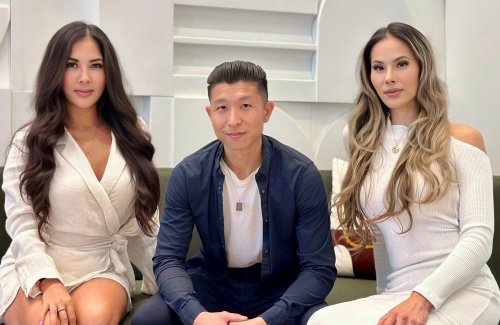
The Asian Hustle Network played a pivotal role in connecting the key co-founders of The Love Tower at Ashah. Michael joined the AHN community shortly after AHN was formed and soon invited Crystal to join. Crystal attended AHN’s first SoCal event, where she invited Sissy to volunteer.

The Love Rising Festival: Celebrating Unity and Love

A significant part of The Love Tower’s mission is The Love Rising Festival—a festival fundraiser designed to ignite a revolution of love and unity while raising funds for the organization, to be conducted on October 19-20, 2024 at the California Historical Citrus Park. The festival offers live performances by renowned artists, impactful activities with influential speakers, sponsor activations, and a variety of unique vendor experiences.

Visit thelovetower.com/loverising for more information.

How to Support The Love Tower

Here are some ways that you can support and be involved with The Love Tower to help them  sustain their transformative programs:

  • Join The One Million Love Legacy Campaign: Aimed to have 1,000,000 people donate $143 (Meaning “I Love You”) to have a loved one’s name engraved within the tower walls.
  • Financial Contributions: Donations help cover program costs, construct the tower, and support staff and volunteers.
  • Volunteers: Passionate individuals can assist with events, programs, and spreading the mission.
  • Sponsorships and Partnerships: Businesses can sponsor events or programs, providing essential funding and resources.
  • In-Kind Donations: Contributions of goods and services, such as use of venue spaces, community collaborations, event supplies, online and offline promotions, help reduce expenses and enhance offerings.
  • Community Engagement: Attending events, spreading the word, and participating in initiatives help build a supportive community.

Join the Journey

The Love Tower at Ashah invites everyone to join their mission to create a more compassionate and united world. For more information, visit their website at www.lovetoweratashah.com or connect with them through their social media accounts:

Facebook: The Love Tower at Ashah

Instagram: @thelovetower 

TikTok: @thelovetoweratashah

LinkedIn: The Love Tower at Ashah
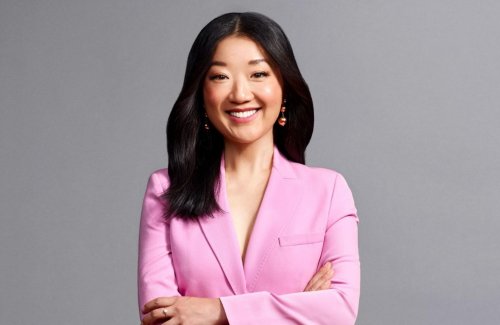
Tammy Sun

Awaken* newsletter

This Founder Raised More Than $115 Million to Make Fertility Care Accessible

Fifty thousand dollars. That’s the average cost of in-vitro fertilization (IVF) treatment in the US. Although the number of employers covering fertility treatment has risen significantly over the past few years, the percentage of employers that provide fertility benefits is still around 40%. This has left many hopeful parents stranded, unable to afford the hefty price tags out-of-pocket.

The good news is that we have many talented people working on this issue. Tammy Sun is the CEO and co-founder of Carrot Fertility, a startup that has raised more than $115 million to help employers, health plans, and health systems provide comprehensive fertility care benefits to people globally. We sat down with Tammy to chat about her work with Carrot and reflections on her founder journey.

TLDR; Key Takeaways

If you only have a few minutes, here are a few golden nuggets from our conversation with Tammy:

  • Storytelling is a core component of innovation. Whether you’re pitching investors, engaging with potential hires, launching a new product, or closing new customers, it’s critical that you can clearly articulate and curate the value proposition to each of your stakeholders. Practicing this skill will naturally lead to new conversations about how your product/service could be improved. 
  • The best way to build something people want is to listen to your customers’ problems. When talking to potential customers, give them the breathing room to talk generally about problems they are facing. This can provide valuable insight into the meaningful problems that need solving.
  • Choose a problem you want to work on where you have a personal connection to the issue, especially in healthcare. If your startup succeeds, you will be working on the same problem for 10+ years. Choosing a problem that you will have a lifetime of curiosity about will keep you motivated.
  • In the early stages of fundraising, focus on discovering your early believers instead of convincing people to care. Your early backers should be people who are as visionary as you are about your problem. Don’t waste time convincing investors who can’t be convinced, move on quickly.
  • Different stages of company building can require different employees. It’s important to remember that very few people can support your company from day 1 to an exit because most don’t have that prior experience. As a founder, you want to assess if the team you have is able to help you reach your next few milestones and reassess the next key growth stage of your company.  
  • The CEO acts as a culture’s pacesetter. As simple as it may be, you need to reflect on the behavior and aura you would like to see within your company. Alignment around company culture starts with you. 

What made you decide that starting a company was the right answer to the lack of access to fertility care?

Before starting Carrot, I spent some time in government, policy, and political work. There’s definitely a huge opportunity through policy to make large-scale improvements and changes to healthcare and other areas that can impact millions of people, particularly around regulatory issues related to fertility care, pregnancy care, and menopause care. But, I think the private sector and companies have a unique sharpness that can impact people in direct ways that nonprofits, legislative efforts, or even judicial efforts can’t.

In this country, whether you like it or not, people get most of their healthcare through their jobs. Employers, health plans, and the partners within the healthcare ecosystem that work with them are very much the primary delivery and distribution mechanisms for healthcare. I really believe that lifelong fertility care–from preconception all the way through menopause, low testosterone, and midlife care–is a vital and fundamental part of human healthcare. In order to bring fertility care to the table as a first-class citizen within the healthcare stack of work, we committed ourselves to making it easy for employers of any size, anywhere in the US and around the world, to customize their products and deliver fertility benefits to their employees in a way that is easy and seamless, and really elevates the experience for those employees.

There’s a place for all different types of work and activity that can impact this space, including nonprofits and public sector work at the federal and state levels. For us, we felt that the private sector and the company vehicle specifically were going to be the most impactful for the change we wanted to see in the world.

What valuable skills did you learn during your time in the public sector that are transferable to what you’re doing now?

In both the public and private sectors, as well as the nonprofit sector, the ability to clearly articulate your ideas with strong and compelling stories is really important. Whether you are in the public sector arguing for a piece of legislation or a specific law, or you’re in the private sector raising capital, launching products, or even recruiting talent and hiring people, it really depends on how good you are at telling your story and articulating an idea about the future. That’s something I was really able to bring with me in that transition.

We know that you played around with a few other ideas including some D2C ideas before committing to your current idea. How did you land on your current business?

It’s a great question. I’m an avid consumer of B2C-type healthcare products. I wear all the wearables and things like that. But as I said, if you’re really talking about healthcare with a capital H, you have to figure out a way to integrate with plans, payers, and employers. We tried many different ideas in the first year and a half of the company. Some of them were direct-to-consumer. We tried to make it really easy for people to access loans and financing. Ultimately, we shut that part down because we didn’t really want to be in the business of financing as the single solution. Medical debt is the number one reason that Americans file for bankruptcy, and we didn’t want to contribute to that. It’s great for some people, but at scale, it’s not a worthwhile solution. We tried all sorts of direct-to-consumer things. I didn’t know anything about benefits, employers, or the many acronyms in the space like ERISA, HIPAA, HRA, or HSA. But what I knew in the early days was that when I started talking to potential customers, all they wanted to do was talk about their problems and what kind of product they would be interested in if we were to build it. The enthusiasm and desire for a product that would make it easy for HR leaders and benefit leaders to meet their needs within their employee population was striking from day one. As soon as we pursued that avenue, we never stopped.

Within the fertility care industry, what do you think founders and other innovators should be focusing on?

I feel like the right match between the founder and the problem is as important as the match between the product and the market. What you want to do if you’re a founder thinking about starting a company is to make sure you have an almost never-ending well of curiosity about the problem you’re trying to solve. You don’t really need to have a clear solution in the early days, but you must have unending curiosity and empathy, particularly in healthcare. You need to understand who is impacted by the problem, who is hurt by it, and who feels pain as a result. Spend a lot of time understanding what that looks like even before you think about trying different MVPs and ways to solve it. If you have a personal connection to the issue, especially in healthcare, it contributes to a lifelong curiosity about how people experience the problem you’re trying to solve. This continuous curiosity allows you to keep innovating even two, three, five, or ten years later, building products and services that add value to people’s lives.

Given that fertility care has only recently seen an influx of venture capital, what do you think are potential exit options for fertility companies?

There are lots of ways along the journey to create liquidity for investors, shareholders, early employees, etc. As the category matures, those opportunities will increase, and we’ll see a lot more diverse outcomes across the category. That’s a good thing; it’s a sign of progress and market maturity. I’m excited about that because I think it’s coming. For early-stage founders, it’s less important to spend time mapping corporate strategy and how you are going to get to an exit. Instead, be maniacal about serving customers and the rest will generally sort itself out. But to your point, this category has been ignored for a long time, so it’s exciting to see how this area of healthcare is getting attention and being prioritized as an area of opportunity for investment.

When you were choosing an idea, was the total addressable market something that you thought about? 

Certainly, in the earlier days, it’s almost a conversation that doesn’t really need to be had. Generally, you want to try to solve a very specific thing really well out of the gate and then use that as a wedge and leverage to expand from there. But I did spend a lot of time evangelizing and educating different people, particularly investors, to address questions about how big the TAM would be. I had to explain why egg freezing was not a niche problem and all the things that, in retrospect, I’m sure you could appreciate as well. It’s very clear now and it’s part of the mainstream conventional wisdom that this is a very large area of healthcare. It affects almost every human being—people who are pregnant, and people who are not pregnant. We were the first to launch a menopause product into the employer market a few years ago, and we really think about that as both reproductive and post-reproductive fertility care. If we were to talk about menopause care five years ago, the category hadn’t matured enough where people would even take that seriously. 

If you’re new to fundraising, it’s a little bit jarring in the early days to get so many rejections, particularly if you’re generally a high-achieving person. I wouldn’t think about fundraising as convincing. I would think about it more as discovering, especially in the early days. It’s less about trying to convince a lot of people about your TAM and more about moving on quickly from people who you sense can’t be convinced and finding people who are as visionary and evangelical about your problem set as you are. 

How did you think about making your first few hires? Why did you hire them, and what lessons did you learn from those first few hires?

The first few hires generally are partially a function of who’s around you. What’s your current community like, whether it’s college or whether you’re in New York or Silicon Valley? What is your immediate vicinity, and who’s in your personal network? An important thing about your first few hires is understanding how to discern when the first few hires have hit their ceiling. You’ll have your first few hires, and then you’ll have your first few fires. The latter is probably as important as the former. 

Very few people can scale a company from zero to 100 million and be able to excel for that entire journey. More people will be particularly excellent at a particular stage of the company, whether it’s zero to a million, a million to 10, or 10 to 30. As a founder, you want to be able to hire and understand what the business needs, not just in this moment, but in the next few moments that are coming. And then, regardless of your personal relationships, you have to be able to shake your team up if needed and build it for the next phase. Sometimes that means you stick with some folks from your founding team. Sometimes that means you separate, and that’s okay. They’ll always be part of the story, but hiring and firing is probably one of the most challenging aspects of early-stage company building.

How did you think about culture-building? 

The thing that was most important for me was that the people in the early team were as obsessed as I was with customers, users, the product, and the problem. We knew very early on that the product would change and it would change very quickly. You want to be surrounded by people who are just as curious as you are about all the things that really matter. I was very lucky that I had a lot of people around me in those early days where our curiosity matched each other. Our level of intensity and our level of passion were all well-calibrated with each other.

Where you find problems, especially in early-stage company culture, is if that calibration is off and some people are running at different speeds. You want your initial team to be extremely aligned, running at the same speed. Everyone should be equally passionate, curious, and taking advantage of the fact that you are early and minimal; so information, knowledge, and insights can travel very fast within the team. As a CEO, you are generally the pacesetter when it comes to progress and culture. I would encourage early-stage founders to think of themselves as pacesetters and examples so that others can see what kind of behavior comprises the culture of a company.

How has your identity as an Asian impacted your founder journey?

The area where it has impacted me is representation, meaning I didn’t have that many Asian role models coming up. That absence has really emphasized the need for empathy, not just for other founders, but also for users and members. For example, considering where our users come from. Where do they feel like there are no role models? Where do they feel like there is no precedent? Where do they feel like it’s lonely? I think my own experience has enlarged and augmented my sense of empathy in all directions with other founders, but also within my customer base and my membership base as well.

Can you share more about the policy-related work Carrot has been doing or that you’ve personally been doing in Alabama to expand and protect access to IVF and other fertility benefits?

What happened in Alabama was bad. We anticipated it and moved very quickly to make sure that our members who were impacted in Alabama were supported. While the change didn’t affect a huge number of members, it was significant from a cultural and media perspective. We made sure that members were communicated with, that customers who were impacted felt supported, and that we were able to answer lots of questions from our partners within our ecosystem.

A silver lining of the Alabama situation is that a strong bipartisan consensus emerged in favor of access to IVF. You saw Democrats, Republicans, and independents all speak up in favor of IVF and fertility care as a fundamental part of healthcare. This is medical care. I saw almost no voices trying to restrict access to it from a political or policy perspective. That is a significant silver lining and an area where we’ve tried to center ourselves and expand the consensus in favor of support. We believe that anything that prohibits or decelerates access to care is bad, and the Alabama event was certainly in that category.

Lastly, is there anything that you’d like to shout out or promote?

My friend April Koh. She’s the founder and CEO of Spring Health, which is a mental health company. She and I have known each other for a long time. She’s done such a phenomenal job in the mental health space with Spring, so I’d like to shout out April.

MIKO Eyewear

Stories

A Mom’s Struggle Led to MIKO Eyewear: Finally Glasses for Low-Bridge Kids

Have you ever struggled to find glasses that fit just right? If you have a low-bridge nose, this challenge might be all too familiar.

For many people, especially in the Asian community, finding eyewear that stays comfortably in place without constant adjustment is a common struggle.

Megan Miyamoto, founder of MIKO Eyewear, knows this experience all too well, and it’s what inspired her to create a brand that finally addresses this issue head-on.

The Inspiration Behind MIKO

Growing up, Megan often faced difficulties in finding glasses that fit well. She felt frustrated by the lack of options that accommodated her facial features.

“I was often told to ‘just shop the rack,’ which left me feeling like I needed to fit in or that there was something wrong with my facial features,” Megan shared with AHN.

When she became a mother, she was determined to give the best for her daughter, including the right eyewear. She didn’t want her daughter to go through the same difficulties that she did.

Through her research, Megan discovered that up to 80% of lifetime UV exposure occurs before the age of 18, leading to serious eye health concerns like cataracts and eyelid cancer. Yet, when she went searching for suitable eyewear for her daughter, she found the options disappointingly limited, especially for children with low bridges.

After trying countless samples, including private label options that didn’t meet her standards, Megan decided to give it a go and design a product using high-quality materials that she could feel good about. And that’s how MIKO was born.

Overcoming Challenges with Community Support

One of the toughest challenges that Megan faced as an entrepreneur is the sense of isolation that can come with building something from the ground up. 

“There were moments when doubt would creep in, and it was easy to feel overwhelmed by the sheer amount of work and decisions needing to be made,” she said.

Megan found strength in the community that rallied around her. She pushed herself out of her comfort zone, connecting with mentors, fellow entrepreneurs, and communities like Authentic Asian.

“If you took the time to connect with me, spread the word about MIKO, or made a purchase, sincerely thank you for being a part of our MIKO journey.”

The Creative Process

Seeing her idea turn into a tangible product that her daughter and neighborhood kids genuinely love is one of the milestones that Megan is most proud of. What started as a quest to fill a gap in the market for low-bridge kids’ eyewear has evolved into a brand that brings confidence and joy to its young wearers.

The design process was particularly special for Megan, as it was a collaborative effort involving her daughter and the neighborhood kids, and turning her kitchen island into a mini design studio.

During these sessions, Megan paid close attention to the kids’ feedback, particularly when it came to the fit of the glasses. They tried on various prototypes, providing insights into what felt comfortable and what didn’t. They also got to select the colors for the frames, giving a fresh perspective and opening Megan’s eyes to combinations she probably wouldn’t have considered on her own.

Seeing the kids’ faces light up when they tried on glasses that fit perfectly was incredibly rewarding for Megan. Their creative process reinforced the idea that MIKO isn’t just eyewear made for kids—it’s made with them.

MIKO’s Mission and Vision

MIKO Eyewear is dedicated to empowering the next generation by providing inclusive, stylish, and functional eyewear specifically designed for children with low bridges.

Megan’s vision is to redefine what it means to wear glasses, turning them from a mere necessity into a source of pride and confidence for kids. By addressing the unique needs of low-bridge children, MIKO not only fills a gap in the market but also celebrates the diversity of facial features, empowering the Asian community and beyond.

Connect with MIKO

Instagram: @miko_eyewear

Website: mikoeyewear.com

Get a complimentary eyeglass strap with your MIKO Eyewear sunglasses purchase! It will be automatically added to your cart. Available for the first 100 customers only!