Uncategorized

September 12, 2022

SHARE:

Some business owners spend years building a company only to see it fail before it even takes off. How are you going to survive and cope? Will you just give up that dream business?

We all know that life as an entrepreneur is complex, but once you hit it, everything falls into place. Following the example of 27-year-old Thai entrepreneur Vanessa Techapichetvanich as she trusted the process and waited for the right moment to reap the benefits of her efforts.

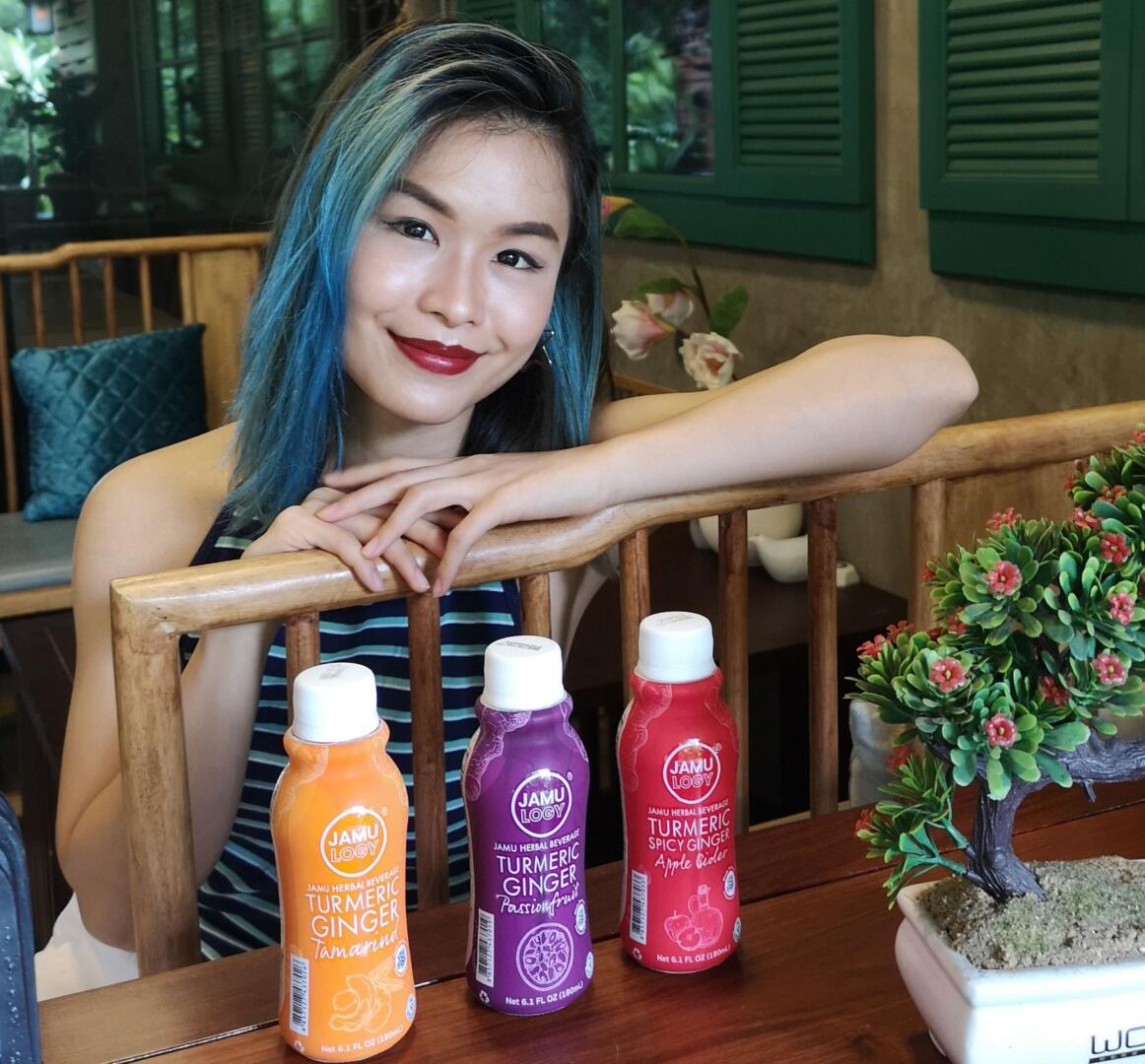
Read through as Vanessa shares her story with the AHN community about building her passion-driven business Jamulogy, a 100% plant-based Indonesian herbal tonic. She discusses her struggles that almost made her give up, and what kept her going in order to reach her successes today.

Hitting Rock Bottom At The Very Start

2 years ago, I poured all my life’s savings into building Jamulogy. I raised quite a significant amount of funding through families and angel investors, built my first factory from scratch, and lost over $1M, due to the pandemic and an over-prioritization of FoodTech R&D.

I was devastated. This tremendous loss was beyond tragic. I was at the point where I wondered whether it was stupid for me to leave my high pay corporate job only to lose all my savings along with a sum of money from my investors.

What am I going to feed myself tomorrow? What will my employees do when they lose their job? How will I regain all the money I’ve lost? How will it affect women founders’ reputation in the startup ecosystem?

These questions and my desperation kept me wide awake at night for months. I was distressed, depressed, and hopeless. It was one of the lowest moments of my life.  

It also made me realize that when someone says “life as an entrepreneur is tough”, it is very much an understatement. You’re pretty much living on the edge 24/7, giving your 10000% best while success isn’t guaranteed.

What am I going to feed myself tomorrow? What will my employees do when they lose their job? How will I regain all the money I’ve lost? How will it affect women founders’ reputation in the startup ecosystem?

-Vanessa Techapichetvanich

Shedding Some Light On Untapped Opportunities

I almost gave up. I would have.. had I not coincidentally connected with someone from AHN who is in the import and export business. One really good thing about this group is you have people from everywhere around the globe, and they are able to share insightful expertise on some stuff you’re not familiar with. 

I joined AHN more than a year ago when Facebook suggested the group to me. One day, I saw some people posted about expanding their food products to big retailers like Walmart, Wholefoods, and Costco, and from there, I got to connect with someone from San Francisco who works for a national distributor company in the US, and that’s how Jamulogy’s products entered the US market. 

This encounter shed some light on untapped opportunities and calls for a pivot in our business model. And I have been rebuilding since January. Despite the adversity I have been put through, this journey has been my greatest teacher yet.

I’m proud to share that Jamulogy is now available in 5 countries worldwide, including the US, Australia, Singapore, Hong Kong, and Thailand. Jamulogy has also recently “graduated” from Southeast Asia’s biggest FoodTech accelerator program. 

Despite the adversity I have been put through, this journey has been my greatest teacher yet.

-Vanessa Techapichetvanich

Transforming Traditional And Holistic Drinks Into Recipes Of Yummy 

Jamulogy was born out of my passion for a healthy lifestyle and my dream to bring Asian pride to the global stage. My mother is Indonesian, and I was introduced to Jamu when I was 5. The word “Jamu” itself means herbs in Indonesian. Sadly, our generation in Asia has overlooked these Indonesian herbal drinks that have over 1,300 years of history as they often associate herbal blends with older people.

Vanessa and her mother

Using modern food tech and all-natural non-GMO ingredients, we aim to recreate traditional Indonesian Jamu as a way to restore health to modern consumers. We are also committed to debunking the myth that healthy food tastes terrible.

Our concept is “From farm to bottle,” and we take every opportunity to support local farmers & growers around Asia. Each bottle contains only 40-80 calories without cane sugar or highly processed ingredients.

Going forward, we are also diverging our product offerings into herbal powder mix to cater to different consumer lifestyles across the world. 

Inspiration To Keep Going and Work Harder

What inspires me the most are our customers. I received all sorts of feedback from customers, both positive and negative. Whenever I hear our customers telling us how our products have created a value-adding impact on their health and life, I can’t help but smile to myself. 

But of course, we also received negative feedback and complaints, which I got a lot of value from as those have helped us improve, adjust, and create even better products for our customers. Truth be told, we have experimented with over 150 recipes. It was a struggle at the start, but “fall seven times, get up eight.” 

It’s the joy of being able to create a positive impact in society that keeps me going. 

It’s the joy of being able to create a positive impact in society that keeps me going. 

-Vanessa Techapichetvanich

Advice To Aspiring Entrepreneurs

  1. Don’t be afraid to ask for help when you need it. 
  2. Do not let your failures define who you are, but do learn from them. Every successful person I know has gone through several major failures before they get to where they are today.
  3. Surround yourself with like-minded people. I can’t stress enough the importance of this. 

For me, the most important traits of being an entrepreneur are a growth mindset and adaptability. It’s not about who has the most brilliant ideas or who has the highest IQ, but more so who adapts the quickest to fit the market’s needs and customers’ expectations. 

Connect With Vanessa

You may check out our IG/FB at @drinkjamulogy.

If you’re just starting an F&B business or planning on exporting to Asia and want some advice, feel free to reach out as well. I’ll try my best to answer ⭐

Related Articles

Image Source: Silicon India

News

South Asians Found Second Home in Devon Avenue’s “Little India”

At Devon Avenue in Chicago, immigrants from India discovered a taste and comfort of their home country.

The area, commonly referred to as “Little India,” has served as a shelter for Indians who miss their culture.

Finding a home in it, Indians such as National Indo-American Museum board member Beverly Kumar, go there every now and then, especially when she craves Kalakand, a traditional Indian fudge.

According to Kumar, “It’s very comforting knowing that just 14 miles away from my house, there is an essence of Little India.” She also mentioned how reminiscing it is to see familiar sights, sounds, scents, and flavors when visiting Devon Avenue since it makes her feel as though she has never left home.

The area not only became a haven for Indians, but also for other South Asians who opened grocery stores, sari and jewelry stores, as well as many other enterprises in addition to food stores.

In the middle of 1960s, the place it became the second and fourth-largest enclave for Indian and Pakistani Americans, respectively.

The Federal Immigration and Naturalization Act of 1965 ushered in the first wave of South Asian immigration, which established settlements for South Asian professionals in Chicago, while the second phase arrived in the 1980s and 1990s.

Psychotherapist Ranjana Bhargava was one of the first immigrants who yearned for vegan food and searched for spices to sate her craving for Indian cuisines, which she found at Mexican places.

Between the first and second waves, businesses such as The Sari Palace sari store and Indian grocery stores began to thrive there.

Since then, a new community has been created where Indians continue to practice their culture through activities like viewing Indian movies, getting together, playing instruments, performing traditional dances, and eating.

The once Jewish-dominated place became a mainly Indian community which captivated more visitors where one can meet not only Indians but people of different races.

Image Source: Olivier Koning / Honolulu Magazine

Stories

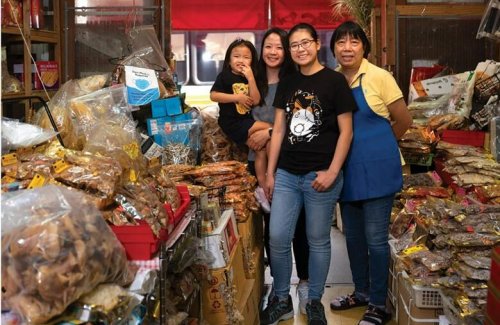
Chinatown’s Oldest and Most Respected Businesses Proudly Carried On By Next Generation

The blood of entrepreneurship runs through the veins of Chinatown’s Chinese food business owners, as three of the longest-running businesses have their children enter the management fields of their family business.

Tony and Selina Chun, together with Alan and Helen Chun, who have been in the business for decades, fully trusted their children to run the meat market company they bought in the 1980s.

The older generation passed it down to their children believing that they would treat it the same way they had after 40 years of building and creating the Chinatown cornerstone with crispy roast pigs, burnished roast ducks, and glazed char siu along with butcher store and seafood vendor.

Frankie, 35, and his cousins are now in charge of running the company that they established through diligence and thrift. Given that they have a family business to manage, Frankie has known since then that he won’t take long in any career.

He was reported in Honolulu magazine as saying, “I knew that anything I was going to pursue wasn’t going to be lengthy, because the family would always ask us back for support.”

He and his cousins learned the operations as a result of early exposure to the business and used them as a means of support, which pleased their parents, especially when they took their first vacation in four decades.

Meanwhile, Liana Fang, whose parents Wesley and Jie Mei Fang founded Sing Cheong Yuan Bakery, assists in running the business.

The pair bought the bakery from its original owners and then expanded it by bringing in more goods. The homemade goods were prepared using original family recipes that they later improved.

The 27-year-old claims she adores Chinatown but acknowledges that she is more passionate about cooking than baking. “It’s so authentic. I love Asian food, the fresh markets, the mom-and-pop shops,” she said.

Completing the list, the 33-year-old daughter of Sun Chong supermarket co-owner Ann Sung also contributes to management of the business.

Sun helps them sell their products and other items by marketing it online and by helping accomplish other stuff needed in the business.

Sun, who grew up at the shop with her cousins, said that their business is like a thread that can connect generations. She also claimed that coming home after studying abroad was like paying back her mother, who had done everything for her. Sun plans to update and improve her mother and aunt’s traditional business structure.

Image Source: Yahoo! Life

Stories

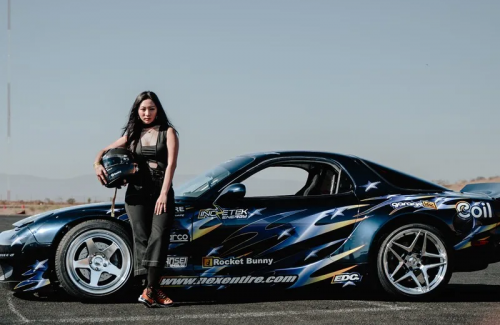
29-Year-Old Drift Racer Sara Choi Excels With Prowess In Male-Dominated Industry

Sara Choi, a South Korean drift racer, is one of the rare female drift racers who compete on an equal or even higher level with men in the automotive industry.

“Men have egos. Men have pride,” says Choi upon knowing that some guys dislike her. 

The 29-year-old was taken care of by a gang of automobile kids after leaving her Hawaii home at 15 and this is when she first acquired her curiosity and passion in cars.

Cool as she is, Choi drives a car at 70 mph while it “drifts” due to oversteering and also has to deal with microaggressions and crude remarks about her body as a drift racer.

Being one of the few women of color who is so skilled at it, vehicles are more than simply a hobby, a source of celebrity, or a source of income to her. Not only did she find a great deal of thrill when she drives sideways at high speed, but a new family as well.

“In Hawaii, we only have three freeways. Every Wednesday and every weekend, they would host a “car cruise meet” at the military base, which was everyone—sometimes up to 200 or 300 cars—going on the freeway and just racing. I would always go with my friends to that,” Choi said in Cosmopolitan. 

When Choi got her first full-time work at a tuning shop, she got a 1999 Civic through her boss, which she paid for with every paycheck. This marked the beginning of her passion for cars. 

After being introduced to drifting, she traveled to Japan, the country where the practice first emerged, years later. After completely experiencing the pleasure of drifting there, she grew passionate about it to the point that it became not only a hobby but a career.

Choi revealed that she is still debating whether or not to compete because it is a male-dominated field and that she is experiencing psychological difficulties.

She is currently concentrating on running racing events to keep the fire going.

One big achievement she had in the arena was when she created the Acura mod, a vehicle she worked on for three months for the SEMA exhibition in Las Vegas.

Additionally, Choi encouraged other women who want to pursue drift racing to “Just do it,” adding that they should put themselves out there to connect with individuals in the field.

Image Source: Twrl Milk Tea

Stories

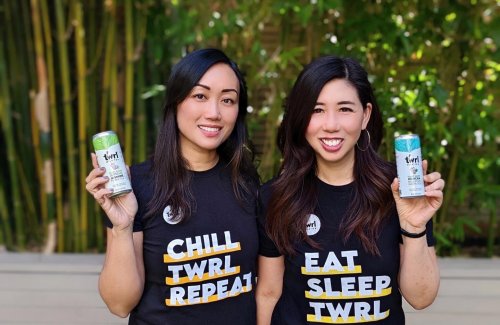
These Two Moms Started Milk Tea Company To Take Pride Of Their AAPI Identity

In order to realize their dream of founding a food company, Olivia Chen and Pauline Ang chose to create Twrl, a milk tea business that embodies their beliefs as mothers, graduates of Berkeley, and members of the AAPI community.

For their whole 20-year friendship, they have always shared a love of food.

In spite of the challenges of setting up a tiny business in the midst of a pandemic, Pauline took the time to experiment and eventually make the tea she wanted. In the Twrl, she invented the first vegan, low-sugar, and low-fat milk tea.

The two eventually hired a co-packer and a food scientist for their canned and on-the-go product.

The co-founders’ early supply purchases from small family farms had been stirring. They were able to help them by making them their suppliers and even assisted them to get non-GMO certification through their products.

Because peas have a neutral flavor, require very little water, and produce significantly fewer carbon emissions than soy and almonds, Twrl used them to make sustainable milk tea.

Olivia and Pauline chose the name Twrl for their company based on a Chinese tale about brewed tea. Twrl is a company that embodies tradition and history with a touch of modernism.

As Asian-Americans who grew up drinking milk tea as part of their family heritage, they are major admirers of it and have even changed its ingredients with their loved ones.

Olivia went on to say that teas in cafés have extremely high-calorie content, low-quality ingredients, and impractical portability. In Twrl, they created its antithesis.

Olivia said they are motivated by the need to create a product that accurately represents America as a nation of immigrants, just like them and their families. A company that offers people the chance to blend their races and serve as role models in the community.

She clears up that as the organization’s founders, they are an Asian-American brand rather than an Asian or American brand.