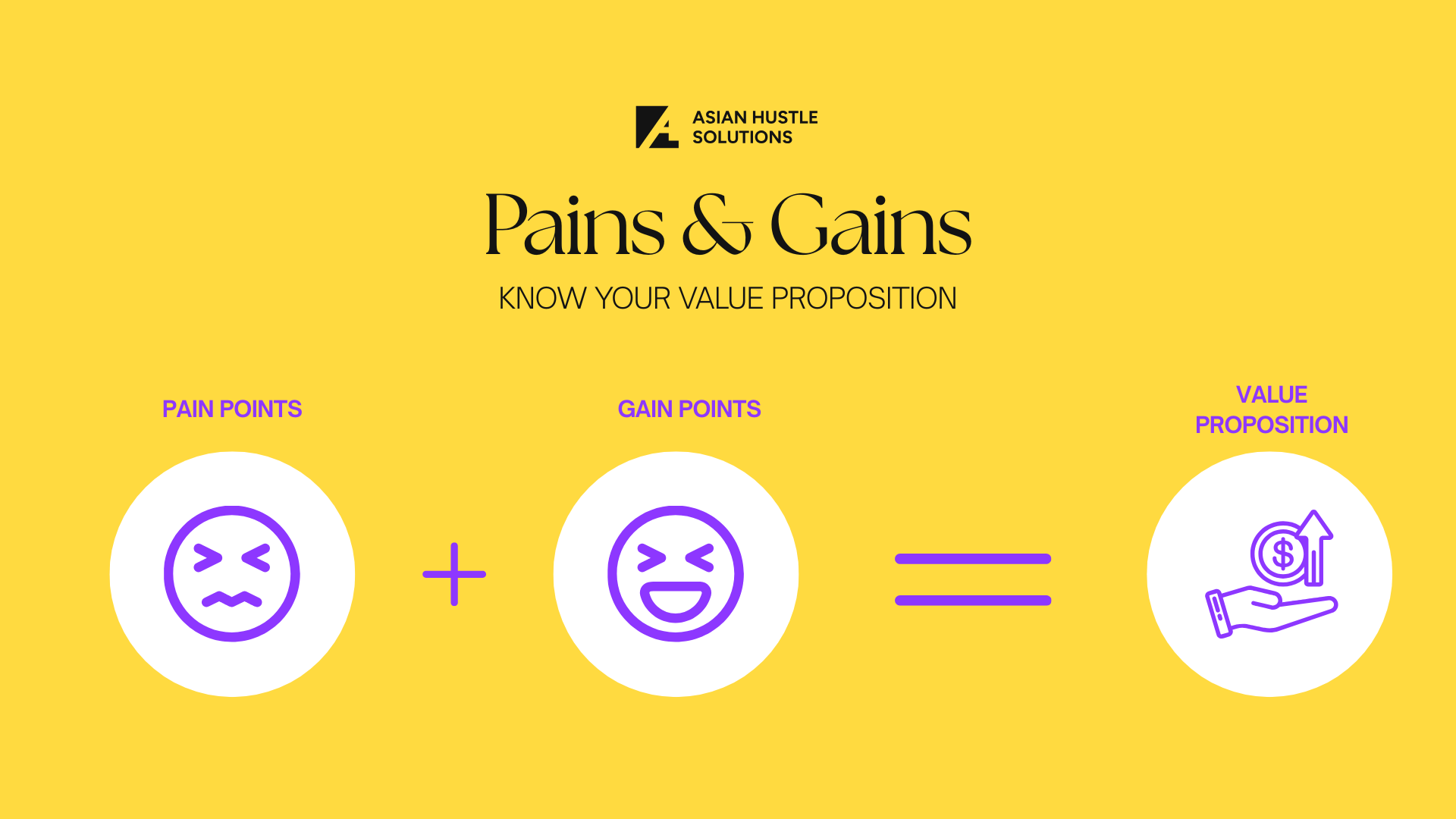
Pain points and gain points are not necessarily new concepts, but some might think they are opposing concepts, when in contrast, the two complement each other. Through customer pain and gain points, you can get a better understanding of your customers’ needs, and offer a unique value proposition.
Pain point: As the name suggests, it’s something that “pains” your customers; an issue that they have that needs to be addressed; a challenge that they need to overcome.
Gain point: Gain point, on the other hand, is more about you. What can your product or service do for the customers; what can they gain from using your service; what can you help them with?
The two are extremely simple and are a good place to start when you’re trying to advertise your product or service since they consider both your and your customer’s sides to offer a value proposition that is valuable.
[Book a FREE call with us] If you want to explore our services more, visit the Asian Hustle Solutions website at AHS.
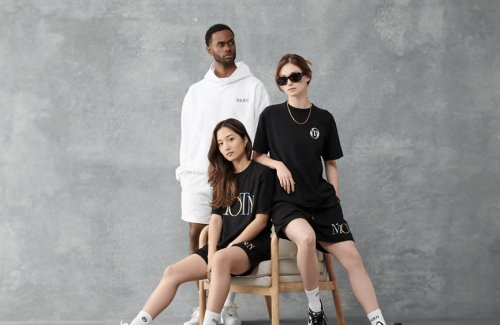
In a world where exercise is becoming increasingly important to maintain a healthy lifestyle, finding comfortable and stylish workout clothes is essential. Unfortunately, many brands in the athletic-wear space have similar designs and aesthetics, leaving little room for uniqueness. That’s where MOTN comes in.
Founded by Alice Kim, with the support of her husband, in Los Angeles, MOTN is an athleisure/streetwear brand that aims to provide clothing that encourages people to stay active or to be “always in motion,” as in their slogan.
With their unique approach to combining fitness and streetwear, MOTN has created a loyal community of individuals who are always in motion. As Alice said, “We need other people to encourage us and support us. This is what I hope people wearing MOTN would also feel – that there is a community of people who are always in motion.”
Inspired by Alice’s love for fitness and Josh’s passion for sneakers and fashion culture, one of the main goals of MOTN is to balance workout gear and streetwear. The couple noticed a gap in the market for brands that emphasized both aspects of fashion.
To make their pieces unique, every collection requires dedicated time and thought to execute the style and design they are going for. They aim to create pieces that differ from every collection and keep customers engaged. MOTN values versatility and flexibility, allowing customers the freedom to mix and match pieces or choose an entire outfit to rock.
Starting a new business came with its fair share of challenges, including moments of doubt and uncertainty. Alice often found herself questioning how their brand would stand out in a market that already had thousands of clothing brands. However, Alice shared, “Throughout the uncertainty, I’ve had an amazing group of friends and family, especially my mom, that pushed me and encouraged me to still give it my all and try to make it work!”
Maintaining quality is also a top priority for MOTN. The brand aims to never compromise on quality, even if it means sacrificing on their end, “ Whether it’s taking longer to sample fabrics/materials, sourcing different fabrics/materials, or even taking a hit financially. We know that when it comes to a brand, customers are always first and so we want to prioritize them,” Alice explained.
As an Asian-owned business, the brand has fortunately not faced any large difficulties in the fashion industry. Alice acknowledges the support from the Asian community and is thankful to have individuals who already support MOTN. However, she wants to make it clear that their brand is all-inclusive and not focused solely on the Asian community.
When asked about her biggest piece of advice for someone starting a business, Alice emphasizes the importance of being passionate about what you do and not comparing yourself to others. Growing up, Alice looked up to her single mom, who worked diligently to get to where she is today. Because of that, she acknowledges that building a successful brand takes a lot of hard work and time, but if you work hard and stay committed, people will see your efforts. Alice also stresses the importance of patience and not getting discouraged by slow progress.
Lastly, Alice highlights the value of community support. “Through launching our brand, I realized how important it is to lean into your community,” she says. “The MOTN team may just be two people but the MOTN family is so much bigger, and we cannot thank our community enough for their love and support.”
Gong Grocer by Thai Kee is a family-owned and operated Asian grocery business with a legacy spanning over 30 years. In this article, Brian Nguyen, one of the co-founders and a Director of Gong Grocer, shares insights with Asian Hustle Network.
Brian’s family is well-known in the Sydney community for their Thai Kee roots. Their journey originated with their grandfather, Thai Trinh, the esteemed namesake of the family’s original supermarket, Thai Kee. Gong Grocer represents the family’s evolutionary step, a mission to revitalize and modernize the Asian grocery shopping experience.
Brian acknowledges the shifting expectations of customers in physical in-store retail settings, and it’s their goal to meet these expectations in their new stores. As the Co-Founder and Director, Brian brings a unique blend of family tradition, personal journey, and a commitment to delivering an exceptional Asian grocery shopping experience.
A FAMILY OF IMMIGRANTS
Brian’s parents, uncles, and aunties were immigrants who fled Vietnam during wartime. Striving for a new life, they left behind everything in pursuit of opportunities in Australia.
Australia’s policy of multiculturalism provided a unique chance for Brian’s family and immigrants alike. The open embrace of diversity allowed families like theirs to openly celebrate their culture, thrive, and share their rich heritage with the broader community.
The origin of the name Thai Kee comes from their grandfather Thai Trinh, who they lovingly referred to as their “Ah Gong” (阿公), meaning grandfather in their dialect. He was the patriarch, and the original entrepreneur of the family. He sold Chinese donuts to supermarkets, waking up at 2 am each morning to bake them, then walking and hand delivering these donuts to supermarkets by 9 am each and every day.
THE FIRST THAI KEE SUPERMARKET
Despite limited means, Thai Trinh invested $5,000 in the first Thai Kee Supermarket in Cabramatta, providing a foundation for his children. But aside from money and most importantly, he passed onto his children a profound sense of hard work, dedication, and a deep commitment to one another, in their culture, and their community.
These values, instilled by their Ah Gong, form the cornerstone of their family’s identity. Known as “Thai” from Thai Kee to customers, to the family, he’s always been Ah Gong.
To honor the spirit of their beloved Ah Gong, Brian and his family launched Gong Grocer by Thai Kee, or 阿公超市, paying homage to the heritage and principles instilled by their grandfather.
FULL-TIME LAWYER TURNED ENTREPRENEUR
As Brian got older and heard more about his family’s stories, he felt a strong desire to carry on their traditions. He saw it as his mission to come up with new and interesting ways to share their culture with the diverse Chinese, Asian, and Australian communities.
Formerly a full-time lawyer, Brian Nguyen took the leap into entrepreneurship, co-founding Gong Grocer alongside his wife Wendy Lin, who herself manages her own successful business, Lioness Fashion.
Brian draws inspiration from his family’s entrepreneurial legacy, rooted in hard work, service, and dedication. The values instilled by his grandfather, Thai Trinh, continue to guide Brian in his pursuit of business excellence and cultural celebration.
OVERCOMING CHALLENGES
In his career and business journey, Brian Nguyen faced significant challenges, notably in time management. Gong Grocer started as a passion project for him. The transition from law to full-time business, alongside his wife Wendy Lin in Lioness Fashion, posed a wild adjustment.
Shifting from a lawyer to a business owner brought its own set of challenges. Balancing the demands of Lioness Fashion, an internationally recognized brand with immediate growth needs, and Gong Grocer, a venture built from scratch, proved to be extremely difficult. The latter involved design, planning, construction, and eventual launch and operations.
To overcome these challenges and achieve success, Brian drew inspiration from his family’s values. He doubled down on hard work and commitment, using them as guiding principles. Recognizing the need for a strong team, he leaned on his family and those around him to build a purpose-driven team that shared his vision. Together, they navigated the complexities, turning Gong Grocer into a thriving reality.
CELEBRATING GONG GROCER’S FLAGSHIP STORE
One of Brian Nguyen’s proudest achievements in this journey is the flagship supermarket store.
“Seeing the tangible transformation coming to life and physical form, from cutting out a giant hole in a concrete floor to creating a whole new level in a shopping centre, and doing this with my family no less, was incredibly rewarding,” Brian shared.
The grand opening events further highlighted the significance of the brand and its story. Brian was genuinely pleased by the support received from the community and the broader public. This positive response reflects the hard work of Brian and his family as entrepreneurs, their active role in the community, and the strong connections they have forged within the industry.
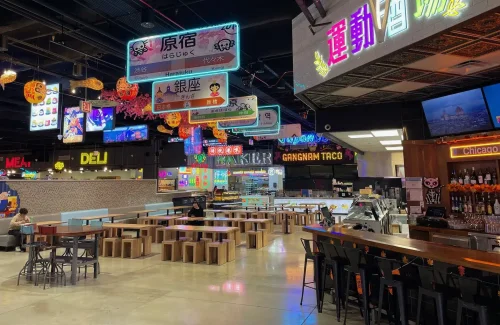
Kenny Yang, the owner of Gangnam Market, took over a ground floor market in December 2022 and turned it into an “American-Asian hybrid” grocery store with a deli, produce section, liquor and beer, plus a range of snacks, beverages and other items Yang imports from across Asia.
Raised in Chicago, Yang attended Harper High School and the University of Illinois Chicago. Yang’s parents run a business named Kent Young Health Products at 2400 S. Wentworth Ave., in Chinatown. After spending a decade working in different cities across East Asia and decided to come back to Chicago to help his parents in the mid-2000s and joined the restaurant business. Besides Gangnam Market, Yang currently owns the Strings Ramen chain, Ken Kee in Chinatown and Gyuro Ramen in the West Loop.
Image source: DLM Photography & Design
Yang hopes this new model will allow customers to try his favorite Asian products as well as items they would find in every American grocery chain.
“I grew up buying a lot of stuff from Whole Foods and Jewels. So for everyone’s convenience, of course, we want to keep their local favorites and add a little spice on the Asian elements,” he said. “It’s actually a bit of local favorites with just a little bit of Asian twist. … But definitely I tried to get things that Asians growing up in Chicago will love.”
Yang shares that the business was named after the popular South Korean district in Seoul and a bit inspired by the hit “Gangnam Style”. By renovating the interior, and adding lights and neon signs for each department, Yang wants to give people a unique destination. He hopes people will like his idea and support the grand opening of the market. Yang is currently still putting the final touches to Gangnam Market but he is ready to unveil his plan to the neighborhood.
Image source: DLM Photography & Design
“I just tried to have something really fun, for our family shopping for the weekend. And then the food court has six, seven concepts, from Asian bakery to American coffee. I just tried to have everything that I love in there,” he said.
You can visit Gangnam Market from 8 a.m.-9 p.m. every day, and enjoy the food court from 11 a.m.-9 p.m.
In a world where living spaces are getting smaller and furniture quality is declining, one entrepreneur is striving to make a difference.
Yvonne Hung, a city-dweller who has lived in some of the world’s largest metropolitan areas, knows firsthand the challenges and constraints of living in small apartments. It can be difficult to have friends over because there isn’t enough space or seats.
For this reason, she founded Otelier in 2020, a San Francisco-based furniture studio with a focus on sustainability, and providing innovative products that are useful even for small spaces.
Yvonne believes that the home is the most intimate social space, and people shouldn’t have to sacrifice that due to a lack of space. Her latest project is called the Quartet, a multi-functional side table that unstacks into four stools.
While the retail industry and consumers have embraced fast furniture with low prices, poor construction, copied designs, and single usage, Otelier is committed to changing that. Yvonne and her team are determined to create sustainable, high-quality furniture that will stand the test of time. With Otelier, urban dwellers no longer have to choose between comfort and the environment, and Quartet is just the beginning of a new era in furniture design.
Quartet, a side table that transforms into four stools.
OTELIER STRADDLES BETWEEN A DESIGN STUDIO AND AN E-COMMERCE BRAND
I’ve always had an obsession with cities—the way they develop over time, how they are shaped by their geographies and industries, and of course how culture and way of life make each city unique.
In fact, I started my career in urban planning, which is what I studied at the Harvard Graduate School of Design. My goal, as cheesy as it sounds, has always been to make the world a better place to live for all. With Otelier, I’m trying to do it at a much smaller scale—the home—because that allows me to get up close and personal with users, and also be hands-on with the creative process.
So much of my design principles still go back to urban planning. For example, I chose to focus on apartment living because higher-density housing is a much more efficient and sustainable way to accommodate a growing population, as compared to single-family homes which encourage urban sprawl. Likewise, sustainability and the cradle-to-cradle approach is always a huge factor in the product design process because protecting the earth is always top of mind.
This generation is going through a lot of changes—higher housing prices, more frequent moving, and smaller apartments are some trends that make life different from what it was 20+ years ago. Activities that used to take place in person, such as work and meetings, now happen online. Social media is both hastening new ideas and increasing anxiety. I think there are many opportunities to address these issues. For me, it’s starting with the most intimate space, the home, and how we can make it a happy experience.
Otelier straddles between a design studio and an e-commerce brand. It’s rare to be both. Most consumer furniture brands aren’t strong on design—there’s a lot of copying of whatever’s trending—and most design studios don’t follow through with the manufacturing and sales process.
I aspire to do both under Otelier. As a designer, I want to explore and experiment, whether it’s with product ideas, new materials, or collaborations with little constraint. And as an entrepreneur, I want to create an e-commerce brand whose products make an impact at scale. I’m still figuring out how to do both with very limited resources as a solopreneur.
BIGGEST CHALLENGES AND OPPORTUNITIES IN SUSTAINABLE FURNITURE DESIGN
It seems there’s a race to the bottom in the consumer furniture industry—make it as cheap as possible, sell more, and maximize profits. It’s no wonder why the EPA says the US produces 12 million tons of furnishing waste a year. Not only are these items going into the landfill, but they also contain a lot of non-recyclable and/or non-biodegradable materials. The challenge is that now consumers are trained to believe their furniture should be dirt cheap and don’t realize these problems, similar to the case of fast fashion.
There’s also a lot of greenwashing everywhere. For example, using recycled plastic bottles is great, but turning them into something that cannot be recycled again is worse than just making another plastic bottle from it because it could then be recycled several more times.
One of my pet peeves is when companies call plastic leather vegan leather. It’s just plastic! Otelier is far from perfect, but I am committed to being honest and looking for the best alternatives that are currently available and financially feasible.
Fortunately, I do think there is a subset of mindful consumers that want high-quality furniture that’s sustainably produced. There are several smaller independent brands, like Otelier, that are trying to address this problem in the furniture space, and a lot of material science and manufacturing companies exploring more sustainable alternatives.
That said, when it comes to innovation on the sustainability front, it’s easy to design or prototype a concept, but much harder to make it commercially viable. I’m fascinated by a lot of the new materials that are currently in development, such as bioplastics. I’m also interested in blockchain for tracking supply chains. But in reality, these ideas are far from being commercially available, especially to small companies like Otelier.
My long-term goal is to have two areas of focus: one for blue sky explorations, including the use of new materials, and a second for producing durable and commercially viable products for the masses. For now, since I’m bootstrapping, the current focus is more on commercially viable products using what’s available today.
There’s plenty we can do now to improve the furniture industry. Taking a methodical approach, I typically break down a product into its materials, manufacturing, logistics & transportation, usage, and end-of-life condition, and then minimize the footprint for each factor.
MAKING SURE OTELIER PRODUCTS ARE SUSTAINABLE
I use materials that are biodegradable and/or recyclable and minimize the use of petroleum-based plastics for both our products and packaging. The Quartet, for example, uses wood and suppliers that are certified by the Forest Stewardship Council (FSC) to ensure that we’re sourcing from sustainably managed forests. I also use hardwood because it’s more durable since longevity is key to sustainability. Metals are also great for durability and recyclability. My hope is that we create zero landfill waste.
Otelier is not perfect; I still rely on the existing transportation and energy systems that are available today. For what I cannot control, I use carbon offsets so that our products are carbon neutral. And I also plant trees to compensate for the wood used in our products.
If all businesses take responsibility for their own environmental footprint, we’d be in a much better place.
THE GOAL IS TO ENCOURAGE MENTAL AND PHYSICAL WELLNESS AT HOME
I’m still at a very early stage with Otelier, but I have so many ideas! It takes me a lot of time to develop each since I work alone.
I think the way this generation lives, post-COVID, requires more flexibility from our home, no matter if you’re living alone or have a family with kids. Some recurring themes in my furniture are multi-functionality and space-saving features. I also am fascinated by objects that are interactive. In a way, I enjoy designing experiences enabled by an object rather than the object itself. For example, the Quartet is a side table that unstacks into four stools. But the goal is to encourage friendship and bonding at home. The furniture is a means to that end.
Eat-Work Table, designed for people working from their kitchen or dining rooms. The height-adjustable table can be used as a dining table.
LONG-TERM GOALS FOR OTELIER
The ultimate goal is to build a brand that creates beautiful and useful furniture that enriches the lives of urban citizens, while also being sustainable and accessible. I hope Otelier will be an international brand, given that apartment living is relevant everywhere.
From a service perspective, my vision is to create a platform that sells both new and used Otelier furniture.Resale is really a key to countering the fast-furniture problem. Although our furniture is heirloom quality, I think most people of this generation would prefer to just sell their used furniture rather than passing it down to their kids and grandkids. So making resale easy is a service that could benefit everyone.
Innovation is really important to me. I’m not here to create what already exists. I really hope that Otelier can pioneer commercializing some of the sustainable materials that are currently in development. It’s still early days, so there are lots to explore, learn, and create.