Stories

March 26, 2025

SHARE:

“What fuels my passion is the personal stories of each of my clients. They teach me something new every day—whether it’s their high standards, attention to detail, or unique perspectives on the world,” states Grace Pei, founder of JINZA Oriental Couture.

Recognizing the power of handcrafted wedding dresses to connect people with their cultural heritage and express their unique stories, Grace is on a mission to highlight the beauty and sophistication of Chinese culture through JINZA Oriental Couture. 

The First Threads

Initially, JINZA Oriental Couture specialized in Western wedding dresses and custom evening gowns at Jinza Couture Bridal. But one fateful day, Grace was approached by a third-generation Asian American bride who wanted a custom Qipao for her wedding reception. 

Grace recalls, ‘This request sparked my journey into researching the Qipao and uncovering what had been lost over the years. Through this process, I discovered that my grandmothers used to wear tailored Qipaos in their time, and I began exploring my family roots.’ 

This reflective journey ignited a new passion in Grace: creating hand-embroidered designs that reflect her client’s unique family histories, cultural heritage, and personal stories. 

With a decade of expertise in bespoke fashion, JINZA Oriental Couture now specializes in handcrafted Chinese wedding dresses, Qipaos/Cheongsams, and Tang suits – all designed and made locally in Los Angeles for weddings and cultural celebrations.

Qipao Wedding Dress at Modern Tea Ceremony (Image source: JINZA Oriental Couture)

Qipao Wedding Dress at Modern Tea Ceremony (Image source: JINZA Oriental Couture)

Unraveling Tangles

Asian fashion has evolved dramatically over the years, with many traditional elements fading from modern designs. As a result, much of this cultural heritage has been lost or overlooked.

“One of the biggest challenges I’ve faced in my business journey is overcoming the misconception that Qipao and Cheongsam should be inexpensive or easily replaceable. Many people ask, “Why should I invest in something I can buy on Amazon or Etsy for $200?” Grace explains.

As the gap between mainstream fashion and Asian fashion narrows, Grace points out that these traditional dresses have become occasional pieces—costumes for special events rather than meaningful, handcrafted works of art. 

To address this, Grace focuses on educating her clients about the value of bespoke fashion: the intricate embroidery, high-quality fabrics, and cultural heritage woven into every piece.

“At Jinza Oriental Couture, we see our mission as both an artistic pursuit and a learning journey alongside our clients. Every client brings a unique story, and we don’t aim to replicate what was done centuries ago but instead incorporate meaningful elements that speak to their identity today.” 

Artisan hand stitching embroidery (Image source: JINZA Oriental Couture)

Artisan hand stitching embroidery (Image source: JINZA Oriental Couture)

Threads of Resilience

“As a mother of two and a first-generation immigrant, I am most proud of the resilience I’ve shown throughout my journey,” Grace exclaims.

Whether overcoming depression or battling an avoidant mindset, Grace’s resilience has transformed JINZA Oriental Couture into more than a fashion brand, but a place for preserving culture and identity.

Grace’s resilience wasn’t built overnight but grew through her passion for helping her community. By preserving cultural heritage through bespoke fashion, she tirelessly designs intricate dresses that tell the unique stories of her clients’ identities.

Grace happily recalls, “Hearing their stories, especially when they share old family albums of grandmothers wearing Qipao, often brings tears to my eyes. The hand stitches, still vibrant and beautiful after 100 years, remind me that clothing can carry a story all on its own.”

From custom Qipaos and Cheongsams to Chinese wedding dresses, each piece reflects the personal histories of her clients. Grace’s vision for JINZA Oriental Couture extends beyond fashion—it’s about supporting female leaders, uplifting the Asian community, and ensuring these cultural treasures are passed down to future generations.

When asked which Asian or Asian American—real or fictional—she’d invite to wear one of her dresses, Grace responds, “Lisa Ling (a previous client) and Ronny Chieng are both role models for me due to their commitment to telling powerful stories, standing up for their communities, and offering true support. Phillip Lim is also a successful example of an Asian American designer who has carved out his own voice in the fashion world, and his influence and individuality would be a perfect match for the ethos of Jinza Oriental Couture.” 

A piece from JINZA Oriental Couture (Image source: JINZA Oriental Couture)

Lessons in Resilience and Unity

The two most important lessons Grace has learned from her entrepreneurial journey with JINZA Oriental Couture are authenticity and community.

“My advice to Asian creatives, founders, and entrepreneurs is to always be authentic. There were times when I wanted to take shortcuts or find quicker ways to get things done, but I learned that staying true to who you are and doing the right things, even if they take longer, is what truly matters. Another important piece of advice is to belong to a community you truly believe in. It will make things a lot easier, even when things don’t go as expected. When we, as a community, stay true to our values and support each other, we can create a stronger and more united future,” Grace affirms.

When asked about her future plans, Grace excitedly shares that she’s honing her storytelling skills to speak more boldly about heritage, culture, and community. She’s also open to collaborations, partnerships, and creating more content to amplify her mission.

Grace concludes, “Together, we are stronger, and by working together, we can have a greater impact. I look forward to the possibilities that lie ahead and the opportunities to connect with like-minded individuals and organizations.”

Please Include Contact

Website: JINZA Oriental Couture

Instagram: @jinzaoriental

Linkedin: Grace Pei

Facebook: Jinza Oriental Couture

Related Articles

Image Source Business Insider

Uncategorized

The Ups And Downs Of A 23-Year-Old Entrepreneur As He Rides The Wave Of Success He Has Built Through Rental Arbitrage

You still have the right to hope for the best and move forward even if you face adversity just as you reach the pinnacle of your accomplishments. This 23-year-old entrepreneur is proof that hard work and determination can pay off.

Derek Cheung is a former college student who got into rental arbitrage. He was an intern when he discovered the company that operates short-term rentals for properties it doesn’t own.

In 2018, he began engaging in rent arbitrage by acquiring his first two apartments. Derek’s first steps weren’t smooth sailing. He did a lot and did extensive research to ensure he was following a solid business plan.

Derek learned the legal paperwork and communication skills involved in real estate and rent arbitrage transactions, especially since many landlords have specific preferences for working with such parties — he even went through around a hundred landlord leads.

He also made sure he knew how to service the property, maintain fixtures, decorate it, and approach landlords in negotiations. Since his first deal was with an agent who represents multiple landlords, his career took off from there.

Derek’s first annual leases were signed in February 2019. One-bedroom flats cost $1,215 per month while studios cost $999. He put down a $500 security deposit on each flat, plus the first month’s rent. Short-term rentals were permitted under the terms of his additional contract.

As a result of working part-time while in school, Derek was able to save $8,000. He also had a $5,000 credit card limit, which was sufficient at the time. He spent $5,000 on secondhand items from Facebook Marketplace. He rented U-Haul to move things and asked two friends to help. After he had set them up, he took photos of the units and posted them on Airbnb.

He kept moving forward with the strategy, and soon he was managing and cleaning six apartment blocks. He had reached a terrifying $10,000 in liability and rent expenses, but he was convinced that he had to risk money in order to make a lot.

Unfortunately, the pandemic hampered travel and bookings. At that time, he owed $20,000  in monthly expenses. He began calling builders, corporate movers, and insurance housing agencies weekly to offer his units, and advertised on Zillow, Corporate Housing by Owner, Furnished Finder, and Craigslist. His top priority was serving customers who had booked 60 days in advance.

When the pandemic subsided, he created a new plan to make up for his losses. Derek lowered his prices just enough to break even or make a small profit. He was also keen on securing long-term visitors and started taking reservations from people in the area who were in between leases, evicted from their homes, or were staying in hotels because their insurance wouldn’t cover them.

Derek had 50 properties by the end of 2021, with 44 of them being fully functional. His revenue increased by about 22% this year.

Image Source openthemagazine.com

Uncategorized

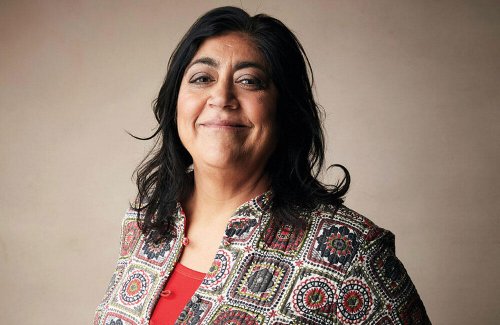
Director Gurinder Chadha On Shaping Her Successful Career By Celebrating Difference

“People might tell you that you’re the odd one out. Remember you’re not, you too are the mainstream. The world might try to make differences a pejorative thing, but I’ve carved out a whole career by celebrating it,” says the 62-year-old film director, Gurinder Chadha, in her recent candid interview with The Guardian.

Gurinder Chadha was born in Kenya, then a British colony. Her family was part of the Indian diaspora in East Africa. They moved to London when she was two and rented a single bedroom. She recounts being shoved into a metal bed frame by their landlord’s son. Her mother was devastated but couldn’t comfort her. “I still remember the indignity and injustice,” she adds.

For a while, she even refused to eat Indian food and had her chapatis with jam and butter. At age 10, she ran away from home and considered it an “escape” to be more British.

Gurinder considers the 2002 box-office hit ‘Bend It Like Beckham’ she directed a watershed moment. She tells The Guardian that until then, the perception was that Indian girls in the UK were obeying and submissive to strict families, but that wasn’t their experience.

“As an immigrant kid, you realise early on you and your parents live different realities,” she adds, “You can fight and rebel, or accept your parents for who they are, work around them, and get on with it. That’s what we did.”

It took three years to get the sports comedy-drama film green-lit. Everyone told her an Indian girl playing football wouldn’t attract the audience. However, it’s the only film to be released in every country since it debuted 20 years ago. “For people on the margins all over, it was transformative”

Unfortunately, her father died suddenly in 1999, and he never got to see Gurinder’s biggest achievements. This made her unappreciated her success for a long time as her father wasn’t there to share it with. It changed when she became a mother of twins in her late 40s, “Having my children celebrate my work has seen something shift within me. Finally, I’ve started to let myself believe it”

280828065_10210184429204132_8785869350725322057_n

Uncategorized

26-Year-Old Filipino Entrepreneur Turns Waste Coconut Shells Into A Thriving Business

With zero funding, Filipino entrepreneur MJ Loleng built her start-up company, Ecobriqs Charcoal Briquettes, an innovative eco-friendly charcoal business from waste coconut shells.

She was able to attract investors with her idea who also had a passion for sustainability and providing employment to those who are poor in the Philippines, as she said that she experienced being poor herself. MJ wants to show that poverty is no reason to give up on ambitions.

MJ wrote on her Facebook, “For the past 4yrs I was just crystal focus on surviving and making things happen. I know I’ve always wanted to help, and I know that I can do it by building a business.”

When “Samgyeopsal” or Korean BBQ restaurants became popular in the Philippines, Ecobriqs experienced a surge in popularity. Briquettes were the ideal kind of coal to use since they did not produce smoke or odor and could be used more than once.

The pandemic drove several eateries to close, putting Ecobriq into a major setback for half a year, but MJ thought of another idea. She collaborated with her friends and opened their own Korean BBQ restaurant, Umma’s Samgyup Café, with a starting capital of P5,000 ($90).

As a result of MJ’s expanding business portfolio, she is now able to bring in more than P100,000 ($2000) per month, and learned stock trading in order to increase her income.

Her advice to aspiring entrepreneurs is to be persistent in achieving their goals, “I also didn’t know how we got this far. I just keep the faith, believe in my team, took the risk, give it ALL IN, and did my best” 

Image Source John Andrew Dangca Facebook

Uncategorized

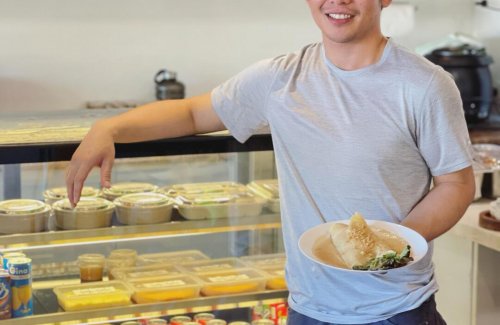
From Former Janitor To Leading A Flourishing Filipino Restaurant In Australia

Who would have thought that the odd jobs of a janitor and a street vendor would lead to such a great story? This is what actually transpired to John Andrew Dangca, the owner of a Filipino restaurant in Canberra, Australia.

Before establishing his popular restaurant among Filipinos, he worked as a street vendor and janitor. Despite his difficult beginning, he was determined to succeed. He saved money and eventually opened his own restaurant. His business success has allowed him to provide for his family. 

Salu-Salo Restaurant, which has been serving Filipino cuisine in Canberra, Australia was also impacted by the pandemic. Fortunately, he was able to adapt by pivoting to a delivery and take-out model. 

He says that they’ve been able to weather the challenge because of the support of their customers. Andrew admitted that he reaches out to his customers to order some food, and if they do, he personally travels to them, regardless of the distance. 

His journey to Australia began when he was young and open to the idea of studying or working abroad. His aunt sponsored his trip to Australia in 2013, where he enrolled in college and began training as a cleaner. It was never easy for him to juggle a job and schoolwork, but he did it because he wanted to provide for his family.

Andrew’s story demonstrates that it is possible to achieve success despite challenging circumstances if one is willing to work hard and never give up. “I put in a lot of effort and always try to do my best in order to be where I am now,” he stated on a Philippine TV show. 

He proved that beginning in a low position, such as working as a janitor or street vendor, is not an obstacle to future success. Rather, this will serve as the fuel that propels you forward toward achieving your goals.