Stories

July 5, 2023

SHARE:

Growing up with stereotypical Asian tiger parents, Angie had always been interested in entrepreneurship but was constantly discouraged.

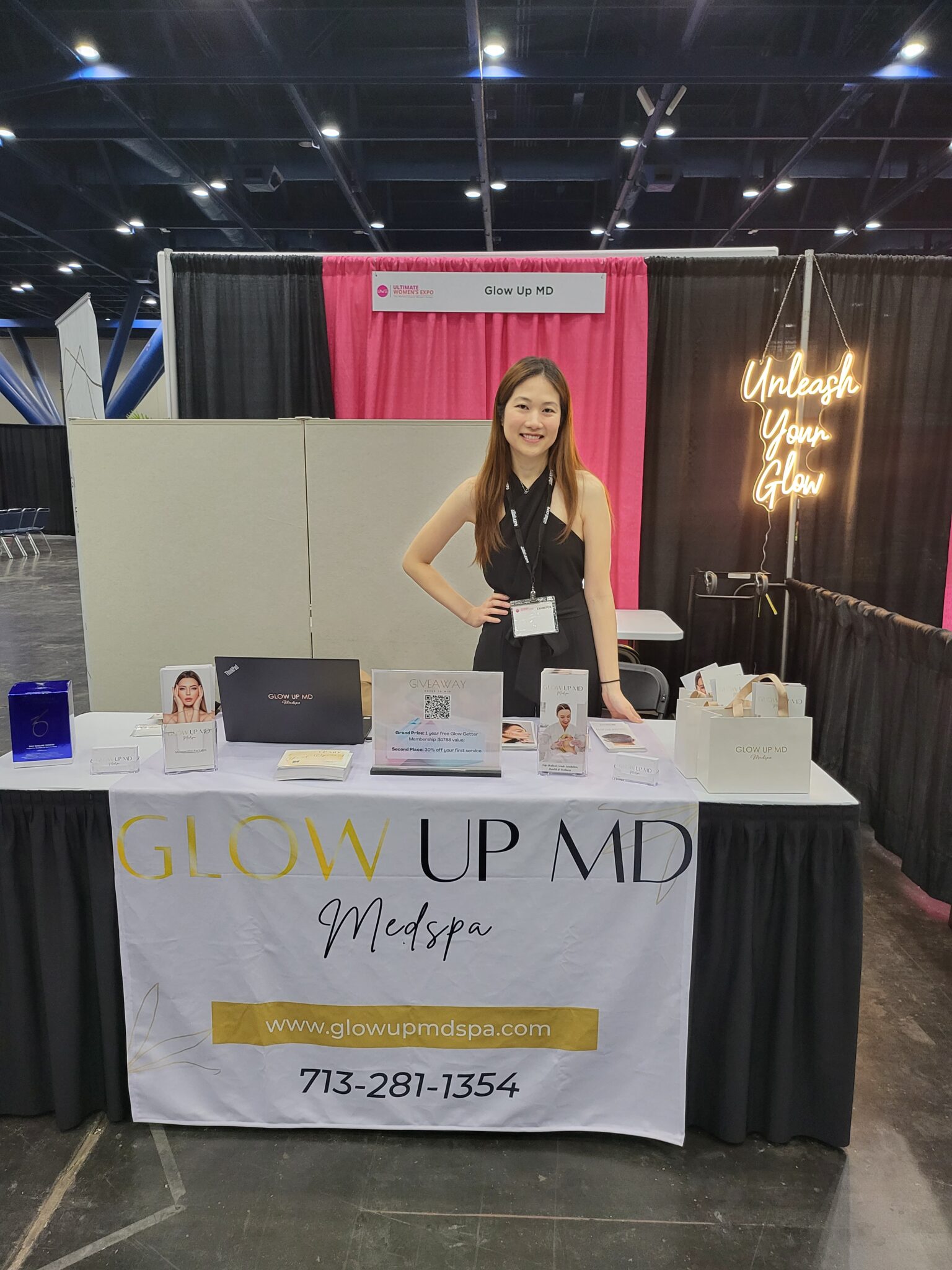
Angie Kim is the physician and CEO of Glow Up MD Medical Aesthetics and Wellness Practice. Her journey to success was far from easy. Angie grew up with traditional Asian immigrant parents who believed that taking risks in business was foolish.

She did all the stereotypical Asian things such as playing piano, being good at math, and going to a good college. She studied engineering and went on to complete medical school. And like most Asian women are expected to be, Angie was very quiet and had low self confidence.

But after completing her medical training, Angie realized that working for someone else was not what she wanted for her life. She refused to work for people without medical education and decided to take a chance on herself.

Starting her own business was an intimidating prospect for her. She had no background in business and had to navigate legal regulations, insurance requirements, and financial planning on her own. But with determination and persistence, she and her husband were able to set up a successful brick and mortar practice within just a few months.

Angie’s journey serves as a reminder that there is never a perfect time to start a business and that sometimes the best way to learn is by doing.

I DID IT ANYWAY

Even in middle school and high school, starting a business always piqued Angie’s interest. She had even presented a few ideas, such as a t-shirt business, to her parents when she was in middle school. Unfortunately, her parents always shot her ideas down, telling her they were stupid.

Angie’s parents have always been extremely risk averse and were against anything that required any type of investment with uncertain return. They wouldn’t even let her spend money to create a website.

Despite the discouragement, Angie was still very interested in entrepreneurship. She would constantly read articles about people who developed new apps or websites that became very popular. However, she had to put those aspirations on the backburner and focus on her education as her parents placed a high emphasis on education.

Even still, she would come up with ideas every so often and kept a list of these on her computer, hoping to return to them one day to get them started. “One thing that’s been constant since my childhood has been that whenever they told me I wouldn’t be able to accomplish something, I did it anyway,” she said.

BIGGEST CHALLENGES

Initially, one of their biggest challenges was trying to figure out the laws surrounding opening a medical practice. They looked at so many sources but kept finding contradicting or incomplete information.

The actual legalese was difficult to understand and they didn’t trust their interpretation of it. They finally spoke to a lawyer who confirmed what they understood. This allowed them to feel comfortable enough to continue on.

As of right now, the biggest challenge they’re facing is marketing and getting the word out. They are still trying to figure out the best way to do this. It has been mostly through trial and error. They are constantly trying different strategies, such as Facebook ads, in-person events, local SEO, local media and print, and direct mailing.

THE TURNING POINT

While working in the hospital, Angie began noticing little things over time that pointed towards the toxicity of the working environment, such as how little control and autonomy physicians have in taking care of their own patients, the backstabbing from other healthcare workers, and how physicians from other healthcare systems all had similar stories.

“I came to the realization that this would not change if I just changed jobs. The only solution was to start my own practice,” she said.

LOOKING BACK ON HER JOURNEY

The most rewarding aspect for Angie is the freedom to practice medicine the way it should be practiced. “I can spend as much time as I need to with patients. I don’t need to spend extra time trying to fight insurance companies. And my patients have been happy with their results,” she said.

She is hoping to grow her practice enough that she can open a second location and eventually franchise it, which would allow her to help even more patients and improve the healthcare system in her own small way.

“If I were to do it all over again, I would document my journey. I thought about it this time, but I felt like I didn’t know what I was doing the whole time.”

ANGIE’S ADVICE FOR OTHERS FACING SIMILAR CHALLENGES FROM THEIR FAMILIES

“People are always going to doubt you when you start, especially those closest to you. You can’t let that get to you. If it’s what you really want and you can’t stop thinking about it, then you should go for it. It’s going to be lonely and somewhat isolating when you start, but it’ll be worth it,” Angie said. 

She believes that there’s always a way to solve a problem. If you feel like you’ve hit a roadblock, you can try looking at the problem from a different perspective.

Right now, Angie still hasn’t told her parents about her business and she’s waiting for the right time when she can finally tell them.

CONNECT WITH ANGIE

Instagram: @glowupmdspa

Facebook: Glow Up MD Medspa
Related Articles

Made with Canva

Uncategorized

Eight Trailblazing Asian Women Who Are Slaying It In Startups

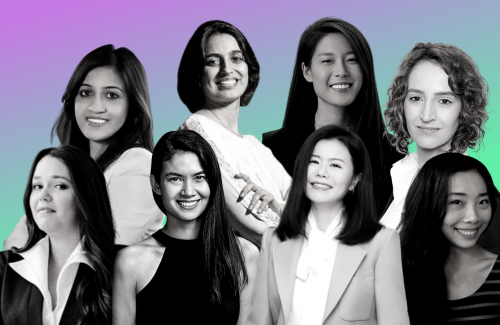
When it comes to closing the gender equality gap in entrepreneurship, many barriers remain to be addressed. However, female entrepreneurs in the startup industry are now rising and have been taking center stage.

Fortune recently released a list of the 15 Most Powerful Women in Startups based on PitchBook valuation data. 

Eight women on the list are notable Asian women who are either founders of highly valued startups where they hold important jobs or chief executives of highly valued firms.

Without further ado, here are the most powerful women in charge of the most valuable private companies in the world today.


Melanie Perkins

Cofounder and CEO, Canva

Valuation: $26 billion

The Malaysian-Austrailian cofounder and CEO of design software maker Canva was valued at $40 billion in 2021, which makes it the highest-valued female-founded startup in the world. Launching their new office product, the company is ready to take on Microsoft and Google.


Divya Gokulnath

Cofounder and director, Byju’s

Valuation: $22 billion

Gokulnath cofounded India’s most valuable startup, Byju’s. The firm’s aim is to make learning engaging and effective by leveraging deep pedagogy and cutting edge technology.


Miranda Qu

Cofounder and president, Xiaohongshu

Valuation: $20 billion

Based in Shanghai, the social e-commerce app Xiaohongshu (translation: “Little Red Book”) has been key to the rise of experiential shopping in China. The innovative platform integrates the authentic content shared by its community with commerce, quickly becoming one of the most popular destinations for making lifestyle decisions.


Ruchi Kalra

Cofounder and CFO, OfBusiness; cofounder and CEO, Oxyzo

Valuations: $5 billion (OfBusiness); $1 billion (Oxyzo)

Kalra along with her husband Asish Mohapatra, cofounded the carbon management business OfBusiness and the digital lender Oxyzo. OfBusiness provides India’s SMEs access to cash flow-based financing for buying raw materials through its NBFC ‘Oxyzo Financial Services’.


Adi Tatarko

Cofounder and CEO, Houzz

Valuation: $4 billion

The Israeli-American cofounder and CEO started the home remodeling and design platform where people can browse and save beautiful photos of inspiring home, as well as find and hire the right design and construction professionals.


Eynat Guez

Cofounder and CEO, Papaya Global

Valuation: $3.7 billion

Papaya Global is a payroll platform trusted across 160+ countries and all types of employment. Based in Israel, Guez cofounded the startup after a long career in global workforce management.


April Koh

Cofounder and CEO, Spring Health

Valuation: $2 billion

Koh became the youngest woman to run a multibillion-dollar company when the startup hit its $2 billion valuation in 2021. With the mission to eliminate every barrier to mental health, Spring Health offers mental health care services as an employer-provided health benefit.


Jinglan Wang

Cofounder and CEO, Optimism

Valuation: $1.7 billion

Optimism is an Ethereum-based decentralized infrastructure platform that allows for instant transactions and scalable smart contracts.The company valued at $1.7 billion as it worked to scale Ethereum.

Image Source: Natalie Naudus

Uncategorized

This Mom Took a Career Switch and Is Now Making Six Figures as a Book Narrator

Natalie Naudus’ voice actor journey began when she realized that narrating audiobooks could be a promising career option. She found that audiobooks were one of the fastest-growing areas of content creation and that most of them were recorded by voice actors in high-quality at-home studios. 

The mother of two decided to pursue it as a new career because she believed that many aspects of the genre she cherished as a classical singer could be incorporated into this new line of work. She now earns six figures annually.

Natalie’s husband helped her set up a home studio. A platform called ACX, which connects narrators with authors, agents, and publishers, gave her her first book job. To make her name and voice more well-known within the community, she started going to events related to book narration. 

During the 2020 pandemic, she decided to share snippets of her book narrator life on Tiktok and Instagram. She wishes others could appreciate this profession as much as she does. This exposure increased her popularity and fan base. Book gigs from publishers who wanted to hire her to publish her works also began to flood in. With this strong online presence, she acknowledged it as one of the most important decisions she has ever made for her professional advancement.

Currently, she still manages to put in a productive 40 hours a week between recording, administrative duties and reading up on material for her next book. Major publishers typically offer her a starting rate of $225 per finished audio hour. 

After three years as a voice actor, she finally reached the six-figure mark in earnings and enabled her to purchase the land for their mountaintop home, as well as upgrade her recording booth.

Natalie had recorded almost 400 books over five years. She is also an award-winning audiobook narrator of more than 250 titles.  Her story shows that taking a chance on a new career path can pay off in ways one never expects.– “It was a difficult decision to give up my opera dreams. But I wouldn’t be where I am today if I hadn’t left it behind and taken this chance.” she tells CNBC’s Make It.

Source Image: Turis.app

Uncategorized

This CEO Transformed Lost Fishing Nets Into Sustainable One-Of-A-Kind Bikinis

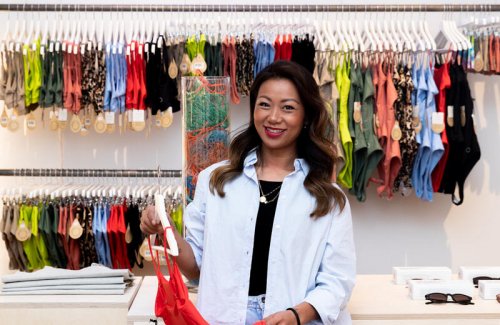
Plastic pollution harms our planet and health, but thankfully, companies like Copenhagen Cartel are combating this environmental problem by converting lost or abandoned fishing nets into bikinis with a modern twist on an ancient textile tradition.

Copenhagen Cartel’s founder and ocean lover, Katrine Lee Larsen, was motivated to help mitigate the adverse effects of plastic use and came up with a “brilliant solution” destined to become a global superstar.

Launched in 2019, Copenhagen Cartel has produced swimwear and athletic wear from ocean waste plastic. The deadly ‘ghost nets’ that would otherwise waste away in the ocean and kill countless marine life can be put to good use in this way. Compared to making brand-new nylon, Copenhagen Cartel’s manufacturing process uses less energy and resources.

Larsen views each day as a fresh challenge while launching her own company. Moreover, as a true nature lover, she has been guided and helped by her purpose. She feels the entrepreneurial world is dominated by masculine values that leave little room for feelings and higher goals. However, her experience has shown that a focused, emotional strategy can be very beneficial. She believes a new era of entrepreneurs will emerge due to shifting to a mindset that values meaning over financial gain.

Larsen is an entrepreneur herself, and she has been through the experience of seeing the ocean being depleted of its resources. Despite this, she knows that there is still room for change, which drives her to continue to assist the environment and natural resources.

Image Source: Sean Berry

Uncategorized

Ann Mukherjee: First Woman of Color CEO of Liquor Brands Shares An Incredible Outlook To Grow

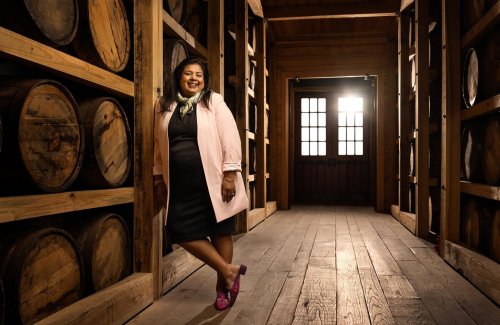
Indian American Ann Mukherjee CEO and chairman of Pernod Ricard, has been a model for success and women’s empowerment. At 56 years old, she is currently managing the world’s second-largest seller of wine and spirits and is also renowned for top-shelf liquor brands such as Absolut, Jameson, and Malibu. In an industry dominated by men, she is the first woman of color to hold the highest position for alcoholic beverage brands.

As soon as she assumed the position of CEO in 2019, she realized that there was a stereotype rooted in an exaggerated machismo of being a self-confident leader. After giving it some thought, she concluded that those beliefs were not only completely false but also destructive, so she chose to disregard them. 

Mukherjee thought the most challenging part of being a CEO was knowing when to ask for help or admit you couldn’t do it alone. She believes it is essential for a leader to accurately understand herself and her people and then learn from them. Although confident in her abilities, she also recognizes the importance of showing humility and honesty.

She also reveals how her failure became the key to her success. She has become more resilient because she has learned to change course when necessary and take advantage of setbacks to advance. And while also acknowledging her drawbacks, she stresses the value of accepting failures. 

Her one piece of advice for anyone just starting in their career is, “Do not worry about fitting in, and do not be afraid to speak up, because when you have confidence in yourself, anything is possible,” she shared with CNBC’s Make It.

Mukherjee is well aware that to be an effective leader, she must first be able to love herself without condition, taking into account all of her attributes, including her strengths, weaknesses, opportunities, and threats. And with that comes the realization that knowing one’s shortcomings can better help one deal with and overcome those. This is the only way for her to achieve genuine personal and professional development.